
Type A Adverse Drug Reaction: What It Is, Why It Matters, and How to Spot It
When a medication causes an unwanted effect because of how it works in your body, that’s a Type A adverse drug reaction, a predictable, dose-related side effect caused by the known pharmacological action of a drug. Also known as augmented reaction, it’s the most common kind of bad reaction to medicine — not because the drug is broken, but because it’s doing exactly what it’s supposed to do, just too much or in the wrong person. Think of it like turning up the volume on a speaker too high — the sound doesn’t change, it just gets louder. Same with Type A reactions: the drug’s effect is amplified, exaggerated, or mismatched with your body’s needs.
These reactions are tied to the drug’s pharmacology, the science of how drugs interact with the body’s systems. They’re not random. They happen because the drug affects your blood pressure, blood sugar, heart rhythm, or digestive tract — things it was designed to change. That’s why statins like pravastatin can cause muscle aches, why NSAIDs like ibuprofen trigger asthma in sensitive people, and why MAOIs force you to avoid aged cheeses. These aren’t rare glitches. They’re expected outcomes based on the drug’s mechanism. That’s why Type A reactions make up about 80% of all reported adverse events — they’re predictable, and often preventable.
What makes them dangerous isn’t that they’re rare — it’s that people ignore the warning signs. High blood sugar from alpelisib? A rash from a targeted cancer drug? A spike in blood pressure after eating tyramine-rich food while on an MAOI? These aren’t just "side effects" — they’re signals. Your body is telling you the drug’s action is out of balance. That’s why knowing your meds matters. It’s not about memorizing every possible side effect. It’s about understanding the pattern: if the reaction is an extension of the drug’s intended effect, it’s likely Type A. And if you’ve seen it before — maybe in a friend, a family member, or even your own history — you’re already ahead of the game.
You’ll find real stories here: people managing diabetes while on alpelisib, seniors switching from risky statins to pravastatin, asthma patients avoiding NSAIDs, and others who learned the hard way what happens when you ignore the basics. These aren’t abstract medical concepts. They’re everyday choices — what you eat, what you take, when you call your doctor. The posts below give you the facts you need to recognize, avoid, or respond to these reactions before they become emergencies. No fluff. No jargon. Just what works — and what doesn’t — when your medicine starts working too hard.
- 14 Comments
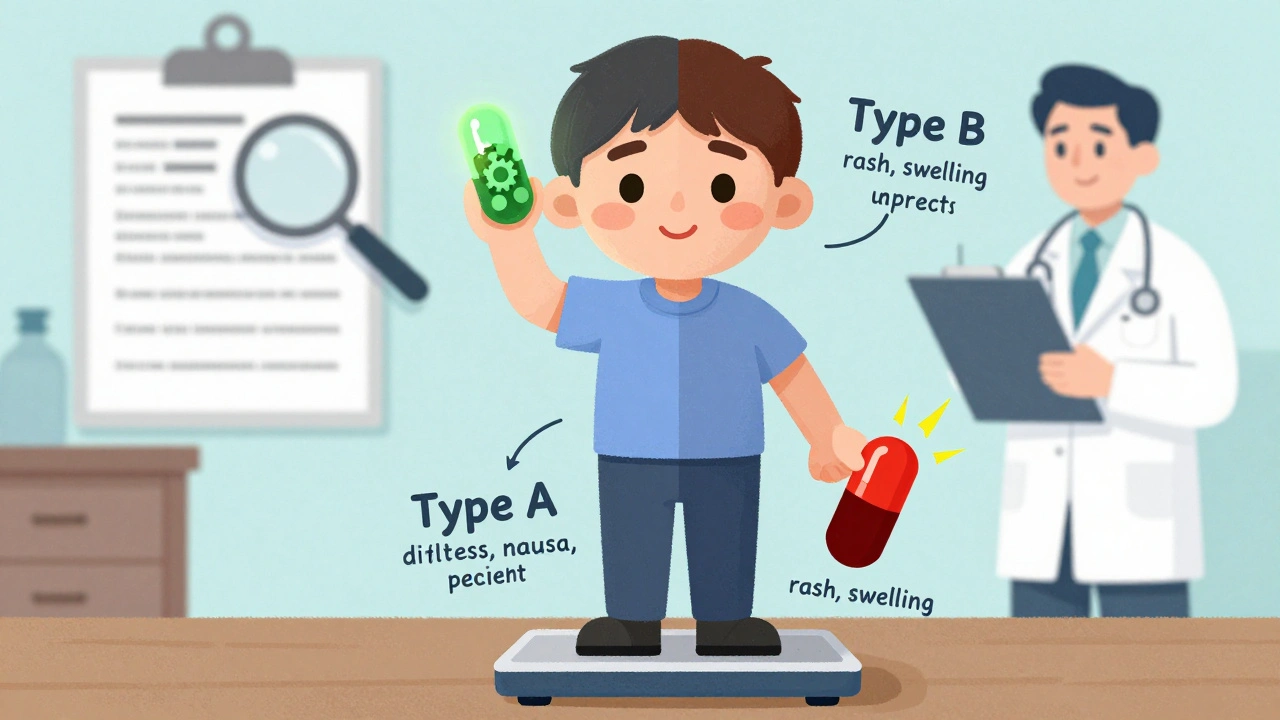
Learn the key differences between Type A and Type B adverse drug reactions - why some side effects are common and predictable, while others are rare but dangerous. Understand how to recognize, prevent, and report them.