
Medication-Induced Cognitive Impairment: Causes, Risks, and How to Spot It
When your memory starts slipping, or you feel foggy after starting a new pill, it might not be aging—it could be medication-induced cognitive impairment, a reversible decline in thinking, memory, or focus caused by drugs. Also known as drug-related cognitive dysfunction, this isn’t rare—it happens when medications interact, pile up, or just don’t belong in your system anymore. Many people assume forgetfulness is normal as they get older, but sudden confusion, trouble finding words, or feeling disoriented after a new prescription? That’s a red flag.
This isn’t just about old age. It’s about polypharmacy, the use of multiple medications at once, often without reviewing if they’re still needed. A senior on five, six, or even ten pills might not realize one of them—maybe a sleep aid, an antihistamine, or a muscle relaxant—is quietly dulling their brain. These drugs often block acetylcholine, a key chemical for memory and focus. The result? Mistakes at the pharmacy, missed appointments, or even falls. And it’s not always obvious. Doctors don’t always ask about mental changes unless you bring them up.
What makes this worse is that many of these drugs are prescribed without checking for drug interactions, how one medicine affects another, often in ways that amplify side effects. Take a blood pressure pill and a bladder medication together? That combo might slow your thinking more than either drug alone. Or start an antidepressant and keep taking an old anti-anxiety pill? You could be setting yourself up for confusion that looks like dementia. The good news? This isn’t permanent. Stopping or swapping the right drug often brings your mind back—fast.
That’s where deprescribing, the careful, planned process of reducing or stopping unnecessary medications comes in. It’s not about cutting pills cold turkey. It’s about working with your doctor to review every medication on your list: Why is it here? Is it still helping? Could it be hurting? Studies show that when done right, deprescribing improves alertness, balance, and even mood—without losing the benefits of the drugs you truly need.
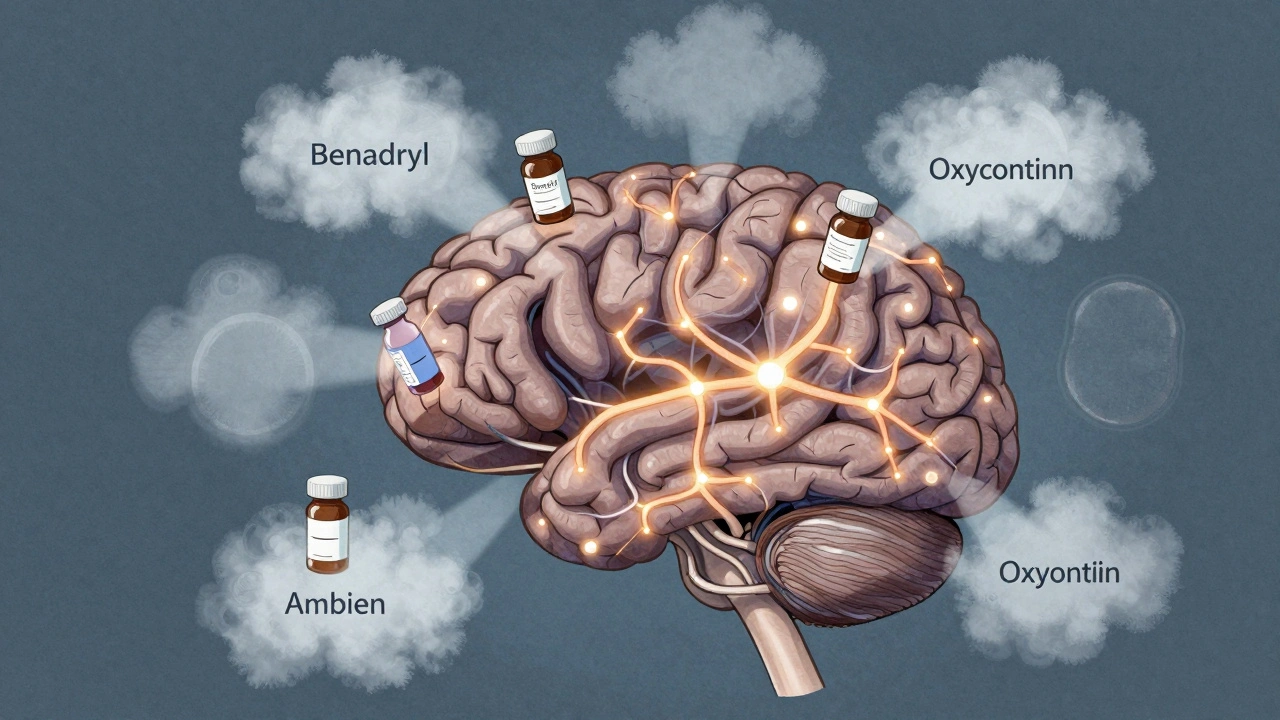
And it’s not just seniors. Anyone on long-term meds—especially for pain, sleep, anxiety, or heart conditions—can be at risk. Even over-the-counter drugs like Benadryl or cold remedies can cause brain fog if taken daily. The key is awareness. If you’ve noticed changes in your thinking after starting a new drug, write it down. Note when it started, what you were taking, and how you felt. Bring that list to your next appointment. You’re not overreacting. You’re protecting your brain.
Below, you’ll find real, practical guides on how to spot these hidden side effects, how to talk to your doctor about cutting back safely, and which medications are most likely to cause trouble. You’ll learn what to ask, what to watch for, and how to take back control—before the fog gets worse.
- 11 Comments
Many common medications cause brain fog and memory loss-not aging. Learn which drugs are to blame, how to recognize the signs, and how to safely reverse the effects with simple, proven steps.