
Medication Brain Fog Risk Calculator
How This Tool Works
Based on research showing that medications can significantly impact cognitive function, this calculator estimates your risk of brain fog using the Drug Burden Index—a validated metric measuring anticholinergic effects. Risk levels are calculated using data from the article, including:
- Anticholinergic risk scores
- Cognitive impact data from clinical studies
- Reversibility timelines for different medication types
Add Your Medications
Your Added Medications
Your Brain Fog Risk Assessment
It’s not just aging. You’re taking your pills as prescribed-sleep aid at night, painkiller for your back, antihistamine for allergies-and yet you’re forgetting where you put your keys, struggling to follow conversations, or feeling like your thoughts are wrapped in cotton. This isn’t normal forgetfulness. It’s brain fog from medication, and it’s more common than you think.
What’s Really Happening in Your Brain?
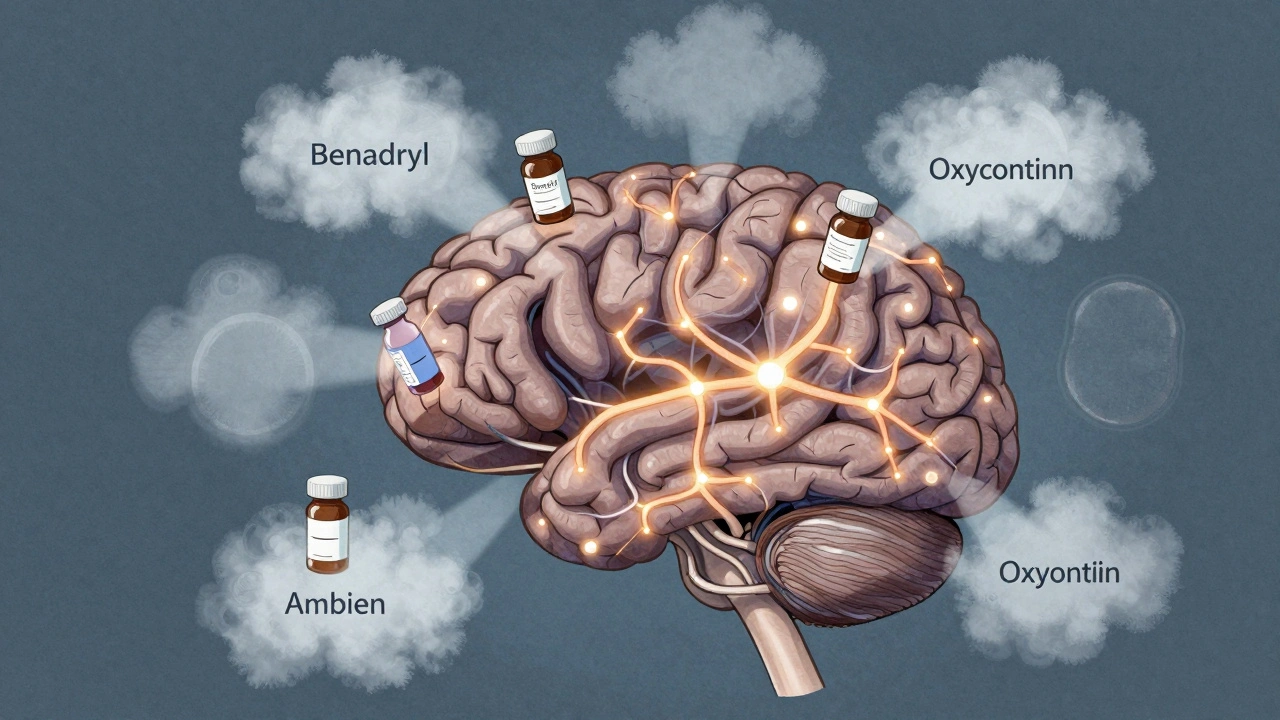
Medications don’t just target symptoms-they mess with the brain’s chemical messengers. Think of neurotransmitters like acetylcholine, serotonin, and GABA as tiny wires carrying signals between brain cells. When drugs interfere with these signals, memory formation, focus, and mental clarity suffer.Anticholinergic drugs are the biggest culprits. These block acetylcholine, a key player in learning and memory. Common ones include diphenhydramine (Benadryl, Tylenol PM), oxybutynin (Ditropan for bladder control), and even older antidepressants like amitriptyline. Research shows people on these drugs have up to a 4.5 times higher risk of memory problems. In older adults, regular use of diphenhydramine raises dementia risk by 54% over seven years.
Benzodiazepines like Xanax and sleep pills like Ambien (zolpidem) work by calming brain activity, but they also shut down the hippocampus-the part of the brain that turns short-term memories into long-term ones. Studies using fMRI show these drugs reduce memory transfer by about 30%. Users report blank spots in their day: no memory of taking a shower, driving home, or even conversations.
Opioids like oxycodone and hydrocodone affect the medial temporal lobe, cutting working memory capacity by 25% even at normal doses. And then there’s chemo brain-75% of cancer patients on chemotherapy report fuzzy thinking, poor focus, and mental fatigue. For some, it lasts months or years after treatment ends.
Which Medications Are Most Likely to Cause Brain Fog?
Not all drugs are created equal when it comes to cognitive side effects. Here’s what the data shows:| Medication Class | Common Examples | Primary Cognitive Impact | Increased Risk of Memory Problems |
|---|---|---|---|
| Anticholinergics | Diphenhydramine, Oxybutynin, Amitriptyline | Memory encoding, attention | Up to 4.5x higher risk |
| Benzodiazepines | Xanax, Lorazepam | Episodic memory, recall | 3.8x higher risk |
| Non-benzodiazepine sleep aids | Ambien (Zolpidem), Zopiclone | Anterograde amnesia (can’t form new memories) | 15% of users report memory gaps |
| Opioids | Oxycodone, Hydrocodone | Working memory, concentration | 25% reduction in capacity |
| Corticosteroids | Prednisone (20mg+ daily) | Confusion, delirium-like symptoms | Appears within 3-5 days |
| Chemotherapy drugs | Paclitaxel, Doxorubicin | Attention, processing speed, executive function | 75% of patients affected |
What’s surprising? Even some newer drugs aren’t safe. Serotonin reuptake inhibitors (SSRIs) like sertraline have a 1.8x higher risk. Isotretinoin (Accutane) and ciclosporin also show unexpected links to cognitive fog, with odds ratios of 3.5 and 2.9 respectively.
Real People, Real Experiences
Behind the statistics are real lives. On Reddit, users share stories like: “Took 5mg Ambien for two weeks. Woke up with no memory of the night before. Stopped it. Three days later, my brain felt clear again.” That’s not rare-over 140 similar stories exist on that thread alone.A 68-year-old woman in a Pharmacy Times case study started oxybutynin for urinary incontinence and became confused, disoriented, and unable to recall her grandchildren’s names. She stopped the drug. Ten days later, she was herself again.
AARP surveyed 2,500 adults over 50. Sixty-two percent blamed their memory lapses on medications. Sleep aids topped the list at 38%, followed by antihistamines (29%) and painkillers (25%). Amazon reviews for diphenhydramine products are filled with comments like: “Brain fog all day,” “Woke up like I’d been drugged,” and “Can’t remember what I ate for breakfast.”

How to Know If It’s Your Medication-or Something Worse
The good news? Medication-induced brain fog is usually reversible. That’s the big difference from Alzheimer’s or other neurodegenerative diseases, which slowly and permanently damage brain cells.If your mental fog started after beginning a new drug, or got worse after a dose increase, that’s a strong clue. Symptoms often appear within days or weeks-not months or years. And unlike dementia, your memory gaps are usually about recent events (like forgetting a conversation), not long-term memories (like your childhood).
Also, brain fog from meds often improves with rest, hydration, or sleep. If you feel sharper after skipping your night pill for a few days? That’s a signal.
What You Can Do: Recognition and Relief
You don’t have to live with foggy thinking. Here’s how to take control:- Review every pill you take-prescription, OTC, and supplements. Many people don’t realize Benadryl or Tylenol PM are anticholinergic. Keep a list and bring it to your doctor.
- Ask about anticholinergic burden. Doctors can use the Drug Burden Index or Beers Criteria to score your total anticholinergic load. A score above 3 is high risk.
- Try one change at a time. Don’t quit multiple meds at once. Work with your doctor to stop or swap one drug, wait 1-2 weeks, then reassess. Most people see improvement in 3-14 days.
- Replace risky drugs with safer options. Swap diphenhydramine for loratadine (Claritin) or cetirizine (Zyrtec)-both have minimal anticholinergic effects. For sleep, try melatonin (0.5-5mg) or trazodone (25-50mg). Clinical trials show 85% of users see memory improvement within two weeks.
- Switch pain meds. Instead of opioids, ask about duloxetine (Cymbalta). It’s just as effective for nerve pain but causes 40% less cognitive impairment.
- Time your meds. Take drowsiness-causing drugs at night, not in the morning. A Johns Hopkins study found this simple shift reduced daytime brain fog by 35% in 78% of patients.

New Tools and Hope on the Horizon
The medical world is catching up. Since March 2024, the FDA now requires all benzodiazepine labels to warn about anterograde amnesia. Electronic health records now flag high-risk drug combinations using the Drug Burden Index, already used in 87% of U.S. hospitals.The NIH launched the iCARE study in January 2024 to find personalized ways to avoid cognitive side effects. And machine learning tools like MedCog can now predict your risk of brain fog with 89% accuracy by analyzing your prescription history.
Future solutions include genetic testing. Variants in the CYP2D6 and CYP2C19 genes explain 40% of why some people react badly to certain drugs. The University of Michigan’s 2024 trial showed that using genetic data to guide medication choices cut cognitive side effects by 63% compared to standard care.
Medicare Part D now pays pharmacists to review your meds for cognitive risk-a big step toward prevention. By 2026, 15 million beneficiaries will have access to this service.
When to Seek Help
If you’re experiencing:- Memory blackouts after taking a new drug
- Confusion that started within days of starting a medication
- Difficulty concentrating that improves after skipping a pill
- Family members noticing you’re “not yourself”
Don’t wait. Schedule a medication review with your doctor or pharmacist. Bring your full list-no matter how harmless a pill seems. Many people assume their memory lapses are just aging. They’re not. They’re a sign your body is reacting to something you’re taking.
The brain is sensitive. But it’s also resilient. Once the trigger is removed, most people regain their mental clarity. You don’t need to accept foggy thinking as part of life. You just need to know what to look for-and what to ask for.
Can over-the-counter sleep aids cause memory loss?
Yes. Many OTC sleep aids, like Benadryl, Tylenol PM, and Unisom, contain diphenhydramine, a powerful anticholinergic drug. Studies show regular use increases dementia risk by 54% over seven years. Users commonly report waking up with no memory of the night before. Safer alternatives include melatonin or trazodone, which have minimal cognitive side effects.
How long does brain fog from medication last?
It usually clears up within 3 to 14 days after stopping the drug. For some, especially with long-term use of anticholinergics or benzodiazepines, it may take 4-6 weeks for full cognitive recovery. In rare cases, like with chemo brain, symptoms can linger for months or years, but these are exceptions. The key is stopping the trigger-your brain can heal.
Are statins linked to brain fog?
The evidence is mixed. Some people report memory issues on statins, but large studies-including one with over 1,000 participants-found no significant difference in cognitive function between statin users and placebo groups after six months. If you suspect statins are causing brain fog, talk to your doctor. Don’t stop them on your own, but ask about alternatives like ezetimibe or PCSK9 inhibitors.
Can antidepressants cause memory problems?
Yes, but it depends on the type. Tricyclic antidepressants like amitriptyline have strong anticholinergic effects and are linked to a 4.2-fold higher risk of memory disorders. SSRIs like sertraline or escitalopram have much lower risk (odds ratio of 1.8). If you’re on an older antidepressant and notice memory issues, ask your doctor if switching to an SSRI might help.
What should I bring to my doctor for a medication review?
Bring a complete list of everything you take: prescriptions, over-the-counter meds, vitamins, supplements, and herbal remedies. Include dosages and how often you take them. Also note when your brain fog started and what makes it better or worse. This helps your doctor spot patterns and use tools like the Beers Criteria or Drug Burden Index to find high-risk drugs.
Is there a test for medication-induced brain fog?
There’s no single blood test. Diagnosis is based on timing and elimination. Your doctor will review your meds, check your anticholinergic burden score, and may ask you to temporarily stop one drug at a time to see if symptoms improve. Cognitive tests like the Mini-Mental State Exam can track progress. New tools like the MedCog algorithm use your health records to predict risk with 89% accuracy.
Evelyn Pastrana
December 8, 2025 AT 01:29Also, Tylenol PM? More like Tylenol *Panic Mode*.
om guru
December 9, 2025 AT 11:58Philippa Barraclough
December 11, 2025 AT 04:08Tim Tinh
December 11, 2025 AT 16:44Olivia Portier
December 12, 2025 AT 03:08Tiffany Sowby
December 12, 2025 AT 09:42Asset Finance Komrade
December 12, 2025 AT 22:49Jennifer Blandford
December 14, 2025 AT 19:18Brianna Black
December 16, 2025 AT 02:00Stacy Tolbert
December 17, 2025 AT 21:15Ryan Brady
December 19, 2025 AT 21:07