

Switching from a brand-name drug to a generic version seems simple: same active ingredient, lower cost, same pill. But for some medications, that switch isn’t as harmless as it looks. When doctors change doses after switching to generics, it’s not because they’re being cautious for no reason - it’s because the difference between too little and too much can be life-threatening.
Why Some Generics Need Dose Changes
Not all generic drugs are created equal. For most medications, the body absorbs them the same way whether they’re branded or generic. But for drugs with a narrow therapeutic index (NTI), even tiny differences in how the drug is absorbed can cause big problems. NTI drugs have a very small window between the dose that works and the dose that harms. A 10% change in blood levels might mean the drug stops working, or it might push you into toxicity. These aren’t just any pills - they’re drugs like warfarin (a blood thinner), levothyroxine (for thyroid disease), phenytoin (for seizures), tacrolimus (for organ transplants), and digoxin (for heart rhythm). For these, the difference between a stable patient and a hospital admission can be as small as a quarter of a pill. The FDA says generics must be bioequivalent to the brand - meaning they deliver 80% to 125% of the same amount of drug into the bloodstream. That sounds like a wide range, but for NTI drugs, it’s not. Imagine two people taking the same dose of warfarin. One gets 90% of the drug absorbed. The other gets 115%. One might have a normal INR of 2.5. The other could spike to 4.5, putting them at risk of a brain bleed. Or worse, the INR drops to 1.5, and a clot forms.Real Cases, Real Consequences
Doctors don’t guess when to adjust doses. They see it happen. In one case, a 68-year-old woman with atrial fibrillation had been stable on warfarin for five years. Her INR stayed between 2.2 and 2.8. Her pharmacy switched her to a different generic brand without telling her doctor. Two weeks later, she had a minor stroke. Her INR was 1.1. The new generic was absorbed slower, leaving her under-anticoagulated. Another patient, a 42-year-old with epilepsy, had been seizure-free for three years on brand-name Keppra. After switching to a generic levetiracetam, she had two seizures in 10 days. Her doctor increased the dose by 15%. The seizures stopped. Her blood levels confirmed the generic wasn’t delivering the same amount of drug. Levothyroxine is another common culprit. A patient on Synthroid for hypothyroidism might feel fine - normal energy, stable weight, normal TSH. Switch to a generic, and within weeks, fatigue returns, weight creeps up, cold intolerance sets in. TSH jumps from 1.8 to 6.4. The fix? A 12.5 mcg increase in dose. Not because her thyroid changed. Because the generic formulation was different. These aren’t rare. A 2022 survey of 1,247 hospital pharmacists found 68% had seen patients need dose adjustments after switching NTI generics. Antiepileptics led the list, followed by warfarin and tacrolimus.Why Does This Happen?
It’s not about the active ingredient. It’s about the rest of the pill. Generics have the same active drug, but they can differ in fillers, binders, coatings, and how quickly the pill breaks down in the gut. For most drugs, these differences don’t matter. For NTI drugs, they do. A coating that dissolves too slowly might delay absorption. A filler that changes how the drug dissolves might cause inconsistent levels from day to day. Even small manufacturing changes - like switching suppliers for an inactive ingredient - can alter how the drug behaves in the body. That’s why some patients do fine switching generics, while others crash. The FDA’s current standards were designed for simple drugs. They don’t account for how complex NTI drugs behave in real people with different metabolisms, diets, and gut health. That’s why experts are pushing for tighter standards - a 90% to 111% bioequivalence range instead of 80% to 125%. The FDA is reviewing this now, with new rules expected in 2024.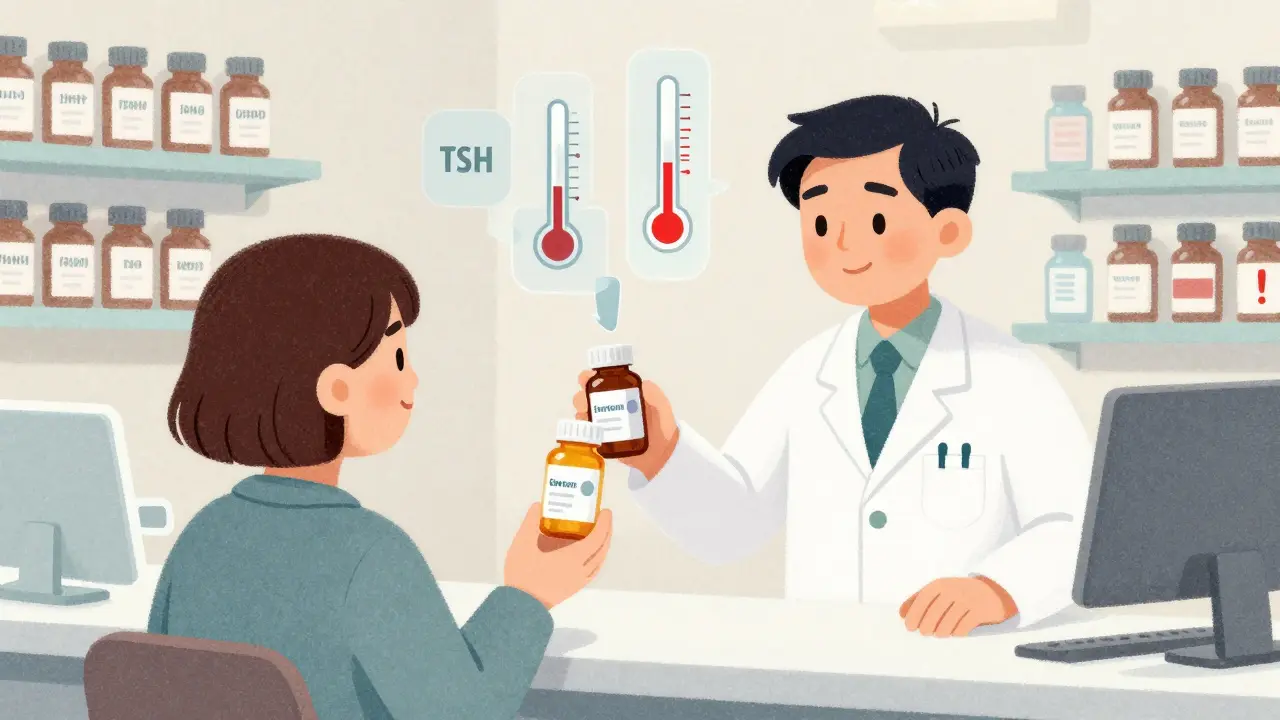
What Doctors Do About It
Good doctors don’t just prescribe and walk away. They monitor. For warfarin: INR is checked within 7 to 14 days after any switch. If it’s more than 10% off the target, the dose is adjusted. For levothyroxine: TSH is rechecked at 6 weeks. If it’s outside the target range, the dose is tweaked - usually by 12.5 or 25 mcg. Many endocrinologists now avoid switching patients entirely once they’re stable. For tacrolimus: Blood levels are drawn within 48 to 72 hours after a switch. A drop of even 15% in concentration can trigger organ rejection in transplant patients. Some hospitals now have formal policies: no automatic substitution for NTI drugs. If a pharmacy tries to switch a patient’s levothyroxine, the system flags it. The pharmacist calls the doctor. The patient gets the same brand or the same generic - no switching unless the doctor approves.What Patients Should Know
If you take a drug for thyroid disease, seizures, blood thinning, or after a transplant, pay attention. - Know your drug. If you’re on warfarin, levothyroxine, phenytoin, or tacrolimus, you’re on an NTI drug. Ask your doctor or pharmacist if yours is one. - Don’t assume all generics are the same. Even two different generic brands of levothyroxine can behave differently. Stick to one if you’re stable. - Track your symptoms. If you start feeling worse - more tired, more anxious, more seizures, unexplained bruising - after a switch, don’t wait. Call your doctor. It might not be your condition worsening. It might be your pill. - Ask for a copy of your prescription. If your pharmacy switches your drug without telling you, ask for the name of the generic you received. Write it down. Next time, ask for that same one. - Request therapeutic drug monitoring. If your doctor doesn’t check blood levels after a switch, ask. It’s not overkill. It’s standard care for NTI drugs.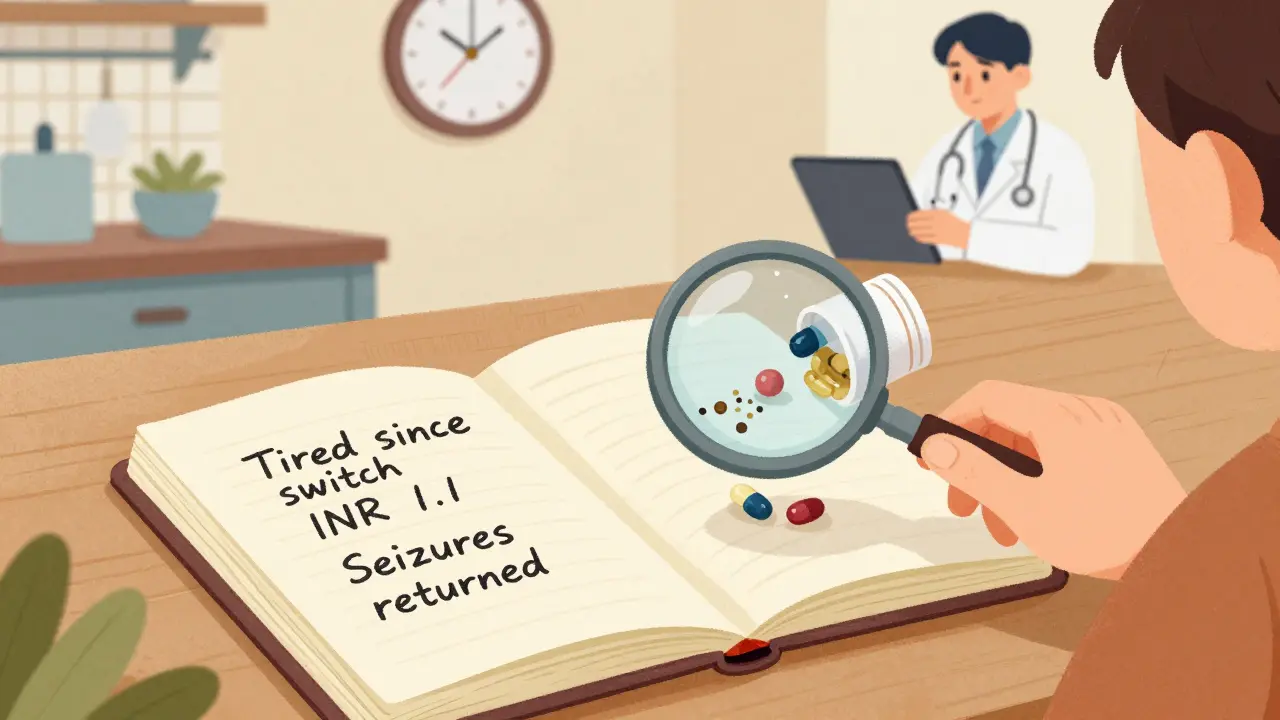
The Bigger Picture
The push for generics is good. It saves billions. But it shouldn’t come at the cost of patient safety. Right now, about 11% of all generic prescriptions are for NTI drugs. That’s $15 billion a year in savings - but also a lot of risk. Some manufacturers are responding by making "supergenerics" - versions of NTI drugs with tighter controls, more consistent release profiles. Teva’s TacroBell tacrolimus, for example, shows less variability than standard generics. The future might see NTI drugs labeled differently - not just "generic," but "NTI-verified" or "consistent release." Until then, the burden falls on doctors, pharmacists, and patients to stay alert.When to Worry - And When You Don’t
Not every generic switch needs a dose change. For antibiotics, blood pressure pills, or antidepressants, switching is usually safe. The body handles those drugs with room to spare. The real risk is in the narrow window drugs. If you’re on one of them, don’t panic. But don’t ignore the signs either. Stability matters. Consistency matters. And sometimes, the cheapest option isn’t the safest - not until you’ve checked your numbers.Do all generic medications require dose adjustments?
No. Only drugs with a narrow therapeutic index (NTI) - like warfarin, levothyroxine, phenytoin, tacrolimus, and digoxin - often need dose checks after switching. For most other medications, generics work just as well without changes.
How long after switching to a generic should I get my blood tested?
For warfarin, get an INR test within 7 to 14 days. For levothyroxine, check TSH at 6 weeks. For tacrolimus or cyclosporine, blood levels should be checked within 48 to 72 hours. Always follow your doctor’s specific instructions.
Can I ask my pharmacist to keep me on the same generic brand?
Yes. You have the right to request a specific generic brand or even the brand-name version if your insurance allows. Tell your pharmacist you’re on an NTI drug and want to avoid switches. Many pharmacies will honor this request, especially if your doctor writes "dispense as written" on the prescription.
Why do some people have no problems switching generics, while others do?
Everyone’s body absorbs drugs differently. Factors like gut health, metabolism, age, and even diet affect how a pill is processed. Two people on the same generic might have completely different blood levels. One might be fine. The other might need a dose change. That’s why monitoring is key - not guessing.
Is there a list of NTI drugs I can check?
Yes. The FDA’s Orange Book lists drugs with NTI designations. Common ones include levothyroxine, warfarin, phenytoin, carbamazepine, digoxin, cyclosporine, and tacrolimus. Your pharmacist can also tell you if your medication is on this list.
Will my insurance cover the brand-name drug if the generic causes problems?
Often, yes. If a generic causes instability or side effects, your doctor can file a prior authorization for the brand-name version. Many insurers approve this for NTI drugs after documented issues. Keep records of your lab results and symptoms to support your case.
Gaurav Meena
January 30, 2026 AT 17:38Man, I never realized how wild this stuff is until my aunt had a stroke after switching her warfarin generic. She was fine for years, then boom - INR dropped to 1.1. No warning, no notice from the pharmacy. Now she’s stuck on the brand-name even though it costs triple. If you’re on one of these NTI drugs, don’t sleep on it. Your life isn’t a cost-cutting experiment.
Jodi Olson
January 31, 2026 AT 06:16Pharmaceutical bioequivalence standards were designed for a world where drugs were simple and patients were homogeneous. We are neither. The 80-125% range is a relic of 1980s regulatory pragmatism, not modern pharmacokinetic science. For NTI drugs, this is not just negligence-it’s systemic epistemic violence against vulnerable populations who cannot advocate for themselves
Carolyn Whitehead
February 1, 2026 AT 12:50My mom’s been on levothyroxine for 15 years and never had an issue until they switched her generic last year. She got so tired she could barely get out of bed. We called the doc, got her back on the old brand, and boom-energy returned in a week. I’m just glad we caught it. Don’t ignore weird symptoms after a switch. It’s not ‘all in your head’.
Amy Insalaco
February 1, 2026 AT 15:40Let’s be clear: the FDA’s bioequivalence framework for NTI drugs is a catastrophic failure of risk assessment methodology. The 80–125% AUC and Cmax window is statistically indefensible when applied to drugs with therapeutic indices narrower than 2:1. The variance in excipient profiles across generic manufacturers introduces nonlinear pharmacokinetic artifacts that are neither modeled nor monitored. Until we implement population pharmacokinetic modeling and mandatory therapeutic drug monitoring for all NTI generics, we are engaging in pharmacological roulette with human lives.
Katie and Nathan Milburn
February 3, 2026 AT 11:59Interesting read. I work in hospital pharmacy and we’ve had two transplant patients reject organs after a generic tacrolimus switch. We now have a policy: no substitutions without physician approval for NTI drugs. It’s not about cost. It’s about not killing people because someone at the pharmacy decided to save $0.20 per pill.
Beth Beltway
February 3, 2026 AT 15:51People who don’t monitor their labs after a generic switch are literally gambling with their lives. If you’re on warfarin and your INR drops and you don’t call your doctor, you’re not ‘trusting the system’-you’re ignoring basic medical responsibility. This isn’t a debate. It’s a warning. Stop being lazy. Get tested.
Marc Bains
February 4, 2026 AT 03:09I’m from India and we’ve got a huge generic market here. But here’s the thing-our doctors know this stuff. If you’re on levothyroxine or phenytoin, they won’t let you switch without checking levels. We don’t treat meds like toilet paper. If you’re on one of these drugs, ask for your brand. If they say no, find a new doctor. Your health isn’t negotiable.
Sheila Garfield
February 5, 2026 AT 05:00My sister’s on digoxin and they switched her generic last month. She felt dizzy and her heart started skipping. She didn’t say anything for weeks because she didn’t want to ‘bother’ anyone. Then she ended up in ER. Now she’s back on the original brand. Don’t be quiet about this stuff. Your voice matters.
Shawn Peck
February 6, 2026 AT 22:15Generic drugs are just as good. People are just too lazy to take their meds right. Stop blaming the pill and start taking responsibility.
Sarah Blevins
February 8, 2026 AT 00:37According to the FDA’s 2023 Bioequivalence Review Report, the variance in NTI drug absorption between generic manufacturers exceeds 18% in 37% of cases, which is statistically significant (p<0.01) and clinically relevant for drugs with therapeutic indices below 1.5. This data is publicly available in the Orange Book under Section 5.2.1.