

Orange Book TE Code Checker
Check Therapeutic Equivalence Codes
Enter a TE code (like AB or BC) to see what it means and whether generic substitution is allowed.
What Is the Orange Book?
The Orange Book isn’t a real book you can hold-it’s the FDA’s official list of approved drug products with therapeutic equivalence evaluations. Officially titled Approved Drug Products with Therapeutic Equivalence Evaluations, it’s been around since 1980 and is updated every month. Its job is simple: tell pharmacists and doctors which generic drugs can safely replace brand-name drugs without changing how well they work or how safe they are.
It was created because of the Hatch-Waxman Act of 1984, a law meant to balance two goals: letting drug companies make money from new inventions, and letting cheaper generics hit the market fast. Without the Orange Book, pharmacists wouldn’t know if a generic version of your blood pressure pill was truly interchangeable with the brand. Today, it covers over 15,000 drug products and is used daily in pharmacies across the U.S.
What Does "Therapeutic Equivalence" Really Mean?
Therapeutic equivalence doesn’t mean two drugs look the same or cost the same. It means they do the same thing in your body. The FDA says a generic drug is therapeutically equivalent to its brand-name version only if it passes three strict tests:
- Pharmaceutical equivalence: Same active ingredient, same dose, same form (pill, injection, etc.), same strength, and meets the same quality standards.
- Bioequivalence: Your body absorbs and uses the generic drug at the same rate and amount as the brand-name drug. If you take both, your blood levels of the drug should be nearly identical.
- FDA approval: The drug is made in a facility that follows strict manufacturing rules (Current Good Manufacturing Practices) and is labeled correctly.
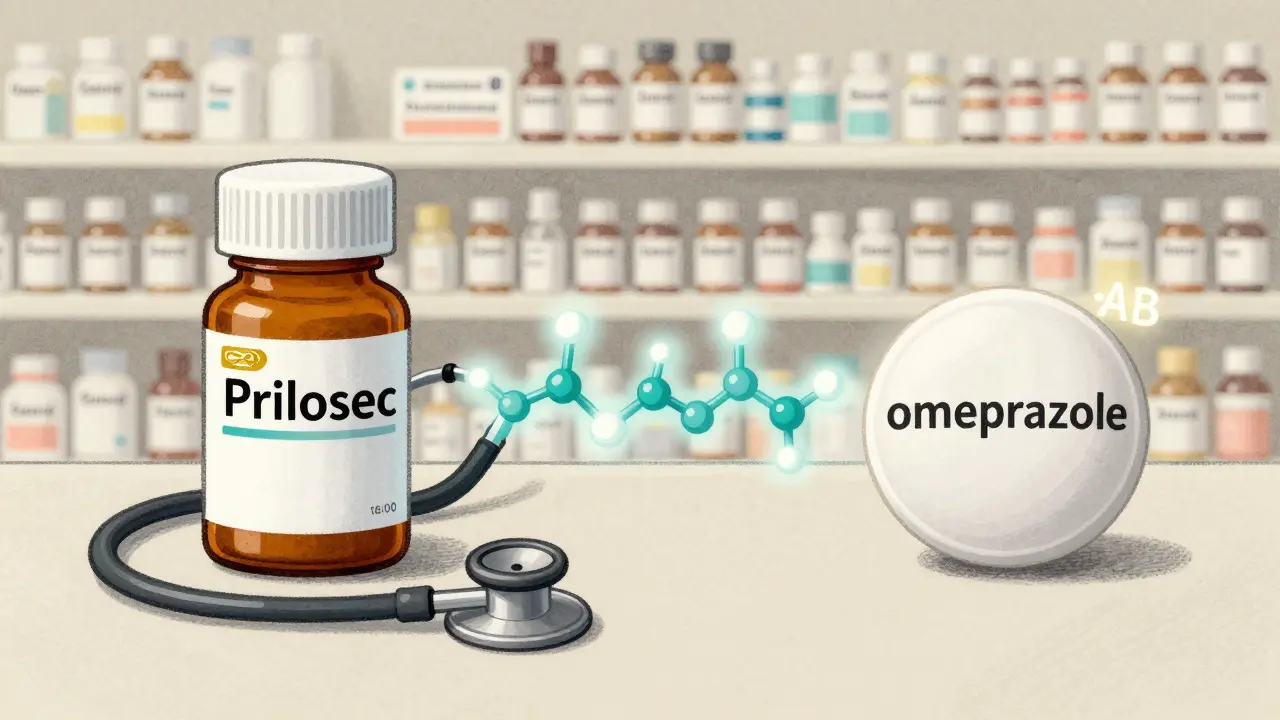
For example, if you’re prescribed 20 mg of omeprazole (Prilosec), the FDA says a generic version with the same dose and formulation is just as safe and effective-so long as it’s marked with an "A" code in the Orange Book.
Understanding TE Codes: The Secret Language of Generic Substitution
The Orange Book uses a simple but powerful coding system called Therapeutic Equivalence (TE) codes. These two-letter codes tell you whether a drug can be substituted without risk.
- A codes mean the drug is therapeutically equivalent. "AB" is the gold standard-it means the generic has been proven bioequivalent with no known issues. "AN" means it’s an inhaler or nasal spray with proven equivalence, even though the device isn’t identical. "AO" is for oral solutions that meet the same standards.
- B codes mean the drug is NOT considered equivalent. "BX" means there’s not enough evidence to prove bioequivalence. "BC" and "BD" mean there are potential bioequivalence problems, often with complex drugs like topical creams or injectables.
These codes aren’t just for pharmacists. Insurance companies, pharmacy benefit managers, and state laws use them to decide what gets covered and what can be swapped at the counter. If a drug has a "B" code, your pharmacist can’t substitute it unless your doctor specifically says "dispense as written."
How the Orange Book Shapes Your Prescription
When your doctor writes a prescription, they might not realize the Orange Book is already working behind the scenes. In 90% of U.S. prescriptions, a generic is filled instead of the brand name. That’s because the Orange Book gives pharmacists the legal and scientific green light to swap drugs-saving patients and the system billions.
From 2010 to 2019, generic drugs saved the U.S. healthcare system $1.67 trillion. That’s because generics cost, on average, 80-85% less than brand-name drugs. But that savings only happens if substitution is done correctly. A 2022 study found that Walgreens had over $1.2 million in rejected insurance claims in just one quarter because pharmacists misread TE codes. Some thought a "BC" drug was interchangeable when it wasn’t.
On the flip side, CVS Health built an automated system in 2021 that checks TE codes in real time. That one system cut substitution errors by 63% and saved $47 million a year. That’s the power of getting it right.
Where the Orange Book Falls Short
For simple pills-like metformin or lisinopril-the Orange Book works perfectly. But for complex drugs, things get messy. Inhalers, topical creams, injectables, and drug-device combos (like auto-injectors) are harder to test for bioequivalence. The device part-the inhaler or pen-can affect how the drug gets into your body.
The FDA admits this. In 2022, they released new guidance saying that for these complex products, the device doesn’t have to be identical, but the clinical effect must be the same. Still, many pharmacists struggle to interpret the codes. A 2023 survey found 67% of pharmacists found TE codes "moderately to extremely difficult" to use without training.
And it’s not just pharmacists. Patients often don’t know why their generic looks different or why a switch was made. Some worry-rightly-that a tiny difference in absorption could matter for drugs with a narrow therapeutic index, like warfarin or levothyroxine. The Orange Book includes these drugs, but the margin for error is razor-thin.
How Pharmacists Use the Orange Book Daily
Every time a prescription comes in, a pharmacist checks the Orange Book-not always manually, but through their pharmacy software. Most systems pull TE codes automatically from the FDA’s online database, which updates monthly. But the system isn’t foolproof.
On average, pharmacists spend 12.7 minutes per complex prescription verifying equivalence. That’s time that could be spent counseling patients. To help, the National Community Pharmacists Association offers a 4-hour certification course on Orange Book interpretation. Over 8,000 pharmacists took it in 2022.
Still, only 41% of community pharmacists say they feel "very confident" reading TE codes without a reference guide. That’s why mistakes happen. A 2023 Reddit thread from pharmacy techs showed that 78% of respondents had seen a prescription where the pharmacist was unsure whether substitution was allowed.
What’s Changing in 2024 and Beyond
The FDA is modernizing the Orange Book. The old PDF version is being replaced by a fully searchable online database, launching in Q2 2024. You’ll be able to search by drug name, manufacturer, application number, strength, and TE code-all in one place. No more flipping through pages or hunting for updates.
The agency is also working on better standards for biosimilars-complex biologic drugs that mimic things like insulin or rheumatoid arthritis treatments. While the Orange Book currently focuses on small-molecule generics, biosimilars are expected to make up 12.5% of the biologics market by 2028. The FDA is already laying the groundwork to include them in future versions.
Meanwhile, state boards of pharmacy still require TE code verification for any generic substitution. Every state. That means the Orange Book isn’t going away. It’s evolving.
What You Need to Know as a Patient
If you’re on a generic drug, you’re likely saving money-and the system is working as intended. But if you’ve ever noticed your pill changed color, shape, or size, that’s normal. It doesn’t mean it’s less effective.
However, if you’re taking a drug with a narrow therapeutic index-like warfarin, lithium, or thyroid meds-and you notice new side effects after a switch, talk to your doctor. Don’t assume it’s "just the generic."
Always check the label. If your prescription says "dispense as written," your doctor is telling the pharmacist not to substitute. That’s your right.
The Orange Book isn’t perfect. But it’s the most trusted tool we have to make sure generics are safe, effective, and affordable. And right now, it’s saving billions of dollars every year-while keeping millions of people healthy.
What does "AB" mean in the Orange Book?
"AB" means the generic drug is therapeutically equivalent to the brand-name drug. It has the same active ingredient, dosage form, strength, and has been proven bioequivalent with no known issues. Pharmacists can safely substitute an "AB" coded generic without needing the doctor’s permission.
Can I ask my pharmacist to use the brand name instead of a generic?
Yes. You can always ask for the brand-name drug, even if a generic is available. But you may have to pay more out of pocket. Your doctor can also write "dispense as written" on the prescription to prevent substitution. Insurance companies may not cover the brand if a generic exists, unless you have a medical reason.
Why do some generics have "B" codes?
A "B" code means the FDA hasn’t found enough evidence to say the generic is therapeutically equivalent. This often happens with complex drugs like inhalers, topical creams, or injectables where the delivery device affects how the drug works. In these cases, substitution isn’t automatically allowed unless the prescriber approves it.
How often is the Orange Book updated?
The Orange Book is updated every month by the FDA. New generic approvals, withdrawn products, and updated TE codes are added monthly. Pharmacies rely on digital systems that sync with the FDA’s database to stay current.
Are all generic drugs listed in the Orange Book?
No. Only generics approved by the FDA through the Abbreviated New Drug Application (ANDA) process are listed. Some older drugs approved before 1938 or those still under DESI review (like Phenobarbital) aren’t included. Also, drugs approved only for safety-not effectiveness-are excluded.
Donna Macaranas
February 1, 2026 AT 03:41Rachel Liew
February 1, 2026 AT 22:19Lisa Rodriguez
February 2, 2026 AT 09:37Ed Di Cristofaro
February 2, 2026 AT 10:24franklin hillary
February 2, 2026 AT 19:45Aditya Gupta
February 3, 2026 AT 17:03Chris & Kara Cutler
February 5, 2026 AT 09:10Angel Fitzpatrick
February 5, 2026 AT 18:10Naomi Walsh
February 6, 2026 AT 21:11Ishmael brown
February 8, 2026 AT 07:23Deep Rank
February 9, 2026 AT 21:56Nidhi Rajpara
February 10, 2026 AT 12:57Jamie Allan Brown
February 12, 2026 AT 02:44Melissa Melville
February 12, 2026 AT 10:15