
NSAID Triggers Asthma: What You Need to Know About Painkillers and Breathing Issues
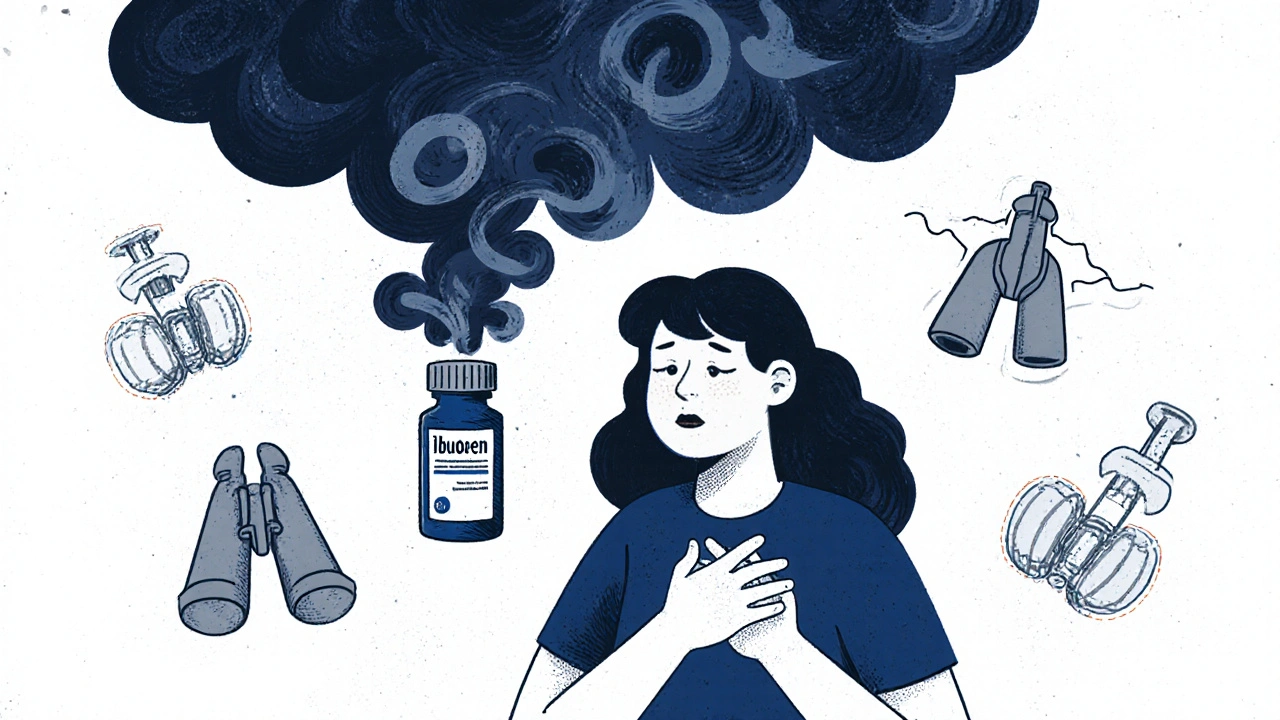
When you take a common painkiller like ibuprofen or naproxen, you might not think about your lungs—but for some people, those pills can cause serious breathing trouble. This is known as NSAID triggers asthma, a condition where nonsteroidal anti-inflammatory drugs cause airway narrowing, wheezing, or full asthma attacks in susceptible individuals. Also known as aspirin-exacerbated respiratory disease, it’s not just an allergy—it’s a biological reaction that affects up to 10% of adults with asthma. If you’ve ever had trouble breathing after taking Advil, Aleve, or even aspirin, you’re not alone. This reaction doesn’t happen right away—it can take hours—and it’s often mistaken for a cold or bad allergy.
Why does this happen? NSAIDs block enzymes called COX-1 and COX-2, which help control inflammation. But in some people, blocking COX-1 causes a buildup of leukotrienes—chemicals that tighten airways and increase mucus. That’s why people with chronic asthma, nasal polyps, or sinus issues are at higher risk. It’s not about being allergic to the drug itself. It’s about how your body reacts to the chemical change it causes. That’s why switching from ibuprofen to acetaminophen (Tylenol) often helps—acetaminophen doesn’t affect those same enzymes the same way.
Not all NSAIDs are equal here. Aspirin is the most common culprit, but ibuprofen and naproxen can trigger reactions too. Celecoxib (Celebrex) is usually safer because it targets COX-2 more selectively, but it’s not risk-free. If you’ve ever had a bad reaction, your doctor should test you properly. Many people avoid all NSAIDs for years without knowing they could safely use certain ones under supervision. And if you need pain relief but can’t take NSAIDs, there are other options—physical therapy, topical creams, or even certain supplements like turmeric (with medical approval).
This isn’t just about avoiding pills. It’s about understanding your body’s signals. If you get wheezing, chest tightness, or a runny nose within hours of taking a painkiller, write it down. Show it to your doctor. Many patients with this condition go undiagnosed because they don’t connect their breathing problems to a medication they took days ago. The good news? Once you know what triggers you, you can manage it. You don’t have to live in fear of every pain reliever on the shelf. You just need the right info.
Below, you’ll find real, practical guides that dig into exactly this—how NSAIDs interact with asthma, what alternatives work, how to talk to your pharmacist about safe options, and what to watch for if you’ve been told to avoid certain drugs. These aren’t theoretical articles. They’re written by people who’ve been through it, and they give you the clear, no-fluff facts you need to stay safe and in control.
- 14 Comments
If you have asthma and take common painkillers like ibuprofen or aspirin, you could be at risk for a dangerous reaction. Learn what NSAID sensitivity is, who's most at risk, and how to stay safe.