

Most people with prediabetes don’t know they have it. That’s not because they’re ignoring their health-it’s because there often aren’t any obvious symptoms. But that doesn’t mean nothing’s happening. Your body is sending quiet signals: fatigue that won’t go away, constant thirst, slow-healing cuts, dark patches on your skin. These aren’t just annoyances. They’re early alarms from your metabolism saying, prediabetes is here-and it’s reversible.
What Prediabetes Really Means
Prediabetes isn’t a disease. It’s a warning sign. Your blood sugar is higher than it should be, but not high enough yet to be called type 2 diabetes. The American Diabetes Association defines it with three clear numbers: fasting blood sugar between 100 and 125 mg/dL, an A1C level between 5.7% and 6.3%, or a 2-hour glucose test result of 140 to 199 mg/dL after drinking a sugary solution. These aren’t arbitrary numbers. They’re thresholds where your body starts struggling to use insulin properly.Insulin is the key that lets sugar enter your cells for energy. When you have prediabetes, that key doesn’t work as well. Your pancreas tries to make more insulin to compensate, but over time, it gets worn out. That’s when blood sugar climbs-and eventually, type 2 diabetes follows. Without changes, 15 to 30% of people with prediabetes develop diabetes within five years. But here’s the good news: the same study that found those numbers also showed that losing just 5 to 7% of your body weight and getting 150 minutes of walking a week cuts your risk by 58%.
The Silent Signs You Can’t Ignore
You won’t always feel sick. But if you’re paying attention, your body gives you clues. Here’s what to look for:- Constant thirst and frequent urination: When your blood sugar rises above 180 mg/dL, your kidneys can’t reabsorb all the sugar. It spills into your urine, pulling water with it. You end up drinking liters a day just to stay hydrated, and you’re in the bathroom every hour.
- Unexplained fatigue: Even if you sleep enough, you feel drained. That’s because your cells aren’t getting the sugar they need to make energy. You might hit a wall after lunch or struggle to get through the afternoon.
- Blurred vision: High sugar levels cause the lens of your eye to swell. This changes how light focuses, making things fuzzy. It’s temporary, but it keeps coming back if your sugar stays high.
- Dark, velvety skin patches: Called acanthosis nigricans, these usually show up on your neck, underarms, or groin. They’re not a rash or dirt-they’re a sign your body is making too much insulin, which triggers skin cell growth.
- Increased hunger: You eat, but you’re still hungry. Your cells are starving for fuel even though there’s plenty of sugar in your blood. Your brain keeps telling you to eat more.
- Slow-healing cuts or infections: High sugar slows blood flow and weakens your immune system. A small cut that should heal in a week takes two weeks or more. Women may notice three or more yeast infections a year.
- Tingling or numbness in hands or feet: This is early nerve damage from prolonged high sugar. It starts as a pins-and-needles feeling and can get worse if ignored.
- Unexplained weight loss: Even if you’re eating normally, you’re losing weight. Your body starts breaking down muscle and fat because it can’t use sugar properly.
These signs don’t always show up together. Some people notice one. Others notice none. That’s why testing matters more than waiting for symptoms.
Who Should Get Tested-and How Often
The CDC says 96 million U.S. adults have prediabetes. More than 80% don’t know it. Screening isn’t just for older people or those who are overweight. The U.S. Preventive Services Task Force recommends testing for all adults over 35, especially if you have:- A BMI of 25 or higher (or 23 or higher if you’re Asian American)
- A family history of type 2 diabetes
- High blood pressure or cholesterol
- A history of gestational diabetes
- Polycystic ovary syndrome (PCOS)
- Physical inactivity
If you’ve been diagnosed with prediabetes before, get tested every year. If you’re at risk but haven’t been diagnosed, get tested every three years. The test is simple: a fasting blood draw or a finger-prick A1C test. No fasting is needed for A1C, and it shows your average blood sugar over the past three months.
How to Reverse It-Without Medication
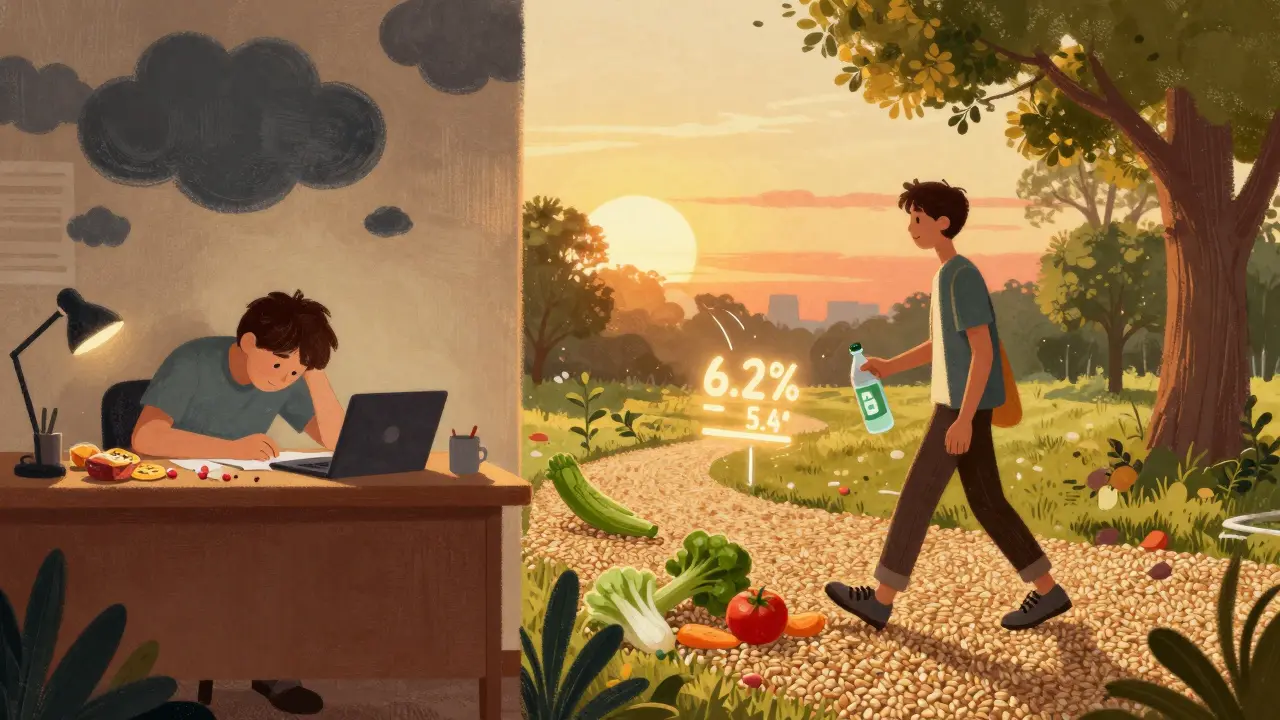
You don’t need pills to fix prediabetes. You need changes. And the best part? You don’t have to be perfect. Small, consistent steps work better than extreme diets or marathon workouts.1. Lose 5 to 7% of your body weight. If you weigh 200 pounds, that’s 10 to 14 pounds. You don’t need to lose 50. Just 10. Studies show that even modest weight loss cuts diabetes risk by half. Focus on reducing processed carbs and added sugars-not cutting calories to the bone.
2. Move every day. Aim for 150 minutes a week. That’s 30 minutes, five days a week. Doesn’t have to be gym workouts. Brisk walking, dancing, gardening, or taking the stairs count. A 2023 study found that people who walked 7,000 steps a day lowered their A1C by 0.5% in just 12 weeks.
3. Eat for stable blood sugar. Swap white bread, pasta, and sugary cereals for whole grains, beans, vegetables, and lean proteins. Add healthy fats like olive oil, nuts, and avocado. These slow down sugar absorption. The Mediterranean diet-rich in vegetables, fish, olive oil, and legumes-has been shown to reverse prediabetes in nearly 28% of people within a year.
4. Sleep and stress matter. Poor sleep and chronic stress raise cortisol, which pushes blood sugar up. Aim for 7 to 8 hours of sleep. Try breathing exercises, walking in nature, or journaling to lower stress. One study found that people who practiced mindfulness for 10 minutes a day lowered their A1C by 0.4% in six months.
5. Use tech to stay on track. Apps like Omada Health and Virta Health-both CDC-recognized programs-help people stick to changes. They offer coaching, meal plans, and wearable trackers. People using these programs have an 85% completion rate, compared to 60% dropouts in traditional programs.
What Doesn’t Work
Not all advice is helpful. Avoid these traps:- Extreme low-carb diets: Cutting out all carbs can backfire. Your brain needs glucose. Instead, choose complex carbs with fiber.
- Quick-fix supplements: No pill, powder, or tea reverses prediabetes. The FDA hasn’t approved any supplement for this.
- Waiting for symptoms: By the time you feel tired or thirsty, your blood sugar has been high for months.
- Blaming yourself: Prediabetes isn’t a failure. It’s a result of modern diets, inactivity, and genetics. What matters now is what you do next.
Why This Matters Beyond You
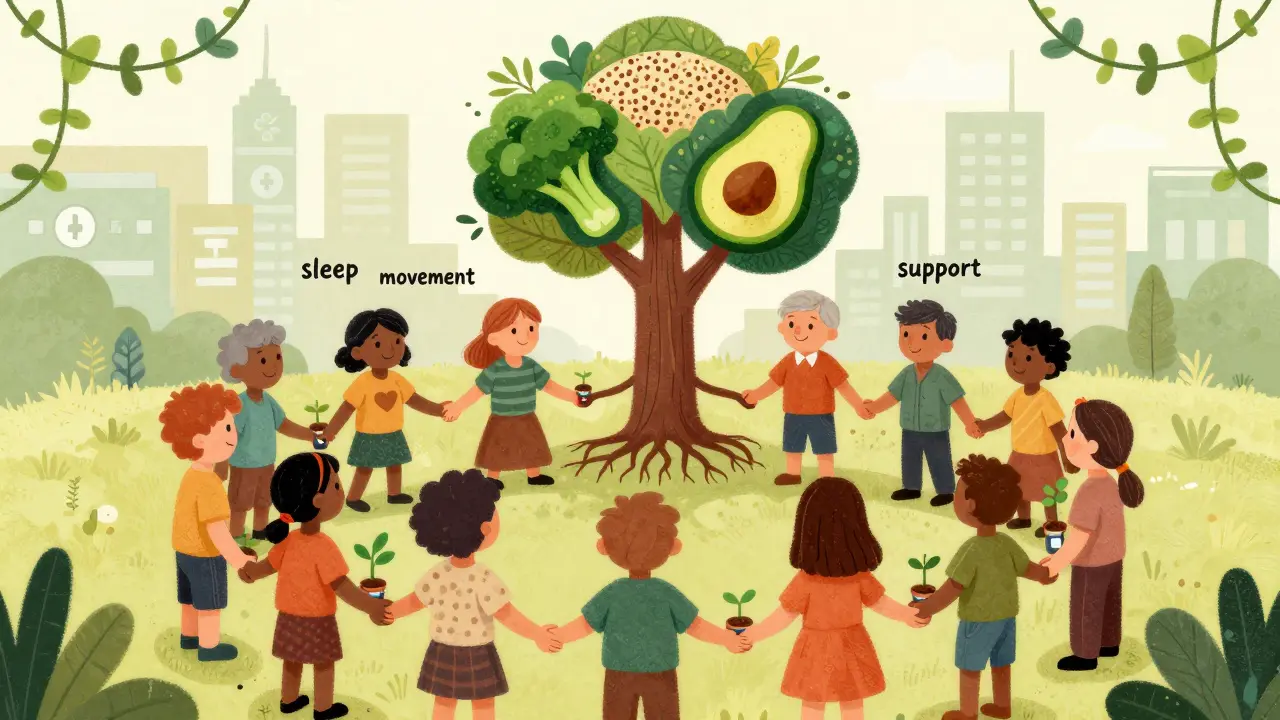
Prediabetes isn’t just a personal health issue. It’s a public health crisis. In 2023, prediabetes cost the U.S. $44 billion in medical bills and lost productivity. If current trends continue, one in three Americans will have diabetes by 2050. But here’s the flip side: if just half of people with prediabetes made lifestyle changes, we could prevent over 10 million cases of diabetes by 2030.That’s not just a statistic. That’s your neighbor, your coworker, your parent. Reversing prediabetes isn’t just about avoiding pills. It’s about living with more energy, clearer vision, better sleep, and less fear. It’s about breaking a cycle that’s been passed down through families for generations.
What to Do Next
If you’ve never been tested: ask your doctor for an A1C test. It’s quick, cheap, and often covered by insurance.If you’ve been told you have prediabetes: don’t panic. Don’t wait. Start with one change this week. Walk 20 minutes after dinner. Swap soda for sparkling water. Take the stairs. These small steps add up faster than you think.
If you’ve tried before and failed: try again. This time, get support. Join a CDC-recognized program. Find a friend to walk with. Use a free app to track your meals. Progress isn’t linear. But every day you choose better food and movement, you’re rewiring your body.
Prediabetes is not a life sentence. It’s a second chance. And that chance is yours right now.
Can prediabetes be reversed completely?
Yes, in many cases. Studies show that 50 to 60% of people with prediabetes can return to normal blood sugar levels through weight loss, physical activity, and better eating habits. The Diabetes Prevention Program found that people who lost 5 to 7% of their body weight and exercised 150 minutes a week reduced their risk of diabetes by 58%. Some people even reverse it to the point where they no longer meet the diagnostic criteria for prediabetes.
Do I need medication for prediabetes?
Not usually. Lifestyle changes are the first and most effective treatment. Metformin is sometimes prescribed for high-risk individuals, especially those under 60 with a BMI over 35 or a history of gestational diabetes. But even then, combining it with diet and exercise works better than either alone. Most doctors prefer to start with behavior changes because they’re safer, cheaper, and help with other health issues like blood pressure and cholesterol.
Can I test for prediabetes at home?
Home A1C test kits are available over the counter, but they’re not as accurate as lab tests. They can give you a rough idea, but they shouldn’t replace a doctor’s diagnosis. Fasting blood sugar tests require a lab draw. If you’re concerned, talk to your doctor. They can order the right test and interpret the results in context with your health history.
How long does it take to reverse prediabetes?
Some people see improvements in blood sugar within 3 to 6 months of making changes. Weight loss and better eating can lower A1C by 0.5% to 1% in just a few months. But full reversal-returning to normal glucose levels-can take 6 to 12 months, depending on how much weight you need to lose and how active you become. The key is consistency, not speed.
If I reverse prediabetes, can it come back?
Yes, if you go back to old habits. Prediabetes reversal isn’t permanent unless you keep up the changes. Studies show that people who regain weight or stop exercising are at high risk of returning to prediabetes or developing diabetes. Think of it like maintaining a car: you can’t fix the engine and then never change the oil. Keep moving, eating well, and getting regular checkups-even if you feel fine.
Ryan Pagan
January 28, 2026 AT 22:08Man, I didn’t realize my constant thirst and midnight bathroom runs were red flags. I thought I was just drinking too much coffee. Turned out my A1C was 6.1. Made the switch to water, started walking after dinner, and lost 12 pounds in three months. My doctor was shocked. Prediabetes isn’t a death sentence-it’s a wake-up call with a free pass to get your life back.
Paul Adler
January 30, 2026 AT 08:41While the article presents a compelling case for lifestyle intervention, it is worth noting that socioeconomic barriers significantly impact adherence. Access to fresh produce, safe spaces for physical activity, and healthcare literacy vary widely across demographics. A one-size-fits-all approach may unintentionally stigmatize those who are structurally disadvantaged.
Kacey Yates
January 31, 2026 AT 01:13ryan Sifontes
January 31, 2026 AT 11:12Laura Arnal
January 31, 2026 AT 21:08OMG I just started swapping soda for sparkling water and I already feel less foggy!! 😊 I didn’t even know my afternoon crashes were blood sugar related. I’m taking the stairs now and my shoes are actually getting worn out lol. You got this!! 💪
Jasneet Minhas
February 2, 2026 AT 01:14How quaint. In India, we’ve known for centuries that white rice and sugar are the root of all metabolic evil. Yet here you are, rediscovering what our grandmothers warned about-while sipping oat milk lattes and tracking steps on Apple Watch. The irony is delicious.
Eli In
February 3, 2026 AT 19:51I’m from the Philippines and we call prediabetes ‘sugar hangover’-it’s not a diagnosis, it’s a lifestyle signal. My lola used to say, ‘If your feet feel numb and your eyes blur, stop eating white rice with every meal.’ She was right. We eat more vegetables now. Our whole family’s energy improved. It’s not about fear. It’s about returning to what worked.
Megan Brooks
February 5, 2026 AT 19:29The emphasis on individual responsibility, while well-intentioned, overlooks the role of systemic factors: food deserts, wage stagnation, and the aggressive marketing of ultra-processed foods. Reversing prediabetes requires not just willpower, but policy change. Personal action matters-but it shouldn’t be the only solution offered.
Frank Declemij
February 7, 2026 AT 03:49Pawan Kumar
February 9, 2026 AT 03:47Let’s be honest: the real cause of prediabetes is glyphosate in our food supply and the government’s collusion with Big Pharma. The A1C test? A scam to sell metformin. Natural sunlight and Himalayan salt will fix this. Why are you trusting institutions that lied about cigarettes?
DHARMAN CHELLANI
February 9, 2026 AT 17:32kabir das
February 11, 2026 AT 15:35But what if… your insulin resistance is caused by EMFs from your phone? Or the fluoride in your water? Or the fact that your mom had gestational diabetes and now you’re cursed? I’ve tried everything… and I still wake up exhausted… and I don’t even eat sugar… why is this happening to me…?
Keith Oliver
February 12, 2026 AT 16:18Look, I’ve read the NIH studies. The 58% reduction? That’s only if you’re under 60, white, and have health insurance. Most people can’t afford to ‘eat better’ when their paycheck barely covers rent. This article is for the privileged. The rest of us are just trying to survive. Thanks for the guilt trip, though.
rajaneesh s rajan
February 14, 2026 AT 03:19Interesting how we call it ‘reversing’ prediabetes like it’s a glitch in the Matrix. But what if it’s not a disease to be cured-but a signal that our entire culture is broken? We moved from ancestral diets to 24/7 food availability and 8-hour sedentary days. Maybe the problem isn’t us. Maybe it’s the world we built. I’m walking more. But I’m also questioning why I had to be ‘fixed’ in the first place.