

Why So Many Pills? The Hidden Danger in Older Adults’ Medicine Cabinets
Imagine taking 10 different pills every day. Some for blood pressure, others for arthritis, a few for sleep, maybe one for acid reflux, and another for cholesterol. Now add in over-the-counter painkillers, herbal supplements, and a rescue inhaler you only use when you’re short of breath. This isn’t rare-it’s normal for many older adults. In Australia, nearly 36% of people over 65 are on five or more medications at once. In nursing homes, it’s as high as 80%. This isn’t just a numbers game. It’s a ticking time bomb for health.
Polypharmacy-defined as taking five or more medications daily-isn’t always a mistake. Many older adults live with multiple chronic conditions like heart disease, diabetes, and arthritis. Each one comes with its own drug. But here’s the problem: more pills don’t always mean better health. In fact, each extra medication increases your risk of side effects, falls, confusion, hospital stays, and even death. Studies show that with five medications, there’s a 50% chance of a harmful drug interaction. With seven or more, that risk jumps to nearly 100%.
How Do These Dangerous Interactions Happen?
Your body changes as you age. Your kidneys and liver don’t clear drugs as quickly. Your brain becomes more sensitive to certain medications. That means a dose that was safe at 50 can become dangerous at 75. But it’s not just your body-it’s the mix.
Take a common example: an older adult on blood pressure medicine, a painkiller like ibuprofen, and a diuretic for swelling. The ibuprofen can make the blood pressure drug less effective, while the diuretic can cause dangerous drops in potassium. The result? Dizziness, fainting, or worse-a fall that leads to a broken hip. This isn’t theoretical. In the U.S., NSAIDs like ibuprofen are among the most commonly prescribed drugs in people with polypharmacy.
Another silent killer? Anticholinergics. These are found in many over-the-counter sleep aids, allergy pills, and even some bladder medications. They block a brain chemical called acetylcholine. In older adults, this can cause memory loss, confusion, dry mouth, constipation, and even increase the risk of dementia. Yet, many people keep taking them because they don’t realize the pill they bought at the pharmacy is part of the problem.
And then there’s the prescribing cascade. A patient takes a medication for high blood pressure. It causes dizziness. The doctor prescribes a balance pill. That pill causes dry mouth. Then they get a saliva substitute. Then they get constipated. Then they get a laxative. Now they’re on six drugs for one original issue. No one steps back to ask: Is any of this really helping?
Deprescribing: It’s Not About Stopping Medicines-It’s About Stopping the Wrong Ones
Deprescribing isn’t just cutting pills. It’s a careful, planned process of stopping medications that do more harm than good. It’s about asking: Is this still needed? Is the benefit still bigger than the risk?
Think of it like cleaning out a cluttered garage. You don’t throw everything away. You keep what’s useful, toss what’s broken, and donate what you don’t need. The same applies to medications.
Doctors use tools like the Beers Criteria and STOPP/START guidelines to spot risky drugs. The Beers list tells you which medications should be avoided in older adults-like benzodiazepines for sleep or certain antipsychotics for dementia. STOPP/START goes further: it helps identify drugs you should stop (STOPP) and ones you might be missing (START), like a bone-strengthening drug for someone with osteoporosis who’s been on long-term steroids.
But here’s the catch: deprescribing doesn’t happen often enough. Why? Because it’s hard. Doctors are pressed for time. Patients are afraid their condition will come back. Family members worry that stopping a pill means giving up. And many patients don’t even know why they’re taking certain drugs.
Who’s at the Highest Risk?
It’s not just age. It’s complexity. Older adults with multiple doctors are at the greatest risk. If you see a cardiologist, a rheumatologist, a neurologist, and a GP-all prescribing without talking to each other-you’re likely drowning in pills. A 2021 study found that patients on 10 or more medications were, on average, two years older than those on fewer drugs. That’s not a coincidence. The longer you live with chronic illness, the more medications pile up.
People with heart disease or diabetes are especially vulnerable. In the U.S., over 60% of older adults with heart disease are on five or more medications. That’s a lot of drugs for one condition. And it’s not just prescriptions. Many take supplements-vitamin D, fish oil, turmeric-without telling their doctor. These can interact with blood thinners, diabetes meds, or even chemotherapy.
And don’t forget the hidden players: over-the-counter drugs and herbal remedies. Melatonin for sleep? It can worsen confusion in dementia. St. John’s Wort? It can make antidepressants, blood thinners, and birth control pills ineffective. These aren’t harmless. They’re part of the problem.
What Does a Successful Deprescribing Plan Look Like?
It’s not a one-time event. It’s a conversation. Here’s how it works in practice:
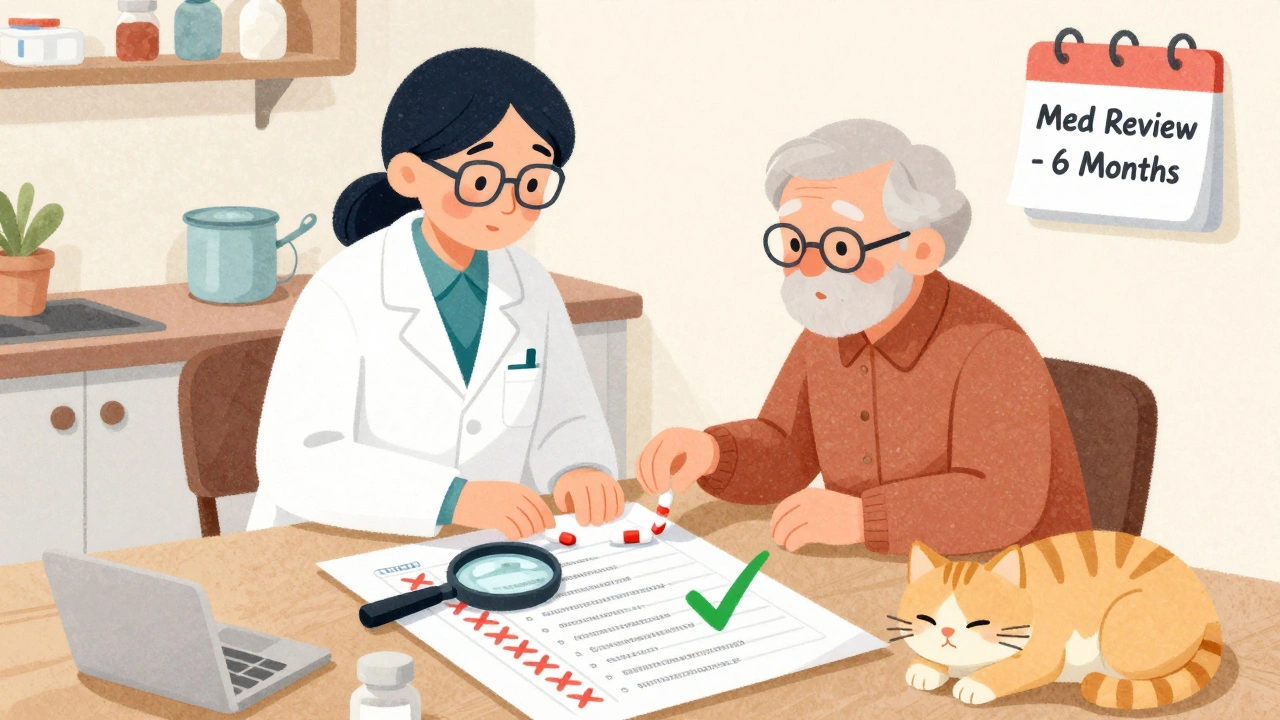
- Review everything. Bring every pill, capsule, patch, and supplement to your doctor or pharmacist. Include the ones you only take when you feel bad (like painkillers or sleep aids).
- Ask why. For each medication, ask: What is this for? How long have I been taking it? What happens if I stop? What are the side effects?
- Look for duplicates. Are you taking two drugs for the same thing? Maybe a blood pressure pill and a natural supplement that does the same thing?
- Start with the highest-risk drugs. Focus on sedatives, anticholinergics, NSAIDs, and drugs with known risks in older adults.
- Stop one at a time. Never cut multiple drugs at once. Give your body time to adjust. Monitor for changes in symptoms, energy, sleep, or balance.
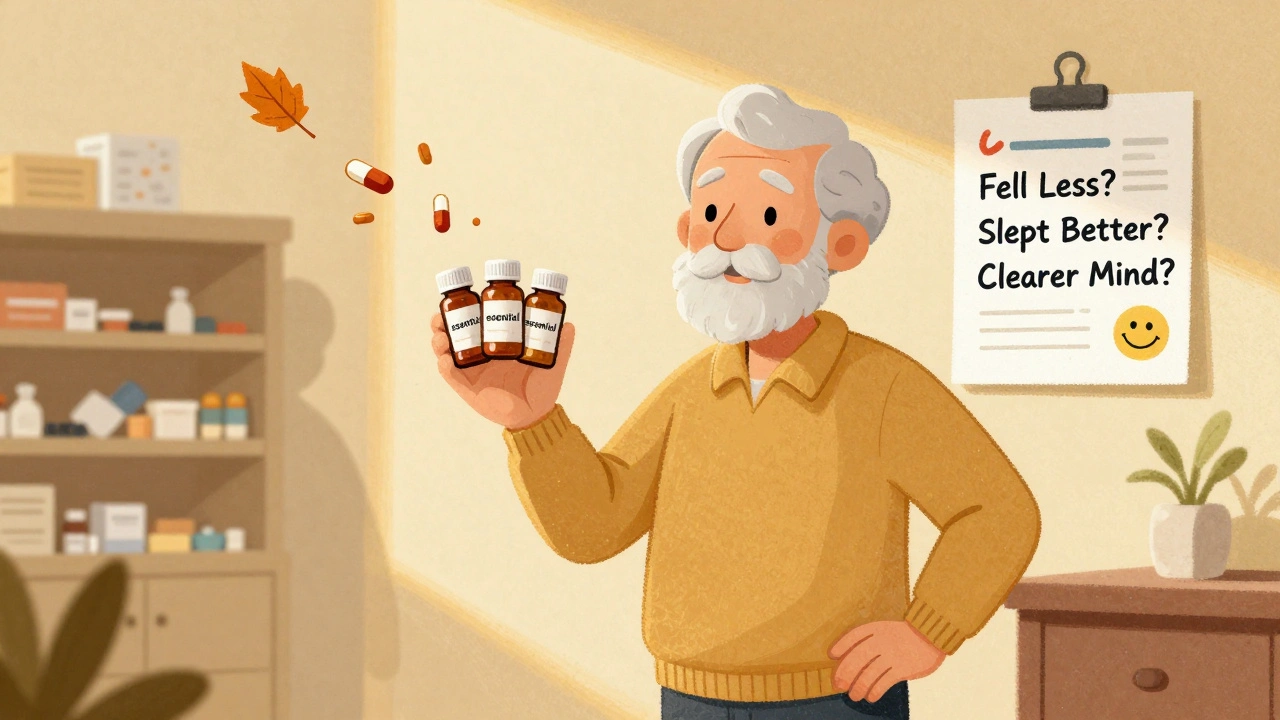
- Track the results. Keep a simple log: Did your dizziness improve? Did your appetite come back? Did you sleep better? Did you fall less?
Real success stories exist. In one Australian study, a pharmacist-led deprescribing program in aged care homes led to a 22% drop in falls and fewer emergency visits. In another, older adults who stopped long-term benzodiazepines reported better memory, more energy, and less grogginess-even though they were scared to quit.
Why Isn’t This Done More Often?
Because the system isn’t built for it.
Doctors get paid for prescribing, not for reviewing. A 15-minute appointment doesn’t leave room to sort through 12 medications. Electronic health records don’t always talk to each other. A cardiologist in one hospital doesn’t see what the neurologist in another clinic prescribed. Pharmacists are underused-many still just fill prescriptions instead of being part of the care team.
And then there’s the fear. Patients worry that stopping a pill will make their condition worse. But studies show that for many drugs-especially sleep aids, acid reflux meds, and some blood pressure drugs-the body adjusts just fine. Sometimes, the symptoms that led to the prescription fade once the drug is gone.
It’s also about culture. We’ve been taught that pills fix problems. But sometimes, the pill is the problem.
What Can You Do Today?
You don’t need to wait for a doctor’s appointment to start protecting yourself.
- Make a complete list. Write down every pill, supplement, and cream you use. Include doses and why you take them. Use your phone’s notes app if you need to.
- Bring it to your next visit. Don’t assume your doctor knows what you’re taking. Many don’t.
- Ask about deprescribing. Say: “I’m worried I’m on too many pills. Can we review which ones are still necessary?”
- Talk to your pharmacist. They’re medication experts. Ask them to check for interactions.
- Don’t take “as needed” meds daily. If you’re using painkillers or sleep aids every day, that’s not “as needed.” That’s daily use. Talk to your doctor.
Medication safety isn’t about taking fewer pills-it’s about taking the right ones. For older adults, the goal isn’t to live longer with 10 drugs. It’s to live better with fewer.
Is polypharmacy always dangerous?
Not always. Some older adults need multiple medications to manage serious conditions like heart failure or diabetes. The danger comes when medications are no longer helping, when they cause side effects, or when they interact in harmful ways. The key is regular review-not automatic continuation.
Can I stop my medications on my own?
No. Stopping certain drugs suddenly-like blood pressure meds, antidepressants, or steroids-can cause serious rebound effects, including heart problems, seizures, or extreme anxiety. Always work with your doctor or pharmacist to taper off safely.
What are the most common dangerous drug combinations in older adults?
Three high-risk combos: (1) NSAIDs (like ibuprofen) + blood pressure meds + diuretics-can cause kidney damage; (2) benzodiazepines (sleep aids) + opioids-increases fall and overdose risk; (3) anticholinergics (allergy or bladder meds) + antidepressants-can cause confusion and memory loss. Always check for these when reviewing your list.
How often should older adults review their medications?
At least once a year, or after any hospital stay, major illness, or change in health. If you’re on five or more medications, consider a review every six months. Many pharmacies now offer free medication reviews-ask for one.
Do herbal supplements count in polypharmacy?
Yes. Supplements like fish oil, ginkgo, St. John’s Wort, and turmeric can interact with prescription drugs. They’re not regulated like medicines, so their strength and effects vary. Always tell your doctor what you’re taking-even if you think it’s “natural” and harmless.
Will deprescribing make me feel worse at first?
Sometimes, briefly. Stopping a sleep aid might cause temporary insomnia. Stopping an acid reflux drug might bring back heartburn for a few days. But these are usually short-term and far less dangerous than long-term side effects. Your doctor can help manage these transitions.
Can technology help with polypharmacy?
Yes. Some electronic health records now flag risky drug combinations. Apps like Medisafe or MyTherapy help track doses and warn about interactions. Pharmacies in Australia are starting to use AI tools to spot patients on 10+ medications who need a review. But tech is only a tool-it still needs human judgment.
What’s Next?
The number of older adults on too many pills isn’t going down. It’s rising. By 2050, there will be 1.5 billion people over 65 worldwide. Without changes, polypharmacy will keep driving hospitalizations, falls, and preventable deaths.
The solution isn’t more drugs. It’s smarter prescribing. It’s pharmacists leading medication reviews. It’s doctors listening more than prescribing. It’s patients asking questions.
Every pill you take has a reason. But not every reason still holds. The goal isn’t to live longer with a medicine cabinet full of bottles. It’s to live better-with clarity, strength, and fewer risks. Start your review today. One pill at a time.
Geraldine Trainer-Cooper
December 7, 2025 AT 22:59Nava Jothy
December 9, 2025 AT 21:36olive ashley
December 10, 2025 AT 15:16Ibrahim Yakubu
December 11, 2025 AT 19:25Ashish Vazirani
December 12, 2025 AT 07:07Mansi Bansal
December 12, 2025 AT 14:11Billy Schimmel
December 14, 2025 AT 03:20Shayne Smith
December 14, 2025 AT 13:04Katie O'Connell
December 16, 2025 AT 01:35Inna Borovik
December 16, 2025 AT 07:26