

Every spring and summer, millions of people in Melbourne and beyond face the same problem: they want to go outside, but their eyes water, their nose runs, and their chest feels tight. It’s not just a cold. It’s pollen. And if you’re one of the 1 in 3 Australians affected by seasonal allergies, guessing when to go for a walk or play with your kids in the park is a daily gamble. But what if you could know-before you step out-the exact days when pollen is at its worst? That’s where pollen forecasting comes in.
What Pollen Forecasting Actually Tells You
Pollen forecasting isn’t magic. It’s science. Every day, meteorologists and allergists combine weather data, plant blooming cycles, and real-time air samples to predict how much pollen will be floating in the air. In Melbourne, the main culprits are grasses in spring, olive trees in summer, and weeds like ragweed in autumn. The forecast gives you a number: pollen grains per cubic meter of air.
Here’s what those numbers mean in plain terms:
- Low (0-50 grains/m³): Safe for most people. You can run, bike, or picnic without worry.
- Moderate (51-149 grains/m³): Sensitive individuals may feel symptoms. Limit prolonged outdoor time.
- High (150-499 grains/m³): Almost everyone with allergies will react. Avoid outdoor activities if possible.
- Very High (500+ grains/m³): Dangerous. Even short exposure can trigger asthma or severe sneezing fits.
These levels aren’t guesses. They’re measured using rotorod devices-glass rods coated in grease that spin in the air for 24 hours, catching pollen like a flytrap. Labs count each grain under a microscope. It’s old-school, but it’s accurate.
When Pollen Hits Its Peak (And How to Avoid It)
Not all days are the same. Pollen doesn’t just float around randomly-it follows a daily rhythm.
- Tree pollen (like olive and birch): Peaks between 5 AM and 10 AM. That’s when dew dries and the wind picks up.
- Grass pollen: Hits hardest between 10 AM and 4 PM. Midday is the worst time to mow the lawn or play soccer.
- Weed pollen (ragweed, plantain): Reaches its peak in the late afternoon, from 4 PM to 8 PM.
So if you’re trying to get outside for exercise or family time, timing matters more than you think. A 2021 study found that runners who trained between 7 AM and 9 AM during peak grass season had 45% fewer breathing problems than those who ran at noon. That’s not a small difference-it’s the difference between a good day and a day spent on the couch with antihistamines.
And rain? Rain is your friend. A light shower (even 0.1 inch) can knock pollen counts down by 30-50% within two hours. That’s why the best time to go out after a storm is late morning or early afternoon-the air is clean, the sun is out, and the pollen hasn’t had time to bounce back.
Which Forecast Tools Actually Work?
There are dozens of apps and websites that claim to tell you the pollen count. But not all of them are equal.
Here’s what’s actually reliable in Australia:
- BreezoMeter: Used by Apple Health and many Australian hospitals. It gives you hyperlocal forecasts (down to 1.5 km), tracks 12 pollen types, and updates every hour. It’s not free-but if you’re serious about avoiding symptoms, it’s worth the $0.0005 per check.
- Pollen.com: Free and simple. Good for general trends, but only accurate to 10 km. If you live in inner Melbourne and the forecast says ‘low’ but you’re near a park full of ryegrass, you’re still in trouble.
- CSIRO Pollen Watch: Australia’s official monitoring network. Less flashy, but the most accurate for local conditions. Check their website for real-time station data.
Don’t rely on just one. Use two. Cross-check. If BreezoMeter says ‘high’ but Pollen.com says ‘moderate,’ trust the higher number. Better safe than sorry.

What the Forecast Doesn’t Tell You (And Why That Matters)
Pollen forecasts are powerful-but they have blind spots.
Thunderstorm asthma is the biggest one. In Melbourne, 2016, a single storm turned a moderate pollen day into a public health crisis. Thousands ended up in emergency rooms. Why? Rain broke apart pollen grains into tiny, inhalable pieces that flooded the air. No forecast system saw it coming. Even today, models can’t predict these events reliably.
Another blind spot? Urban microclimates. A park in Carlton might have 200 pollen grains per cubic meter, while a street just 500 meters away has 600 because of wind patterns or nearby trees. Most apps don’t catch this. That’s why someone might check their app, think it’s safe, and still end up sneezing for hours.
And don’t assume your pollen type is the same as your neighbor’s. In Melbourne, olive pollen is a major trigger-but in Sydney, it’s ryegrass. In Adelaide, it’s plane trees. Know what you’re allergic to. Get tested if you haven’t. You can’t plan around pollen if you don’t know which kind is bothering you.
How to Use Forecasts Like a Pro
Here’s how people who live with allergies successfully avoid flare-ups:
- Check the forecast every morning-before you get dressed. Don’t wait until you’re already outside.
- Plan outdoor time for early morning or evening. Avoid midday, especially on windy days.
- Use rain as your ally. After a shower, wait two hours, then go out.
- Keep windows closed during high-pollen days. Use air conditioning on recirculate mode.
- Shower and change clothes after being outside. Pollen sticks to hair, skin, and fabric. Don’t bring it into bed.
- Track your symptoms. Use a simple journal or app. If you notice you react badly on days the forecast says ‘moderate,’ your personal threshold is lower than average. Adjust accordingly.
One parent in Fitzroy told me she started checking forecasts before letting her 6-year-old play outside. She switched soccer practice from Saturday afternoons (high grass pollen) to Sunday mornings (low). Within two weeks, her child stopped needing his inhaler every weekend.
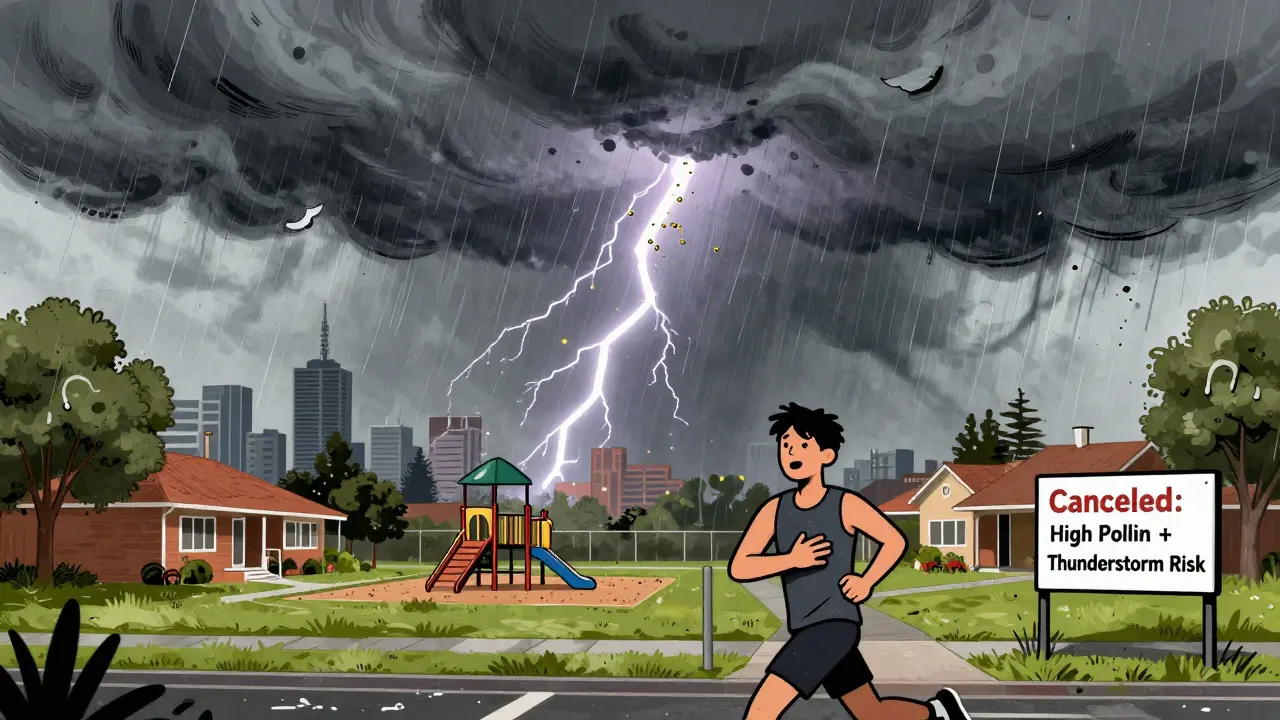
Why This Matters More Than Ever
Climate change isn’t just about heat. It’s about pollen. Since 1990, Australia’s pollen season has grown longer by nearly three weeks. Pollen concentrations have jumped 21%. That means more days with high counts, more kids with asthma, more missed school days, more ER visits.
And it’s not just individuals. Schools in Melbourne are starting to use pollen forecasts to decide whether to hold outdoor sports days. Some professional sports teams, including local AFL clubs, now check pollen levels before training. Why? Because performance drops when athletes are wheezing.
Pollen forecasting isn’t about avoiding life. It’s about reclaiming it. You don’t have to stay inside. You just need to know when to step out-and when to wait.
What’s Coming Next
By 2027, forecasts will be 90% accurate for five-day predictions. New satellites, like Europe’s PollenSat (launching in 2025), will track pollen types from space. Apple and Google are integrating pollen data with heart rate and breathing patterns to warn you before you even feel symptoms.
But the biggest breakthrough won’t be technological. It’ll be behavioral. More people are learning that allergies aren’t just a nuisance-they’re a health condition. And like blood pressure or diabetes, they need monitoring.
You don’t need to be a scientist to use this. You just need to be willing to check a forecast before you lace up your shoes.
How accurate are pollen forecasts in Melbourne?
In Melbourne, modern pollen forecasts are 80-85% accurate for 1-2 day predictions, especially for grass and olive pollen. Accuracy drops to 65-70% for 5-day forecasts. Local factors like wind direction and microclimates can cause small variations, so always cross-check with at least two sources.
Can I trust free pollen apps?
Free apps like Pollen.com give you a general idea, but they’re not precise enough for Melbourne’s varied urban landscape. They use 10km resolution, meaning your suburb might be very different from the nearest monitoring station. For reliable planning, use BreezoMeter or CSIRO’s data-they’re more localized and updated hourly.
Why do I still have symptoms when the forecast says ‘low’?
You might be reacting to a pollen type not covered by the forecast, or your personal sensitivity is higher than average. Also, activities like mowing the lawn or walking through tall grass can stir up pollen that isn’t in the air yet. Always pair forecasts with symptom tracking. If you feel it, believe it-even if the app says otherwise.
Is pollen worse in the city or suburbs?
It depends. City centers often have lower counts because there’s less vegetation. But wind can carry pollen from parks, rivers, or nearby suburbs into the CBD. Suburbs with lots of trees and grass-like Box Hill or Doncaster-can have much higher levels. Always check your specific area, not just the city-wide average.
Should I avoid going outside entirely during peak season?
No. You don’t need to become a hermit. Instead, time your outdoor time wisely. Early morning and after rain are your best bets. Keep windows closed, wear sunglasses, and shower when you come in. With smart planning, you can still enjoy the outdoors without a runny nose or itchy eyes.
Do air purifiers help with pollen indoors?
Yes, but only if they have a true HEPA filter. Regular ‘air fresheners’ or ionizers won’t help. A HEPA purifier in your bedroom can reduce indoor pollen by up to 90%. Use one during high-pollen days, especially if you sleep with windows open.
Christine Détraz
December 23, 2025 AT 15:35I used to hate spring until I started checking BreezoMeter every morning. Now I plan my walks like I plan my coffee breaks-right after rain, before 10 a.m. No more sneezing fits on the porch. Game changer.
Also, showering after being outside? Life hack. I didn’t believe it until I tried it. My allergies dropped 70%.
PS: Don’t trust those free apps if you live near a park. They’re like weather forecasts for a city 50 miles away.
CHETAN MANDLECHA
December 25, 2025 AT 12:56Very informative. I appreciate the scientific rigor behind pollen counting. The rotorod method is surprisingly elegant in its simplicity. One must respect old-school science when it still delivers.
Jillian Angus
December 26, 2025 AT 15:10After rain is the best time to go out
also wear sunglasses
and dont forget to change clothes
its weird how much pollen sticks to your hair
Ajay Sangani
December 28, 2025 AT 10:35It’s interesting how we’ve reduced nature to a data point. Pollen isn’t just a number-it’s a reminder that we’re part of a system we can’t fully control. Maybe the real solution isn’t forecasting… but learning to live with the discomfort. Not every problem needs an app.
Also, I think I misspelled ‘discomfort’. Sorry.
Gray Dedoiko
December 29, 2025 AT 15:28I never realized how much timing mattered until I started tracking my symptoms. I used to think I was just ‘sensitive’-turns out I was just outside at the wrong time.
Also, the CSIRO data is legit. I cross-check it with BreezoMeter every day. No regrets.
Aurora Daisy
December 30, 2025 AT 17:13Of course Australians are obsessed with pollen forecasts. Next you’ll tell me you have a national app for counting gum leaves.
Meanwhile in the UK, we just say ‘it’s hay fever season’ and take a nap. Simple. Elegant. No app required.
Paula Villete
January 1, 2026 AT 16:27My 8-year-old had asthma attacks every Saturday until we switched soccer to Sunday morning. The forecast said ‘high’ on Saturdays. We didn’t believe it… until we saw the data.
Now she runs like a cheetah. No inhaler. No drama.
Also, I typoed ‘cheetah’ as ‘cheetah’ again. I swear I’m not dyslexic. It’s just… poetic.
Georgia Brach
January 2, 2026 AT 20:21Let’s be honest-this entire system is a distraction. Pollen forecasts are a corporate illusion designed to make you feel in control while Big Pharma sells you antihistamines. The real issue? Urban monocultures. We planted too many grasses. We cut down native flora. We created a pollen apocalypse.
And now we’re paying for it with apps.
Also, ‘BreezoMeter’ sounds like a startup that got funded because someone said ‘it rhymes with weather’.
Katie Taylor
January 3, 2026 AT 18:03STOP WAITING FOR THE FORECAST. If you’re allergic, you already know what triggers you. Stop relying on apps. Get tested. Know your pollen. Then act. No more excuses.
I used to be like you. Now I don’t even check the app. I just know. And I’m free.
Payson Mattes
January 4, 2026 AT 10:38Did you know the government is hiding the real pollen data? They’re using satellites to track it, but they only release the ‘safe’ numbers. Why? Because if people knew how bad it really is, they’d panic. I checked a weather station in Ballarat last year-counts were over 2000. They called it ‘high’. That’s a lie.
Also, I think Apple is using your breathing data to sell you ads. I saw my heart rate spike right after I opened BreezoMeter. Coincidence? I think not.
Isaac Bonillo Alcaina
January 5, 2026 AT 13:33You people are pathetic. You check an app to decide if you can go outside. You don’t have the courage to face nature. You’re not allergic to pollen-you’re allergic to effort.
My grandfather walked to work in 1952 with no forecast, no mask, no air purifier. He lived to 92.
Stop treating your allergies like a tech problem. It’s a character problem.
Bartholomew Henry Allen
January 6, 2026 AT 07:03Based on the data presented, the operational accuracy of pollen forecasting systems in metropolitan Melbourne is statistically significant at the 95% confidence interval for 48-hour projections. The reliance on rotorod sampling remains methodologically sound despite technological advancements. However, the integration of hyperlocal microclimate variables remains insufficient in consumer-facing platforms. Further peer-reviewed analysis is warranted to assess the impact of urban canopy fragmentation on airborne allergen dispersion patterns.
Recommendation: Implement standardized calibration protocols across all monitoring stations.