
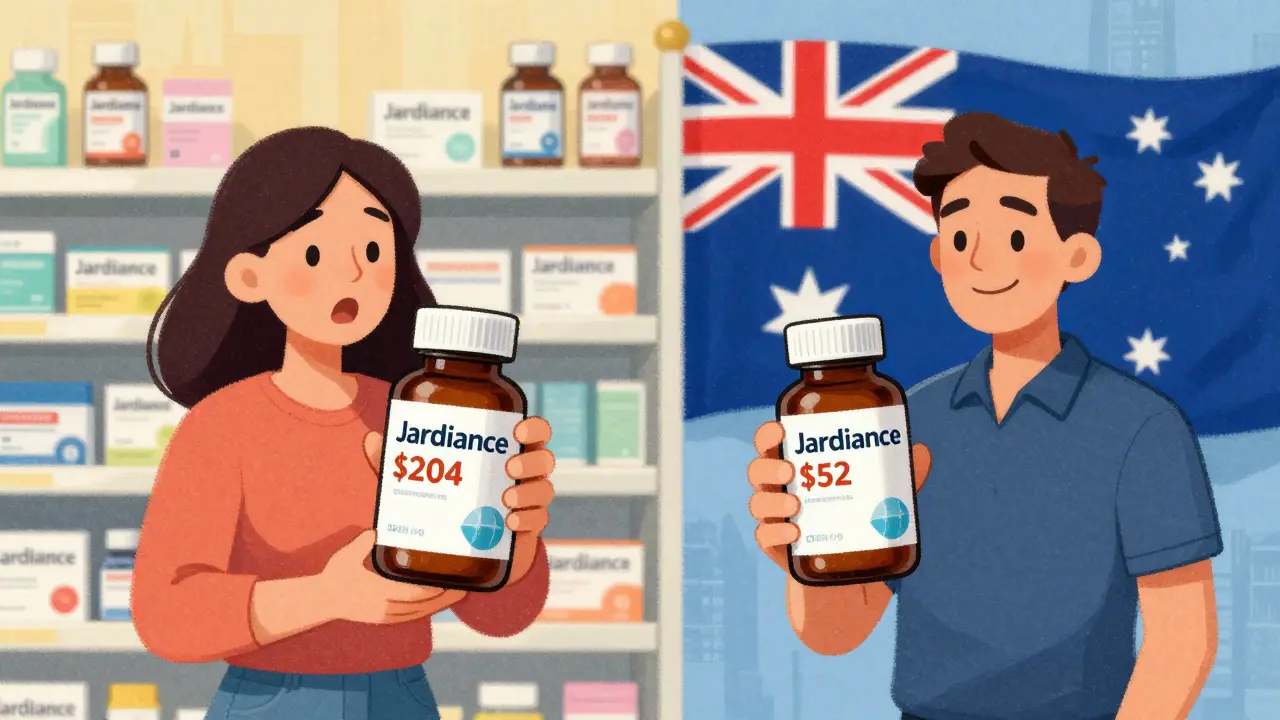
Ever wonder why your prescription costs $500 in the U.S. but only $50 in Australia? It’s not because one country is richer or the other is poorer. It’s because pharmaceutical prices are shaped by laws, not markets. The same pill, made in the same factory, can cost 10 times more depending on where you live. And it’s not just about brand-name drugs - even generics vary wildly.
Why the U.S. Pays So Much More for Brand Drugs
The U.S. doesn’t negotiate drug prices like most other wealthy countries. Instead, pharmacies and insurers handle it privately. That means drugmakers can set list prices as high as they want - and they do. In 2022, the U.S. paid 278% more than other OECD countries for brand-name drugs on average. For some new biologics, like those used for autoimmune diseases or diabetes, prices were nearly 4.5 times higher.
Take Jardiance, a diabetes drug. In Japan, it costs about $52 per month. In the U.S., before Medicare negotiated a lower price, it was $204. That’s almost four times more. Same drug. Same active ingredient. Same manufacturer. The only difference? Policy.
France, Japan, and Germany use external reference pricing - meaning they look at what other countries pay and set their own prices below the average. The U.S. doesn’t. Until 2023, there was no federal authority to step in and say, “This is too high.” That changed with the Inflation Reduction Act. For the first time, Medicare started negotiating prices for 10 high-cost drugs, starting in 2025. The first batch of negotiated prices is already out, and they’re still 2.8 times higher than what other countries pay on average.
What About Generic Drugs? The U.S. Actually Wins
Here’s where things get surprising. When you look at generic drugs - the ones that come after patents expire - the U.S. has some of the lowest prices in the world. Generics make up 90% of all prescriptions filled in the U.S., but only 41% in countries like Germany or Canada. Why? Because American pharmacies and insurers have spent decades pushing for low-cost alternatives. The U.S. generic market is massive, competitive, and efficient.
On average, U.S. generic prices are 67% lower than in other developed countries. That’s why your $4 generic statin might cost $15 in Australia or $20 in the UK. The U.S. doesn’t just allow generics - it forces them into the market fast, with aggressive competition between manufacturers. That’s not luck. It’s policy.
How Other Countries Control Prices
Most high-income countries don’t leave drug pricing to the free market. They use tools the U.S. avoids:
- Reference pricing: Countries like Canada and Germany set prices based on what neighboring countries pay. If France lowers the price of a drug, Germany follows.
- Price caps: Japan has strict limits on how much drugmakers can charge, even for new, innovative drugs.
- Centralized negotiation: Australia’s Pharmaceutical Benefits Scheme (PBS) negotiates prices directly with manufacturers. If a company won’t agree to a fair price, the drug doesn’t get listed - and patients don’t get subsidized access.
- Health technology assessments: Before a drug is approved for public funding, countries like the UK and Sweden evaluate whether it’s worth the cost. If it doesn’t offer enough benefit over cheaper options, it’s rejected.
These systems aren’t perfect. Sometimes they delay access to new drugs. But they keep overall spending under control. In 2023, the U.S. spent $1,370 per person on prescription drugs. Canada spent $640. Australia spent $580. Japan spent $480.
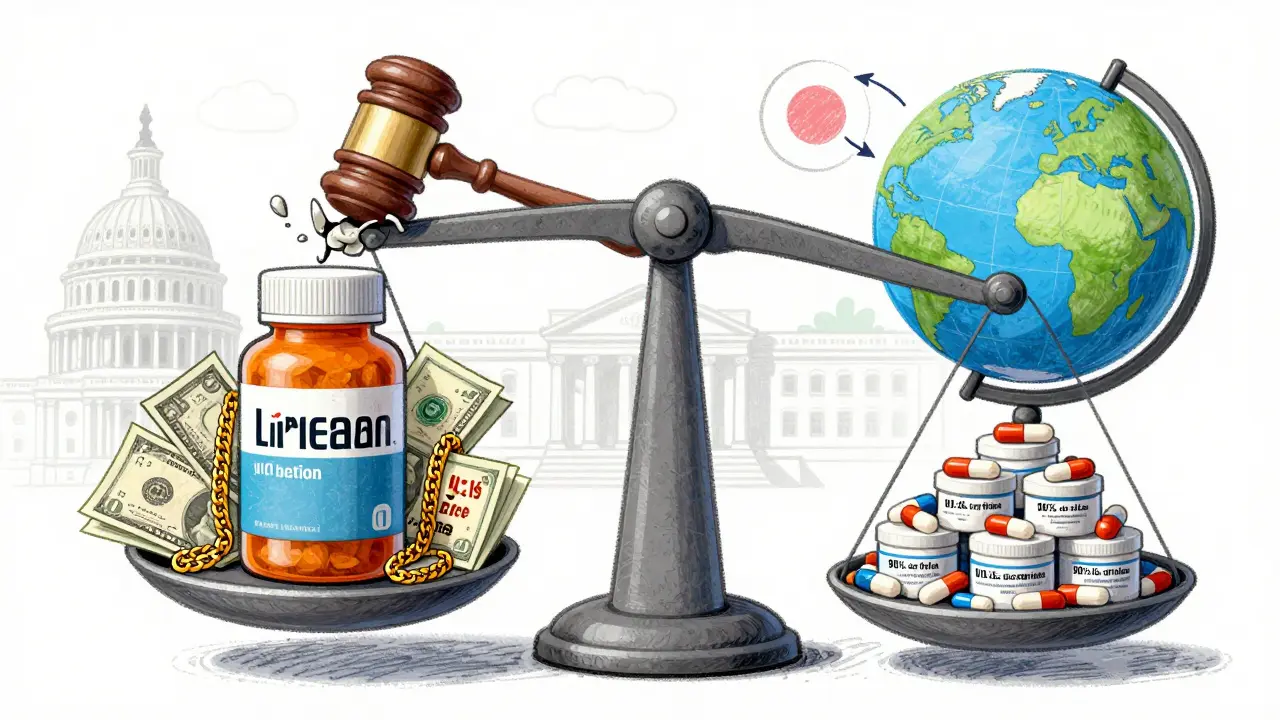
The Real Cost Isn’t Just the Price Tag
It’s easy to think lower prices mean worse care. But data says otherwise. Countries with strict price controls don’t have fewer new drugs - they just pay less for them. Japan, for example, is one of the top countries for pharmaceutical innovation, yet it has the lowest prices for most brand-name drugs.
And access? In Australia, nearly every essential medicine is available at a capped price. In the U.S., one in four adults skip doses or don’t fill prescriptions because of cost. That’s not a market failure - it’s a policy failure. When a drug like Ozempic costs $1,000 a month and insurance won’t cover it, people choose between food and medicine.
Why Some Countries Pay More Than Others
Not all countries are cheap. Canada and Germany often rank as the second-highest pricers after the U.S. Why? Because they cover more brand-name drugs publicly. Their systems pay for newer, more expensive drugs - but they still negotiate hard. Canada, for instance, pays more than Japan for most drugs, but less than half of what the U.S. pays.
Then there’s Argentina. A 2024 global study found that drug prices there were nearly six times higher than in Germany. Why? Political instability, currency collapse, and lack of import controls. Lebanon, on the other hand, had prices at just 18% of Germany’s - not because it’s cheap, but because most people can’t afford to buy drugs at all.
Price doesn’t always equal access. In some low-income countries, the problem isn’t the sticker price - it’s whether the drug is even available in pharmacies.
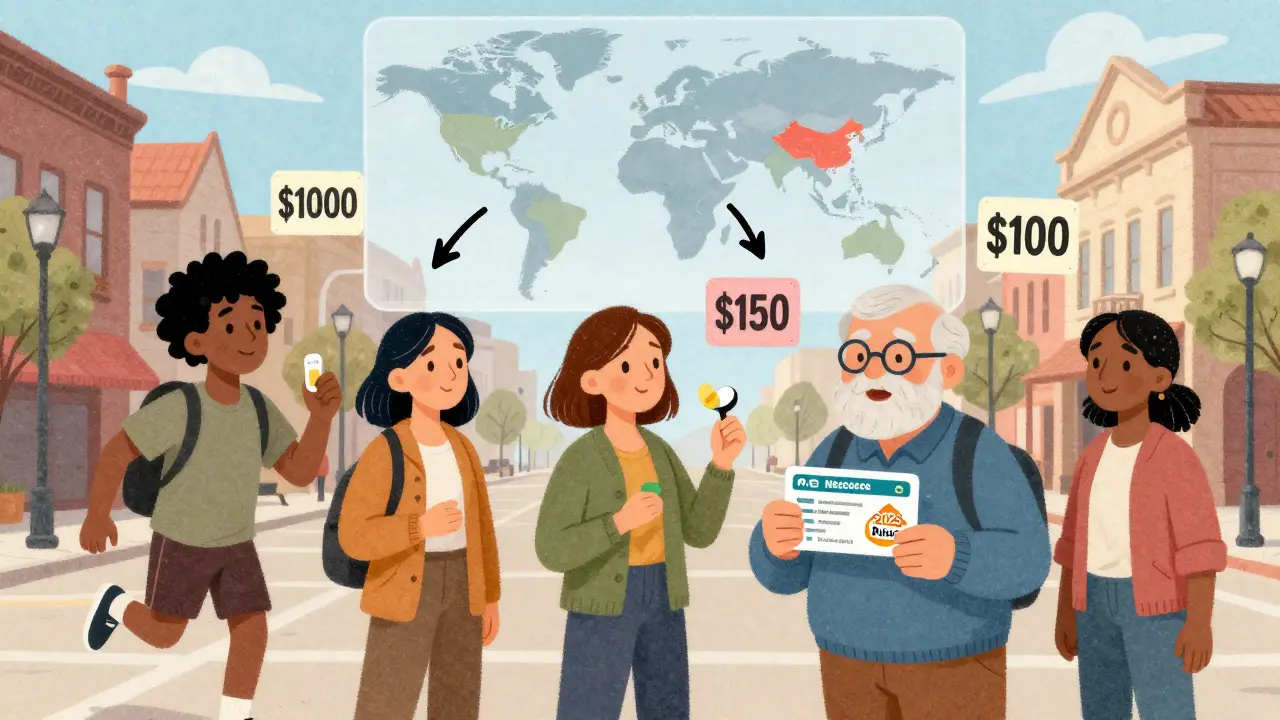
The Future: What’s Changing in 2025?
The U.S. is finally starting to change. Medicare’s first 10 negotiated drugs will hit the market in 2025. That’s just the beginning. By 2029, up to 60 drugs could be subject to negotiation. The list for the next round of drugs will be announced in February 2025. These aren’t small savings. For a drug like Eliquis, Medicare’s new price is 78% lower than the list price.
But here’s the catch: these negotiated prices are still higher than what other countries pay. Australia, for example, pays about $40 a month for Eliquis. Medicare’s negotiated price? Around $150. So the U.S. is catching up - but it’s not catching up to the cheapest. It’s catching up to the middle.
Meanwhile, countries like China and India are using their massive buying power to slash prices. China’s national drug negotiations brought down prices for cancer drugs by 50-80% in just a few years. That’s not magic. It’s strategy.
What This Means for You
If you’re in the U.S., don’t assume your pharmacy’s price is fair. Always ask for the cash price. Sometimes it’s lower than your copay. Use GoodRx or SingleCare - they often show prices from pharmacies that bypass insurance entirely. And if you’re on Medicare, pay attention to the list of negotiated drugs. You might be eligible for a much cheaper version starting in 2025.
If you’re outside the U.S., you’re probably paying less - but that doesn’t mean you’re getting more. Your system might delay access to new drugs. You might wait months for approval. But you won’t be forced to choose between your medication and your rent.
The truth is, no country has the perfect system. The U.S. leads in innovation but fails on affordability. Europe and Japan keep costs low but sometimes slow down access. Australia balances both - but only because it has the power to say no.
Pharmaceutical pricing isn’t about science. It’s about politics. And until more countries start negotiating like Australia or China, the U.S. will keep paying the highest price in the world - for the same pills everyone else takes.
Why are drug prices so different between the U.S. and other countries?
The U.S. doesn’t have a government agency that negotiates drug prices for the public. Instead, private insurers and pharmacies handle it, giving drugmakers more power to set high list prices. Other countries use reference pricing, direct negotiation, or price caps to keep costs down. The U.S. also has a massive generic market, which lowers overall spending - but brand-name drugs still cost far more than elsewhere.
Are generic drugs cheaper in the U.S. than in other countries?
Yes. U.S. generic drug prices are about 67% lower than in most other developed countries. That’s because the U.S. has a highly competitive generic market with many manufacturers and aggressive price competition. Generics make up 90% of all prescriptions filled in the U.S., which helps keep total spending down - even as brand-name prices stay high.
Which countries have the lowest drug prices?
Japan and France consistently have the lowest prices for brand-name drugs among wealthy nations. Australia also has very low prices for many medications thanks to its Pharmaceutical Benefits Scheme (PBS), which negotiates directly with drugmakers. Countries like Germany and Canada pay more than Japan but still far less than the U.S.
Does paying more for drugs mean better quality or more innovation?
No. Countries like Japan and Germany pay far less for drugs than the U.S. but still lead in pharmaceutical innovation and research. High U.S. prices don’t translate to more new drugs - they just mean more money goes to drug companies. Innovation happens globally, not just where prices are highest.
Will Medicare’s drug price negotiations lower costs for Americans?
Yes, but not as much as in other countries. Medicare’s first negotiated prices are still 2-4 times higher than what Australia or Japan pay. Still, they’re a major drop from the original list prices - in some cases, over 70% lower. This is just the start. By 2029, up to 60 drugs could be negotiated, which will help millions of seniors save money.
Can I buy cheaper drugs from other countries?
Technically, importing prescription drugs from other countries is illegal in the U.S. - though enforcement is rare for personal use. Some people buy from Canada or Mexico, where prices are lower. But there’s no guarantee the medication is the same or safe. The safest way to save is to use price comparison tools like GoodRx or ask your pharmacist for cash prices.
Priscilla Kraft
January 11, 2026 AT 00:35Just used GoodRx for my insulin last month - cash price was $35. My insurance copay? $120. 😅 The system is broken, but at least we’ve got tools to fight back. 🙌
Alex Smith
January 11, 2026 AT 11:06So let me get this straight - the U.S. pays 4x more for the same pill, but somehow we’re still the ‘innovation hub’? Cool. So innovation = gouging people who need medicine to live? Got it. 🤡
Madhav Malhotra
January 12, 2026 AT 15:01In India, even brand drugs are cheap because we have massive generic manufacturing. I used to buy Eliquis-like meds for $10/month. But here’s the catch - access is still a nightmare in rural areas. Price isn’t the only problem. Availability? That’s the real war.
Jason Shriner
January 14, 2026 AT 02:23so like… the us is basically the walmart of pharmaceuticals? buy 10 get 1 free… if you’re rich. otherwise you’re just a walking debt collector with a pill bottle. 🤷♂️
Alfred Schmidt
January 15, 2026 AT 18:42YOU PEOPLE ARE DYING BECAUSE OF CORPORATE GREED AND YOU’RE STILL SITTING THERE LIKE IT’S NORMAL??!! THE SAME PILLS. THE SAME LABS. THE SAME CHEMISTRY. AND YOU’RE PAYING $200 FOR WHAT SOMEONE ELSE GETS FOR $40??!! THIS ISN’T CAPITALISM - THIS IS A CRIME!!
Sean Feng
January 17, 2026 AT 04:00Generics are cheap here. That’s all I care about.
Vincent Clarizio
January 17, 2026 AT 14:14Think about it - we’ve turned healthcare into a casino where the house always wins. Drug companies aren’t just selling pills - they’re selling hope, and they know people will pay anything for it. The U.S. system doesn’t just allow price gouging - it incentivizes it. We’ve built a machine that turns human desperation into shareholder dividends. And now we’re surprised when people can’t afford to live? The tragedy isn’t the cost of the drug - it’s that we’ve accepted this as inevitable. We’ve normalized suffering as a cost of doing business. And that’s not just policy. That’s moral bankruptcy.
Sam Davies
January 18, 2026 AT 01:49Oh wow, the U.S. finally negotiated prices. How quaint. Like a toddler finally sharing their toy after being told they’re ‘being rude’. Meanwhile, Australia’s been doing this since the 70s and still has better life expectancy. The real innovation here? The sheer audacity to call this progress.
Christian Basel
January 19, 2026 AT 12:44Pharmaco-economic externalities are being restructured via policy-driven reference pricing paradigms - the U.S. is transitioning from a free-market pricing anomaly to a regulated equilibrium model. Generic penetration rates remain the primary cost-containment lever, but the Inflation Reduction Act’s Medicare negotiation provisions represent a structural inflection point in value-based pharmacoeconomics.