
Why Pet Dander Makes You Sick (It’s Not the Fur)
You love your cat or dog. But every time you hug them, your nose starts running, your eyes itch, or you can’t catch your breath. You’re not alone. About 1 in 10 people in the U.S. have pet allergies, and most of them still keep their pets because they don’t want to give them up. The problem isn’t the fur. It’s the pet dander - tiny, invisible flakes of skin that cats, dogs, and even birds shed every day. These particles stick to your clothes, furniture, and carpets. They float in the air for hours. And they carry proteins that trigger your immune system like a false alarm.
For cats, the main offender is a protein called Fel d 1, found in their saliva and skin glands. When cats groom themselves, they spread it all over their fur. Dogs have Can f 1, a similar protein in their saliva and skin. Even if your pet doesn’t shed much hair - like a poodle or a sphynx - they still produce these allergens. There’s no such thing as a truly hypoallergenic breed. That’s a myth. Some individual animals produce less, but it’s unpredictable. The only way to know is to spend time with that specific pet before bringing it home.
The Bedroom Is Your Best Defense
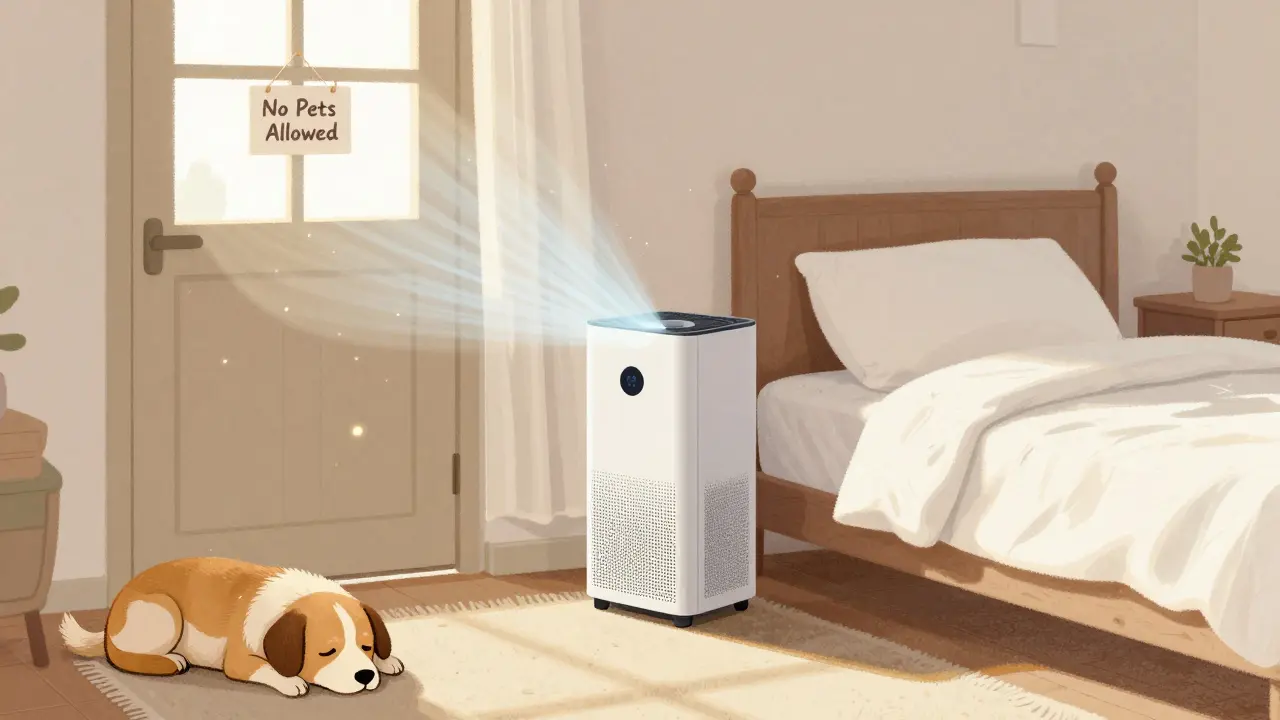
One of the most powerful things you can do is keep pets out of the bedroom. This isn’t just a suggestion - it’s backed by clinical studies. When people with pet allergies keep their pets out of the bedroom, nighttime symptoms drop by up to 40%. Why? Because you spend a third of your life there. If your pillow, sheets, and mattress are covered in dander, you’re breathing it in all night. That’s when your body can’t escape it.
Start by removing your pet from the room. Use a baby gate or close the door. If your pet is used to sleeping with you, start slowly. Let them nap in the room during the day, then gradually move their bed to another part of the house. Use a high-quality air purifier with a true HEPA filter in the bedroom. It doesn’t need to be the most expensive one - just make sure it’s rated for the room size. Look for units that move at least 200 cubic feet of air per minute for a standard bedroom.
HEPA Filters Are Non-Negotiable
Standard vacuum cleaners don’t cut it. They kick allergens back into the air. A HEPA vacuum, on the other hand, traps 99.97% of particles as small as 0.3 microns - that’s smaller than a grain of pollen. Research shows HEPA vacuums remove 30-50% more dander than regular ones. Vacuum at least twice a week, focusing on carpets, rugs, upholstered furniture, and under beds. If you have hardwood or tile floors, you’re already ahead - they hold 50-75% less dander than carpet.
Don’t forget the air. A standalone HEPA air purifier in your main living area can reduce airborne allergens by 40-60%. Place it where you spend the most time - usually the living room or home office. Run it on high for an hour after your pet has been active, then lower it to maintain clean air. Replace filters every 6-12 months. Most models have a light or app alert when it’s time.

Cleaning Routines That Actually Work
Washing pet bedding weekly at 130°F (54°C) kills allergens. Don’t just shake it out - wash it. Use a detergent with enzymes if possible. They break down proteins better than regular soap.
Bathing your pet once a week reduces allergens on their skin and fur by up to 80%. Sounds hard? It is - especially with cats. Sixty percent of cat owners say their pets hate baths. Try using a damp cloth or allergen-reducing wipes daily to wipe down your pet’s fur. There are special shampoos designed to neutralize Fel d 1 and Can f 1. Look for ones with ingredients like oatmeal or chlorhexidine. They don’t eliminate allergens, but they reduce them significantly for 24-72 hours.
Wipe down surfaces daily. Use a microfiber cloth - it traps dust better than a feather duster. Clean your pet’s favorite spots: the couch, the armchair, the windowsill. Use a lint roller on clothing and furniture. It removes 70-85% of surface dander in seconds.
What About Allergy Sprays and Medications?
Allergen-reducing sprays can help, but they’re not magic. Independent tests show they reduce allergen potency by 30-70% for up to three days. Apply them to carpets, furniture, and pet bedding. Look for products with active ingredients like Allersearch or PetalCleanse. Don’t rely on them alone - combine them with cleaning and air filtration.
For symptoms, over-the-counter antihistamines like loratadine or cetirizine work for 60-70% of people. They start working in under an hour. Nasal sprays with corticosteroids (like fluticasone) are more effective for stuffy noses and congestion. If symptoms are severe or persistent, talk to a doctor about immunotherapy. Allergy shots or the newer sublingual tablets (like Odactra for cat allergies) can retrain your immune system. After 3-5 years of treatment, 80-85% of people see lasting improvement - even after stopping treatment.
Costs, Time, and Realistic Expectations
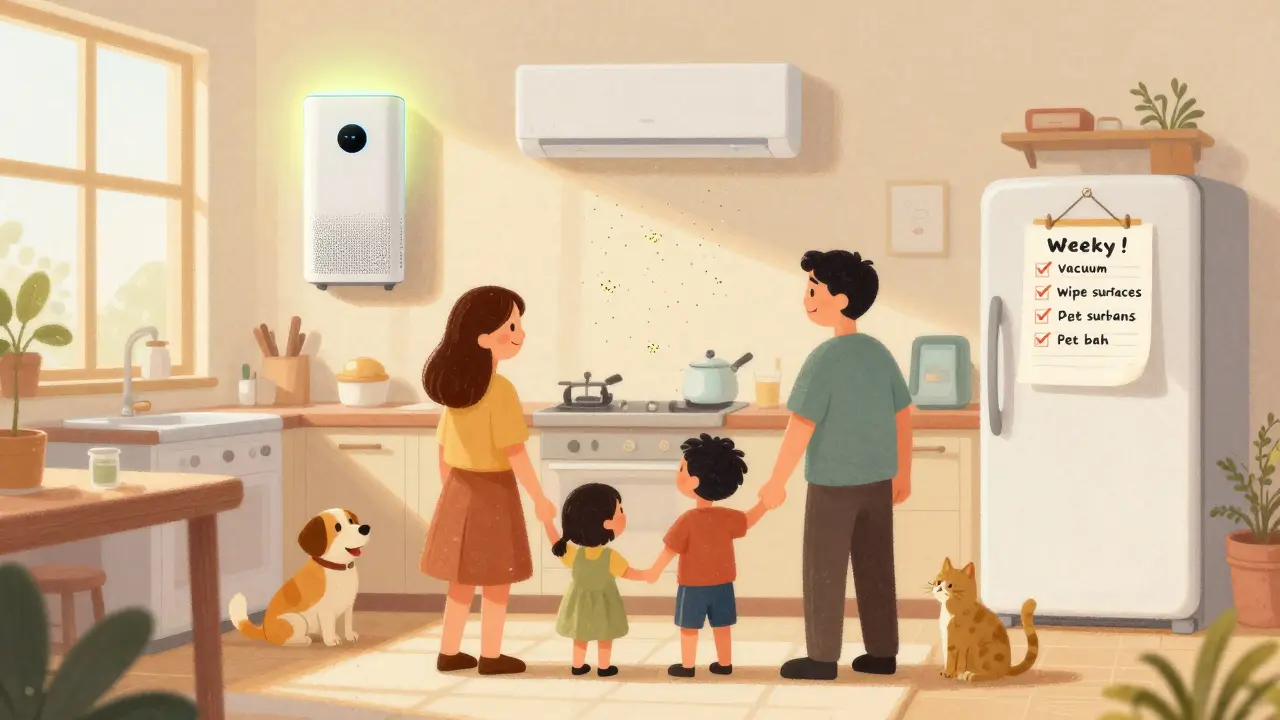
Setting up an allergy-friendly home doesn’t require a fortune. A good HEPA vacuum costs $150-$300. A decent air purifier runs $100-$250. Weekly pet shampoo is $10-$20. Filter replacements are $20-$50 every year. That’s $200-$500 upfront. Most families see a 50-70% drop in allergen levels within three months if they stick with the routine.
Time-wise, plan for 15-20 minutes of vacuuming twice a week, 10 minutes of wiping surfaces daily, and a weekly bath or wipe-down for your pet. It’s not easy, but it’s doable. Most people who stick with it report major symptom relief within 4-6 weeks.
The biggest hurdles? Getting pets to tolerate baths and staying consistent. If your cat hisses every time you bring out the towel, try grooming gloves or dry shampoo sprays. If you’re too tired to vacuum after work, set a reminder on your phone. Make it part of your routine - like brushing your teeth.
The Future Is Here - And It’s Smarter
Scientists are working on real breakthroughs. A new FDA-approved tablet for cat allergies (Odactra) lets you take a daily pill instead of getting shots. CRISPR gene editing is being tested to create cats that produce almost no Fel d 1 - but those won’t be available until 2028 or later. Meanwhile, smart home systems are starting to appear. Some air purifiers now have built-in sensors that detect allergen levels and adjust automatically. In a few years, your home might clean itself without you lifting a finger.
For now, the best solution is simple: control your environment. Don’t try to eliminate your pet. Don’t believe the hype about hypoallergenic breeds. Focus on what works - HEPA filters, pet-free zones, regular cleaning, and medical help when needed. You don’t have to choose between your health and your pet. With the right strategies, you can have both.
Can you outgrow pet allergies?
Some people do, especially children. But it’s not guaranteed. Many adults develop pet allergies later in life. Even if your symptoms improve, the allergy doesn’t disappear - it just becomes less active. Continuing to reduce exposure helps keep symptoms under control.
Does shaving my dog help with allergies?
No. Shaving doesn’t reduce the main allergens, which come from skin and saliva, not fur. In fact, shaving can make things worse. Without fur to trap dander, more allergens become airborne. Regular bathing and brushing are far more effective than shaving.
Are air purifiers worth it for pet allergies?
Yes - if they have a true HEPA filter. Air purifiers with HEPA filters can reduce airborne pet allergens by 40-60%. They work best when paired with other strategies like keeping pets out of the bedroom and vacuuming regularly. Cheap models without HEPA filters won’t help.
Can I have a pet if I have asthma?
Many people with asthma live with pets successfully. But pet dander can trigger asthma attacks. If you have asthma, talk to your doctor before getting a pet. Use HEPA filters, keep pets out of your bedroom, and consider allergy shots. Studies show that combining environmental controls with immunotherapy helps 92% of asthma patients keep their pets without flare-ups.
How long do pet allergens last in a home after the pet is gone?
Pet allergens can stick around for up to six months after a pet leaves. Dander clings to carpets, upholstery, and even walls. To speed up removal, deep clean everything: steam clean carpets, wash all fabrics in hot water, and use HEPA vacuums and air purifiers. The longer you wait to clean, the longer symptoms will last.
Elen Pihlap
January 6, 2026 AT 21:34Emma Addison Thomas
January 8, 2026 AT 13:35Anastasia Novak
January 9, 2026 AT 12:30Jonathan Larson
January 10, 2026 AT 13:03Alex Danner
January 11, 2026 AT 00:52Katrina Morris
January 11, 2026 AT 13:09Anthony Capunong
January 12, 2026 AT 13:05Kyle King
January 13, 2026 AT 03:40