

What Exactly Is Pancreatitis?
Think of your pancreas as a quiet worker behind your stomach. It makes enzymes to break down food and hormones like insulin to control blood sugar. When it gets inflamed, that’s pancreatitis. It doesn’t just hurt-it can shut down your digestion, wreck your metabolism, and even raise your cancer risk. There are two main types: acute and chronic. Acute comes on fast-like a lightning strike. You wake up with severe upper belly pain that shoots to your back. You might vomit, feel dizzy, or look pale. Most cases clear up in a week with rest, fluids, and no food for a few days. But if it’s severe? It can turn deadly. Chronic pancreatitis is different. It’s not a one-time event. It’s a slow burn. Over years, your pancreas gets scarred, calcified, and worn down. The pain comes and goes, often after eating. You start losing weight even if you’re eating. Your stools float and smell awful because your body can’t digest fat anymore. And over time, you might develop diabetes because your pancreas can’t make insulin anymore.
Acute Pancreatitis: The Sudden Emergency
Acute pancreatitis hits hard and fast. About 80% of cases are caused by gallstones or heavy alcohol use. The rest? Sometimes it’s medications, high triglycerides, or even unknown reasons. The key sign? Pain. Not just any pain-intense, constant, and centered just below your ribs, radiating to your back. It doesn’t get better with antacids or changing position. Doctors don’t guess. They check three things: your pain pattern, blood tests (lipase levels three times higher than normal), and a CT or MRI scan showing swelling or fluid around the pancreas. The Revised Atlanta Classification sorts cases into mild, moderate, or severe based on whether your organs-like your lungs or kidneys-start failing. Mild cases? You’re in and out of the hospital in a few days. Severe cases? That’s where things get dangerous. If organ failure lasts more than 48 hours, your risk of infection, necrosis, or death jumps to 15-30%. Early, aggressive IV fluids in the first 24 hours can cut complications by nearly a third. Delayed fluids? That’s a mistake many hospitals still make.
Chronic Pancreatitis: The Silent Wreckage
Chronic pancreatitis doesn’t announce itself with a bang. It creeps in. Often, it’s tied to years of alcohol abuse-90% of cases show clear signs of long-term exposure. But genetics matter too. Mutations in genes like PRSS1 or SPINK1 can make you prone to it, even if you never drink. Smoking? It doesn’t just cause cancer-it speeds up pancreatic damage. Quitting smoking is the single most effective way to slow progression. The disease has three stages. Early: occasional pain, normal digestion. Intermediate: pain gets worse, you start having trouble digesting fats. Late: the pain fades because the pancreas is too damaged to produce enzymes, but now you’re diabetic and malnourished. Imaging tells the story. CT scans show calcium deposits-like little stones-in the pancreas. MRIs show dilated ducts. Blood tests won’t always show it, but your stool will. If you’re passing greasy, foul-smelling bowel movements (steatorrhea), your pancreas isn’t making enough lipase. That’s a red flag.
Why Nutrition Is Non-Negotiable in Recovery
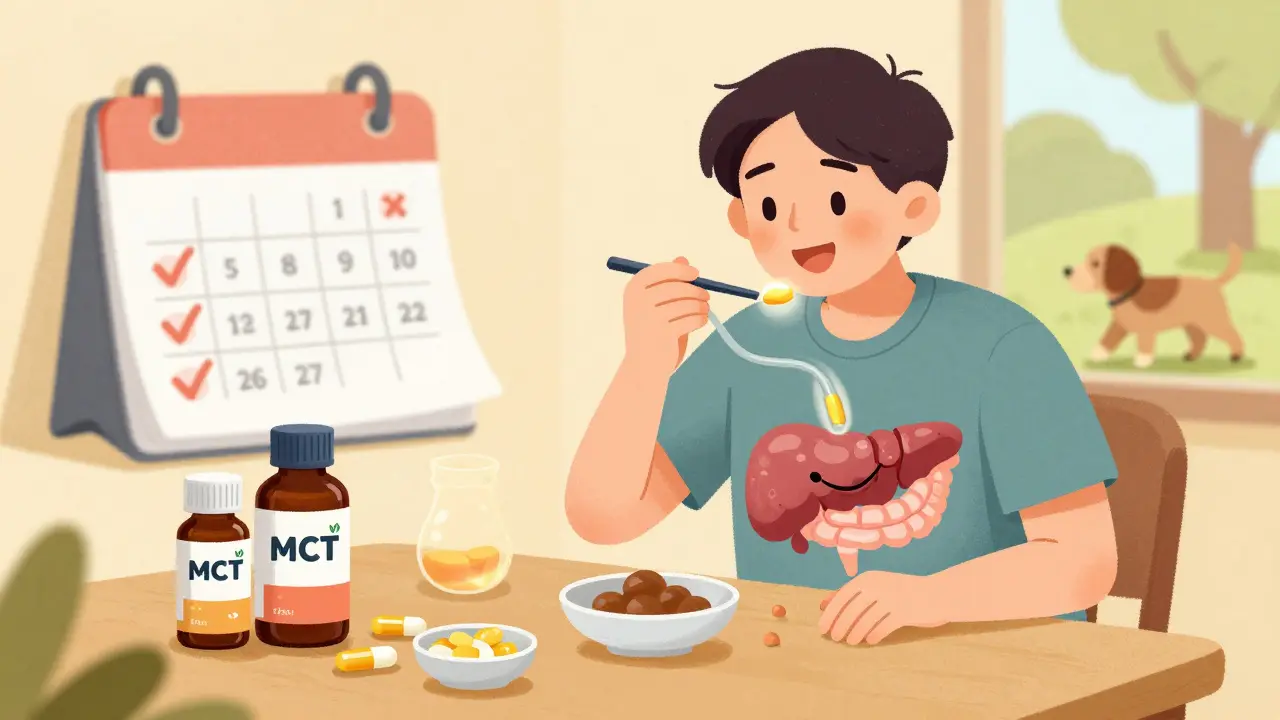
When your pancreas is inflamed, it can’t do its job. That means your body can’t break down proteins, carbs, or fats properly. You lose weight. You get weak. You get deficiencies. In acute pancreatitis, the first rule is: don’t eat. Not for a few days. Your gut needs to rest. But here’s the twist: once you’re stable, you need to start feeding it-within 24 to 48 hours. Enteral nutrition (a tube into your small intestine) cuts infection risk by 30% compared to IV nutrition. It keeps your gut lining healthy, prevents bacteria from leaking into your bloodstream. For chronic pancreatitis, nutrition isn’t just helpful-it’s life-saving. You need to eat, but you need to eat right. Fat restriction sounds obvious, but it’s misunderstood. In acute flares, you need under 20-30 grams of fat per day. Once stable, you can go up to 40-50 grams, but the type of fat matters. Medium-chain triglycerides (MCTs)-found in coconut oil or specialized supplements-don’t need pancreatic enzymes to digest. They’re absorbed directly into your liver. That’s why doctors recommend MCT oil for patients with steatorrhea.
Enzyme Replacement: The Lifeline for Chronic Patients
If your pancreas can’t make enzymes, you have to replace them. That’s pancreatic enzyme replacement therapy (PERT). Dosing isn’t one-size-fits-all. You need 40,000 to 90,000 lipase units per main meal and 25,000 per snack. Take them right before or during the meal-not after. If you take them too early or too late, they won’t work. The gold standard is Creon or similar capsules. Newer formulations like Creon 36,000 are designed to survive stomach acid better and release enzymes exactly where they’re needed-in the small intestine. A 2022 trial showed they improve fat absorption by 45% compared to older versions. But here’s the problem: many patients don’t take enough. Or they take them with water instead of food. Or they don’t know they need to crush them and mix with acidic food like applesauce if they can’t swallow pills. If your stool still looks greasy after 2-3 weeks on PERT, your dose is too low. A 72-hour fecal fat test can confirm it.
Deficiencies You Can’t Afford to Ignore
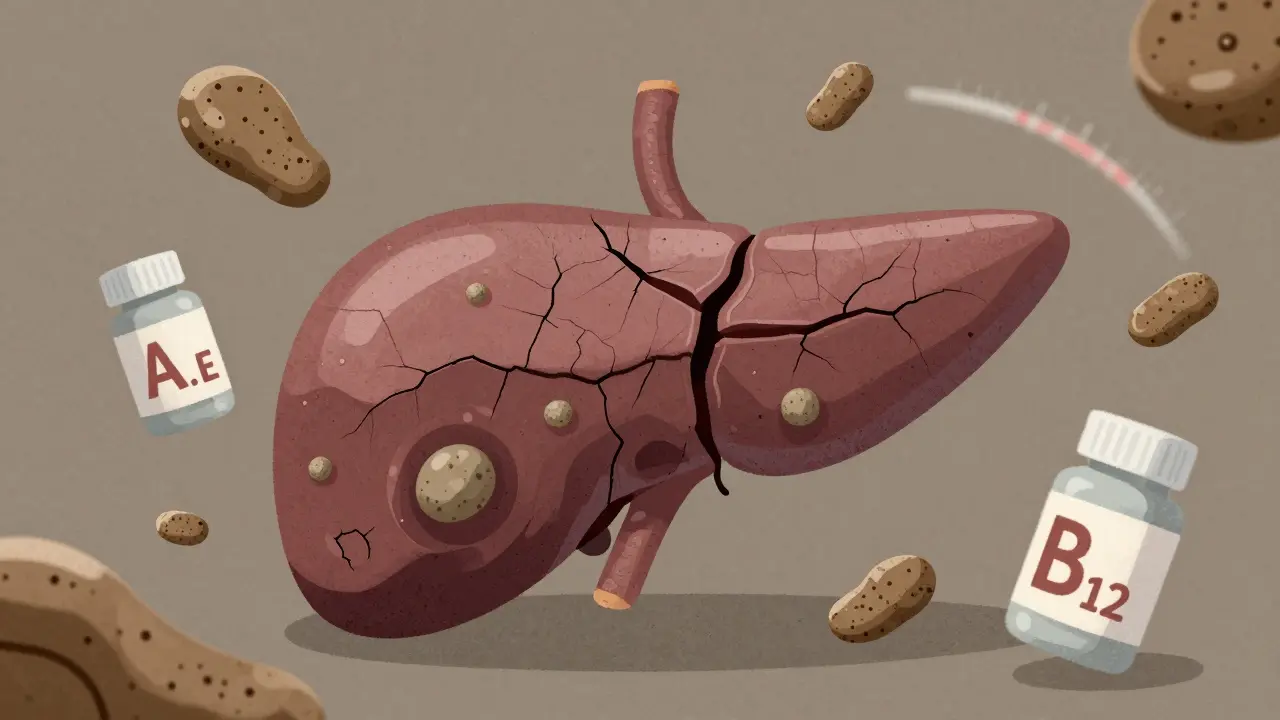
Chronic pancreatitis patients are walking nutrient bombs. Eighty-five percent are low in vitamin D. Forty percent lack B12. A quarter are deficient in vitamin A. Why? Because fat-soluble vitamins (A, D, E, K) need fat and enzymes to be absorbed. No enzymes? No vitamins. Low vitamin D means weak bones and higher infection risk. Low B12 causes nerve damage and anemia. Low vitamin A? Poor vision and immune trouble. You can’t fix this with a multivitamin. You need targeted supplements: water-soluble forms of vitamins A, D, and E. Some patients need monthly B12 injections. Regular blood tests every 6 months aren’t optional-they’re essential.
What About Pain and Opioids?
Pain is the biggest reason people with chronic pancreatitis stop living. It’s not just physical-it’s psychological. Sixty-five percent of patients rely on opioids just to get through the day. But here’s the trap: long-term opioid use leads to dependence. One in three develops an opioid use disorder within five years. The answer isn’t just stronger pills. It’s a team. Pain specialists, psychologists, and dietitians working together. Nerve blocks. Acupuncture. Low-dose antidepressants like amitriptyline, which help with nerve pain. And yes-better nutrition. When you reduce steatorrhea and inflammation, pain often drops by 30-40%.
What’s New in Treatment?
Science is moving fast. In January 2024, the FDA approved Dexcom G7, the first continuous glucose monitor designed specifically for pancreatogenic diabetes-the kind caused by pancreas damage. It tracks wild blood sugar swings that standard monitors miss. Stem cell therapy? Still experimental, but early trials show promise. One trial found a 30% improvement in enzyme production after 12 months. Probiotics? Not just for gut health. A 2023 study showed specific strains like Lactobacillus rhamnosus GG reduced pain scores by 40% in chronic pancreatitis patients over six months. It’s not a cure, but it’s a tool.
Long-Term Risks: The Cancer Shadow
Chronic pancreatitis doesn’t just make you sick-it makes you vulnerable. Your risk of pancreatic cancer jumps 15 to 20 times higher than normal. Over 10 years, 4% of patients will develop it. That’s why annual MRIs or MRCP scans are now recommended for those with long-standing disease, especially if you smoke, have a family history, or carry genetic mutations. There’s no magic bullet. But catching it early? That’s your best shot.
Real People, Real Struggles
Sarah, 52, spent seven years being told she had IBS. Her weight dropped 40 pounds. She was terrified to eat. Then she found a pancreatitis center. They put her on MCT oil, adjusted her enzyme dose, and started her on vitamin D injections. Her bowel movements went from 4-5 times a day to 1-2. She’s back to walking her dog every morning. Mark, 48, took 40,000 units of enzymes daily. Still lost 35 pounds. Ended up in the hospital on a feeding tube. His problem? He was taking enzymes with coffee, not with food. The acid killed them before they could work. Once he switched to taking them with meals, his weight stabilized. These aren’t rare stories. They’re common. And they’re fixable-with the right knowledge.
What You Can Do Today
- If you’ve had one episode of acute pancreatitis: stop drinking alcohol, get your gallbladder checked, and quit smoking.
- If you have chronic pancreatitis: get tested for enzyme deficiency, start PERT, take MCT oil, and check your vitamin levels every 6 months.
- Don’t wait for pain to get worse. See a specialist. Most primary care doctors aren’t trained in this.
- Small, frequent meals-6 to 8 a day-help manage blood sugar and reduce flare-ups.
- Track your stools. Greasy, floating, foul-smelling? That’s your body screaming for help.
Pancreatitis isn’t a death sentence. But it won’t get better on its own. It needs action. The right nutrition. The right enzymes. The right team. And the will to stick with it-even when it’s hard.
Conor Murphy
January 26, 2026 AT 01:19Thank you for writing this.
Angie Thompson
January 27, 2026 AT 07:41Patrick Merrell
January 28, 2026 AT 10:24James Nicoll
January 29, 2026 AT 06:34Marie-Pier D.
January 30, 2026 AT 06:02Marian Gilan
January 30, 2026 AT 09:54Peter Sharplin
February 1, 2026 AT 05:22Also - yes, crush the capsules in applesauce. The acid kills them if they’re swallowed whole. This isn’t optional.
Kipper Pickens
February 1, 2026 AT 06:13Allie Lehto
February 2, 2026 AT 06:02rasna saha
February 2, 2026 AT 15:38Conor Flannelly
February 3, 2026 AT 16:58Aurelie L.
February 5, 2026 AT 06:48