
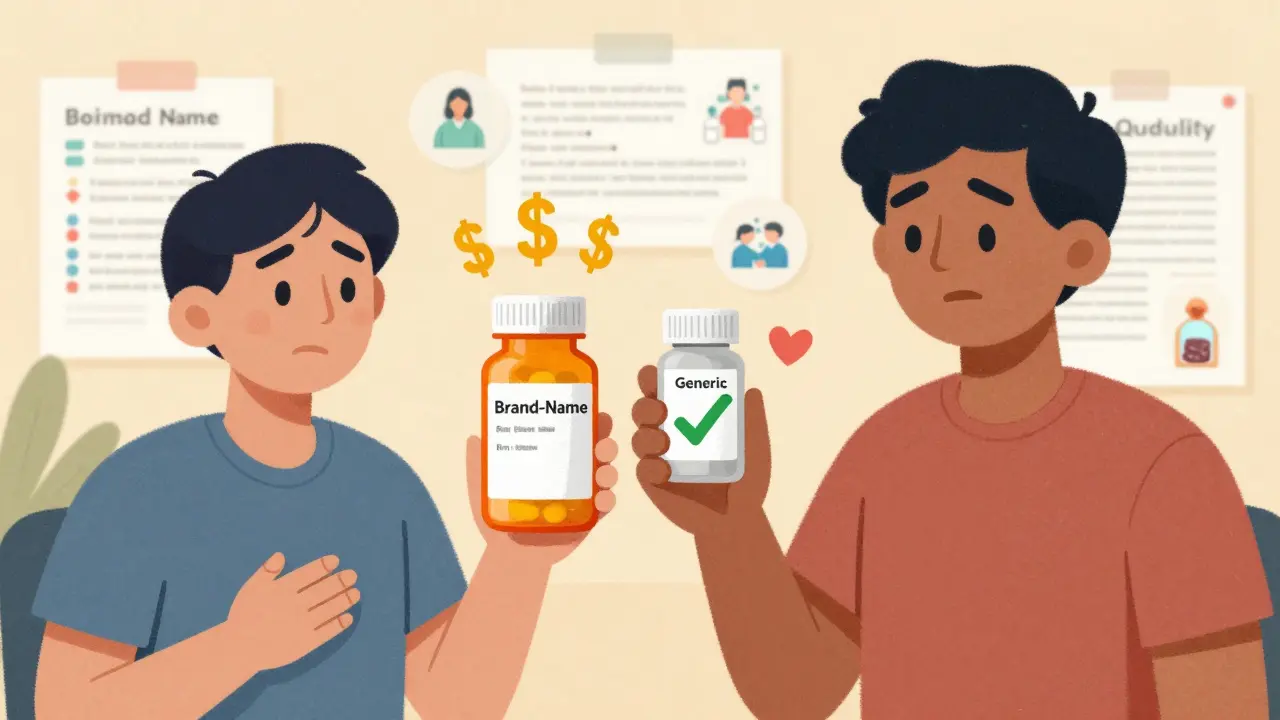
When you pick up a prescription, you might see two options: the brand-name drug you’ve heard of, or a cheaper generic version. Many people assume generics are just cheaper copies - maybe less effective, maybe with more side effects. But what does the data actually say? In health economics, this isn’t just about price tags. It’s about outcomes economics - the full picture of cost, effectiveness, adherence, and long-term health impact.
What Outcomes Economics Really Measures
Outcomes economics doesn’t just look at how much a pill costs at the pharmacy counter. It asks: What happens after the patient takes it? Do they stick with the treatment? Do they end up in the hospital less? Do they miss fewer days of work? Do their quality of life scores improve? This approach, called Health Economics and Outcomes Research (HEOR), combines clinical data, patient reports, and financial modeling to measure real-world value. For generic drugs, that means looking beyond the 80-90% price difference and asking: Does switching to a generic change how people feel, behave, or fare over time? The answer, backed by studies from ISPOR and HIMSS, is mostly yes - and in a good way. Generics aren’t just cheaper. They’re often better for the system because they get more people on treatment.Why Patients Stick With Generics - And Why That Matters
One of the biggest surprises in outcomes research? Patients are more likely to take their meds when they’re cheaper. A 2023 meta-analysis from ISPOR found that generic medications lead to 5-15% higher adherence rates than brand-name versions. Why? Because cost is a huge barrier. GoodRx data from late 2023 shows that 89% of patients choose generics when the price difference is over $20 per prescription. For someone on a fixed income, that’s not a small amount - it’s the difference between taking medicine daily or skipping doses to make it last. Higher adherence isn’t just a nice stat. It translates directly to fewer complications. For chronic conditions like high blood pressure, diabetes, or thyroid disease, missing doses leads to worse outcomes. Studies show that better adherence from generic use leads to 5-7% fewer hospitalizations and ER visits. That’s not just saving money - it’s saving health.The Real Cost Savings: It’s Not Just the Pill
Many people think savings come only from lower drug prices. But the real savings happen downstream. A 2023 report from pharmacy benefit managers (PBMs) found that commercial insurance plans saved $1,200 to $1,800 per member per year by pushing generics. That’s not just from cheaper pills - it’s from fewer complications, fewer doctor visits, and less need for expensive interventions. Take warfarin, a blood thinner with a narrow therapeutic index. Even though doctors are cautious about switching patients from brand-name Coumadin to generic warfarin, real-world data shows no difference in clotting events - and a 75% drop in drug cost. The savings aren’t just in the script. They’re in avoided strokes, fewer lab tests, and less time spent managing side effects. For conditions like asthma or depression, where adherence is low and consequences are high, generics can cut total treatment costs by 12-18% when market penetration hits 70% or more. That’s the power of outcomes economics: it sees the whole system, not just one line item.
Where Generics Don’t Always Win - And Why
It’s not all clear-cut. Some patients and providers still hesitate. And for good reason. In Reddit threads and patient reviews, 42% of people report side effects or perceived changes in effectiveness after switching to generics. Many blame inactive ingredients - the fillers, dyes, or binders that differ between brands. While these don’t affect how the drug works (the active ingredient is identical), they can trigger allergies or sensitivities in rare cases. For drugs with a narrow therapeutic index - like levothyroxine, digoxin, or seizure meds - even tiny differences in absorption can matter. That’s why only 47% of primary care doctors feel comfortable switching patients on these meds. The FDA requires generics to be within 80-125% of the brand’s bioavailability. That’s a wide range. For some patients, that variability adds up. And then there’s the psychological effect. Studies show patients who believe they’re taking a brand-name drug report better outcomes - even if they’re on the generic. This isn’t just placebo; it’s about trust. When patients lose confidence in their medication, they’re more likely to stop taking it.How Health Systems Are Using HEOR to Make Better Decisions
Forward-thinking health systems aren’t just guessing about generics. They’re using structured HEOR processes to guide policy. The HIMSS 2023 guide outlines a four-step model:- Define the question: Are we saving money without hurting outcomes?
- Gather evidence: Pull data from claims, EHRs, and patient surveys.
- Analyze cost-effectiveness: Calculate cost per quality-adjusted life year (QALY). In the U.S., under $150,000 per QALY is generally considered good value.
- Implement with communication: Train staff, notify patients, and track results.
What’s Changing in 2026 - And What’s Coming Next
The rules are tightening. In 2024, the FDA released new draft guidance requiring more robust outcomes data for complex generics - like extended-release pills or topical creams. The ISPOR updated its standards too: now, studies must track patients for at least 24 months and collect patient-reported outcomes at four key points - baseline, 30, 90, and 180 days. AI is starting to play a role. Machine learning models are being trained to predict which patients are most likely to do well on a generic - and which might need to stay on brand. This isn’t about cost-cutting anymore. It’s about personalization. Meanwhile, the market is shifting. Generics now make up 90% of prescriptions in the U.S., but only 22% of total drug spending. That means there’s still huge potential to squeeze out more value - without compromising care.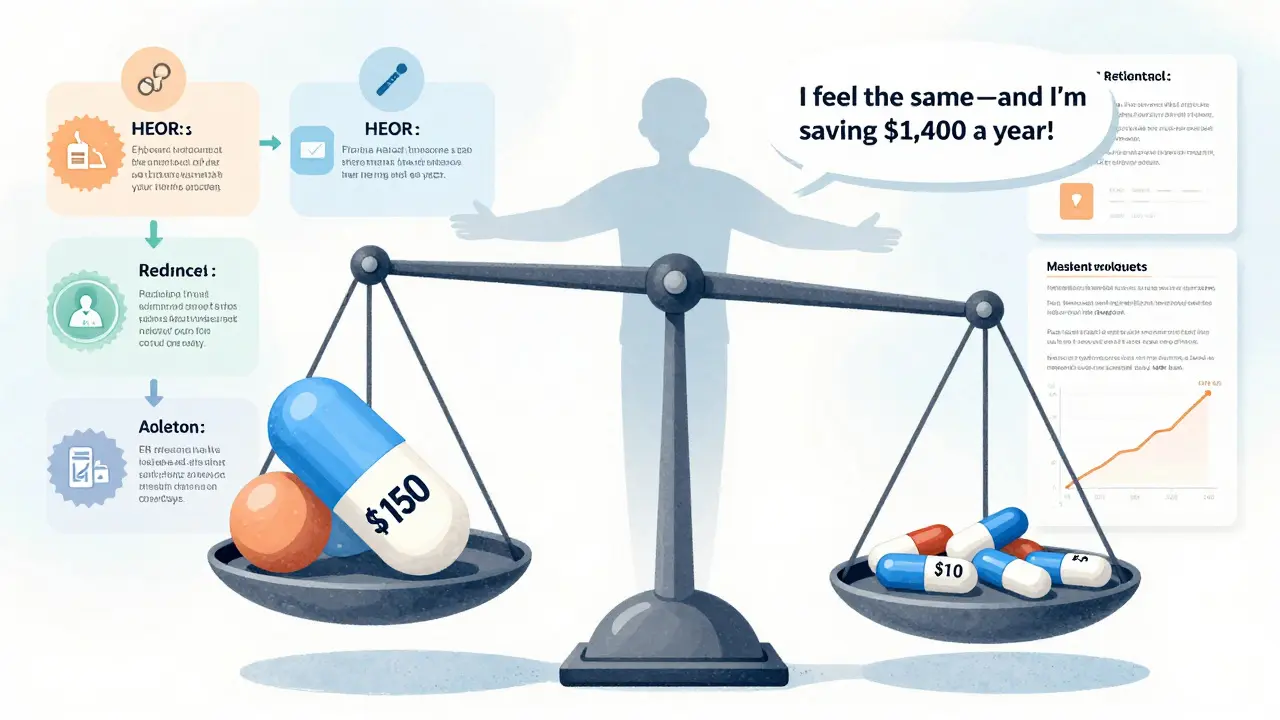
What This Means for You
If you’re a patient: Don’t assume generics are inferior. If your doctor says it’s safe to switch, ask for the data. Most of the time, you’ll save money and feel the same. If you’re a provider: Use HEOR tools to support your decisions. Don’t rely on gut feeling. Look at adherence rates, hospitalization trends, and patient feedback in your practice. If you’re a payer or policy maker: Stop treating generics as a simple cost-saving hack. They’re a lever for better population health. Invest in the data, the communication, and the follow-up. The goal isn’t to replace brand drugs with generics at all costs. It’s to use the right tool for the right patient - and to measure what actually matters: health outcomes, not just price tags.Frequently Asked Questions
Are generic drugs really as effective as brand-name drugs?
Yes. By FDA standards, generics must deliver the same active ingredient in the same amount and at the same rate as the brand-name version. Bioequivalence is tested using strict criteria - the drug must be within 80-125% of the brand’s absorption levels. Real-world studies show no meaningful difference in clinical outcomes for most medications. The perception that generics are weaker often comes from psychological factors or rare reactions to inactive ingredients, not the drug itself.
Why do some people say they feel worse after switching to a generic?
Some patients report changes in side effects or effectiveness after switching. This is often due to differences in inactive ingredients - dyes, fillers, or coatings - which can cause sensitivities in rare cases. It can also be a psychological effect: if a patient believes the generic is inferior, they may notice symptoms more or stop taking the drug. Studies show that when patients are properly informed about the switch, these reports drop significantly. Always talk to your pharmacist or doctor before switching, especially for narrow therapeutic index drugs.
Do generics save money for insurance plans and taxpayers?
Yes - significantly. In 2023, commercial insurers saved $1,200 to $1,800 per member per year through aggressive generic formularies. Medicare Part D saved billions by requiring HEOR evidence before covering brand-name drugs when generics were available. The savings aren’t just from lower drug prices - they come from fewer hospitalizations, ER visits, and complications due to better adherence. For public health systems, this means more people get treated, and fewer resources are wasted on preventable crises.
Why do some doctors avoid switching patients to generics for certain drugs?
Doctors are cautious with drugs that have a narrow therapeutic index - meaning small changes in blood levels can cause big effects. Examples include warfarin, levothyroxine, phenytoin, and lithium. While studies show generics are safe for most patients, the margin for error is thin. Some providers prefer to keep patients on the same formulation they’ve been stable on, especially if they’ve had issues before. This isn’t about distrust of generics - it’s about minimizing risk in high-stakes situations.
Is HEOR just a way for big pharma to control the market?
No. HEOR is a neutral framework used by payers, providers, and regulators to make better decisions. While pharmaceutical companies do commission HEOR studies, independent groups like ISPOR, YHEC, and academic institutions conduct them too. The goal is to measure real-world value - not to favor one drug over another. In fact, HEOR has been instrumental in pushing insurers to cover more generics, not fewer. It’s a tool for transparency, not control.
Will generics become even more dominant in the next few years?
Absolutely. By 2027, KLAS Research predicts 85% of U.S. health systems will require HEOR evidence before adding any drug to their formulary - up from 65% in 2023. CMS is pushing Medicare Advantage plans to use value-based criteria. AI-driven tools are making it easier to predict which patients will respond best to generics. As biosimilars and complex generics enter the market, HEOR will become even more critical. The future isn’t just cheaper drugs - it’s smarter, data-driven prescribing.
Ayush Pareek
January 15, 2026 AT 09:29Really appreciate this breakdown. I’ve been on a generic thyroid med for years and never noticed a difference-just saved $150/month. My mom switched too and now she’s not skipping doses like she used to. Small savings add up when you’re living paycheck to paycheck.
Healthcare shouldn’t be a luxury. Generics aren’t ‘cheap’-they’re smart.
RUTH DE OLIVEIRA ALVES
January 15, 2026 AT 18:38It is imperative to acknowledge the empirical rigor underpinning the bioequivalence standards mandated by the FDA. The pharmacokinetic parameters-Cmax, AUC, and Tmax-are subject to stringent statistical thresholds (80–125%) to ensure therapeutic interchangeability. To dismiss generic medications on anecdotal grounds is not merely misguided; it is scientifically indefensible.
Furthermore, the documented reduction in non-adherence rates, coupled with downstream cost savings in emergency care, constitutes a compelling case for policy reinforcement.
Crystel Ann
January 17, 2026 AT 13:58I switched my dad to generic warfarin last year. He was scared at first, but his INR stayed stable, and he stopped complaining about the cost. He even started taking his blood pressure med regularly after that. Sometimes the biggest win isn’t the pill-it’s the peace of mind.
Nat Young
January 18, 2026 AT 19:15Let’s be real-this whole ‘generics are just as good’ narrative is corporate propaganda. The FDA’s 80–125% bioequivalence window? That’s a 45% variation range. One person gets 80%, another gets 125%. That’s not ‘the same drug.’ That’s a lottery.
And don’t get me started on the fillers. Ever read the inactive ingredients list? Talc, titanium dioxide, FD&C dyes-some of these are banned in Europe. You think Big Pharma doesn’t profit from you getting sick again because their ‘generic’ made you nauseous?
They’re not saving you money. They’re outsourcing your health risks to the poor.
Sohan Jindal
January 20, 2026 AT 14:43Generics are a socialist trick to make Americans weak. Why do you think the Chinese own all the factories that make them? They poison the fillers so we get sick and rely on the government. Your insulin isn’t cheaper-it’s a trap.
My uncle took generic blood pressure pills and ended up in the hospital. They don’t want you healthy. They want you dependent.
Buy American. Buy brand. Fight back.
Frank Geurts
January 22, 2026 AT 12:47While the economic rationale for generic substitution is, indeed, compelling-particularly in light of the demonstrated reduction in hospitalization rates and improved adherence metrics-it is equally critical to emphasize the ethical imperative of patient autonomy.
Health systems must not only implement HEOR frameworks, but must also ensure that patient education, informed consent, and longitudinal monitoring are not treated as afterthoughts. To reduce human health to a cost-per-QALY calculation is to risk dehumanization.
The data supports generics-but the human story must remain central.
Arjun Seth
January 24, 2026 AT 09:38You think this is new? People have been getting scammed by generics since the 90s. The FDA doesn’t test for long-term effects. They just check if the pill dissolves in water the same way.
My cousin took generic seizure meds and had three seizures in a month. The doctor said, ‘It’s fine, same active ingredient.’
Same active ingredient? What about the rest of the pill? You think your body doesn’t notice the difference?
Stop drinking the kool-aid. Real medicine costs money. If you can’t afford it, don’t take it. That’s life.
Mike Berrange
January 25, 2026 AT 16:40I’m sorry, but this post feels like a corporate white paper dressed up as journalism. You cite ISPOR and HIMSS like they’re gospel, but who funds them? Pharma. PBMs. Insurance companies.
And yet, you ignore the real stories-the ones where people get worse on generics and nobody listens because ‘the data says it’s fine.’
You’re not helping. You’re silencing.
I’ve been on the same brand-name antidepressant for 12 years. Switching to generic made me suicidal. No one cared. They just said, ‘It’s bioequivalent.’
Well, my brain didn’t get the memo.
Dan Mack
January 27, 2026 AT 01:10They’re lying. The FDA lets generics slide because they’re scared of lawsuits from big pharma. I read a leaked memo once-generics are allowed to vary up to 20% in absorption. That’s not a coincidence. That’s a plan.
And now they’re using AI to push them on people? Next thing you know, they’ll be tracking your pill intake and charging you extra if you don’t take the generic.
This isn’t healthcare. It’s control.
Amy Vickberg
January 28, 2026 AT 04:00Mike, I hear you. I’ve been there too. I switched to a generic for my anxiety med and felt like I was drowning for two weeks. I went back to brand, and it was like breathing again.
But I also know people who’ve been on generics for years with zero issues. It’s not black and white.
Maybe the answer isn’t ‘all generics good’ or ‘all generics bad’-but ‘let’s listen to the person, not just the data.’
Doctors need to stop treating this like a math problem. It’s biology. It’s emotion. It’s trust.
Nicholas Urmaza
January 29, 2026 AT 23:59Generics are the future. Period. If you can’t afford your meds, you’re not sick-you’re poor. And the system should fix that, not make you feel guilty for choosing a pill that works.
I’ve seen patients who skipped doses for months because of cost. Then they got the generic. They showed up to appointments. They got better. That’s not magic. That’s justice.
Stop acting like saving money is a sin. It’s the only thing keeping people alive.
Sarah Mailloux
January 30, 2026 AT 21:01My grandma switched to generic levothyroxine and her TSH went nuts. She panicked. We went back to brand-and she’s been stable for two years now.
Does that mean generics are bad? No. But it means some people need the brand. And that’s okay.
Stop treating patients like numbers. We’re not widgets. We’re people with bodies that react differently.
Let doctors decide. Let patients choose. Not the algorithm. Not the insurer. Not the formulary.