
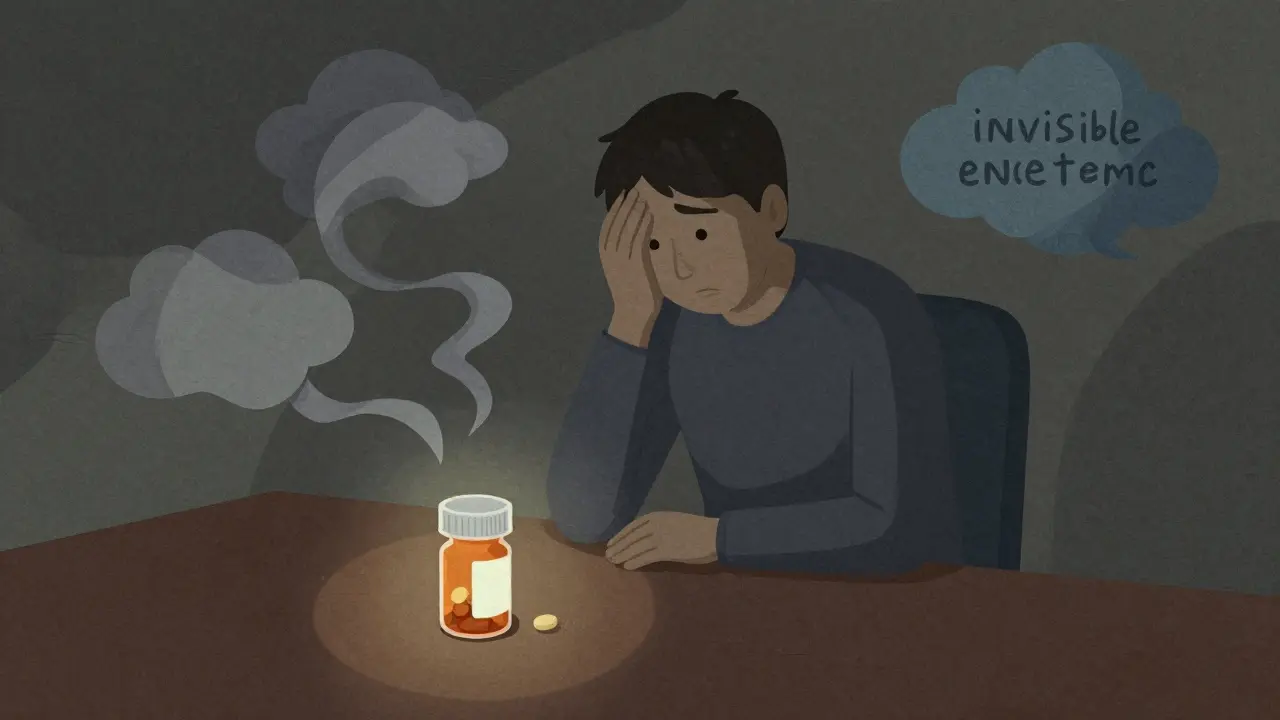
Missing a dose of medication might seem like a small thing, but in mental health care, it's often the difference between stability and a crisis. When someone stops taking their prescribed psychiatric meds-whether it's by choice or by accident-it's called medication non-adherence is the failure of patients to follow prescribed medication regimens for psychiatric conditions. It's been described as an "invisible epidemic" because while the numbers are staggering, the struggle often happens behind closed doors.
The stakes are incredibly high. Data from the Centers for Disease Control and Prevention (CDC) shows that non-adherence contributes to roughly 125,000 deaths every year in the U.S. alone. Even more concerning is that for people dealing with Schizophrenia, only about 50% actually stick to their antipsychotic routines. To see real therapeutic results, the World Health Organization (WHO) says you generally need at least an 80% adherence rate. When we fall short of that, we see a massive spike in hospitalizations and human suffering.
Why do people stop taking their meds?
It's rarely as simple as "forgetting." For many, the barrier is the medication itself. High symptom severity can make the simple act of opening a bottle feel impossible. Others struggle with a lack of insight into their illness-they might feel "cured" and decide they no longer need the meds, or they might have a deep-seated negative attitude toward the side effects.
Life circumstances play a huge role too. If you don't have a stable place to live, keeping track of a pill bottle is a luxury. For homeless individuals with psychiatric conditions, adherence rates drop to a dismal 26%-41%. Similarly, elderly patients struggling with depression are 40% less likely to stay on their meds compared to those without depression. It's a vicious cycle: the illness makes it harder to take the medicine that treats the illness.
What actually helps? The best interventions
Not all support systems are created equal. While digital apps and reminders are popular, they often provide only a marginal boost. The real game-changer is Collaborative Care, which is an integrated healthcare model where pharmacists and psychiatrists work together as a team to manage a patient's medication.
When a pharmacist is brought into the mix, the results are dramatic. One study in Frontiers in Psychiatry found that this team-based approach led to a 142% greater improvement in adherence compared to standard care. Why? Because pharmacists can focus specifically on the "how" of the medication-managing side effects, simplifying dosing, and providing a dedicated point of contact for the patient. This approach can increase adherence by up to 40% and save patients thousands of dollars in avoided emergency room visits.
| Intervention Type | Typical Adherence Impact | Key Strength |
|---|---|---|
| Pharmacist-Led Collaborative Care | High (Up to 40% increase) | Direct medication management and side-effect mitigation |
| Simplified Regimens (Once-daily) | Significant (87% adherence) | Reduces "pill fatigue" and cognitive load |
| Long-Acting Injectables (LAIs) | Very High (87% PDC) | Removes the need for daily decision-making |
| Digital Health Apps | Low to Moderate (1-2% increase) | Good for mild forgetfulness, bad for severe illness |

The power of simplification
If you have to take five different pills at four different times a day, the chances of failure skyrocket. This is why simplifying the regimen is one of the most effective "quick wins" in mental health. According to a survey by the National Alliance on Mental Illness (NAMI), 87% of patients who switched to a once-daily dose maintained their adherence, compared to only 52% of those on complex schedules.
Another powerful tool is the use of Long-Acting Injectable Antipsychotics. Instead of a daily pill, these are administered as an injection every few weeks or months. A study in JAMA Psychiatry showed that patients on injectables had an 87% Proportion of Days Covered (PDC) rate, whereas those on oral meds were only at 56%. It essentially removes the daily struggle of remembering the medication.
Systemic barriers and the path forward
Even with the best tools, the system often gets in the way. Many people want a medication specialist or a collaborative care team, but insurance coverage is a massive hurdle. A recent poll in the r/mentalhealth community revealed that 64% of people were blocked from accessing specialized medication services due to insurance limits.
We are seeing some progress, though. The FDA and CMS are putting more pressure on providers to track adherence. New metrics like the Proportion of Days Covered (PDC), which is a metric that calculates the percentage of days a patient has medication available based on pharmacy fill dates, are becoming standard. In fact, some provider contracts now link a portion of a doctor's compensation to whether their patients hit an 80% PDC target.
Looking ahead, AI and digital phenotyping are entering the scene. Researchers are now using passive smartphone data to predict when a patient is likely to lapse in their medication-sometimes up to 72 hours before it happens. While this sounds like science fiction, it allows clinicians to intervene *before* the patient stops their meds, rather than reacting after they've already relapsed.
What is a "good" adherence rate for mental health meds?
Generally, the World Health Organization (WHO) and other clinical standards suggest that an 80% adherence rate (meaning the medication is taken correctly 80% of the time) is the minimum threshold required to achieve optimal therapeutic outcomes and prevent relapse.
Why are pharmacist-led programs more effective than apps?
Apps only solve the problem of forgetting. Pharmacists address the root causes of non-adherence, such as managing difficult side effects, correcting misunderstandings about how the drug works, and simplifying complex dosing schedules through Medication Therapy Management (MTM).
Do long-acting injectables actually work better than pills?
In terms of adherence, yes. Evidence shows that long-acting injectables have significantly higher Proportion of Days Covered (PDC) rates (around 87%) compared to oral formulations (around 56%) because they eliminate the need for the patient to remember a daily dose.
How does housing stability affect medication use?
Housing stability is a critical social determinant of health. Patients with stable housing have much higher adherence rates (up to 58%) compared to homeless individuals (as low as 26%), as the latter often lack secure storage for meds and a consistent routine.
What is the Proportion of Days Covered (PDC) metric?
PDC is a standard measurement used by healthcare systems and insurers to determine if a patient is adherent. It calculates the total number of days the patient had the medication on hand divided by the total number of days in the period. A score of 0.8 or higher is typically considered adherent.
Next Steps for Improvement
If you or a loved one are struggling to stay on track with medication, start by asking your doctor about regimen simplification. Ask if there is a once-daily version of your medication or if a long-acting injectable is an option for your specific diagnosis.
If side effects are the main problem, request a referral to a psychiatric pharmacist. These specialists can often tweak the timing or formulation of your meds to make them easier to tolerate. Finally, if cost is the barrier, look for patient assistance programs or cost-transparency tools provided by the manufacturer, as financial stress is one of the most common reasons for interrupted treatment.