
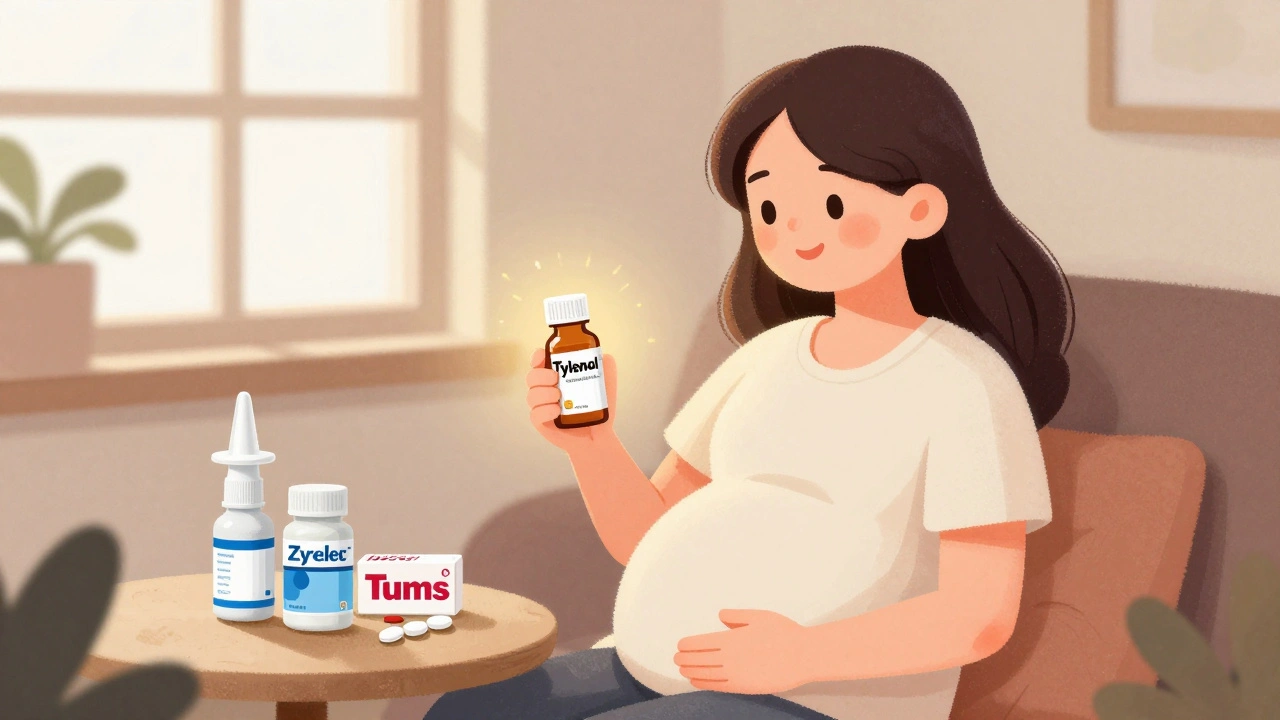
When you’re pregnant, even a simple headache or runny nose can feel like a crisis. You don’t want to risk your baby’s health, but you also don’t want to suffer. The good news? Many common medications are safe during pregnancy - if you know which ones and how to use them correctly. The bad news? There’s a lot of conflicting advice out there, and some products marketed as "natural" or "gentle" can be riskier than you think.
What Makes a Medication Safe During Pregnancy?
There’s no such thing as a 100% risk-free medication in pregnancy. Every drug crosses the placenta to some degree. But safety isn’t about zero risk - it’s about risk that’s lower than the risk of not treating the condition. For example, untreated severe nausea can lead to dehydration and weight loss that harms both you and your baby. Untreated high blood pressure can lead to preeclampsia. Untreated depression can affect bonding and postpartum care. The old A, B, C, D, X letter system for pregnancy drug safety was scrapped in 2015 because it was too simplistic. Today, guidelines rely on detailed summaries based on real human data - not just animal studies. Organizations like the American College of Obstetricians and Gynecologists (ACOG), the CDC, and MotherToBaby track exposure data from over 100,000 pregnancies. If a medication has been used safely by thousands of pregnant people over decades, and no pattern of birth defects or complications has emerged, it’s considered safe.Safe Allergy Medications During Pregnancy
Allergies don’t take a break during pregnancy. Sneezing, itchy eyes, and nasal congestion are common. The safest options are non-drowsy antihistamines:- Cetirizine (Zyrtec) - 10 mg once daily. Used by hundreds of thousands of pregnant people with no increased risk of birth defects. Recommended by University of Michigan, Cleveland Clinic, and Atlanta Women’s OBGYN.
- Loratadine (Claritin) - 10 mg once daily. Also well-studied. Avoid Claritin-D - it contains pseudoephedrine, which is not recommended in the first trimester.
- Fexofenadine (Allegra) - 180 mg once daily. Non-drowsy and safe. Stick to the plain version, not combination products.
Safe Cold and Congestion Relief
Cold symptoms can be miserable. But many cold medicines are dangerous during pregnancy because they contain multiple ingredients - some of which are risky.- Guaifenesin (Mucinex) - 600-1200 mg every 12 hours. Safe for thinning mucus. Only use plain versions. Avoid Multi-Symptom Cold, DayQuil, or NyQuil - they often contain dextromethorphan, pseudoephedrine, or alcohol.
- Dextromethorphan (Robitussin DM) - Maximum 120 mg in 24 hours. Considered safe by most sources, but avoid if you have high blood pressure.
- Saline nasal spray - Safe anytime. Use 3-4 times daily to clear congestion without medication.
Pain Relief: What’s Safe and What’s Not
This is one of the most common questions. You need pain relief - but what can you take?- Acetaminophen (Tylenol) - The only oral pain reliever consistently recommended. Safe at all stages. Maximum dose: 3,000 mg per day. That’s six 500 mg tablets. Don’t exceed it. Tylenol PM contains diphenhydramine - avoid unless absolutely necessary.
Heartburn and Digestive Issues
Heartburn affects up to 80% of pregnant people. Constipation is nearly universal. Here’s what works:- Calcium carbonate (Tums) - Safe and effective. Use as needed for heartburn. Watch your total calcium intake - don’t exceed 2,500 mg daily from all sources. Too much can cause constipation or kidney stones.
- Famotidine (Pepcid) - 20 mg twice daily. A safe H2 blocker. Works well if Tums aren’t enough.
- Polyethylene glycol (Miralax) - 17 g once daily. The only laxative consistently recommended for pregnancy. It doesn’t get absorbed - it just draws water into the bowels. Safe long-term.
Nausea and Vomiting: Morning Sickness Relief
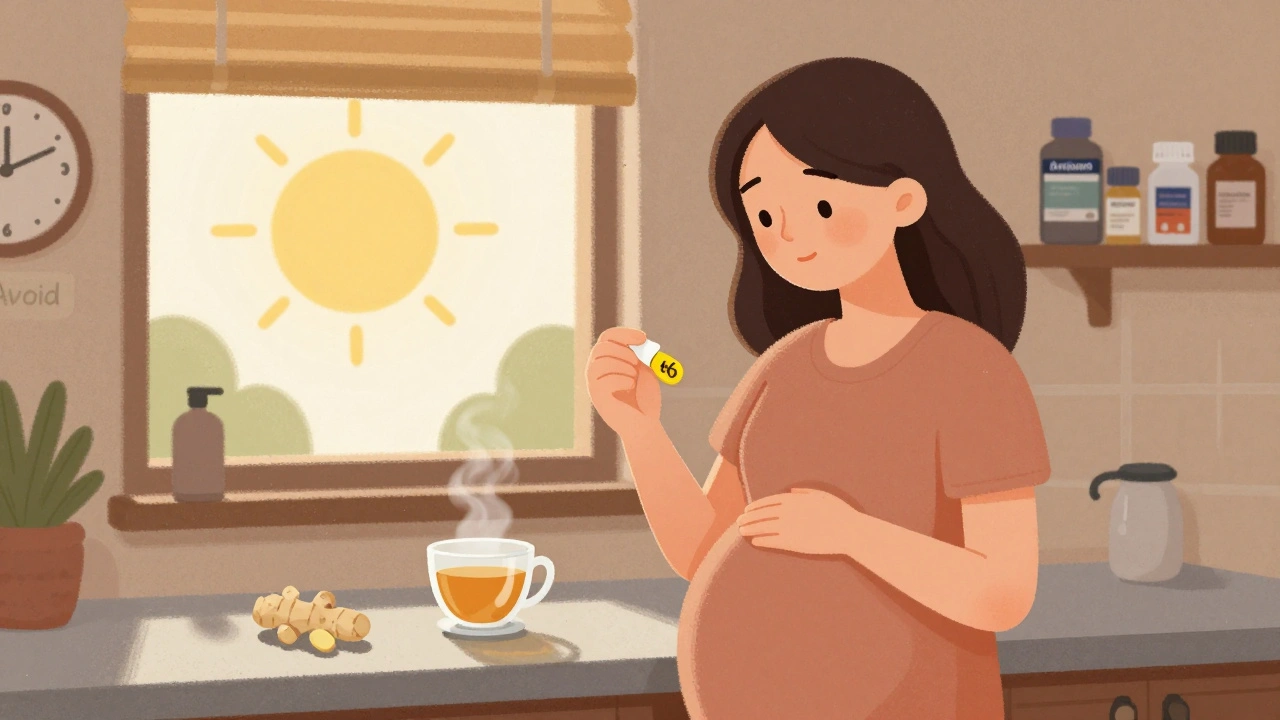
Morning sickness isn’t just in the morning - it can last all day. And it’s not just nausea - it’s vomiting, dizziness, and exhaustion. The most effective, evidence-based treatment is a combination:- Vitamin B6 (pyridoxine) - 25 mg, three times daily.
- Doxylamine succinate (Unisom SleepTabs) - 25 mg, up to three times daily.
What About Antidepressants and Other Prescription Meds?
This is where fear runs high - and misinformation too. Stopping antidepressants suddenly during pregnancy is more dangerous than staying on them. Untreated depression increases the risk of preterm birth, low birth weight, and postpartum depression. The goal isn’t to avoid all meds - it’s to use the safest ones.- Sertraline (Zoloft) - The most studied SSRI in pregnancy. Recommended by ACOG as first-line. Recent FDA warnings about neonatal adaptation syndrome are rare and usually mild - jitteriness, mild breathing trouble, feeding issues. These resolve within days.
- Fluoxetine (Prozac) - Also well-studied. Use with caution in third trimester due to possible prolonged effects.
- Escitalopram (Lexapro) - Considered safe, but less data than sertraline.
What You Should Avoid Completely
Some things are just not worth the risk:- Aspirin - Except in very low doses for specific conditions like preeclampsia prevention (only under doctor supervision).
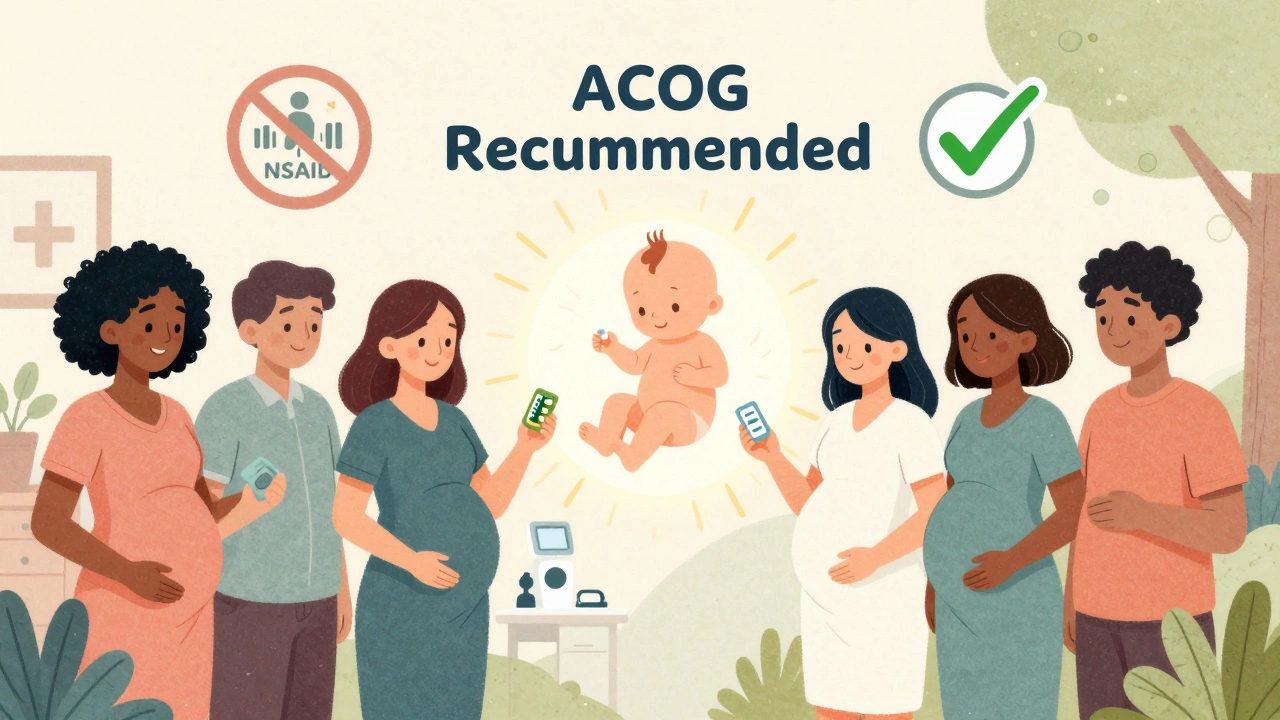
- NSAIDs (ibuprofen, naproxen, celecoxib) - After 20 weeks, they’re dangerous. Avoid even in early pregnancy if possible.
- Isotretinoin (Accutane) - Causes severe birth defects. Must be avoided before and during pregnancy.
- ACE inhibitors and ARBs (for high blood pressure) - Can cause fetal kidney damage. Switch to methyldopa or labetalol.
- Herbal supplements - Most are unregulated. Black cohosh, goldenseal, dong quai, and others can cause contractions or harm the baby. Just because it’s "natural" doesn’t mean it’s safe.
- Alcohol and recreational drugs - No safe amount of alcohol during pregnancy. Marijuana affects fetal brain development.
How to Use This List - Practical Tips
This list is a guide, not a rulebook. Here’s how to use it safely:- Always check the active ingredient - not the brand name. Claritin = loratadine. Zyrtec = cetirizine.
- Never take multi-symptom cold pills. They often hide risky ingredients.
- Stick to the lowest effective dose for the shortest time.
- When in doubt, call your provider or a pregnancy info line like MotherToBaby (1-800-733-4727).
- Keep a list of all medications you take - including vitamins, herbs, and OTC drugs - and review it at every prenatal visit.
- Don’t assume "natural" equals safe. Many herbal products are toxic in pregnancy.
When to Call Your Doctor
You don’t need to panic over every little symptom - but some things need immediate attention:- Feeling dizzy, having blurred vision, or swelling in your face/hands - could be preeclampsia.
- Severe vomiting that won’t stop - you may need IV fluids.
- Thoughts of harming yourself or your baby - call your provider or a crisis line immediately.
- Any new medication you’re considering - even if it’s "on the safe list." Your health history matters.
Final Thoughts: You’re Not Alone
About 90% of pregnant people take at least one medication. Most do so safely. The fear of harming your baby is real - but it shouldn’t stop you from taking care of yourself. Your health matters. Your comfort matters. Your mental health matters. The goal isn’t to be perfect. It’s to be informed. Use this list as a starting point. Talk to your provider. Ask questions. If your provider dismisses your concerns, find someone who listens. You’re doing the best you can. And that’s enough.Is Tylenol really safe during pregnancy?
Yes, acetaminophen (Tylenol) is the safest pain reliever and fever reducer during pregnancy. However, you should not exceed 3,000 mg per day. Avoid Tylenol PM, which contains diphenhydramine. Long-term, high-dose use may have potential neurodevelopmental effects, but the evidence is still unclear. For occasional use at recommended doses, it’s considered safe by ACOG and the CDC.
Can I take Zyrtec or Claritin while pregnant?
Yes, both cetirizine (Zyrtec) and loratadine (Claritin) are considered safe during pregnancy. They are non-drowsy antihistamines with decades of use and no increased risk of birth defects. Avoid Claritin-D or Zyrtec-D - those contain pseudoephedrine, which should be avoided in the first trimester and used cautiously afterward.
Is it safe to take Benadryl for allergies or sleep during pregnancy?
Diphenhydramine (Benadryl) is not linked to birth defects, but newer research suggests it may affect fetal brain development with frequent or long-term use. ACOG now recommends limiting it to occasional use - for example, for a bad allergic reaction or a single night of insomnia. For regular allergy relief, choose Zyrtec or Claritin instead.
What can I take for heartburn besides Tums?
Famotidine (Pepcid) is a safe and effective alternative. It’s an H2 blocker that reduces stomach acid production. Take 20 mg twice daily. Other options include ranitidine (Zantac), but it was recalled in 2020 due to contamination concerns. Always check with your provider before starting any new medication, even if it’s available over the counter.
Are antidepressants safe during pregnancy?
Yes, many antidepressants are safe during pregnancy, especially sertraline (Zoloft), which has the most safety data. Stopping your medication suddenly can be more harmful than continuing it - untreated depression increases risks for preterm birth, low birth weight, and postpartum depression. Always work with your provider to choose the safest option for you and your baby.
Is it safe to use essential oils or herbal remedies during pregnancy?
Most herbal remedies and essential oils are not tested for safety in pregnancy. Some, like black cohosh, pennyroyal, and sage, can cause contractions or harm the baby. Even "natural" products can be potent. Stick to proven remedies like ginger tea for nausea or saline sprays for congestion. Always check with your provider before using any supplement or essential oil.
What should I do if I took a medication before knowing I was pregnant?
Don’t panic. Most medications taken in the first two weeks after conception either have no effect or cause an all-or-nothing outcome - meaning the pregnancy either continues normally or ends in miscarriage. If you took something risky after that, contact MotherToBaby (1-800-733-4727) or your provider. They can assess the risk based on timing, dosage, and your health history. Most exposures do not lead to birth defects.
Courtney Black
December 10, 2025 AT 19:00It's wild how we're told to fear every pill but then told to suffer through migraines and anxiety like it's some rite of passage. The real danger isn't the medicine-it's the guilt we're programmed to carry. I took Zyrtec for 7 months. My kid's 4 now. He draws dragons. No birth defects. Just a kid who likes fire.
Stop punishing yourself for needing relief. You're not failing. You're surviving.
iswarya bala
December 11, 2025 AT 05:46tylenol is life saver fr!! i took it for back pain n my baby is now 2yrs n super healthy!! dont listen to the haters, if ur doctor said its ok then its ok!! <3
Simran Chettiar
December 11, 2025 AT 15:21One must consider the metaphysical implications of pharmaceutical intervention during gestation. The placenta is not merely a biological conduit-it is a threshold of moral responsibility. To ingest a substance is to invite an ontological negotiation between self and other, between autonomy and symbiosis. The Western medical paradigm reduces this sacred exchange to a risk-benefit spreadsheet, ignoring the deeper question: what does it mean to care for another when that other cannot consent?
And yet-do we not consent to this burden by choosing to carry life? Perhaps safety is not found in lists, but in surrender to the unknown.
Still, I take Pepcid. Every night. And I do not regret it.
Richard Eite
December 13, 2025 AT 02:46ACOG says it’s safe so it’s safe. End of story. You want to be a hero? Take the meds. Don’t be one of those girls who cries over a headache like it’s a tragedy. You’re not fragile. You’re pregnant. Get over it. Tylenol. Zyrtec. Done. Stop googling and start living.
Also stop using Benadryl. It’s 2025. We have better options. Grow up.
Katherine Chan
December 14, 2025 AT 05:19you are not alone in this i was so scared to take anything but then i started taking zyrtec and it changed everything
my anxiety went down my sleep got better and my baby is now a happy 1 year old who loves bananas
you’re doing amazing even if you feel like you’re failing
we got this
Philippa Barraclough
December 14, 2025 AT 05:21While the data on cetirizine and loratadine is indeed robust, I find it concerning that the piece does not address the potential for pharmacokinetic variability in pregnancy. Increased plasma volume, altered CYP450 metabolism, and changes in renal clearance may affect drug distribution in ways that are not fully captured by population-level safety data. For instance, while Zyrtec is generally safe, a subset of individuals may experience higher plasma concentrations due to reduced tubular secretion in the third trimester.
Moreover, the recommendation to avoid diphenhydramine for long-term use is supported by emerging neurodevelopmental studies, but these are largely observational and confounded by maternal sleep deprivation and underlying anxiety disorders. Causality remains elusive.
I appreciate the thoroughness, but I wish the piece engaged more deeply with the epistemological limits of our evidence base.
Tim Tinh
December 15, 2025 AT 03:52so i took tylenol pm for like 3 nights when i was 18wks because i was exhausted and couldn’t sleep
my kid is 3 now and he’s a little monster but in the best way
also i used to take aleve before i got preggo and i felt so guilty but honestly? i think my body knew what it was doing
you’re not a bad mom for taking meds. you’re a smart one for asking questions
Olivia Portier
December 16, 2025 AT 16:39my sister took sertraline the whole time and her daughter is now a straight A student who plays violin
she was so scared to stay on it but her therapist said if she stopped she might not even be able to hold her baby after birth
so she stayed on it
and now she’s the one who shows up for every parent meeting
you’re not weak for needing help
you’re brave for asking for it
Tiffany Sowby
December 18, 2025 AT 07:18Wow. So we’re just supposed to trust some committee that doesn’t even know what it’s talking about? I read a study that said acetaminophen might cause ADHD. And now you’re telling me to take it like it’s water?
And don’t get me started on Zyrtec. I know a woman whose kid had a cleft palate. She took it in week 8. Coincidence? Maybe. But why risk it?
Why not just… suffer? Isn’t that what motherhood is supposed to be? Pain? Sacrifice? Guilt?
Oh wait. You’re just telling me to take the pills. Classic.
Guylaine Lapointe
December 18, 2025 AT 14:17It is deeply irresponsible to suggest that "many common medications" are safe without distinguishing between therapeutic necessity and convenience. The normalization of pharmaceutical use during pregnancy, particularly for non-life-threatening conditions such as seasonal allergies or mild heartburn, reflects a troubling cultural shift toward medicalization of normal physiological states.
While the data cited may be statistically sound, it does not absolve the practitioner of the ethical imperative to prioritize non-pharmacological interventions first. Saline sprays, dietary fiber, positional changes, and cognitive behavioral therapy are not merely "alternatives"-they are foundational.
Furthermore, the dismissal of herbal remedies as universally dangerous ignores millennia of ethnobotanical knowledge. The problem is not the plants-it is the lack of standardization, regulation, and culturally competent counseling.
One must ask: who benefits from this list? The pregnant person? Or the pharmaceutical industry?