
Most people don’t think about what happens to their old pills after they’re done with them. But improper storage or disposal of medications can lead to accidental poisonings, drug abuse, and even environmental damage. In Australia, over 1,200 emergency room visits each year are linked to accidental medication exposure in children under five. And flushing pills down the toilet? That’s not just a bad habit-it’s contaminating our waterways. The good news? Proper handling is simple, and it starts with knowing how to store and dispose of prescriptions correctly.
Where to Store Your Medications
Your medicine cabinet isn’t always the best place. Bathrooms are humid, and kitchen cabinets get hot from the stove. Heat, moisture, and light can break down drugs, making them less effective-or even dangerous. Most medications work best stored between 68°F and 77°F (20°C to 25°C). That means a cool, dry drawer in a bedroom or hallway is better than the bathroom.
For medications that need refrigeration-like insulin, certain eye drops, or injectables-keep them in the fridge at 36°F to 46°F (2°C to 8°C). Don’t freeze them unless the label says to. Always keep the original bottle with the label on it. That’s your proof of what’s inside, and it has important expiry dates and usage instructions.
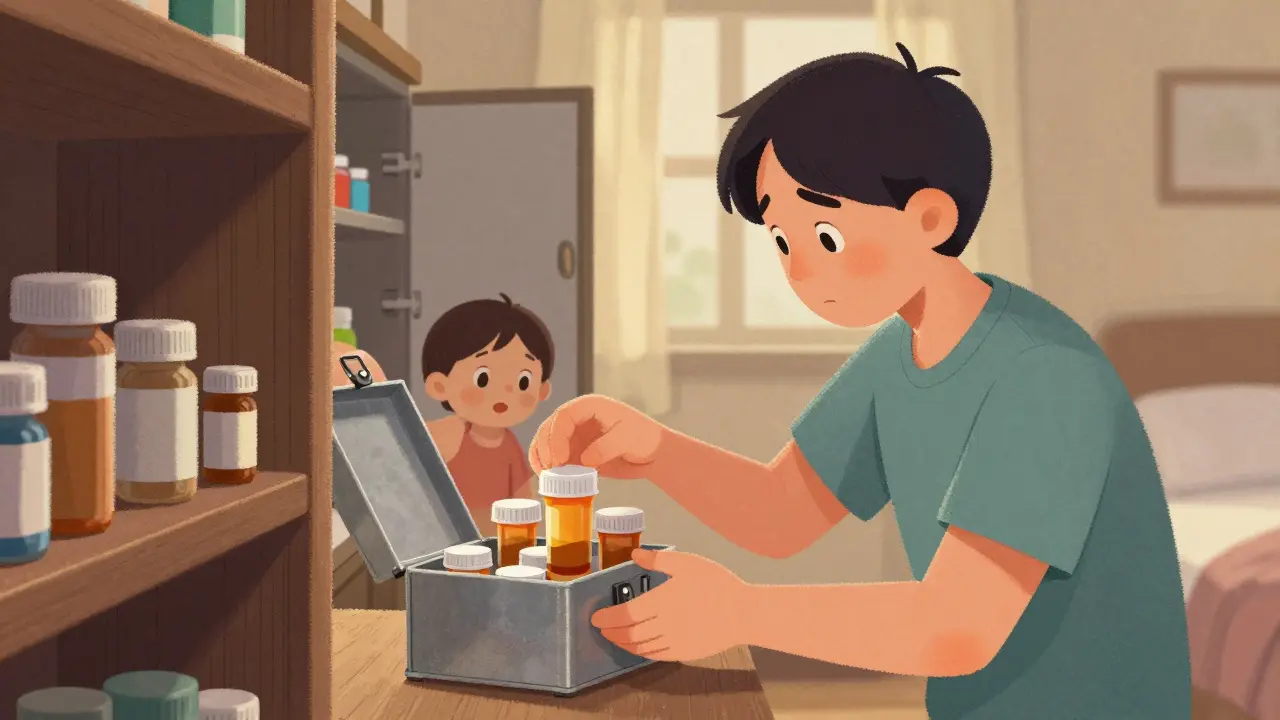
Controlled substances-like opioids, benzodiazepines, or stimulants-need extra care. These are high-risk for misuse. Store them in a locked box, not just a cabinet. Many pharmacies sell affordable lockboxes designed for this. If you have kids, pets, or houseguests, this step is non-negotiable. A 2022 FDA survey found that 61% of people didn’t realize their unused painkillers could be stolen and abused by teens or visitors.
How to Dispose of Medications Safely
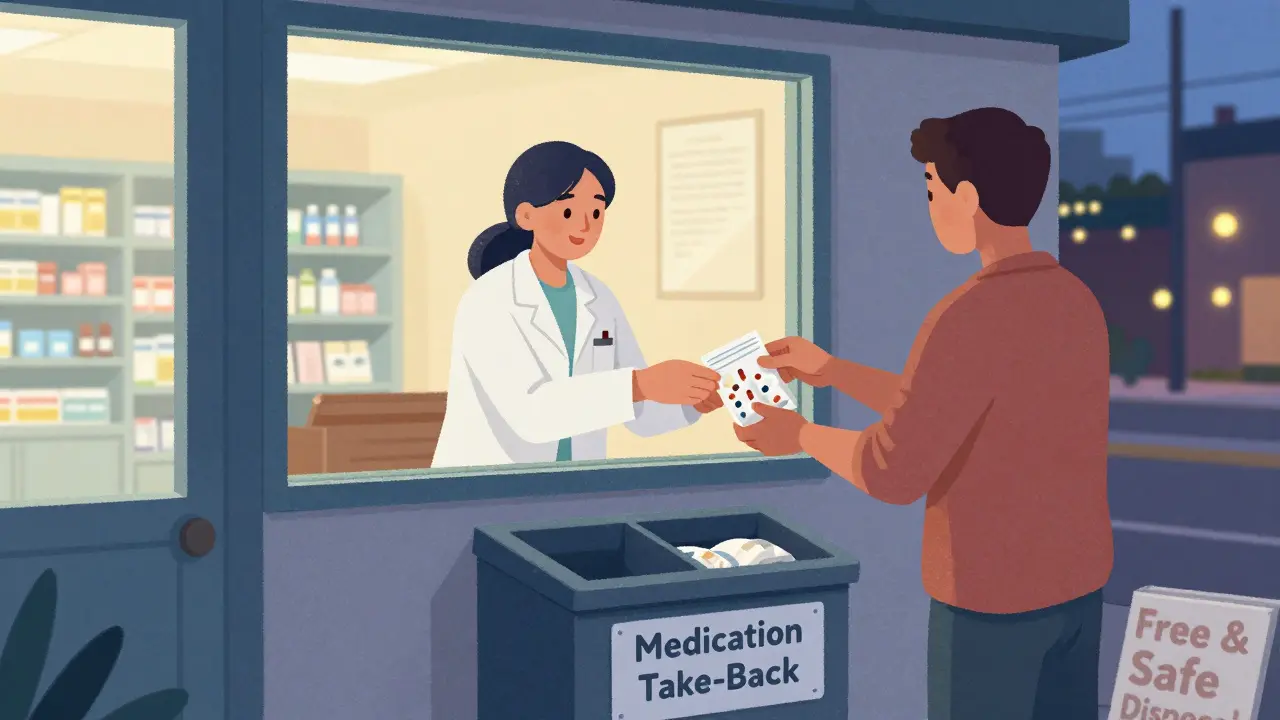
The safest way to get rid of unused or expired meds? Use a take-back program. These are drop-off locations-often at pharmacies, hospitals, or police stations-where you can hand over your old pills without questions. In Australia, many pharmacies participate in the National Drug and Alcohol Treatment and Referral Service. In the U.S., the DEA runs the National Prescription Drug Take Back Day twice a year, with over 11,000 collection sites registered as of 2022.
But what if there’s no take-back option nearby? Don’t flush. Don’t toss pills into the trash without preparation. The FDA has clear instructions for home disposal:
- Remove pills from their original bottles.
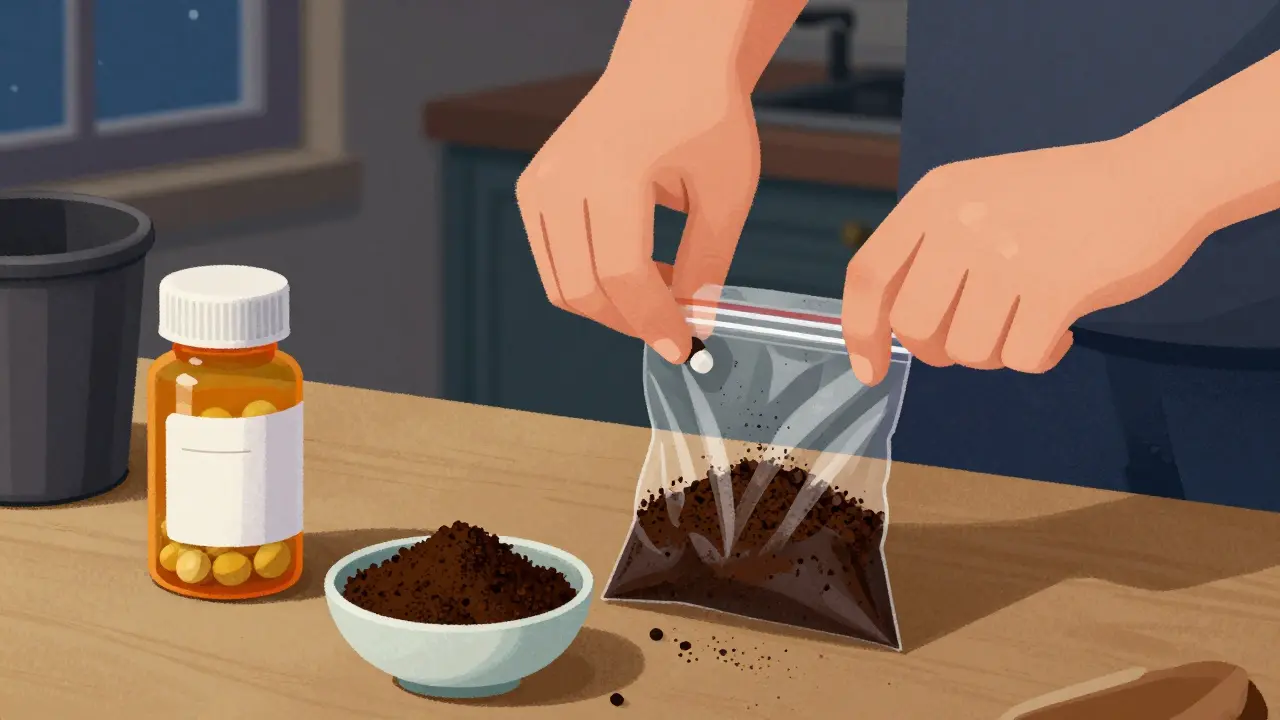
- Mix them with something unappetizing-used coffee grounds, cat litter, or dirt. Don’t crush pills unless the label says it’s safe (some capsules shouldn’t be crushed).
- Put the mixture into a sealed plastic bag or container, like an empty jar or a ziplock.
- Scratch out your name and prescription number on the empty bottle with a marker.
- Throw the sealed container in the household trash.
This method cuts pharmaceutical contamination in water by 99.8% compared to flushing, according to FDA testing. It’s not glamorous, but it works.
When Flushing Is the Only Option
There’s one exception: the FDA’s flush list. A small number of drugs are so dangerous if misused that flushing is the safest disposal method-when no take-back option exists. These include certain opioids like oxycodone, fentanyl patches, and one benzodiazepine: alprazolam. The list has 15 medications total. If your medicine is on it, and you can’t get to a take-back site, flush it immediately. The risk of accidental overdose outweighs the environmental concern.
Check the FDA’s website or the patient information sheet that came with your prescription. If it says “flush,” then do it. If it doesn’t? Follow the coffee grounds method above.
What Happens at Healthcare Facilities
Hospitals and clinics don’t just throw pills in the trash. They follow strict federal rules under the EPA’s Subpart P, which took effect in 2019. This law bans flushing hazardous pharmaceutical waste down drains and requires healthcare facilities to use special containers for disposal.
Hazardous waste pharmaceuticals-about 5% to 10% of all drug waste-are sent to licensed incinerators. This includes chemotherapy drugs, certain antibiotics, and some painkillers. Non-hazardous drugs are handled differently, often through regulated medical waste services. But here’s the catch: take-back bins in hospitals? Those are only for patients who were prescribed the drugs. You can’t drop off your old meds at a hospital pharmacy unless you’re a current patient. That’s a common misunderstanding.
Staff at healthcare facilities get trained on these rules. It’s complex. A 2021 study found that 42% of nurses were unsure which medications counted as hazardous. That’s why facilities use color-coded bins, digital tracking systems, and third-party waste haulers. Records of destruction must be kept for at least three years.
Why This Matters Beyond Your Home
Every year, an estimated 247 million pounds of pharmaceuticals end up in U.S. waterways because of improper disposal. That’s not just a problem for fish-it’s a problem for people. Studies have found traces of antidepressants, birth control, and antibiotics in drinking water supplies. While the health effects on humans are still being studied, the environmental impact is clear: aquatic life is changing. Fish are showing signs of hormonal disruption, and some species are losing the ability to reproduce.
And then there’s the misuse angle. Unused opioids are a leading cause of addiction in teens. A 2022 American Hospital Association report found that 68% of hospitals saw increased costs after new disposal rules kicked in-mostly because of training, containers, and waste transport. But they’re still doing it. Why? Because it saves lives.
Common Mistakes and How to Avoid Them
- Mistake: Keeping expired meds “just in case.” Fix: Toss anything past its expiry date. Effectiveness drops over time. Some, like insulin or epinephrine, can become dangerous.
- Mistake: Throwing empty pill bottles in recycling. Fix: Scrub off labels, remove personal info, then recycle if your local program accepts plastic #1 or #2. Otherwise, toss in the trash.
- Mistake: Assuming take-back programs accept controlled substances. Fix: Most community drop-offs only take non-controlled meds. For opioids or stimulants, contact your pharmacy or DEA-registered collector. In Australia, call the National Drug and Alcohol Treatment and Referral Service for guidance.
- Mistake: Flushing everything. Fix: Only flush if your medication is on the FDA’s flush list. Otherwise, use the coffee grounds method.
What’s Changing in 2026?
Regulations are tightening. The EPA is expected to propose new water quality standards for pharmaceuticals by 2025. More states are passing laws requiring pharmacies to offer take-back bins year-round, not just during special events. In Australia, new legislation passed in late 2024 requires all community pharmacies to provide free disposal bags and information on safe disposal.
Technology is helping too. Smart disposal kiosks are being tested in hospitals and pharmacies. These machines scan your prescription label, sort the medication automatically, and direct it to the right disposal stream-incineration, recycling, or secure storage. Early results show a 70% increase in proper disposal rates.
The bottom line? Medication safety isn’t just about taking pills right. It’s about what you do with them when you’re done. A few minutes of attention now can prevent harm later-for your family, your community, and the environment.
Can I flush all expired medications down the toilet?
No, you should not flush most medications. Only the 15 drugs on the FDA’s flush list should be flushed, and only if no take-back option is available. These include specific opioids and one benzodiazepine. For all other medications, mix them with coffee grounds or cat litter, seal them in a container, and throw them in the trash. Flushing contributes to water contamination and is illegal for non-listed drugs under EPA regulations.
Where can I find a medication take-back location near me?
In Australia, check with your local pharmacy or visit the National Drug and Alcohol Treatment and Referral Service website. In the U.S., use the DEA’s National Prescription Drug Take Back Day locator or search for “drug disposal near me” on your city’s public health site. Many police stations and hospitals also have year-round drop boxes. Always call ahead-some locations only accept non-controlled substances.
What should I do with empty prescription bottles?
Remove the label by peeling it off or covering it with permanent marker to hide your name and prescription details. Then, check your local recycling rules. Most plastic bottles (number #1 or #2) can be recycled if clean. If recycling isn’t available, throw the bottle in the trash. Never reuse prescription containers for storing other substances.
Why can’t I just throw old pills in the trash without mixing them up?
Unmixed pills in the trash can be found and taken by children, pets, or people looking for drugs. Mixing them with coffee grounds, cat litter, or dirt makes them unappealing and unrecognizable. It’s a simple step that prevents misuse and accidental poisoning. The FDA recommends this method because it reduces the risk of exposure by over 99% compared to tossing pills alone.
Do I need to dispose of medications differently if they’re controlled substances?
Yes. Controlled substances like oxycodone, Adderall, or Xanax require special handling. Most community take-back programs can’t accept them. Contact your pharmacy, local DEA-registered collector, or law enforcement agency. In Australia, the National Drug and Alcohol Treatment and Referral Service can guide you. Never put these in the regular trash or flush them unless instructed. Improper disposal of controlled substances can lead to legal consequences and increased risk of diversion and abuse.
Brandon Shatley
March 23, 2026 AT 17:36also lol at the coffee grounds trick. kinda gross but makes sense. better than flushing.
Blessing Ogboso
March 24, 2026 AT 00:17Jefferson Moratin
March 24, 2026 AT 14:57winnipeg whitegloves
March 25, 2026 AT 13:45Korn Deno
March 25, 2026 AT 16:35Anil Arekar
March 25, 2026 AT 17:56Elaine Parra
March 27, 2026 AT 06:59Rama Rish
March 28, 2026 AT 15:32Kevin Siewe
March 29, 2026 AT 03:00Chris Farley
March 30, 2026 AT 23:52Sean Bechtelheimer
March 31, 2026 AT 07:37Seth Eugenne
April 1, 2026 AT 18:45