
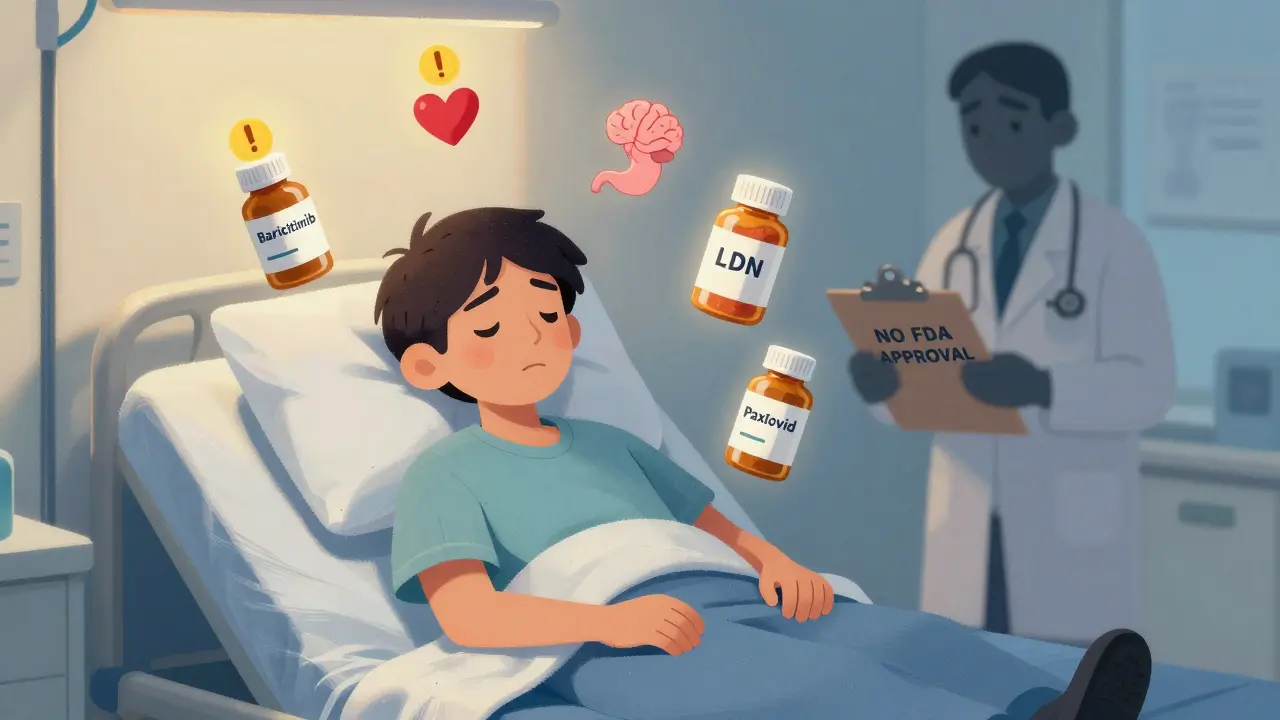
Long COVID Treatment Comparison Tool
Baricitinib
Evidence Level: Promising
Previously approved for rheumatoid arthritis; currently in NIH-funded REVERSE-LC trial
Key Benefits:
- May reduce fatigue and inflammation
- Previously shown to reduce death in acute COVID-19
Major Risks:
- Increased risk of serious infections (3.3-4.1 cases per 100 patient-years)
- Higher risk of blood clots and cancer
- Risk may be higher in younger Long COVID patients
Who Might Benefit:
People with persistent inflammation
Who Should Avoid:
People with history of serious infections, blood clots, or cancer
Metformin
Evidence Level: Early Promise
60-year-old diabetes drug; showed 41% reduced risk of developing Long COVID when started within 5 days of positive test
Key Benefits:
- May prevent Long COVID when used early
- Readily available and inexpensive
Side Effects:
- Gastrointestinal issues (35.7% of users: nausea, diarrhea)
- Not proven effective for established Long COVID
Who Might Benefit:
People who start treatment within 5 days of positive test
Who Should Avoid:
People with kidney issues, heart failure, or taking other medications
Low-Dose Naltrexone (LDN)
Evidence Level: Limited
Off-label use originally for opioid addiction; 62% reported improved energy in patient surveys
Key Benefits:
- Might calm immune overactivity
- Low cost and accessible
Side Effects:
- 28% reported worse sleep
- 19% experienced headaches
- 11% experienced severe anxiety
Who Might Benefit:
People with immune overdrive subtype
Who Should Avoid:
People with mental health conditions or sensitive to side effects
Paxlovid
Evidence Level: Mixed
Antiviral combo; 38% symptom improvement in small study, but no difference from placebo in larger NIH trial
Key Benefits:
- May help people with persistent viral components
- Available if taken early in infection
Side Effects:
- Bitter taste (79% of users)
- Drug interactions with dozens of medications
- 40% of users had to stop other meds
Who Might Benefit:
People with confirmed viral persistence (unclear)
Who Should Avoid:
People taking blood thinners, statins, or other medications with known interactions
Important Considerations
- No FDA-approved treatments: All current treatments are off-label uses of existing medications
- Subtype matters: Different Long COVID subtypes (fatigue/brain fog, heart rhythm issues, immune overdrive, metabolic dysfunction) may respond differently
- Side effects often exceed benefits: 57% of users felt worse after trying treatments
- Timing is critical: Metformin only shows benefit when taken within 5 days of positive test
- Medical guidance essential: 68% of patients tried off-label treatments without medical supervision
The number of people living with Long COVID continues to climb. As of early 2026, an estimated 200 million people worldwide are still dealing with symptoms that won’t go away - fatigue that crushes your energy, brain fog that makes simple decisions feel impossible, heart palpitations that come out of nowhere, and muscle pain that lingers long after the virus is gone. For many, the acute phase of COVID-19 is over, but the illness isn’t. And here’s the hard truth: there are still no FDA-approved drugs specifically for Long COVID. That means people are turning to medications that were never designed for this - and that’s where the real danger and the real hope lie.
Repurposed Drugs: Hope Built on Old Safety Data
Most of the current treatment efforts are based on repurposing drugs already approved for other conditions. It’s the fastest path forward. But using a drug for a new purpose doesn’t automatically mean it’s safe for that new group of patients. The safety profile of baricitinib, for example, was built in people with rheumatoid arthritis - older adults with weakened immune systems. Long COVID patients? Many are younger, previously healthy, and not immunocompromised. So when you hear about baricitinib being tested in the REVERSE-LC trial, you need to ask: does its known risk of serious infections, blood clots, and cancer make sense for someone who just wants to walk up stairs without collapsing?
Baricitinib showed promise in reducing death during acute COVID-19. Now it’s being tested to see if it can help with Long COVID fatigue and inflammation. The NIH is pouring money into this trial - over $100 million - because the early signals were strong. But the FDA label warns of major cardiovascular events happening in 3.3 to 4.1 cases per 100 patient-years. That’s not a small number. And we don’t yet know if Long COVID patients, who may already have endothelial damage, are at higher risk. The trial results won’t be out until late 2026. Until then, some doctors are prescribing it off-label. Others refuse.
Metformin: The Unexpected Front-Runner
Metformin, a 60-year-old diabetes drug, is now one of the most talked-about treatments. A 2023 study from the University of Minnesota, published in Nature Medicine, found that people who started metformin within five days of a positive COVID test had a 41% lower chance of developing Long COVID. That’s not just statistically significant - it’s dramatic. The effect was so strong, it’s now being tested in larger phase 3 trials.
But here’s the catch: 35.7% of people in the trial had gastrointestinal side effects - nausea, diarrhea, cramps. That’s more than one in three. For someone already battling brain fog and fatigue, adding constant stomach pain might feel worse than the original symptoms. And we still don’t know if metformin works for people who’ve had Long COVID for months or years. The study only looked at early intervention. What about the person who’s been sick for 18 months? No data yet.
Low-Dose Naltrexone: A Quiet Hope with Hidden Costs
Low-dose naltrexone (LDN), usually given at 1-5 mg daily, is another off-label favorite. Originally used to treat opioid addiction at 50 mg, the low dose seems to calm immune overactivity. A 2024 patient survey from Nova Southeastern University found that 62% of Long COVID patients reported improved energy after three months of LDN. That’s powerful. But 28% had worse sleep. 19% got headaches. One person reported severe anxiety. These aren’t rare side effects - they’re common enough to be tracked.
There’s no large, randomized trial yet. Just observational data. That means we don’t know if the improvement was real, or if people felt better because they believed it would work. The placebo effect is strong in Long COVID. And because LDN is cheap and off-patent, there’s no pharmaceutical company funding big studies. So progress is slow. Patients are left to experiment on themselves - often without medical supervision.
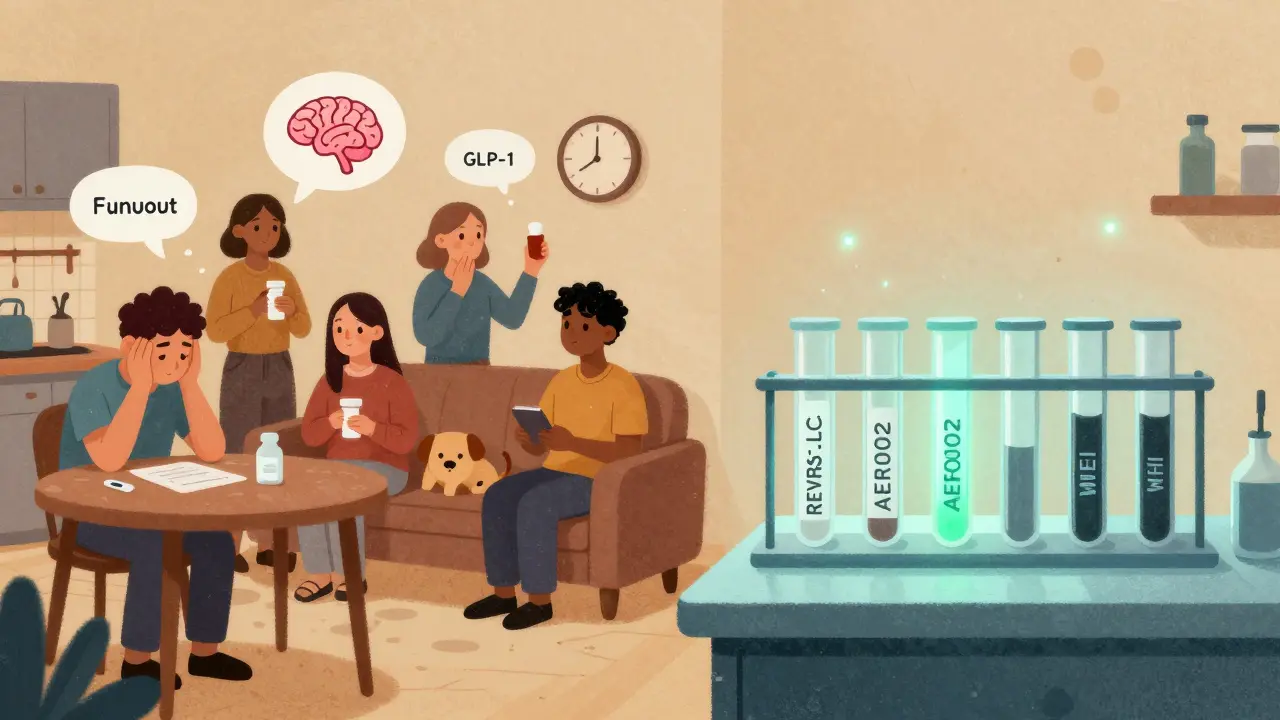
Paxlovid: Mixed Signals and a Bitter Taste
Paxlovid - the antiviral combo of nirmatrelvir and ritonavir - was the go-to for early COVID. Now it’s being tested for Long COVID. The results? Confusing. A small study from UCSF in 2024 showed a 38% symptom improvement with a 15-day course. But a larger NIH trial published in JAMA Internal Medicine in early 2025 found no difference between Paxlovid and placebo. The numbers were almost identical: 34.1% vs. 32.8% improvement. So what’s going on?
One thing we do know: 79% of users reported a bitter, metallic taste. Some say it’s unbearable. Others describe it as a constant reminder they’re sick. And ritonavir - the booster in Paxlovid - interacts with dozens of common medications. Blood thinners, statins, anti-anxiety drugs, even some heart medications. For someone already on multiple pills, this isn’t just inconvenient - it’s dangerous. A 2025 review found that 40% of Long COVID patients on Paxlovid had to stop or adjust other meds because of interactions.
Failed Trials and Hidden Risks
Not every drug even makes it to the finish line. The BC007 trial - designed to clear out harmful autoantibodies thought to cause Long COVID - was shut down in March 2025. Why? It didn’t work better than placebo. Worse, three patients in the treatment group had serious infusion reactions. One needed ICU care. That’s the reality of experimental treatments: success is rare. Failure is common.
Other drugs are still in early testing. AER002, a long-acting antibody, showed only mild infusion reactions in 18% of participants. Polymerized collagen, injected into the skin, caused only temporary pain in 12%. These look safe - but we don’t know if they do anything. Safety without efficacy is just a placebo with needles.
The Unknowns Are the Biggest Threat
Here’s what we still don’t know - and why this is so dangerous:
- No biomarkers. We can’t test for Long COVID. No blood test. No scan. No clear signal that someone has it - or that a treatment is working. Doctors are guessing.
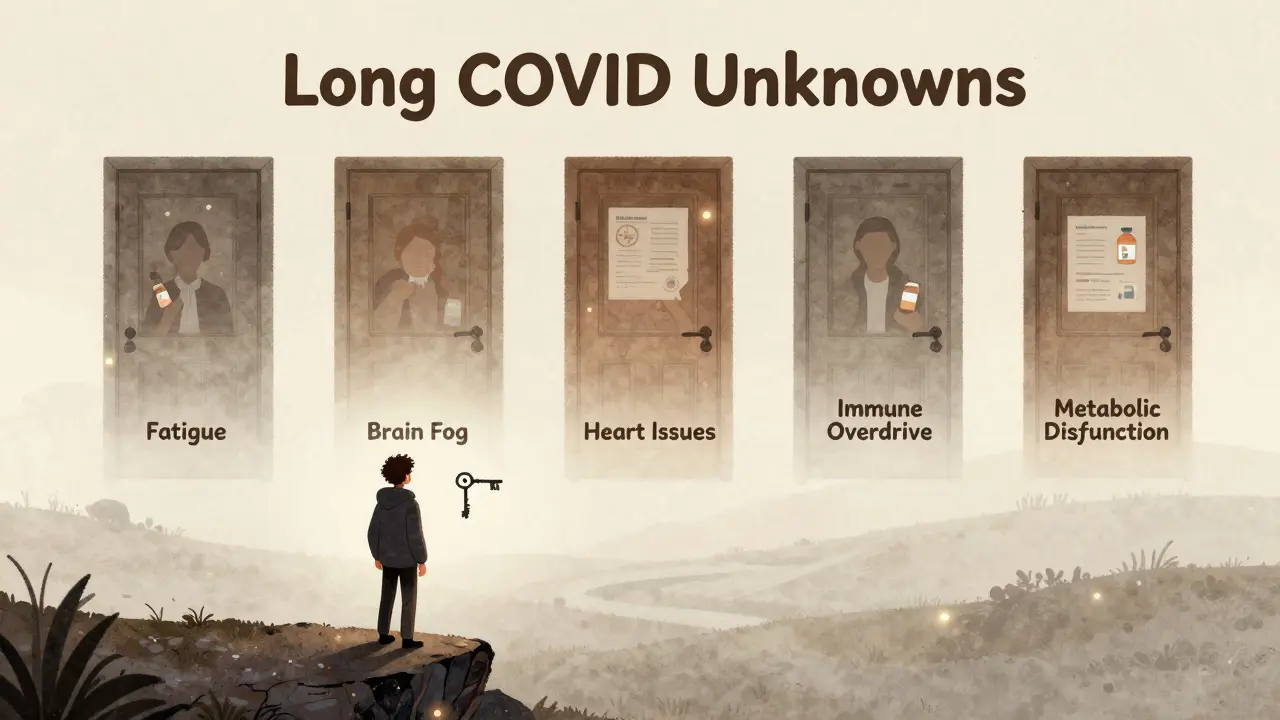
- No consensus on subtypes. The NIH now recognizes at least four different forms of Long COVID: one driven by fatigue and brain fog, another by heart rhythm issues, another by immune overdrive, and a fourth by metabolic dysfunction. Treating them all with the same drug is like using one key to open every lock in a city.
- Unknown long-term effects. We don’t know if taking baricitinib for six months will raise cancer risk. We don’t know if LDN for two years will damage the liver. We don’t know if metformin changes gut bacteria permanently. These drugs were studied for months - not years - in different populations.
- Who gets treated? A 2025 survey of 15,000 Long COVID patients found that 68% tried at least one off-label medication. But only 12% had any medical guidance. The rest self-prescribed based on online forums. That’s not healthcare. That’s trial and error.
What Patients Are Really Experiencing
Community feedback paints a clearer picture than clinical trials. The Body Politic support group, with over 15,000 members, reports:
- 32% have tried metformin - but 57% say it didn’t help enough
- 29% tried LDN - 41% said side effects were worse than symptoms
- 24% tried Paxlovid - many quit because of the taste or drug interactions
- 57% of respondents said they felt worse after trying a medication
These aren’t just numbers. These are people who spent their savings on supplements, drove hours to clinics offering unproven treatments, and lost jobs because they couldn’t keep up. And now they’re told: “We don’t know what works.”
What Comes Next?
The NIH’s RECOVER initiative is now testing GLP-1 agonists like tirzepatide - drugs originally for diabetes and weight loss. The theory? Long COVID may involve metabolic dysfunction and brain inflammation. But tirzepatide causes nausea in 20-25% of users. Would someone with chronic fatigue want to add vomiting to their list of problems?
Stellate ganglion blocks - nerve injections used for chronic pain - are also being tested. Early data from pain clinics shows 15% get hoarseness. 5% get a hematoma. But no one has studied whether this helps brain fog or fatigue in Long COVID. It’s a shot in the dark.
And then there’s the new discovery: a compound from WEHI in Australia that prevented Long COVID symptoms in mice. It’s not even in human trials yet. Toxicity studies start in early 2026. That’s two years away. For someone who’s been sick for three years, that’s a lifetime.
Bottom Line: Patience, Caution, and Realistic Expectations
There’s no magic pill. Not yet. And there won’t be until we understand what Long COVID actually is. Right now, we’re treating symptoms with drugs designed for other diseases - and hoping for the best. The safest approach? Avoid unmonitored off-label use. If you’re considering a medication, ask your doctor: “What’s the evidence? What are the risks for someone like me? And what happens if it doesn’t work?”
The next two years will be critical. Results from baricitinib and metformin trials could lead to the first FDA-approved Long COVID treatments by 2027 or 2028. But until then, the biggest risk isn’t doing nothing - it’s doing something unproven without knowing the cost.
Are there any FDA-approved drugs for Long COVID yet?
No. As of early 2026, there are no drugs approved by the FDA specifically for Long COVID. All current treatments are off-label uses of medications approved for other conditions, such as rheumatoid arthritis, diabetes, or opioid dependence. Clinical trials for potential treatments like baricitinib and metformin are ongoing, with results expected in 2026 and 2027.
Why is baricitinib being tested for Long COVID if it has serious side effects?
Baricitinib was originally approved for rheumatoid arthritis and showed strong anti-inflammatory effects in severe acute COVID-19. Researchers believe its ability to calm immune overactivity might help Long COVID patients with persistent inflammation. The key question is whether the benefits outweigh the risks - like increased infection, blood clots, or cancer - in a younger, generally healthier population. That’s why the NIH is running a large, controlled trial. It’s not a go-ahead to use it freely.
Can I take metformin on my own to prevent Long COVID?
The study showing a 41% reduction in Long COVID risk only applied to people who took metformin within five days of a positive test. It did not test people who already had Long COVID. Taking it after symptoms appear may not help, and the 35% rate of gastrointestinal side effects can be severe. Self-prescribing without medical supervision risks complications, especially if you have kidney issues, heart failure, or are on other medications. Always consult a doctor before starting metformin.
Why do some people say LDN helped them while others say it made things worse?
Low-dose naltrexone (LDN) is an immunomodulator, meaning it affects the immune system - but not everyone’s immune system reacts the same. Some Long COVID patients have overactive immune responses, others have exhausted immune systems. LDN may help one group and harm another. Also, sleep disturbances and headaches are common side effects, reported in nearly a third of users. Without standardized dosing or monitoring, results vary wildly.
Is Paxlovid worth trying for Long COVID symptoms?
Evidence is mixed. One small study showed modest benefit; a larger NIH trial found no difference from placebo. The bitter taste affects nearly 80% of users, and the ritonavir component interacts dangerously with many common medications - including statins, blood thinners, and anti-anxiety drugs. For most people, the risks and side effects likely outweigh the uncertain benefits. It’s not recommended outside of a clinical trial.
What should I do if I’m considering an off-label treatment for Long COVID?
Talk to a specialist familiar with Long COVID - ideally at a clinic affiliated with a major research center. Ask for evidence from peer-reviewed studies, not anecdotes. Request a clear plan: what dose, how long, what side effects to watch for, and what to do if symptoms worsen. Keep a symptom diary. Never stop or start medications without medical guidance. And remember: if something sounds too good to be true - like a miracle cure - it almost always is.
Milad Jawabra
March 4, 2026 AT 02:24Let’s be real - we’re all just guinea pigs at this point. Baricitinib? Metformin? LDN? Paxlovid? I tried three of them. Lost my job, drained my savings, and still can’t walk to the fridge without needing a nap. But hey - at least I’m not dead. The fact that we’re being told to ‘wait for trials’ while our lives rot is a crime. Someone’s making money off this. Not me. Not you. Definitely not the 200M of us.
Stop pretending this is science. It’s a dumpster fire with a NIH logo. I’m not mad - I’m just done waiting. If you’re considering anything off-label? Do your homework. Track your symptoms. Talk to other patients. And for god’s sake - don’t let a doctor who’s never met a Long COVID patient tell you what’s ‘safe’.
I’m on LDN now. Sleep’s trash. But my brain fog? 30% lighter. I’ll take it. 🤷♂️
tatiana verdesoto
March 5, 2026 AT 13:43I just want to say - I feel you. I’ve been sick for 4 years. Tried everything. The taste of Paxlovid? Still haunts me. I remember crying in the shower because I couldn’t even swallow water after taking it. 😭
Metformin gave me diarrhea so bad I canceled my sister’s wedding. LDN made me feel like a zombie with a headache. But… I’m still here. And I’m still trying. That’s the thing no one talks about - we’re not just patients. We’re warriors. And we’re not giving up.
To anyone new: you’re not alone. Even if no one in your family gets it. Even if your doctor shrugs. You’re not crazy. This is real. 💙
Ethan Zeeb
March 6, 2026 AT 21:38Baricitinib’s 4.1% risk of major cardiovascular events isn’t ‘maybe dangerous’ - it’s a red flag. We’re talking about young, healthy people. Why are we even considering this? The NIH is throwing money at the wrong problem.
Metformin’s 41% reduction? Maybe. But only if taken within 5 days. That’s useless for 99% of us. LDN? Anecdotes aren’t data. And Paxlovid’s 79% bitter taste? That’s not a side effect - it’s a deterrent. We need biomarkers. Not more placebo-controlled trials on drugs designed for old men with arthritis.
This isn’t medicine. It’s desperation with a clinical trial number.
Darren Torpey
March 8, 2026 AT 20:59Man, this whole thing feels like watching a wildfire spread while someone hands you a water pistol and says ‘stay hydrated.’
Metformin? A quiet hero. LDN? The weird uncle who shows up unannounced and either fixes your life or ruins your sleep. Paxlovid? A bitter ghost haunting your tongue for weeks.
But here’s the real kicker - we’re not just fighting a disease. We’re fighting invisibility. No scan. No test. No validation. Just a bunch of us huddled in online forums, trading stories like ancient runes, trying to piece together a map from broken compasses.
Someone’s gotta fund the damn biomarkers. Until then? We’re the scientists. We’re the lab. And yeah - we’re the guinea pigs too.
But damn - if we’re gonna be the experiment… let’s at least make the data count.
Lebogang kekana
March 9, 2026 AT 03:25Broooooo. I just wanna scream. I’ve been on LDN for 8 months. My energy? UP. My brain fog? GONE. My sleep? Like a zombie who got kicked by a donkey. 😵💫
But I’m telling you - if you’re sitting there waiting for a ‘magic pill’? You’re already losing. This ain’t about pills. It’s about showing up. Every. Single. Day.
Drink water. Walk outside. Breathe. Even if you can only do 2 minutes. That’s victory. The meds? Maybe they help. Maybe they don’t. But YOU - your will? That’s the real treatment.
Stop asking ‘what’s next?’ Start asking ‘what can I do right now?’
🔥💪
Jessica Chaloux
March 10, 2026 AT 07:54I took metformin because I read a Reddit post. Now I’m in the ER because my potassium dropped. My doctor said I was ‘lucky’ I didn’t have a heart attack. 😭
I just wanted to feel normal again. Now I feel like a cautionary tale.
Why does no one warn us? Why do we have to learn this the hard way?
Someone please just… hold my hand.
Mariah Carle
March 11, 2026 AT 01:35Here’s the philosophical knot: if we treat Long COVID as a medical condition, we demand a pill. But what if it’s not a disease - it’s a rupture? A fracture in the contract between body and self?
Baricitinib doesn’t heal the trauma of being abandoned by the healthcare system. LDN doesn’t mend the grief of losing your future. Metformin doesn’t restore the trust you had in your own body.
We’re trying to cure a wound with a Band-Aid made of pharmaceuticals.
Maybe the real treatment isn’t in a pill bottle…
…but in the quiet courage of showing up - even when no one believes you.
Alex Brad
March 11, 2026 AT 05:37