
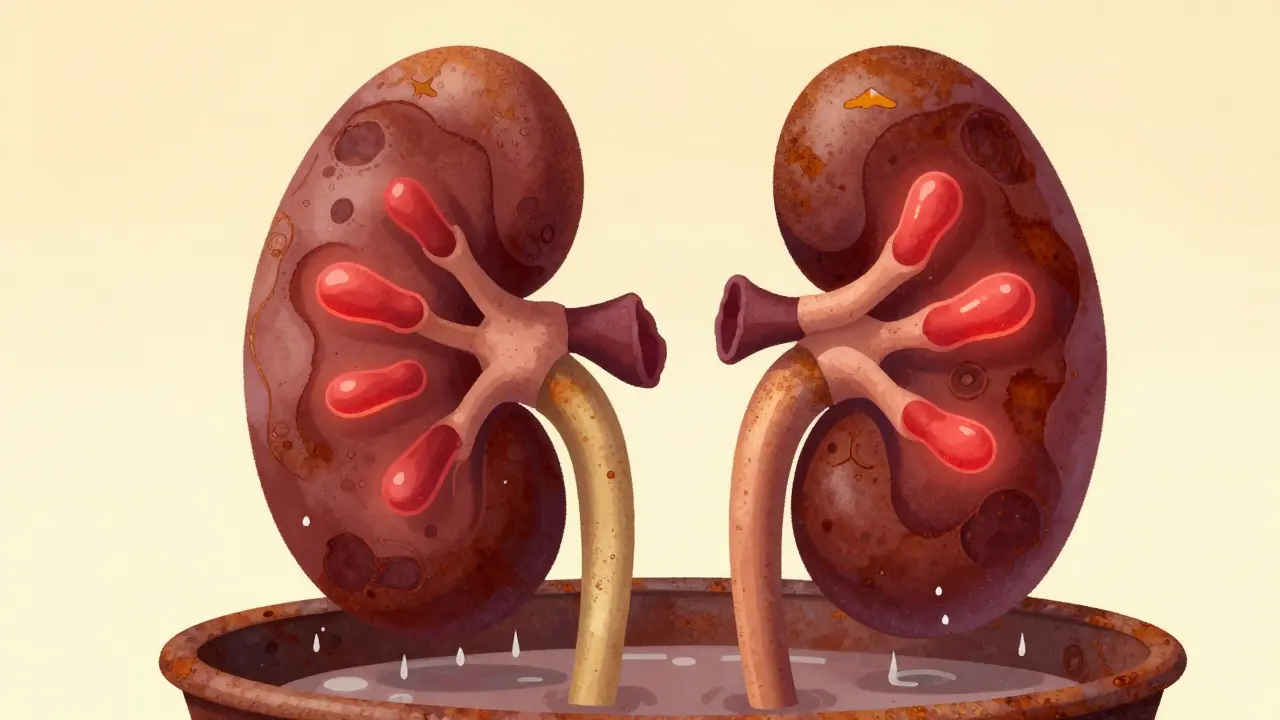
When your kidneys stop working, it’s not sudden. It’s a slow leak-like a pipe rusting from the inside until it finally bursts. For millions, that leak starts with diabetes, high blood pressure, or an invisible immune attack on the tiny filters in their kidneys. These three causes aren’t just common-they’re the reason most people end up on dialysis. And the scary part? Many don’t know they’re at risk until it’s too late.
Diabetes: The Silent Kidney Killer
Diabetes doesn’t just affect your blood sugar. It rewires your kidneys. Every time your blood sugar spikes, your kidneys work overtime to filter out the extra glucose. That sounds helpful, but over time, it’s like running your car engine at redline for years. The filters-called glomeruli-swell, thicken, and start leaking protein into your urine. This is called diabetic kidney disease, or DKD.
By the time you feel tired or notice swelling in your legs, up to 40% of people with type 2 diabetes already have kidney damage. And it’s worse for those with type 1-about 30% develop it. The damage shows up in biopsies as thickened basement membranes (over 450 nm thick, compared to a healthy 300-400 nm) and scarred glomeruli. What makes it sneakier is that you might not feel a thing until your kidneys are working at less than 15% capacity.
The good news? Early action changes everything. Keeping your HbA1c below 7% in the first five years of diagnosis cuts your risk of kidney failure by over half. And new drugs like SGLT2 inhibitors (empagliflozin, dapagliflozin) don’t just lower blood sugar-they protect your kidneys directly. In the EMPA-KIDNEY trial, these drugs reduced the risk of kidney failure by 32%. That’s not a small win. That’s life-changing.
Hypertension: The Pressure That Crushes Your Filters
High blood pressure doesn’t just strain your heart. It crushes your kidneys. When your blood pressure stays above 140/90 mmHg for years, the small arteries feeding your kidneys harden and narrow. This cuts off blood flow, starving the glomeruli. Without enough blood, they scar. This is called nephrosclerosis.
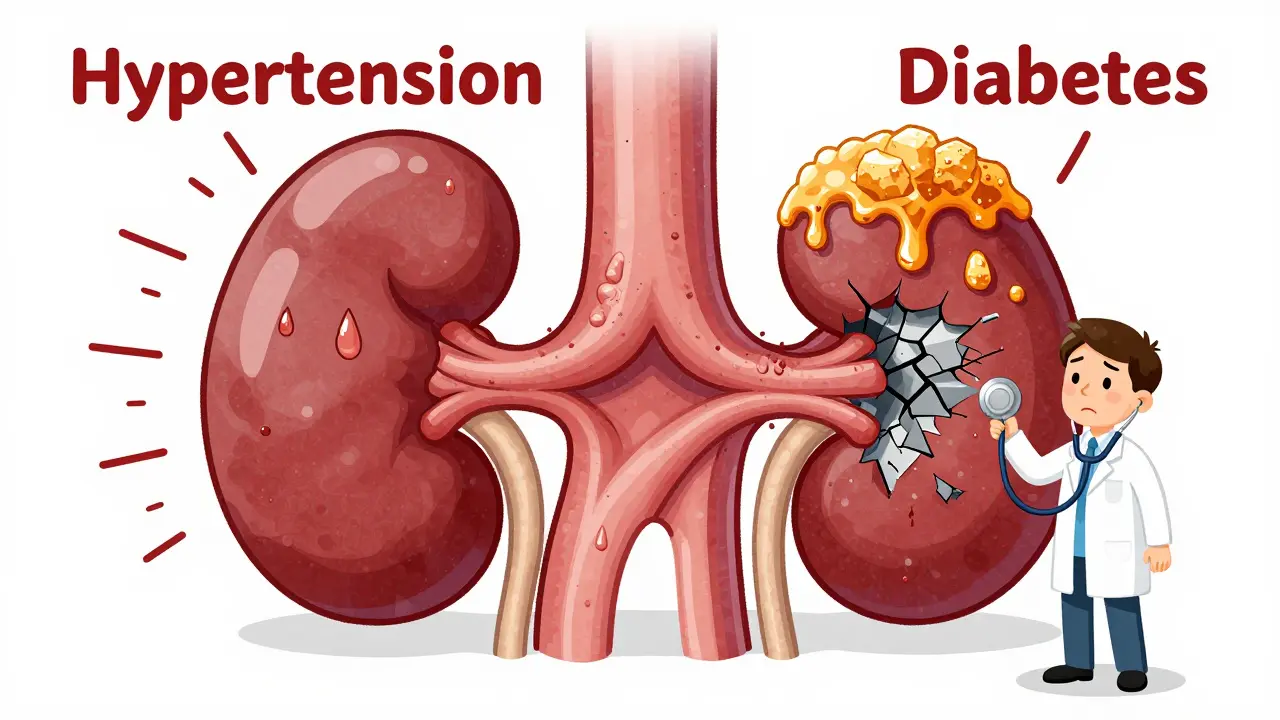
Here’s the twist: hypertension is the second leading cause of kidney failure, responsible for nearly 3 out of every 10 cases. But it’s even more dangerous when it teams up with diabetes. About 75% of people with diabetes also have high blood pressure. Together, they speed up kidney decline by almost double-losing kidney function at 3.2 mL/min/year instead of 1.8 mL/min/year with diabetes alone.
What’s worse? Many people with high blood pressure feel fine. No headaches. No dizziness. Just silent damage. That’s why checking your blood pressure regularly isn’t optional-it’s survival. The goal? Keep it under 130/80 mmHg if you have diabetes, and under 120/80 if you’re already leaking protein in your urine. ACE inhibitors and ARBs aren’t just for lowering pressure-they actually protect the kidney filters. They’re the first-line defense for anyone with early kidney damage, no matter the cause.
Glomerulonephritis: When Your Immune System Turns Against You
Unlike diabetes or high blood pressure, glomerulonephritis isn’t about wear and tear. It’s an attack. Your immune system, confused or overactive, sends antibodies or immune cells to your kidneys-and they mistake the glomeruli for invaders. The result? Inflammation, swelling, and rapid scarring.
The most common form is IgA nephropathy. It affects 2.5 to 4.5 people per 100,000 annually, especially in Asia. You might notice blood in your urine after a cold or sore throat. That’s often the first clue. But here’s the problem: most people wait over a year to get diagnosed. One Reddit user saw seven doctors over 18 months before getting the right test.
Other types, like lupus nephritis, hit harder. If you have lupus, you have a 10-30% chance of ending up on dialysis within 10 years. Class IV lupus nephritis-the most severe-has a 28.7% risk of kidney failure. The damage shows up on biopsy as immune deposits stuck in the glomeruli, visible under a microscope with special staining.
Treatment is trickier. You can’t just take a pill and fix it. You often need immunosuppressants like rituximab or cyclophosphamide. The VALIGA study showed rituximab cuts ESRD risk by 48% in high-risk IgA patients. But there’s a catch: aggressive treatment in older adults can increase infection risk. That’s why doctors now use scoring systems like the Oxford MEST-C score to decide who needs strong drugs-and who can be monitored.
How Fast Do They Progress?
Not all kidney failure happens at the same speed. Diabetes moves fastest. Once you hit macroalbuminuria (over 300 mg of protein in your urine per day), you have a 44% chance of needing dialysis in five years. Hypertension? Slower. It takes about 12 years on average to reach end-stage disease. Glomerulonephritis? Wildly unpredictable. Some people with IgA nephropathy stay stable for decades. Others crash in five years.
What determines your speed? Three things: how much protein you’re losing, how high your blood pressure is, and whether you’re on the right meds. A person with diabetes, high BP, and heavy proteinuria has the worst prognosis. But even then, early intervention can buy you years.
What Actually Works? The Real Treatment Rules
There’s no magic bullet. But there are proven steps:
- Test your urine annually for albumin-to-creatinine ratio (UACR). If it’s over 30 mg/g, you’re already in danger.
- Start SGLT2 inhibitors if you have diabetes and any sign of kidney damage-even if your sugar is under control.
- Use ACE inhibitors or ARBs for anyone with proteinuria, regardless of cause. They’re the only class proven to slow kidney decline across all three conditions.
- Keep blood pressure low. Target <130/80 for diabetics, <120/80 if you’re leaking protein.
- Watch your protein intake. Too much (over 1.2 g/kg/day) stresses damaged kidneys. Aim for 0.8 g/kg/day. Most people don’t need to cut protein unless they’re already in trouble.
And here’s something most don’t tell you: adherence matters more than the drug. Only 58% of people take their blood pressure meds consistently after a year. If you’re skipping pills because you feel fine-that’s exactly when you need them most.
Why Early Detection Is Everything
There’s no cure for end-stage kidney disease. Dialysis keeps you alive, but it’s exhausting. It takes 12 hours a week. It drains your energy, your time, your freedom. Transplant is better-but there’s a long wait, and you need to stay healthy to qualify.
The only real solution? Catch it early. A 2023 survey by the National Kidney Foundation found that 31% of diabetic patients who started SGLT2 inhibitors within six months of spotting albuminuria saw their kidney function stabilize. That’s not a miracle. That’s science.
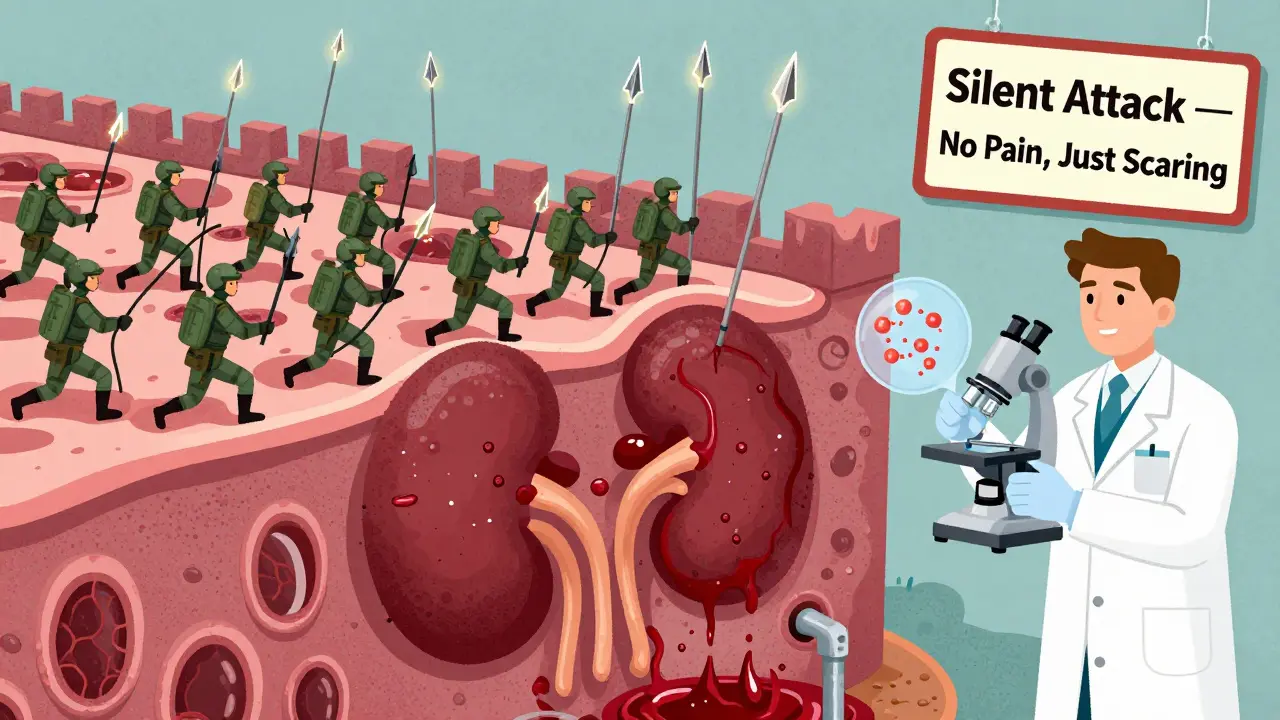
And it’s not just about drugs. It’s about awareness. If you have diabetes or high blood pressure, ask your doctor for a urine test every year. Don’t wait for swelling or fatigue. By then, it’s often too late. Kidney damage doesn’t scream. It whispers. And if you’re not listening, it’s already too loud.
What’s Next? The Future of Kidney Care
New drugs are coming fast. Finerenone, approved by the FDA in 2023, reduces kidney failure risk by 18% in diabetics with proteinuria. Sparsentan, expected in 2024, cuts proteinuria by nearly half in IgA nephropathy-far better than older drugs.
And scientists are looking beyond urine and blood tests. New biomarkers like urinary TNF receptor-1 can predict kidney failure five years in advance with 89% accuracy. Soon, we might know who’s at risk before any damage shows up.
But none of this matters if we don’t test. If we don’t treat early. If we keep pretending high blood pressure is “no big deal” because you don’t feel sick.
Your kidneys don’t complain. They just stop working.
Can you reverse kidney damage from diabetes?
Early-stage kidney damage from diabetes can be slowed or even partially reversed with strict blood sugar control, blood pressure management, and medications like SGLT2 inhibitors. Once scarring (fibrosis) sets in, it’s permanent. But stopping further damage is still a huge win-it can delay dialysis by decades.
Does high blood pressure always lead to kidney failure?
No. Most people with high blood pressure never develop kidney failure. But if your blood pressure stays uncontrolled for more than 5-10 years, especially above 140/90, your risk rises sharply. The key is early detection and treatment. Keeping it under 130/80 reduces your risk by over 25%.
How do I know if I have glomerulonephritis?
Signs include blood in your urine (making it pink or cola-colored), foamy urine (from protein), swelling in legs or face, and high blood pressure. But many people have no symptoms until it’s advanced. A urine test showing protein or blood, plus a blood test for kidney function, is the first step. A kidney biopsy is the only way to confirm the type.
Can I still drink alcohol if I have kidney disease?
Moderate alcohol (one drink per day for women, two for men) is usually okay if your kidney function is stable and you’re not on dialysis. But alcohol raises blood pressure, dehydrates you, and can interfere with medications. If you have advanced disease or are on immunosuppressants, your doctor may recommend avoiding it entirely.
What’s the difference between CKD and ESRD?
Chronic Kidney Disease (CKD) means your kidneys are damaged and not working well-but you still have some function. It’s divided into five stages. End-Stage Renal Disease (ESRD) is Stage 5: your kidneys are working at 10-15% capacity or less. At this point, you need dialysis or a transplant to survive. Most people with diabetes, hypertension, or glomerulonephritis reach ESRD if untreated.
If you have diabetes, high blood pressure, or unexplained blood in your urine, don’t wait for symptoms. Get tested. Your kidneys won’t tell you when they’re failing. But you can still save them-if you act now.
henry mateo
December 29, 2025 AT 21:30ps: typo in my last message i meant 'empagliflozin' not 'emagliflozin' sorry lol
Kunal Karakoti
December 31, 2025 AT 05:23Kelly Gerrard
January 1, 2026 AT 04:28Nadia Spira
January 2, 2026 AT 20:10Colin L
January 4, 2026 AT 12:41Hayley Ash
January 5, 2026 AT 21:51kelly tracy
January 6, 2026 AT 17:36srishti Jain
January 6, 2026 AT 21:10Shae Chapman
January 7, 2026 AT 04:37Henry Ward
January 8, 2026 AT 04:24Aayush Khandelwal
January 9, 2026 AT 20:46Sandeep Mishra
January 10, 2026 AT 03:06