
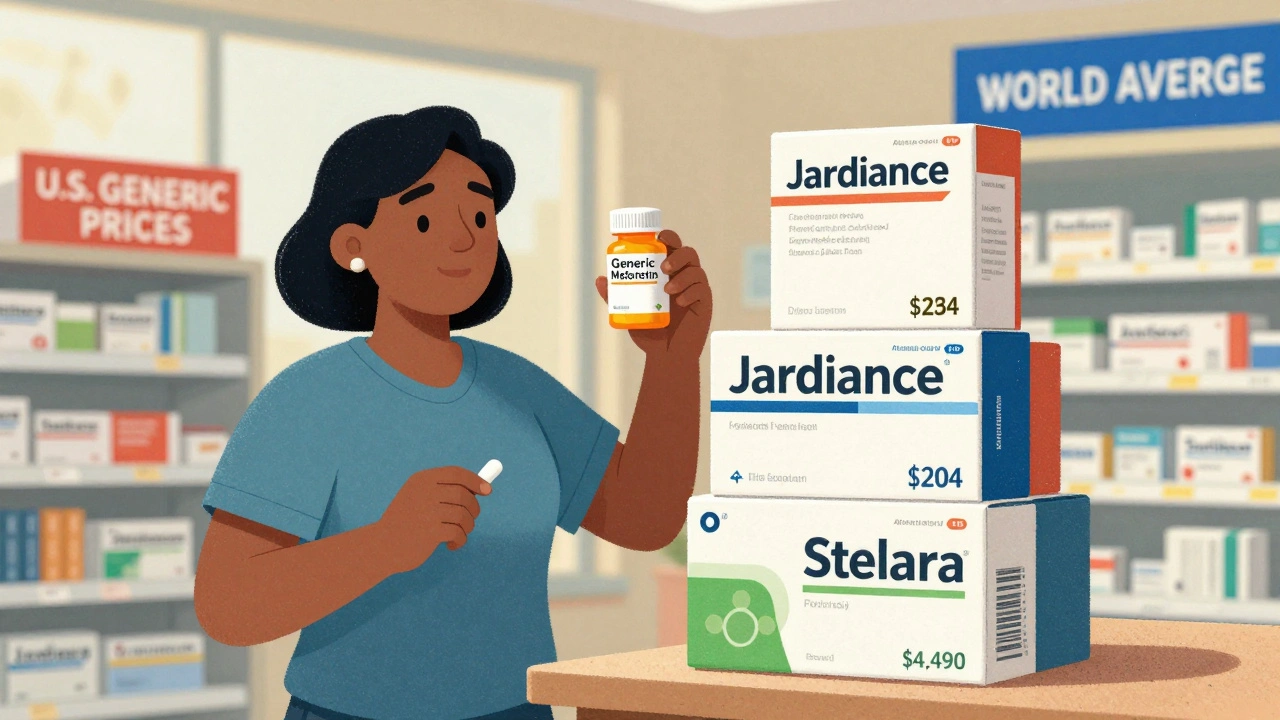
When you walk into a pharmacy in the U.S. and pick up a generic pill for high blood pressure or diabetes, you might assume you’re getting a bargain. After all, generics are supposed to be cheaper. But here’s the twist: generic drugs in the U.S. are often cheaper than in almost every other developed country. Meanwhile, the brand-name drugs you don’t take - but still pay for indirectly - are among the most expensive in the world.
Why U.S. Generic Drugs Are Actually Cheaper
It sounds counterintuitive, but it’s true. According to a 2022 study by the RAND Corporation, U.S. prices for unbranded generic drugs were 33% lower than in 33 other OECD countries. That means if a generic version of metformin costs $5 in Germany, it might cost just $3.35 in the U.S. The same pattern holds for statins, antibiotics, and thyroid meds. In fact, 90% of all prescriptions filled in the U.S. are for generics - and most of them cost less than $20.
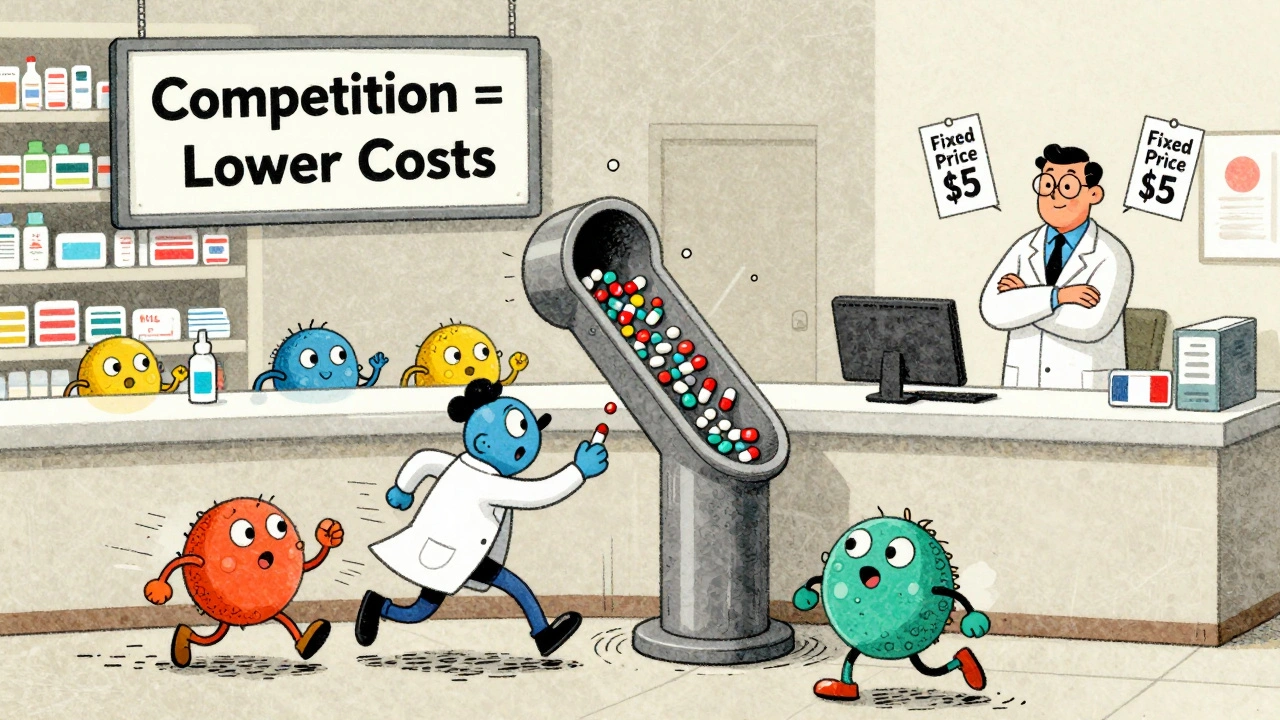
Why? It’s not magic. It’s competition. When a brand-name drug’s patent expires, multiple generic manufacturers rush in. The FDA approved 773 generic drugs in 2023 alone. With three or more companies making the same pill, prices crash. IQVIA data shows that once four generics hit the market, the price drops to just 15-20% of the original brand’s list price. In some cases, a 100-pill bottle of generic lisinopril sells for under $4 at Walmart.
This doesn’t happen everywhere. In countries like France and Japan, governments set fixed prices and limit the number of generic makers allowed to compete. That keeps prices stable - but also higher than what U.S. consumers pay. In Canada and the U.K., even generics are priced higher because of slower approval processes and fewer competitors.
The Brand-Name Problem
But here’s where the U.S. stands out - and not in a good way. While generics are cheap, brand-name drugs are outrageously expensive. The same RAND study found that U.S. prices for originator drugs (the original, patented versions) are 422% higher than in other countries. That’s more than four times the cost.
Take Jardiance, a diabetes drug. The average price in 11 other OECD countries is $52 per month. Medicare’s negotiated price? $204. Stelara, a psoriasis treatment, costs $2,822 abroad on average - but $4,490 in the U.S. under Medicare’s new pricing rules. These aren’t outliers. The Health System Tracker found that in nine out of ten cases, Medicare’s negotiated prices still exceeded international benchmarks.
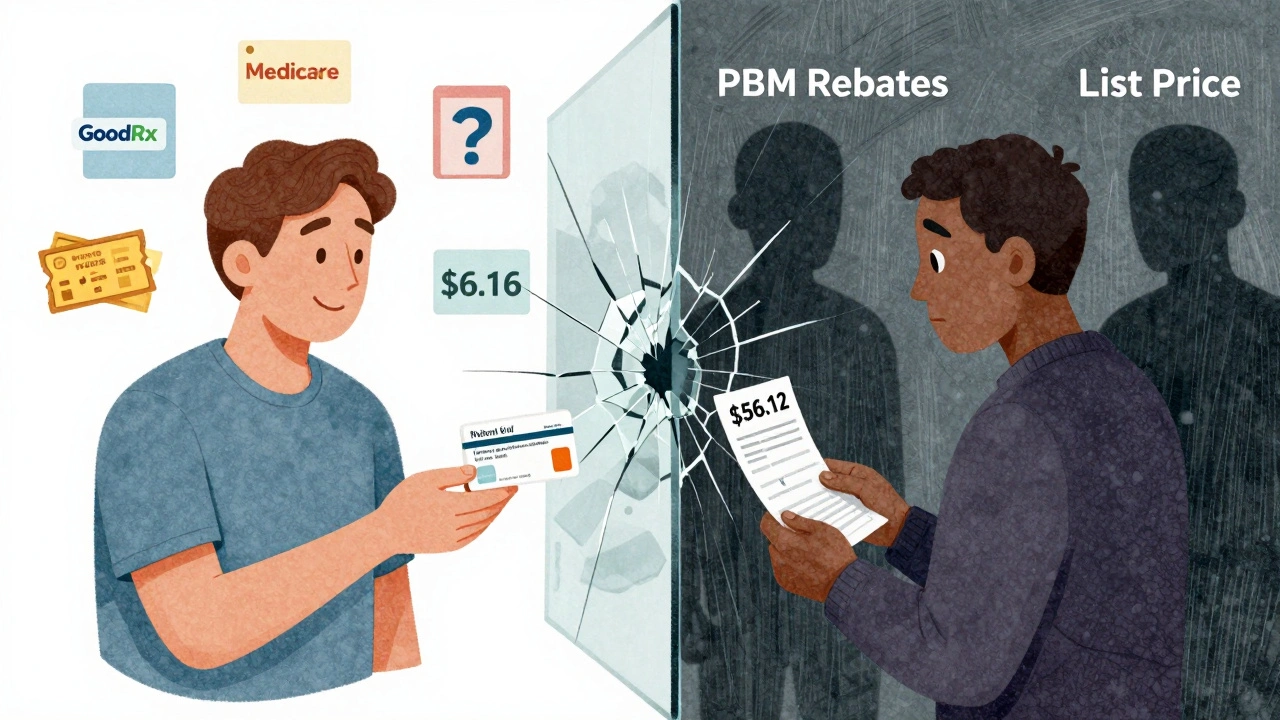
Why? Because the U.S. doesn’t negotiate prices like other countries do. Most nations have centralized agencies that say, “We’ll pay X for this drug, or we won’t cover it.” The U.S. lets drugmakers set their own list prices - then insurers and pharmacy benefit managers (PBMs) try to negotiate rebates behind the scenes. That’s why the “list price” you hear about in the news is often meaningless. The real price - what the government or insurance pays after discounts - is lower. But you, the patient, still see the full list price on your receipt if you’re paying out of pocket.
Net vs. Gross: The Hidden Math
Here’s a key detail most people miss: the U.S. has two pricing systems. There’s the list price - what’s printed on the box. And there’s the net price - what actually gets paid after rebates, discounts, and coupons.
A 2024 University of Chicago study found that when you look at net prices - what Medicare, Medicaid, and large insurers actually pay - the U.S. is cheaper than Canada, Germany, and the U.K. for generic drugs. Why? Because public programs buy in bulk and demand steep discounts. Medicare Part D, for example, negotiates rebates worth billions each year. The result? The average generic copay in the U.S. is $6.16. The average brand-name copay? $56.12.
But here’s the catch: those rebates don’t help uninsured patients or people with high-deductible plans. If you’re paying cash for a brand-name drug, you’re stuck with the full list price. And that’s where the U.S. becomes the most expensive country in the world for medicine.
Who’s Paying the Difference?
Some argue that the U.S. pays high prices so the rest of the world can get cheap drugs. The logic goes like this: drug companies invest billions in R&D. They make up for low prices abroad by charging more in the U.S. It’s called “free riding.”
But the data doesn’t fully support that. The FDA’s 2023 report showed that 93% of generic prescriptions in the U.S. cost under $20. That’s not a profit center - it’s a volume play. Meanwhile, brand-name companies still make massive profits. In 2024, the top 10 pharmaceutical companies earned over $100 billion in net income globally. They didn’t need the U.S. to be the only high-price market to stay profitable.
What’s more, countries like Germany and Japan spend less per person on drugs than the U.S. - yet they still fund innovation. They just don’t let companies set prices without limits. That’s the real difference: regulation versus market chaos.
What Happens When Competition Fails?
It’s not all sunshine with generics. Sometimes, when too many manufacturers compete, they start losing money. One by one, they quit the market. Then, suddenly, only one company is left making a drug - and they raise the price.
This happened with doxycycline, an antibiotic. In 2013, there were 14 makers. By 2017, only two remained. Prices jumped from $20 to $1,800 for a 30-day supply. The same thing happened with cyclophosphamide, a cancer drug, and chlorpromazine, an antipsychotic. The FDA has documented over 20 cases of “generic drug monopolies” since 2010.
These aren’t mistakes. They’re market failures. When a drug has low profit margins and high production costs, companies drop out. And when there’s no competition, there’s no price pressure.
What This Means for You
If you’re taking generics, you’re probably paying less than people in most other countries. That’s a win. But if you need a brand-name drug - especially for cancer, autoimmune disease, or rare conditions - you’re in a tough spot. Even with insurance, your out-of-pocket costs can be crushing.
Here’s what you can do:
- Always ask if a generic is available - even if your doctor didn’t suggest it.
- Use price comparison tools like GoodRx or SingleCare. They show real-time cash prices at nearby pharmacies.
- Ask your pharmacist about manufacturer coupons. Many brands offer $0 copay cards for the first few months.
- If you’re on Medicare, check if your drug is in the new negotiated list. You might pay less than you think.
- Don’t assume foreign prices are lower for generics. In many cases, they’re not.
The Bigger Picture
The U.S. doesn’t have a broken drug system. It has two systems: one for generics, which works well, and one for brands, which doesn’t. The problem isn’t that Americans pay too much for pills - it’s that they pay too much for the wrong pills.
Policy makers are starting to notice. The Medicare drug negotiation program, which began in 2023, is slowly bringing down prices for the most expensive brand-name drugs. The next round of negotiated drugs will be announced in early 2026. If successful, it could cut costs for millions.
But here’s the truth: no country has figured out how to make all drugs affordable without trade-offs. The U.S. gets cheap generics because it lets the market run wild. Other countries get stable prices because they control them tightly. Neither is perfect. But if you’re only taking generics, you’re getting one of the best deals in global healthcare.
Are generic drugs in the U.S. really cheaper than in other countries?
Yes, for the most part. According to a 2022 RAND Corporation study, U.S. generic drug prices are 33% lower on average than in 33 other OECD countries. This is due to high competition - when multiple manufacturers make the same drug, prices drop sharply. In contrast, countries like France and Japan limit the number of generic makers, keeping prices higher.
Why are brand-name drugs so expensive in the U.S.?
The U.S. doesn’t regulate drug prices like most other countries. Drugmakers set their own list prices, and insurers negotiate rebates behind the scenes. Without government price controls, companies charge what the market will bear. In contrast, countries like Canada and Germany negotiate prices directly with manufacturers, often refusing to cover drugs that cost too much.
Do rebates make U.S. drug prices lower than other countries?
For net prices - what insurers and government programs actually pay - yes. A 2024 University of Chicago study found that U.S. public-sector net prices for generics are 18% lower than in Canada, Germany, the U.K., France, and Japan. But rebates don’t help uninsured patients or those paying cash. Their out-of-pocket costs are based on the full list price, which is still among the highest in the world.
Can I buy cheaper drugs from other countries?
Legally, importing prescription drugs from other countries is prohibited in the U.S. unless approved by the FDA. While some people buy medications from Canada or Mexico online, it’s risky. You might get counterfeit or expired drugs. The safest way to save is to use U.S.-based price tools like GoodRx, ask for generics, or apply for manufacturer assistance programs.
Why do some generic drugs suddenly become expensive?
When too many manufacturers compete, some go out of business due to low profits. If only one or two companies remain, they can raise prices without fear of losing customers. This has happened with antibiotics like doxycycline and cancer drugs like cyclophosphamide. The FDA has documented over 20 cases of this since 2010. It’s a flaw in the system: too much competition kills the market, then too little creates monopolies.
Is the U.S. paying more so other countries can get cheap drugs?
It’s a common argument, but the data doesn’t fully back it up. While U.S. brand-name drug prices are high, pharmaceutical companies still make massive profits globally. Countries like Germany and Japan spend less per person on drugs than the U.S. - yet still fund innovation. The real issue isn’t global free riding - it’s the lack of price regulation in the U.S. itself.
How does Medicare’s new drug pricing program affect prices?
Medicare’s negotiation program, launched in 2023, has already lowered prices for 10 high-cost brand-name drugs. In all but one case, Medicare’s negotiated price is still higher than what other countries pay. But it’s the first time the U.S. government has directly challenged drugmaker pricing. The next round of 15 drugs will be announced in early 2026, and experts expect even deeper cuts - especially for drugs with no generic alternatives.
Constantine Vigderman
December 12, 2025 AT 04:52OMG I had no idea generics were this cheap here 😱 Just paid $3 for my metformin at Walmart and thought I was getting ripped off… turns out I’m the lucky one 🙌
Cole Newman
December 12, 2025 AT 12:33Bro the whole system is rigged. PBMs are the real villains - they take the rebates and you still get stuck with the list price. I saw a $1,200 insulin bill last month. That’s not healthcare, that’s extortion. 🤡
Casey Mellish
December 12, 2025 AT 18:49As an Aussie, I can confirm - our generics cost 3x what they do in the US. We pay $15 for a 30-day supply of lisinopril. Here? $4. We have universal coverage, sure, but we pay for it in taxes and wait times. The US system is chaotic, but for generics? It’s actually brilliant. Just wish the brand-name mess got fixed too.
Tyrone Marshall
December 14, 2025 AT 11:19It’s not about whether the system is broken - it’s about what parts are working and which are bleeding out. Generics? Thriving because competition is fierce. Brand names? Dying because there’s no accountability. We treat medicine like a luxury item instead of a human right. And yet, the people who need it most - the uninsured, the underinsured - they’re the ones getting crushed. We need to ask: why do we let profit dictate access?
Emily Haworth
December 16, 2025 AT 10:53Big Pharma is in cahoots with the FDA and Medicare. They’re all one big cartel. You think the price drops because of competition? Nah. They just shut down all but one maker, then jack it up. They did this with doxycycline - and they’re doing it again with cancer meds. 😈💰
Tom Zerkoff
December 16, 2025 AT 20:10The data presented is statistically robust and aligns with peer-reviewed findings from RAND and the University of Chicago. However, the implicit assumption that market-driven pricing is inherently superior requires critical examination. While generic drug cost efficiency is demonstrable, the absence of centralized price negotiation creates systemic inequities that disproportionately impact vulnerable populations. A hybrid model - competitive generics with regulated brand-name ceilings - may offer optimal balance.
Yatendra S
December 18, 2025 AT 11:13Life is a cycle, man. We compete till there’s no one left to compete with… then we become the monopoly. The same thing happens in love, in business, in spirituality. The market doesn’t care about ethics - only survival. So who’s really to blame? The companies? Or the system that rewards greed over grace? 🤔
Himmat Singh
December 19, 2025 AT 23:20The assertion that U.S. generic drug prices are lower than those of other OECD nations is misleading. The study referenced fails to account for currency conversion volatility, taxation structures, and distribution logistics. Furthermore, the notion that competition inherently reduces prices ignores the documented instances of collusion among generic manufacturers. The conclusion is empirically unsound and ideologically biased.
kevin moranga
December 21, 2025 AT 10:30Look, I get it - the system’s messy, but here’s the good news: if you’re on generics, you’re winning. I used to pay $80 for my blood pressure med until I switched to the generic, found it on GoodRx for $4, and started telling everyone I know. Seriously - if you’re reading this and you’re paying full price for a generic? Stop. Right now. Go to your pharmacist. Ask for a coupon. You’re not stupid for not knowing - you’re just not informed yet. And I’m here to tell you: you can do better. Your health is worth it. 💪
Alvin Montanez
December 21, 2025 AT 21:35It’s not just about price - it’s about principle. We have allowed the pharmaceutical industry to operate as a private tax on the sick. The fact that we celebrate cheap generics while ignoring the $2,000 cancer drugs is moral cowardice. The U.S. doesn’t have two systems - it has one system that chooses who lives and who dies based on their insurance card. And if you think this is acceptable, you’re part of the problem. We are not a nation that should be proud of letting people choose between insulin and groceries. This isn’t capitalism - it’s cruelty dressed up as policy.