
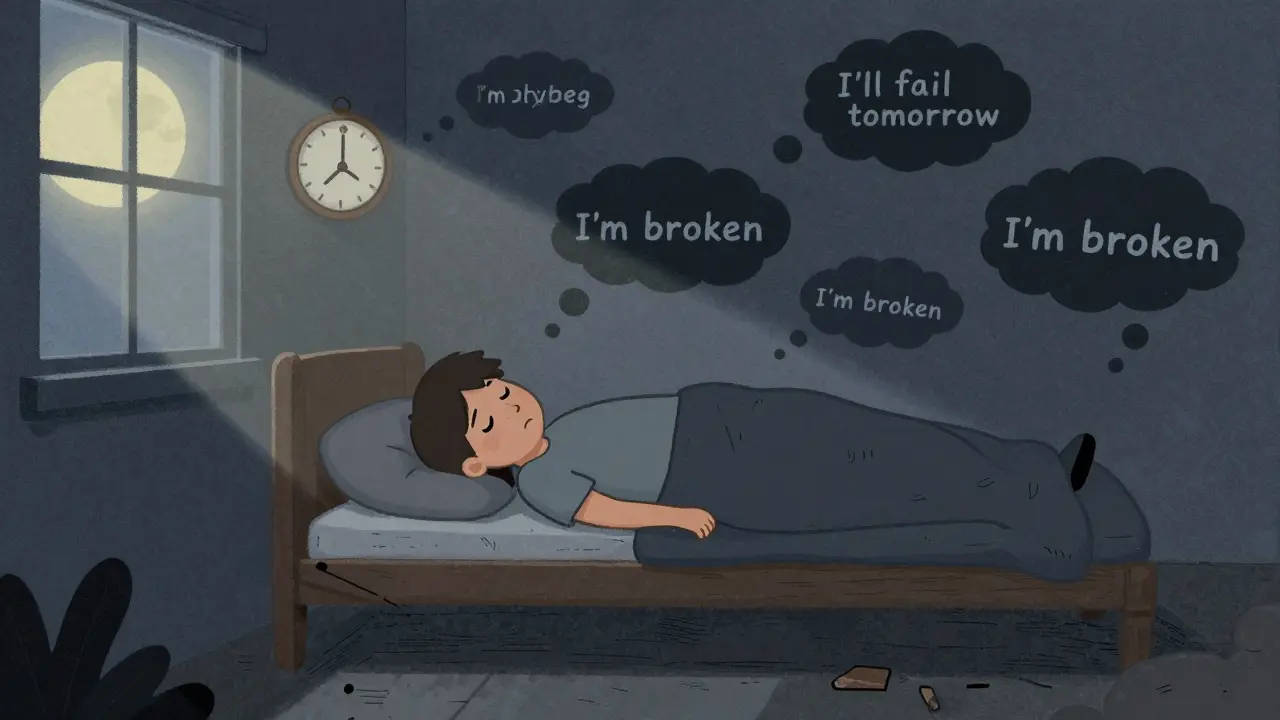
Insomnia isn’t just about not sleeping-it’s about the cycle you get stuck in
Most people think insomnia means lying awake all night. But the real problem isn’t the occasional bad night. It’s what happens after: the anxiety about not sleeping, the hours spent staring at the ceiling, the reliance on pills that stop working. By the time someone seeks help, insomnia has become a habit-not just a symptom. And that’s where CBT-I changes everything.
CBT-I isn’t another sleep hack-it’s a science-backed reset
Unlike sleep meds that mask the problem, CBT-I (Cognitive Behavioral Therapy for Insomnia) targets the root causes. Developed in the 1980s, it’s now the gold standard recommended by the American College of Physicians, the American Academy of Sleep Medicine, and every major sleep research body. It’s not a single trick. It’s a structured 6-8 week program built on five proven techniques: sleep restriction, stimulus control, cognitive restructuring, relaxation training, and sleep hygiene.
Let’s break down what actually happens in a CBT-I session. Sleep restriction doesn’t mean going to bed later-it means going to bed less than you think you need. If you’re only sleeping 5 hours a night, you start by limiting your time in bed to 5 hours. That sounds brutal. And it is-at first. But by reducing time in bed, you build up sleep pressure. Your body learns: bed = sleep, not stress. Studies show this single technique accounts for 40% of CBT-I’s success.
Stimulus control is about retraining your brain. Your bed should only be for sleep and sex. No scrolling. No worrying. No reading. If you’re awake for more than 20 minutes, you get up. Go sit in another room. Only return when sleepy. This breaks the association between your bed and frustration. One 2022 study found that people who stuck to this rule had a 78% success rate.
What you think about sleep matters more than you realize
Most insomniacs have a running script in their head: “If I don’t sleep 8 hours, I’ll crash tomorrow.” “I’ll lose my job.” “I’m broken.” These aren’t facts-they’re fears. CBT-I uses cognitive restructuring to challenge them. You don’t just say “don’t worry.” You ask: “What’s the evidence you’ll fail if you sleep 5 hours?” “Have you ever survived a day with less sleep?” “What’s the worst that actually happened?”
A 2024 study in Nature Digital Medicine found that people who completed 80% of these cognitive exercises saw a 62% greater drop in insomnia severity than those who skipped them. Your thoughts aren’t just noise-they’re the engine keeping insomnia alive.
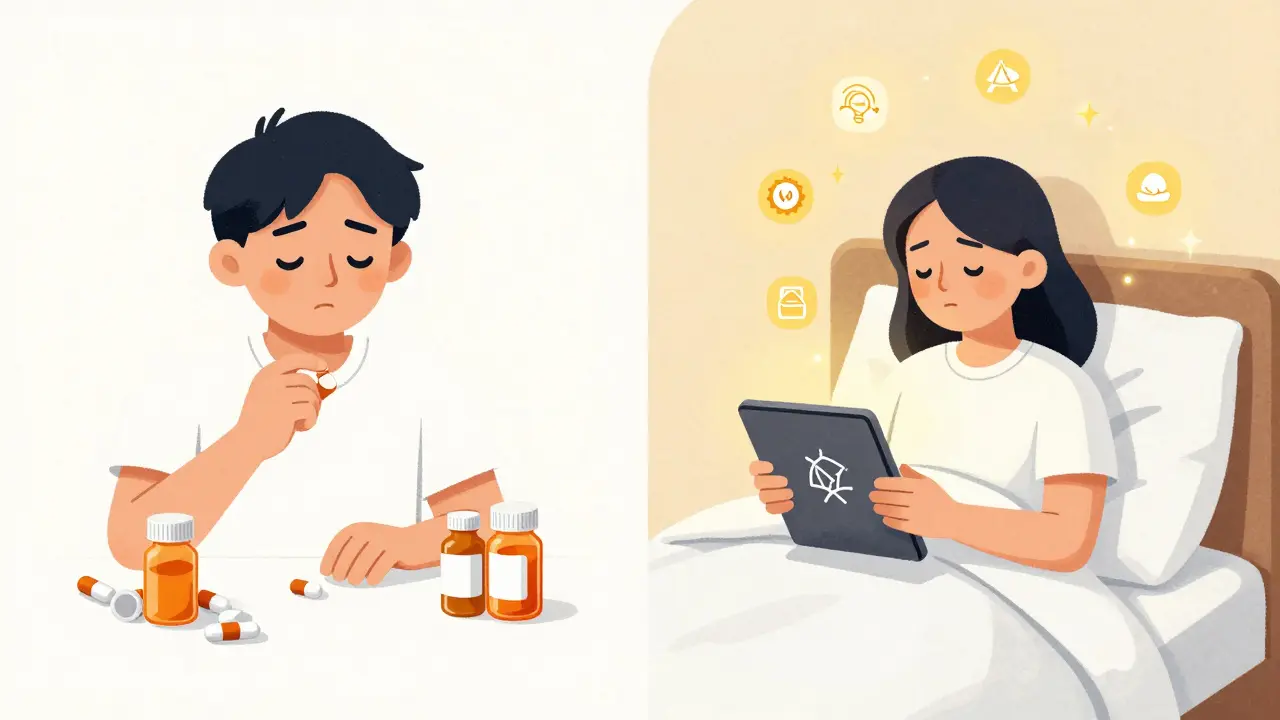
Sleep meds work fast-but they don’t last
Medications like zolpidem (Ambien) can help you fall asleep in the first few nights. That’s why they’re prescribed so often-47% of all insomnia prescriptions in the U.S. are for zolpidem. But here’s the catch: tolerance builds fast. In 42% of users, the drug stops working within 8 weeks. Side effects? Dizziness, memory gaps, next-day grogginess, and even sleepwalking. The FDA has issued safety warnings about these risks.
And when you stop? Insomnia often comes back worse. A 2022 meta-analysis in Sleep Medicine Reviews showed that while sleep meds and CBT-I perform similarly in the first 4-8 weeks, CBT-I wins by month 3-and badly. At 12 months, 68% of CBT-I patients still had strong results. Only 32% of medication users did.
Combining both? Sometimes it helps-but only temporarily
Some doctors still recommend starting with a short course of medication while you begin CBT-I. That’s not wrong. A 2023 JAMA study found that people who used both approaches had the highest long-term success-74% maintained improvement at 6 months. But here’s the twist: the medication was only used for the first 2-4 weeks. After that, it was dropped. The real work? The therapy.
The meds are a bridge-not the destination. And if you rely on them too long, you never build the skills to sleep without them.
CBT-I is hard. But the payoff is permanent
People drop out of CBT-I. About 28% quit early, mostly because of the first two weeks of sleep restriction. That’s when you’re sleep-deprived, cranky, and wondering why you ever started. But those who stick with it? 78% of Reddit users who completed CBT-I reported “significant improvement.” In a 2023 survey of over 3,000 users, 89% said they no longer felt groggy in the morning. 83% said the results lasted.
One user on r/sleep wrote: “After 6 weeks of strict sleep restriction, my sleep efficiency jumped from 68% to 92%. The hardest part? Waking up at 6 a.m. on weekends. But I did it-and I haven’t needed a pill since.”
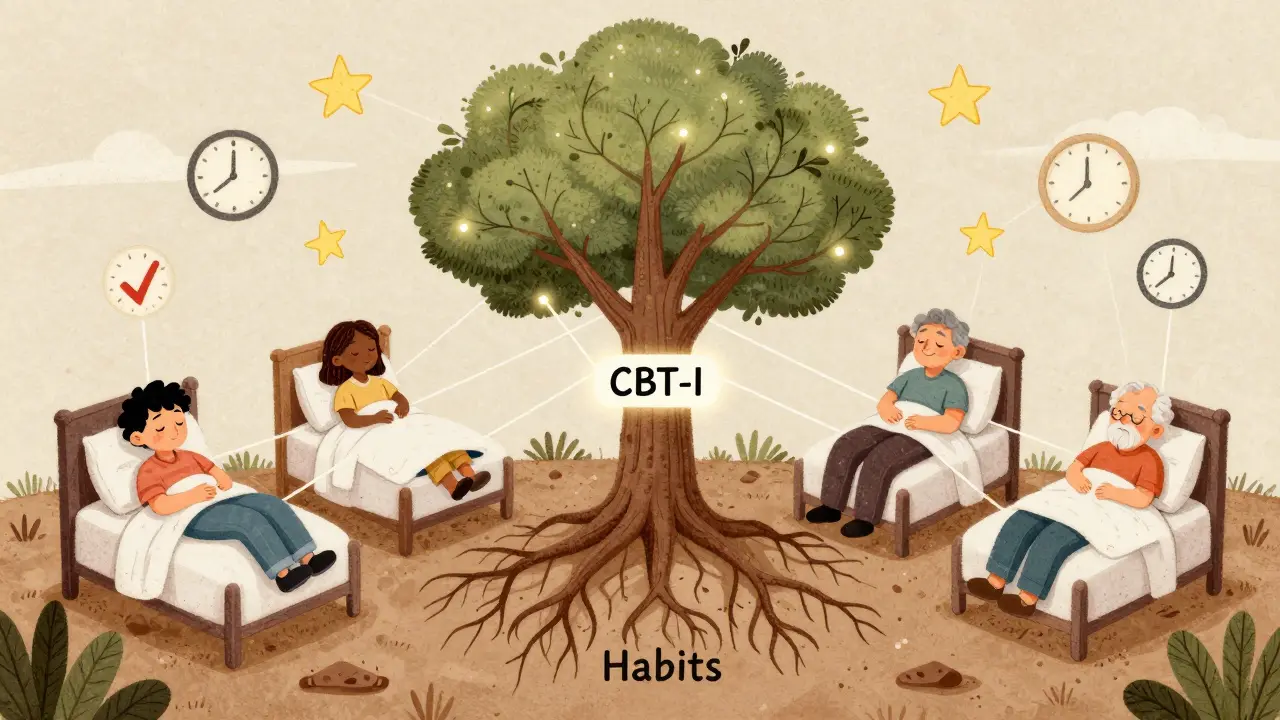
Digital CBT-I works. And it’s getting easier to access
You don’t need a therapist in a clinic to do CBT-I. Digital platforms like Sleepio and Somryst are FDA-cleared as prescription digital therapeutics. They guide you through the same protocols-step by step-with videos, diaries, and reminders. Adherence rates are 65-70%, matching in-person therapy.
Even older adults are succeeding. A 2024 study found 82% of people aged 65-85 completed digital CBT-I with just 15-20 minutes a day. Medicare started covering it in 2022. UnitedHealthcare now covers it for 28 million members. Sixty-three Fortune 500 companies offer it through employee wellness programs.
Why isn’t everyone doing it?
Because the system isn’t built for it. Only 15% of U.S. primary care doctors feel trained to deliver CBT-I. Insurance pays $15 for a zolpidem script. It pays $120 for a CBT-I session. That’s not a coincidence. It’s economics. But that’s changing. Digital CBT-I is growing at 24.3% per year. Pharmaceutical sales? Just 4.7%.
And the evidence keeps piling up. A 2023 study followed people 10 years after CBT-I. Their insomnia severity scores were still 56% lower than before treatment. That’s not a cure. It’s a transformation.
If you’re tired of pills that don’t work, CBT-I is your next step
You don’t need to suffer through another night of counting sheep. You don’t need to accept that this is “just how it is.” Insomnia is a learned habit-and like any habit, it can be unlearned. CBT-I gives you the tools. It’s not quick. It’s not easy. But it’s the only treatment that works long-term without side effects.
Start with a sleep diary. Track your time in bed. Track your actual sleep. Then, find a certified CBT-I provider-or a digital program covered by your insurance. The hardest part? Starting. The best part? Knowing you’ll sleep better next week-and next year.
Is CBT-I better than sleeping pills for long-term insomnia?
Yes. While sleeping pills like zolpidem help you fall asleep faster in the first few weeks, they lose effectiveness after 4-8 weeks due to tolerance. CBT-I doesn’t just treat symptoms-it rewires the habits and thoughts that keep insomnia going. Studies show that 68% of people who complete CBT-I still have improved sleep at 12 months, compared to only 32% of those who used medication alone.
How long does CBT-I take to work?
Most people see noticeable changes by week 3-4. Sleep efficiency typically improves by 15-20% after just three sessions. But the full 6-8 week program is needed to build lasting habits. The first two weeks are the hardest because of sleep restriction, but that’s when the real change begins.
Can I do CBT-I on my own without a therapist?
Yes. Digital platforms like Sleepio and Somryst are FDA-cleared and deliver the same evidence-based protocols as in-person therapy. Studies show 65-70% completion rates, matching traditional CBT-I. They include daily tracking, video lessons, and automated feedback. However, people with severe anxiety, depression, or other sleep disorders may benefit from working with a certified provider.
Does CBT-I work for teenagers and older adults?
Absolutely. A 2024 meta-analysis found CBT-I improved sleep onset latency by 28.4 minutes and total sleep time by 45.2 minutes in adolescents-far better than medication, which showed no lasting benefit. For older adults, digital CBT-I has a success rate of 82%, even without a therapist. Age isn’t a barrier-it’s just a different pacing.
Why don’t more doctors recommend CBT-I?
The biggest barriers are lack of training and reimbursement. Only 15% of U.S. primary care doctors feel confident delivering CBT-I. Insurance pays far less for therapy than for a prescription. But that’s changing: Medicare covers digital CBT-I, and major insurers are expanding coverage. The evidence is overwhelming-CBT-I is the standard of care. It’s just not yet the default.
What if I can’t stick to the sleep schedule?
It’s normal to struggle, especially in weeks 2-3. The key is consistency, not perfection. If you miss a day, don’t quit. Just reset. Use your sleep diary to track patterns. Digital programs send reminders. A therapist can adjust your schedule. The goal isn’t flawless execution-it’s progress. Most people who stick with it-even imperfectly-see major improvements.
Hanna Spittel
December 30, 2025 AT 13:06John Chapman
December 31, 2025 AT 17:15Urvi Patel
January 2, 2026 AT 08:19anggit marga
January 2, 2026 AT 11:23Frank SSS
January 3, 2026 AT 20:57Paul Huppert
January 4, 2026 AT 16:00Brady K.
January 5, 2026 AT 11:25Kayla Kliphardt
January 6, 2026 AT 18:21Joy Nickles
January 8, 2026 AT 02:28Emma Hooper
January 9, 2026 AT 23:08Martin Viau
January 10, 2026 AT 11:53Marilyn Ferrera
January 11, 2026 AT 21:36Robb Rice
January 13, 2026 AT 11:19Harriet Hollingsworth
January 13, 2026 AT 22:24