
Key Takeaways for Safe Storage
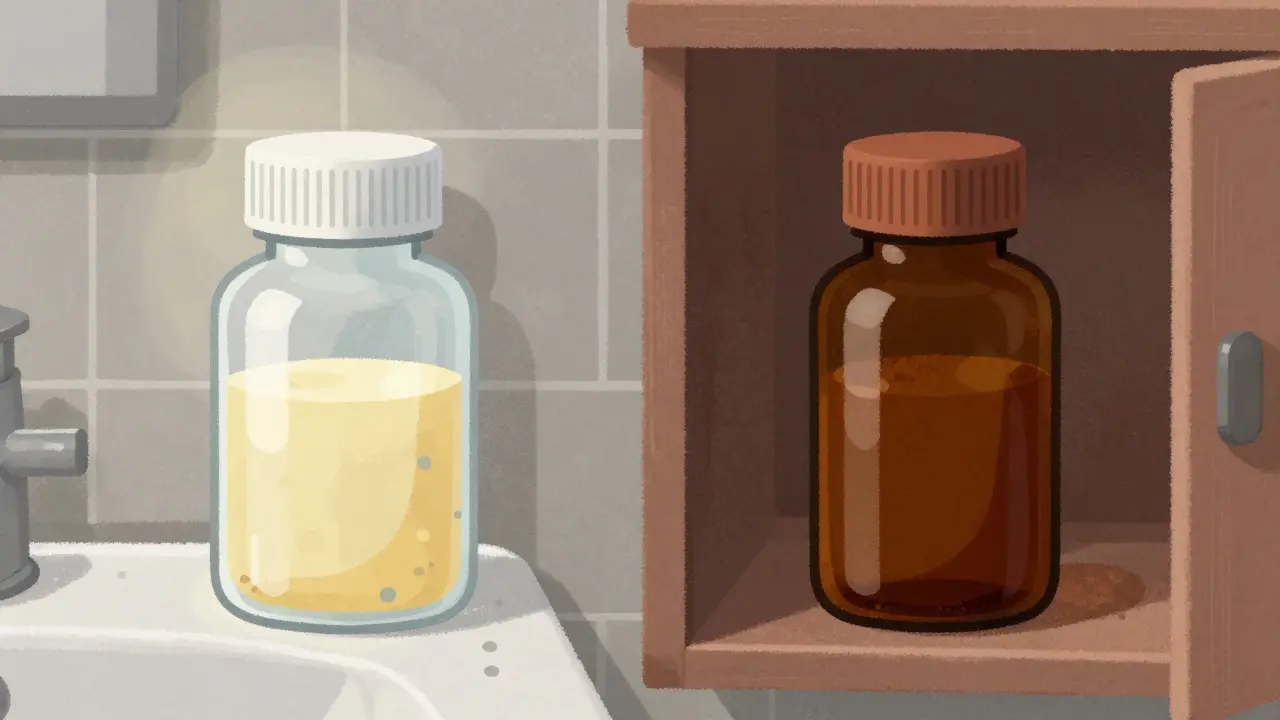
- Always keep meds in their original amber or opaque containers.
- Avoid the "bathroom trap"-humidity and light make it the worst place for storage.
- Check for "Protect from Light" labels on your packaging.
- Watch for signs of decay: color changes, unusual smells, or cloudiness.
- Maintain a temperature range between 59°F and 77°F (15°C to 25°C) unless refrigerated.
Why Light Ruins Your Medicine
Light isn't just brightness; it's energy. When photons hit certain chemical bonds in a drug, they can break those bonds or rearrange them. This process, known as photodegradation, is why you see amber-colored bottles at the pharmacy. These bottles aren't just for aesthetics; they are engineered to block wavelengths below 470 nanometers. For example, if you're using certain chemotherapy agents or potassium iodide, these are considered "extremely light-sensitive." Even brief exposure can trigger a reaction that renders the drug ineffective. In the case of eye drops, the aqueous (water-based) nature of the solution makes them even more vulnerable. A study by Alcon showed that ophthalmic solutions stored in clear containers lost 35% of their efficacy within 14 days compared to those in amber bottles. If your eye drops aren't in a protective container, you're essentially gambling with your vision health.The Best Places (and Worst Places) to Store Meds
Most of us default to the bathroom medicine cabinet because it's convenient. However, this is usually the worst choice. The combination of high humidity from the shower and light exposure from the bathroom lamp creates a "danger zone" for your pills and creams. Instead, look for a dedicated kitchen cabinet that is far away from the stove and sink. You want a cool, dry spot. If you're serious about it, a small hygrometer can help you monitor humidity levels. Temperature also plays a massive role. Most oral medications are stable between 59°F and 77°F. If your home gets hotter than 86°F (30°C), especially during summer, your medication might start to break down even if it's in a dark cupboard. For those using biologics or unopened insulin, the rules are stricter: these must stay refrigerated between 36°F and 46°F (2°C to 8°C). For eye drops, once opened, they typically need to be kept between 40°F and 77°F to remain stable.Comparing Your Storage Options
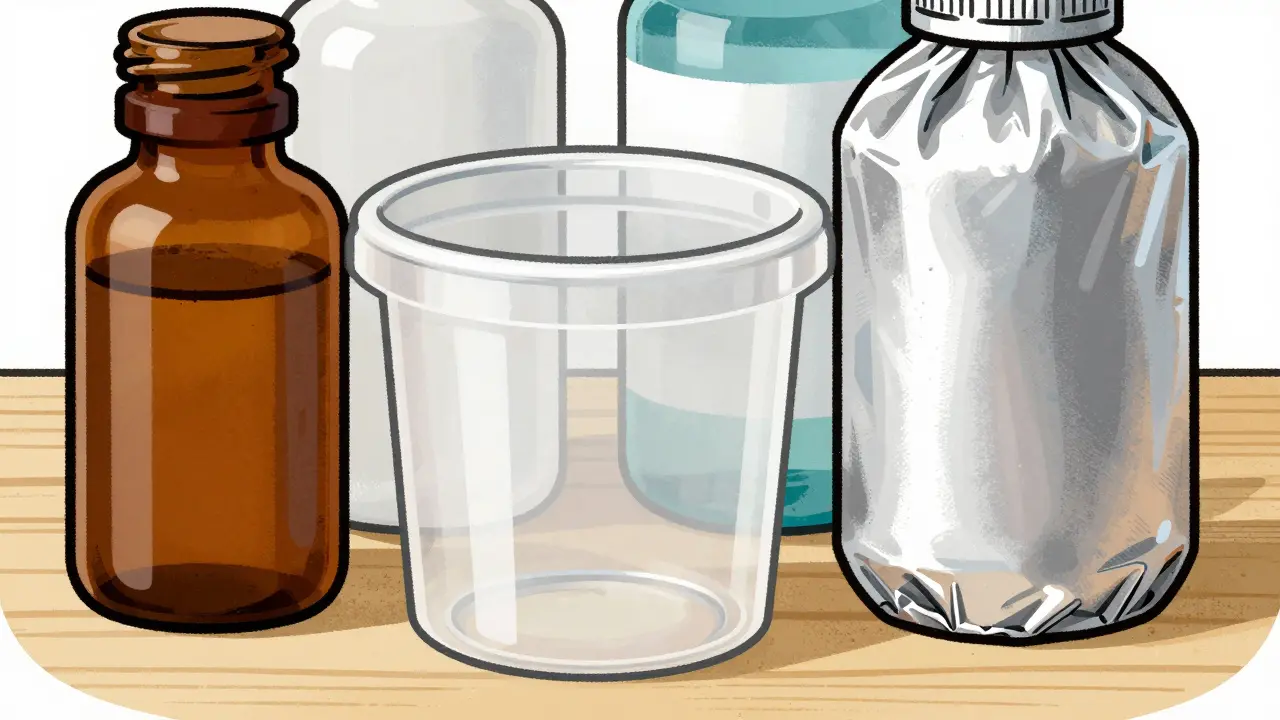
Not all protective containers are created equal. If your medication came in a clear bottle and the label says "protect from light," you need to upgrade your storage immediately.| Storage Type | UV Protection Level | Pros | Cons |
|---|---|---|---|
| Amber Glass | High (~98%) | Superior stability; non-reactive | Fragile; more expensive |
| Opaque Plastic | Moderate (~85%) | Durable; cheaper; lightweight | Slightly less UV blocking |
| Aluminum Foil | Total (100%) | Complete light blackout | Inconvenient; high non-compliance |
| UV-Filter Boxes | High | Organizes multiple meds | Bulkier; higher initial cost |
How to Spot Degraded Medication
How do you know if your medicine has already been ruined? You have to be your own detective. Check for these three red flags:- Color Shifts: If a white cream turns yellow or a clear liquid becomes cloudy, it's a sign of chemical change. This is common with tretinoin or certain vitamin drops.
- Texture Changes: Look for tablets that are chipping or breaking more easily than usual. If a cream becomes grainy or separates, toss it.
- Smell Tests: Some drugs have a distinct "death scent" when they expire. For instance, degraded aspirin often develops a strong, pungent vinegar smell.
Step-by-Step: Setting Up Your Storage System
Getting your medications stored correctly doesn't take much time, but it requires a bit of a system. Follow these steps to ensure your meds stay potent:- Audit Your Cabinet: Read every label. Look for phrases like "Protect from light," "Store in original container," or "Keep in a cool, dry place."
- Secure the Container: If a medication is in a clear bottle but requires light protection, transfer it to a USP-compliant amber container. If you can't find one, wrapping the bottle in aluminum foil is a temporary fix, though it's a bit clunky.
- Pick the Right Room: Move your meds out of the bathroom and bedroom (where sunlight might hit the dresser) and into a dark kitchen cabinet or a dedicated storage box.
- Plan for Travel: Don't just throw your eye drops in a backpack. Use an insulated medication bag with a UV-blocking lining. This keeps the temperature stable and blocks the sun during transit.
Special Considerations for Eye Drops
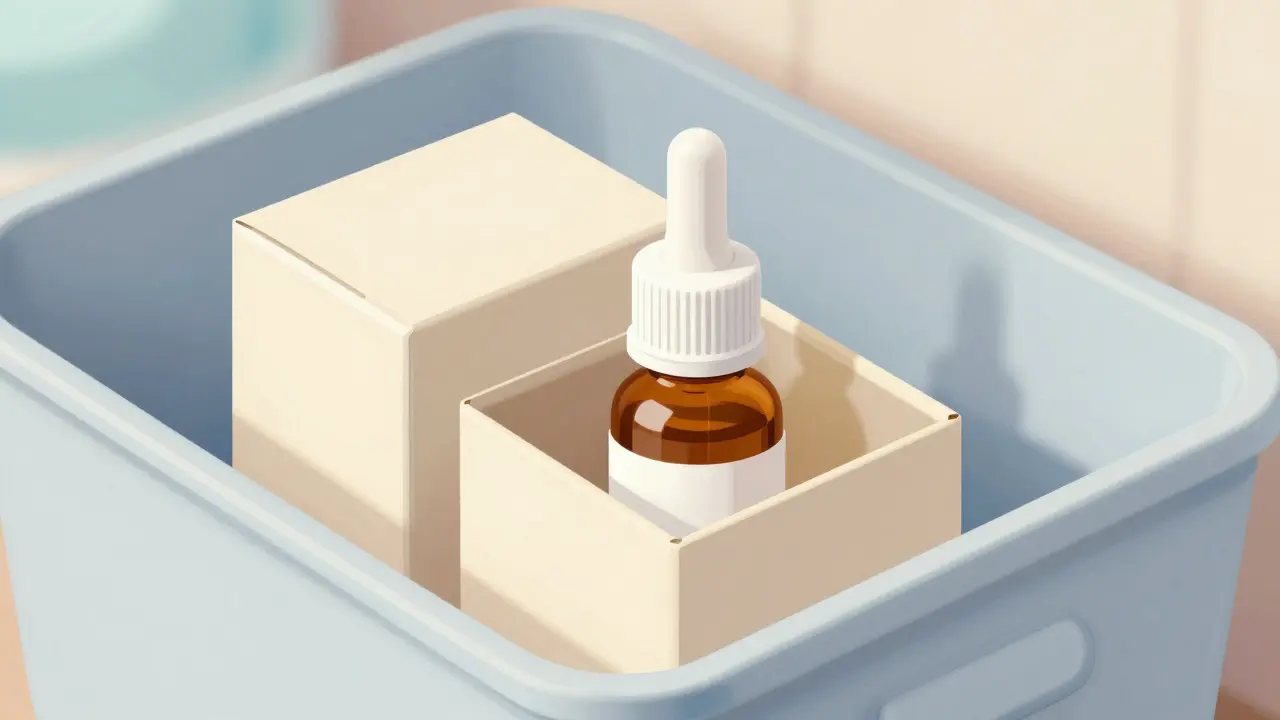
Eye drops are a unique case because they are applied directly to one of the most sensitive organs in your body. Because they are aqueous solutions, they are essentially "magnifying glasses" for light degradation. Experts from the American Academy of Ophthalmology suggest a "dual protection" strategy for multi-dose drops. This means keeping the drops in their amber bottle and then placing that bottle inside the original cardboard box. This second layer of opaque packaging provides an extra shield against light leaks. Never transfer your eye drops into a generic clear travel bottle; you'll likely destroy the active ingredients within a week.Can I just wrap my clear medication bottle in foil?
Yes, wrapping a bottle in aluminum foil provides nearly 100% light protection. However, it is inconvenient and can lead to patients forgetting to take their meds because the bottle is harder to handle. A proper amber bottle is a better long-term solution.
Is it okay to store eye drops in the fridge if the label doesn't say so?
Generally, you should follow the manufacturer's instructions. While some drops can be refrigerated, others may precipitate (form crystals) if they get too cold. Most eye drops are stable between 40°F and 77°F.
How do I know if my medication is "light-sensitive"?
Check the prescription label or the patient information leaflet for warnings like "Protect from light" or "Store in original container." If the bottle is already amber or opaque, it is almost certainly light-sensitive.
What happens if I use light-damaged medicine?
The most common result is that the medicine won't work. For example, a light-damaged antibiotic might not kill the bacteria, leading to a prolonged infection. In rarer cases, the chemical breakdown can create irritants that cause rashes or allergic reactions.
Where can I find a proper UV-blocking container?
You can purchase USP-compliant amber bottles from pharmacy supply stores or online. Some specialized medication organizers also come with UV-filtering plastics specifically for this purpose.