
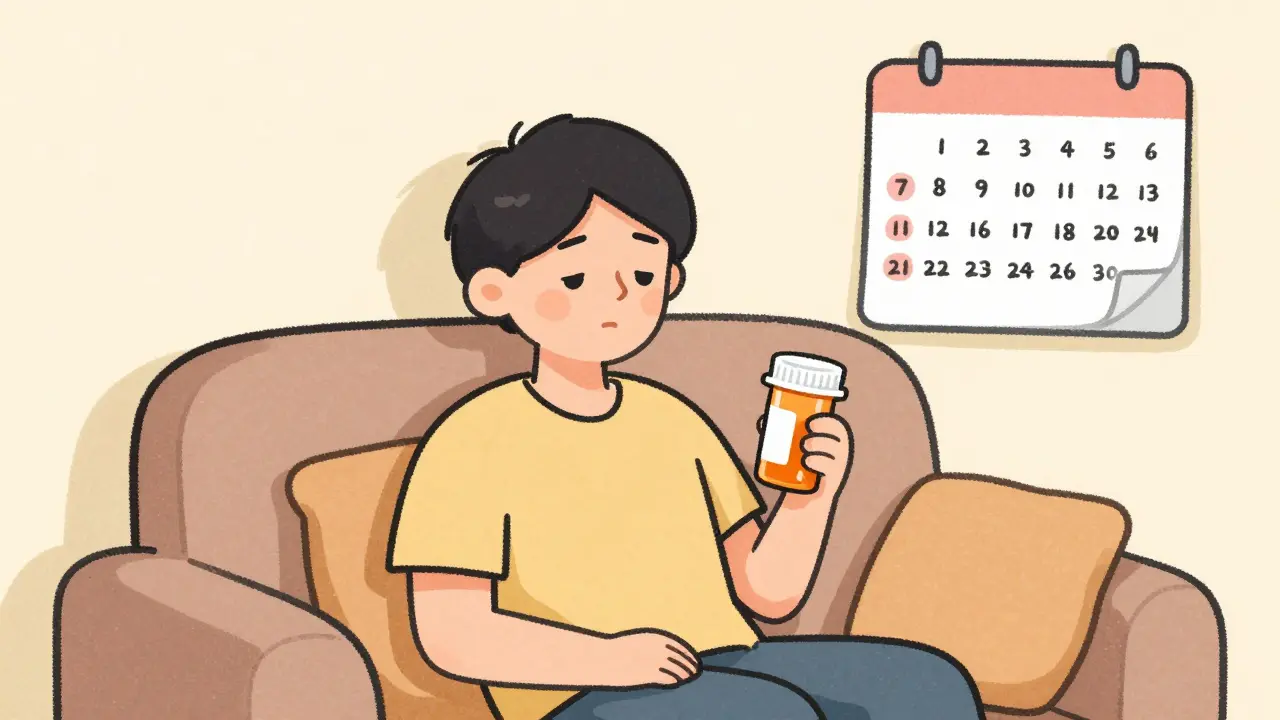
Why You Shouldn't Panic at the First Sign of Discomfort
You start taking a new prescription because you hope it will fix a problem, but then you wake up feeling dizziness or nausea the next morning. It feels counterintuitive-why does something meant to help actually make you feel worse? This reaction is incredibly common. Research shows that approximately 50-70% of patients starting new pharmaceutical treatments experience mild reactions like fatigue or stomach upset within the first two weeks. In fact, many people stop their medication entirely during this period, even though the symptoms are often temporary.
The tricky part is knowing whether what you're feeling is just your body adjusting or something dangerous. If you stop too soon, you might lose progress on treating the underlying condition. However, if you push through something unsafe, that's also a risk. The goal here isn't to ignore warning signs, but to distinguish between manageable side effects and red flags that need immediate attention.
The Difference Between 'Normal' Adjustments and Red Flags
Understanding the timeline is your first tool. Most mild side effects emerge quickly, usually within one to two days after the first dose, and peak around day three or four. They often fade as your system builds a tolerance to the drug. For example, dry mouth, slight drowsiness, or minor stomach cramps usually fit into this 'adjustment phase.' These are temporary, non-serious reactions that typically resolve spontaneously without changing your dosage.
Serious adverse events, however, look different. According to medical experts, certain symptoms require an immediate call to your doctor rather than home management. If you experience shortness of breath, chest pain, severe swelling, or difficulty swallowing, do not try to wait this out. While mild effects occur in roughly 70% of patients, serious ones are rare but demand action. Doctors emphasize that misclassifying serious symptoms as 'normal treatment effects' can lead to hospitalizations, so always trust your instinct if something feels severely wrong.
Tactical Solutions for Common Mild Symptoms
For symptoms that fall into the 'manageable' category, there are specific strategies backed by clinical data. You don't just have to suffer until it passes; you can actively lower the intensity.
Managing Nausea and Stomach Upsets
This is perhaps the most frequent complaint. If a pill makes you queasy, the simplest fix is often food. Clinical protocols recommend taking your medication with a small meal or milk (unless the label specifically forbids it). Drinking 8 to 10 ounces of water with each dose also helps dilute the irritation. A 2022 study found that adding this routine resolved nausea in about 62% of cases within 72 hours. Avoid spicy foods while your system adjusts, as they can compound the issue.
Handling Digestion Issues
Some medications slow your gut down, leading to constipation, while others might speed it up. Diarrhea management involves cutting out caffeine, acidic foods, and high-fiber intake temporarily. On the flip side, if you get constipated, focus on hydration (aim for 2.5 to 3 liters of fluids daily) and add fiber through fruits and vegetables. Exercise also plays a role here; walking for just 30 minutes a day showed a 68% resolution rate for constipation symptoms in recent trials involving over 1,200 patients.
Combating Dry Mouth and Fatigue
Dry mouth can be annoying but is rarely dangerous. Sipping water every 15 to 20 minutes or using sugar-free sour candies containing citric acid can boost salivary flow by nearly 80% within two days. For fatigue, which makes you feel drained rather than asleep, focus on nutrient timing. Keeping a diet balanced with carbohydrates, fats, and protein helps stabilize energy. Also, ensure you're getting 7 to 9 hours of nightly sleep, as lack of rest exacerbates drug-induced tiredness.
| Symptom | Recommended Action | Expected Resolution Time |
|---|---|---|
| Nausea / Upset Stomach | Take with food/milk + 8oz water | 2-3 Days |
| Fatigue / Lethargy | Balanced diet + 7-9 hrs sleep | 1-2 Weeks |
| Constipation | Hydrate + 30 mins exercise daily | 3-5 Days |
| Dry Mouth | Sip water frequently + Xylitol products | 2 Days |

The Hidden Power of Timing
Sometimes the issue isn't the drug itself, but when you take it. Community forums show that shifting the time of administration can solve problems that otherwise persist. If you take blood pressure medication early in the morning and feel dizzy standing up fast, consider asking your doctor if taking it at bedtime works better. Taking sedating medications right before your sleep helps you recover during a natural downtime rather than struggling through the day.
Polypharmacy patients (those on multiple drugs) often face timing conflicts. If you are managing four or more prescriptions, it can take 10 to 14 days to fully adapt to the schedule. During this window, keeping a log of exactly what you took and when helps identify patterns. Did the nausea happen only after lunch? Does the dizziness spike on Tuesdays? Tracking helps pinpoint triggers faster than guessing.
Mindset: Is It Psychology or Physiology?
This might sound counterintuitive, but how you interpret a sensation matters. Harvard researchers conducted randomized trials demonstrating that patients told to view mild side effects as a sign that "the medication is actively working" reported significantly lower anxiety scores. Their symptom intensity ratings were 29% lower compared to those told to simply watch for improvement. This approach, known as an adaptive mindset, doesn't change the biology of the side effect, but it reduces the distress associated with it.
If you know that a slight headache might mean the blood vessel relaxers are expanding circulation, you are less likely to panic. However, this strategy must never replace checking for actual safety risks. Dr. Robert Shmerling warns that this psychological reframing is safe only for truly mild, known issues like a stuffy nose or slight itch, not for anything threatening heart function or breathing.
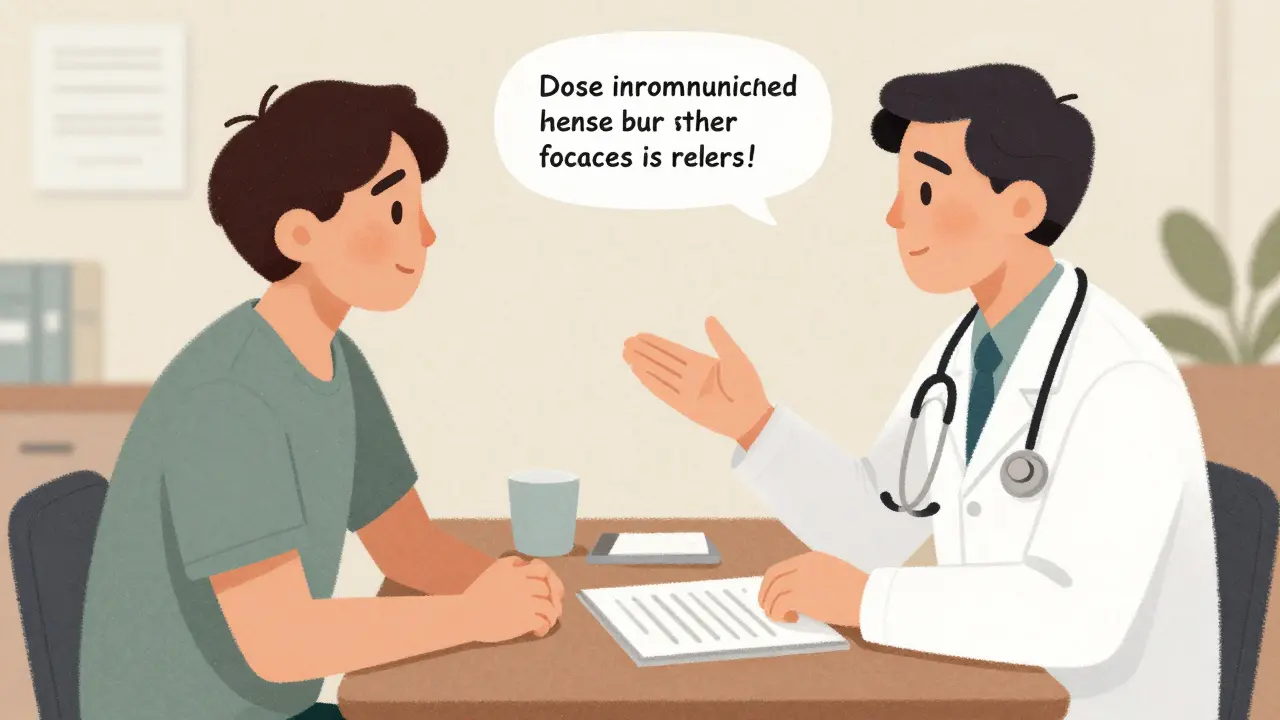
When to Ask for a Dosage Adjustment
If lifestyle changes and waiting aren't working after two weeks, the solution might be a mathematical one. A common move is the "start low, go slow" approach. Your provider might reduce the dosage by 25% or 50% initially to let your body acclimate before ramping back up. This strategy has a 70% to 75% success rate in eliminating symptoms while maintaining therapeutic benefits.
While lowering the dose might slightly reduce efficacy, staying on a lower dose long-term is better than stopping completely. Don't attempt to adjust the dose on your own; always consult your Healthcare Provider. In a meta-analysis of 42 studies, self-adjustment carried a 15-20% risk of losing treatment effectiveness, whereas doctor-guided adjustments kept patients safer.
Building Your Personalized Safety Net
Success relies heavily on communication. Before you even leave the pharmacy, ask these questions:
- What are the top two side effects I should expect?
- How long should it take for them to pass?
- Are there any foods or drinks I strictly cannot mix with this pill?
- Is it okay to take this with a glass of milk?
Rod Farren
April 1, 2026 AT 07:53Bioavailability windows are crucial when analyzing the absorption phases of new pharmaceutical interventions.
The pharmacokinetics dictate why patients experience acute sensitivity during the first forty-eight hours.
Adverse event profiles show clear trends in homeostatic disruption followed by adaptation.
Clinical data suggests that tachyphylaxis is rare in these non-opioid categories.
We must differentiate between toxicity signals and mere receptor downregulation events.
Hepatotoxicity markers should remain stable throughout the titration period.
Nephrogenic risks require strict hydration protocols alongside standard dosing schedules.
Ignoring the metabolic clearance half-life leads to suboptimal therapeutic index management.
Many practitioners fail to explain the biphasic response curve to their clientele.
Evidence-based medicine dictates waiting out the initial inflammatory surge.
This aligns perfectly with current FDA guidelines regarding patient retention strategies.
Cara Duncan
April 1, 2026 AT 18:06I love how this breaks down the timeline for us! 😊
It makes so much sense to see those numbers now.
Everyone should know about the food tricks too!
Glad to share some positivity here 💖.
We can get through the hard parts together 🌟.
Eleanor Black
April 3, 2026 AT 10:17It is important to note that many individuals overlook the physiological adjustments occurring during initial therapy.
One must understand that the body requires time to recalibrate its homeostatic balance.
This process often manifests as minor discomforts which are statistically expected outcomes.
We should not confuse transient symptoms with indications of severe adverse events.
Clinical guidelines suggest monitoring duration before making any abrupt changes to dosage regimens.
Patience remains a critical factor throughout the entire therapeutic window of observation.
Many patients unfortunately cease treatment prematurely due to unnecessary anxiety regarding side effects.
Communication with healthcare providers serves as the most reliable method for clarification of concerns.
Dietary modifications may alleviate certain gastrointestinal disturbances experienced by recipients.
Hydration plays a pivotal role in mitigating renal stress associated with pharmaceutical intake.
Sleep hygiene also influences how effectively the system processes the introduced compounds.
It is advisable to maintain a journal to track the frequency and intensity of reactions daily.
Documentation assists medical professionals in identifying specific patterns requiring intervention.
Furthermore, psychological framing significantly impacts the perception of physical sensations reported by users.
Adherence to prescribed protocols ensures optimal long-term health benefits without unnecessary complications.
Arun Kumar
April 3, 2026 AT 15:36Remember that every culture approaches health differently and we must respect those nuances.
Your comfort matters deeply in this global journey of healing.
Let us support one another while navigating these medical hurdles.
Inclusivity builds stronger communities around wellness practices.
Sharing stories helps everyone feel less alone during tough times.
James DeZego
April 5, 2026 AT 10:59Fantastic points right there my friend :)
I totally agree about the cultural aspect of care.
It really changes everything when you feel heard though.
Jenny Gardner
April 6, 2026 AT 03:03READ THE LABEL CAREFULLY!!!
Cullen Zelenka
April 7, 2026 AT 20:55You got this and stay positive about the process.
Things will settle down soon enough for sure.
Kep going strong man.
Russel Sarong
April 8, 2026 AT 07:32Is it truly manageable or merely tolerated by our fragile frames???
Christopher Beeson
April 10, 2026 AT 05:21What is the existential cost of chemical interference with our biology?
Pain becomes a philosophical construct in these trials.
Do we surrender autonomy for a theoretical cure anyway?
Sharon Munger
April 12, 2026 AT 01:52just take your meds and wait
trust the plan
Julian Soro
April 13, 2026 AT 12:20Absolutely right and consistency is key for success.
Medical teams rely on this kind of steady adherence.
Stay safe out there and keep pushing forward.