
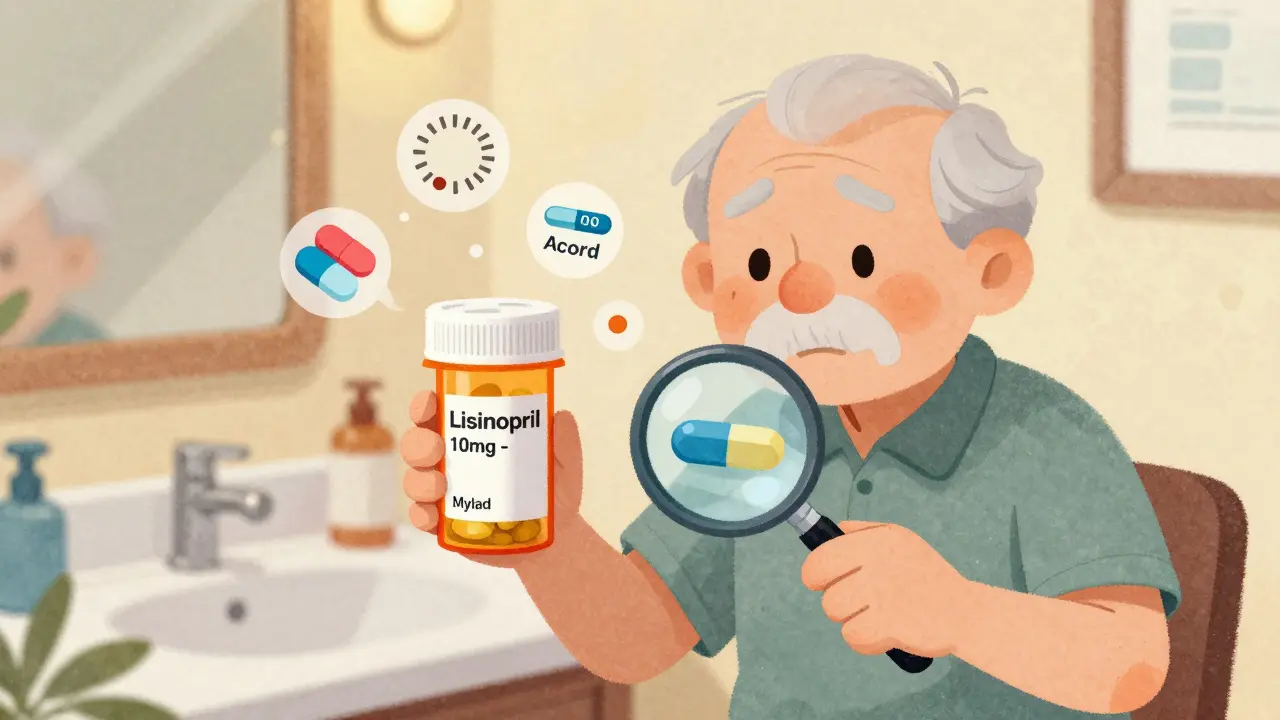
Every time you pick up a new prescription, there’s a chance the pills look different. Maybe they’re a different color, shape, or size. Maybe the label says a new company made them. That’s normal - but it’s also a red flag if you don’t check it. In Australia, over 80% of prescriptions are filled with generic drugs, and that number keeps rising. The problem? Most people don’t know how to tell if the new bottle is still the right medicine. And that’s dangerous.
Why Your Pills Look Different - And Why It Matters
Generic drugs aren’t fake. They’re legally approved copies of brand-name drugs. They contain the same active ingredient, work the same way, and cost less. But here’s the catch: the law doesn’t require generic pills to look like the brand-name version. That means your 10mg lisinopril from last month might be a small white oval, and this month it’s a large blue capsule. Same drug. Different maker. Different look. That’s fine - unless you don’t notice the change. People over 65 are especially at risk. A 2022 survey found that 42% of older patients rely on the shape or color of their pills to know what they’re taking. If those visuals change without warning, confusion follows. And confusion leads to mistakes: skipping doses, doubling up, or mixing up meds entirely. The real danger isn’t the generic switch itself. It’s the lack of verification. A 2021 study in the Journal of Patient Safety found that patients who mixed pills from different bottles after a label change accidentally overdosed. One man took his blood thinner twice because he thought the new blue pill was his cholesterol med. He ended up in the hospital.What to Check on Every New Prescription Label
Don’t just grab your bottle and go. Stop. Look. Compare. Here’s exactly what to check on your new label against your old one:- Patient name - Make sure it’s yours. Mix-ups happen, especially in busy pharmacies.
- Medication name - Look for both the brand name (like Lipitor) and the generic name (like atorvastatin). They should match what your doctor prescribed.
- Dosage strength - Is it 5mg, 10mg, or 20mg? This number must be identical. Even a small change can be harmful, especially with blood thinners, seizure meds, or thyroid drugs.
- Manufacturer - Look for "Mfg: ACCORD HEALTHCARE" or "Made by Mylan". If this changes from your last fill, it’s a different generic version. Not necessarily bad - but worth noting.
- Prescription number (Rx#) - This is unique to your prescription. If it’s completely different from last time, ask why. Sometimes it’s just a refill, but if the number changed and you didn’t get a new script, something’s off.
- Refills remaining - Did you have two left? Now you have one? That’s normal. But if it jumped from zero to three without a new doctor’s note, call your pharmacy.
- Directions - "Take one daily" vs. "Take one twice daily"? That’s a big difference. Check the wording matches your old label exactly.
- Expiration date - Always check this. Even if the pills look right, expired meds can lose potency or become unsafe.
When the Pill Looks Wrong - But the Label Says It’s Right
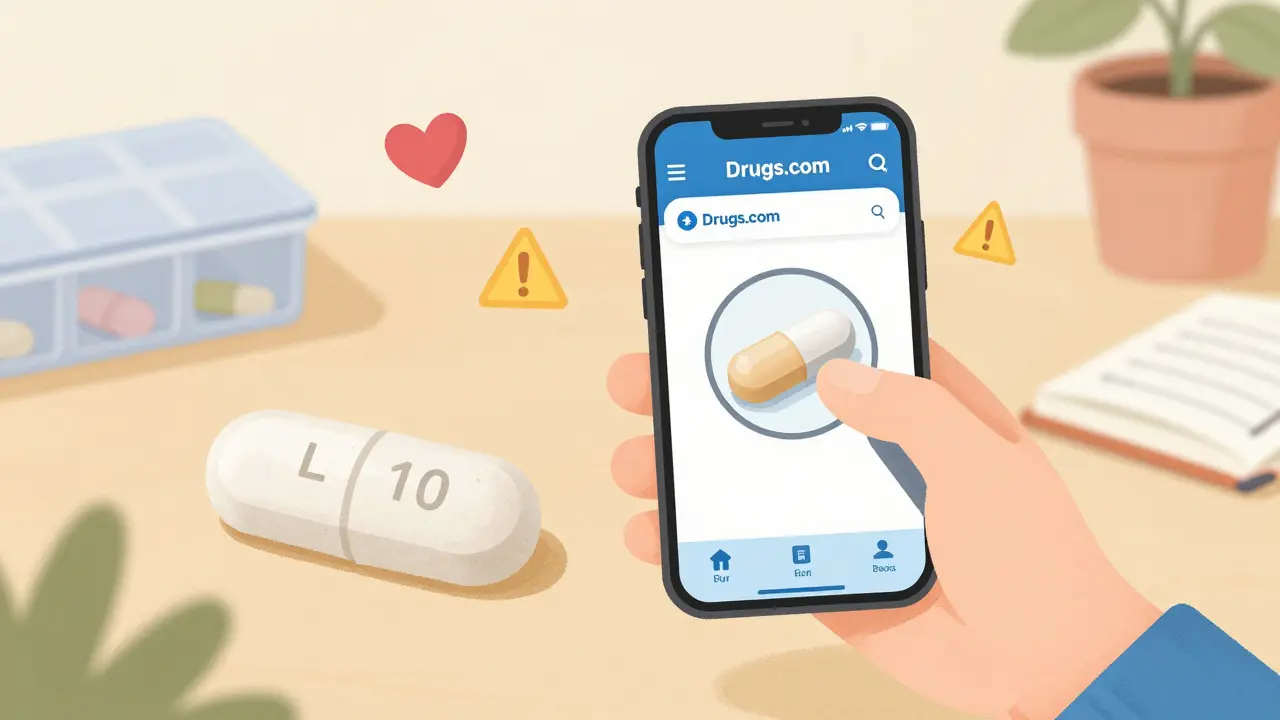
This is where most people get stuck. The label says "atorvastatin 10mg" - but the pill looks nothing like last month’s. What now? First, don’t panic. Generic manufacturers change their pill designs all the time. But don’t assume it’s safe either. Here’s what to do:- Check the imprint. Most pills have letters or numbers stamped on them - like "L 10" or "54 411". This is your key to verification.
- Go to Drugs.com Pill Identifier (or use the free app). Enter the shape, color, and imprint. It will show you exactly which drug it is, and who made it.
- Compare the result to your old pill’s imprint. If they match, you’re good.
- If they don’t match - or if the identifier says it’s a different drug - call your pharmacist before taking it.
High-Risk Medications - Don’t Skip This Step
Some drugs have a "narrow therapeutic index." That’s a fancy way of saying: even tiny differences in how your body absorbs them can cause serious harm. These include:- Warfarin (blood thinner)
- Levothyroxine (thyroid hormone)
- Phenytoin or carbamazepine (seizure meds)
- Lithium (mood stabilizer)
How to Avoid Future Confusion
You don’t have to check every label forever. Here’s how to make it easier:- Take a photo of every pill bottle when you get it. Keep them in a folder on your phone. When the next refill comes, compare side-by-side.
- Use a pill organizer with compartments for each day. Fill it once a week. If the pills look different, you’ll notice immediately.
- Ask your pharmacist to explain changes. They’re trained to spot issues. Don’t be shy - it’s your safety.
- Know your meds. Learn the generic names. If your doctor prescribes "lisinopril," don’t just remember "the blood pressure pill." Know the name.
- Opt for electronic prescriptions. Handwritten scripts have 61% more errors than digital ones. Ask your doctor to send prescriptions electronically.
Red Flags - When to Say No
Stop and call your pharmacist if you see any of these:- The active ingredient is different (e.g., you were on atorvastatin, now it’s rosuvastatin).
- The dosage changed without your doctor’s approval.
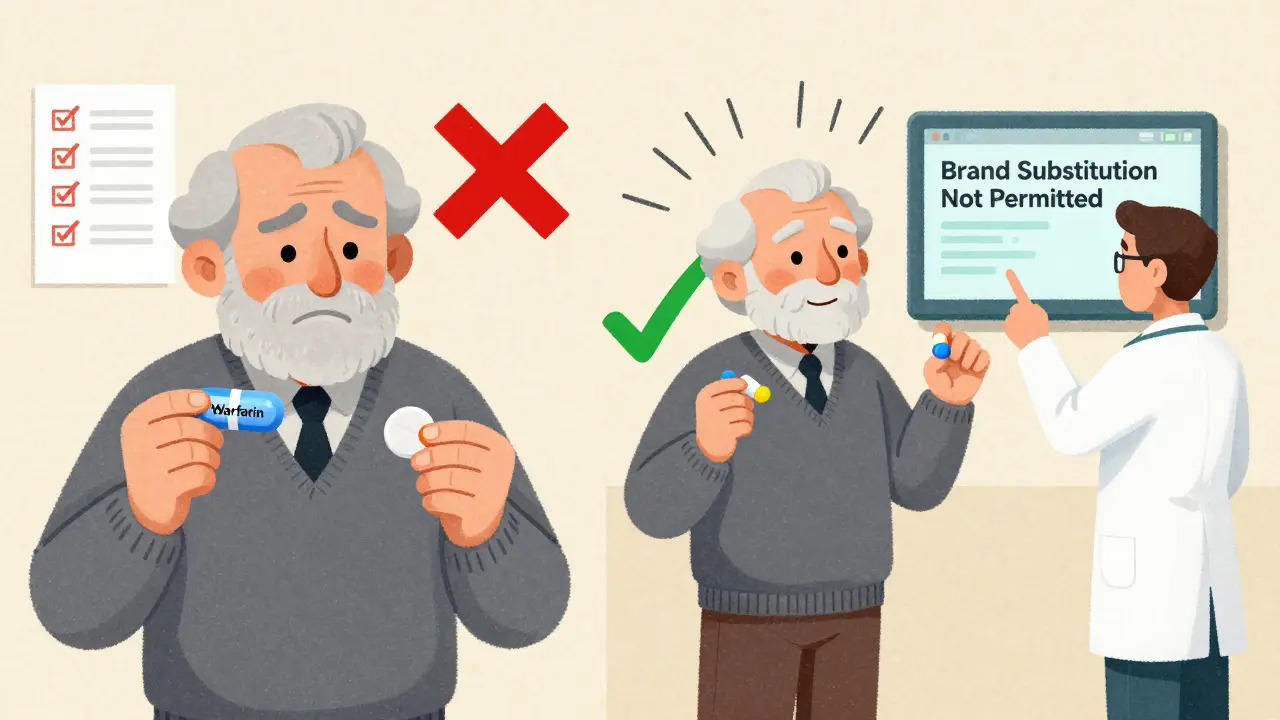
- The label says "brand substitution not permitted" - but you got a generic anyway.
- The pill looks like a completely different drug (e.g., a round white pill that’s usually for anxiety, but you’re on diabetes meds).
- You’re given a new medication without a refill count - or the refill count is wrong.
Final Thought: You’re the Last Line of Defense
Pharmacists are busy. Doctors are overloaded. The system isn’t perfect. But you’re the one who takes the pills every day. You’re the only one who notices when something’s off. Comparing your new prescription label to your old one isn’t extra work. It’s basic safety - like checking the tire pressure before a long drive. It takes two minutes. But it could save your life.Why do my pills look different every time I refill my prescription?
Generic drug manufacturers aren’t required to make pills look the same as the brand name or even as each other. They only need to contain the same active ingredient, strength, and dosage. So, a different company might make your lisinopril in a blue capsule this month and a white tablet next month - both are correct. Always verify the label and imprint to be sure.
Can I trust the generic version of my medication?
Yes - for most people, generics are just as safe and effective as brand-name drugs. The FDA requires them to meet strict standards. But for narrow-therapeutic-index drugs like warfarin or levothyroxine, small differences in how the body absorbs the drug can matter. If you take one of these, ask your doctor if you should stick with the same generic maker.
What should I do if my new pill looks like a different drug?
Don’t take it. Call your pharmacy immediately. Use a pill identifier tool like Drugs.com to check the imprint, color, and shape. If it doesn’t match your medication, the pharmacy may have made a mistake. They’ll need to verify the prescription and replace the bottle.
How do I know if a generic drug is the same as my old one?
Compare the active ingredient, dosage, and imprint on the pill. Use the Drugs.com Pill Identifier to search by shape, color, and imprint. If all match your previous bottle, it’s the same medication - even if the color or size changed. The manufacturer may be different, but the drug is identical.
Is it safe to switch between different generic brands?
For most medications, yes. But for drugs with a narrow therapeutic index - like blood thinners, thyroid meds, or seizure drugs - even small variations can affect your health. If you notice changes in how you feel after switching, tell your doctor. You can ask your pharmacy to always fill your script with the same generic brand.
What if my prescription says "brand substitution not permitted" but I got a generic?
That’s a mistake. If your doctor checked "brand substitution not permitted," the pharmacy is legally required to give you the brand-name drug. Contact your pharmacy right away. If they insist they did it correctly, call your doctor to confirm the prescription. Never take a drug you weren’t prescribed.
Dayanara Villafuerte
January 19, 2026 AT 11:14Jodi Harding
January 20, 2026 AT 08:51Naomi Keyes
January 21, 2026 AT 03:51Selina Warren
January 22, 2026 AT 03:18Joni O
January 22, 2026 AT 09:41Andrew Qu
January 23, 2026 AT 15:39Max Sinclair
January 24, 2026 AT 12:38Danny Gray
January 26, 2026 AT 06:57Pat Dean
January 27, 2026 AT 16:41Ryan Otto
January 29, 2026 AT 03:42rachel bellet
January 30, 2026 AT 18:00