
Why Checking Lot Numbers and Recalls Matters
Clearing expired medications isn’t just about cleaning out a shelf. It’s about stopping dangerous drugs from reaching patients. In 2022, the FDA reported over 1.3 million emergency room visits in the U.S. linked to expired or recalled medications. Many of those cases happened because someone assumed the expiration date was stamped clearly - or worse, tried to guess it from a jumble of letters and numbers on the bottle.
Lot numbers aren’t random codes. They’re traceable fingerprints for each batch of medicine. If a manufacturer discovers a defect - say, a pill dissolved too fast or a liquid grew mold - they can pull only the affected lots. If you don’t check those lot numbers, you might keep dangerous drugs on your shelf while throwing out perfectly good ones.
What You’ll Find on the Package
Every prescription and over-the-counter medicine you handle should have two things printed clearly: the expiration date (EXP) and the lot number. These are not the same thing. The EXP date tells you when the drug is no longer guaranteed to work safely. The lot number tells you which production run it came from.
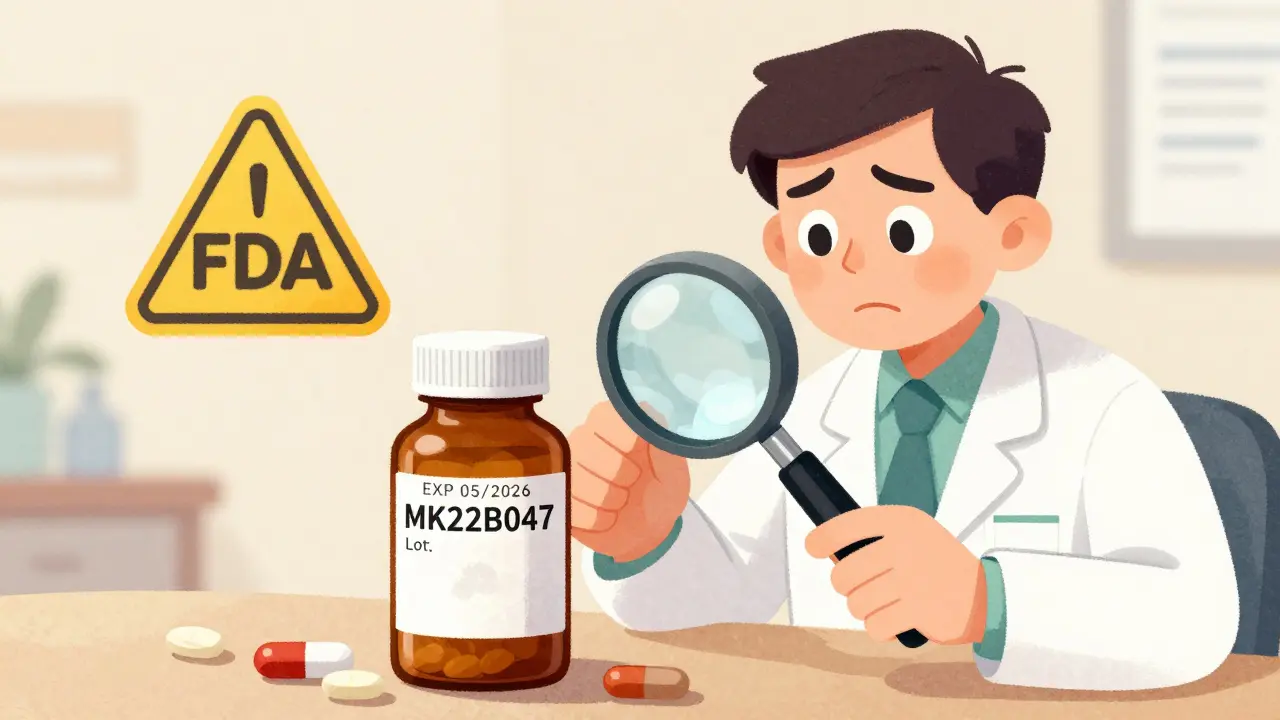
Expiration dates are always shown as a calendar date - usually in MM/YYYY format. You might see it as "EXP 05/2026" or "EXP 12/25". Some international meds use DD/MM/YYYY, which can trip up staff used to U.S. formats. Don’t assume. Read it. If the date is faded, smudged, or missing, treat the medication as expired. No exceptions.
Lot numbers vary wildly. Pfizer might use "230515A" (meaning May 15, 2023). Merck could use "MK22B047". Some are simple like "L1234567B". There’s no universal standard. You can’t reverse-engineer the expiration date from the lot number. The FDA says this outright: the printed EXP date is the only legally valid one.
Never Guess the Expiration Date
Here’s a dangerous myth: "If the lot number shows the manufacturing date, I can add 24 months and know when it expires." That’s wrong. And it’s costly.
Shelf life isn’t the same for every drug. Some antibiotics last 18 months. Some insulin lasts only 28 days after opening. Some tablets are stable for five years. The manufacturer determines this based on stability testing - not a fixed formula. A 2024 MedKeeper study found that 74% of medication errors during inventory clearance happened because staff tried to calculate expiration dates from lot numbers.
One real case: A clinic in Ohio threw out $18,000 worth of flu vaccines because they thought a lot number ending in "21" meant 2021 manufacture, so they assumed it expired in 2023. The actual expiration? 2025. The vaccine was still good. That’s not just waste - it’s a public health risk when patients go unvaccinated.
How to Check for Recalls
Even if a drug hasn’t expired, it might be recalled. Maybe the wrong dosage was filled. Maybe the bottle cap didn’t seal. Maybe it was contaminated. You need to check for active recalls every time you clear inventory.
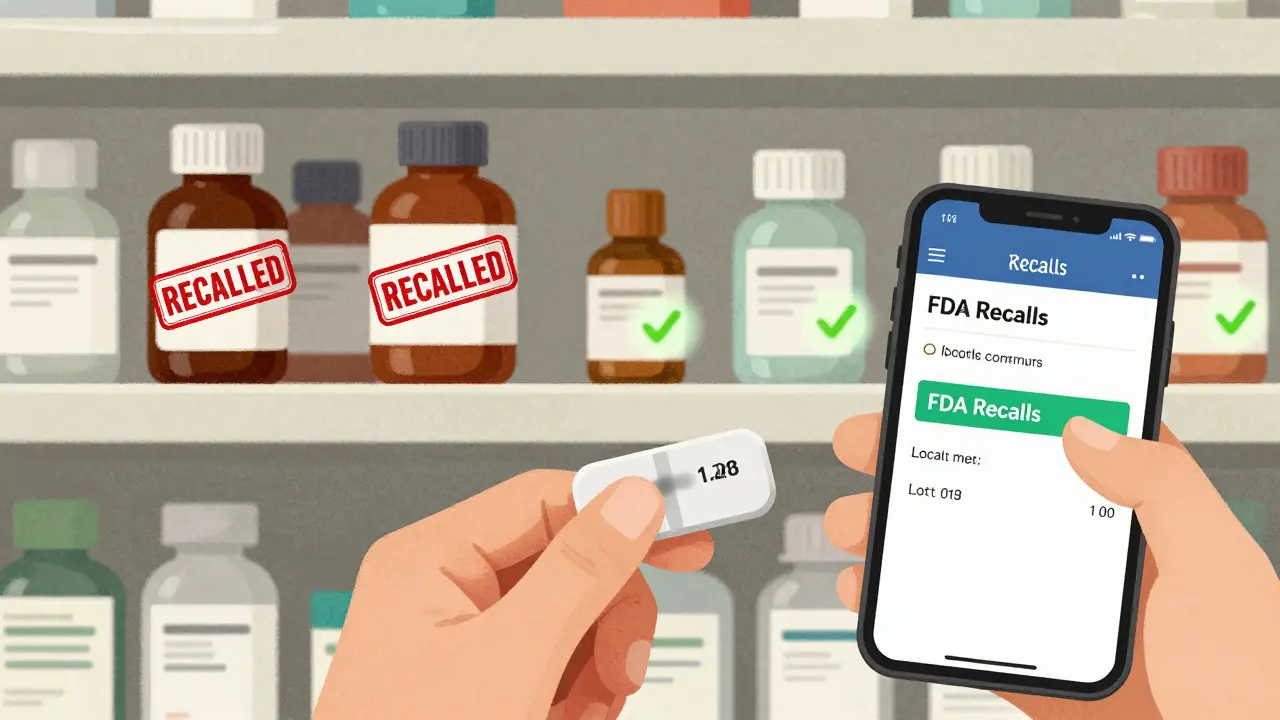
The FDA maintains a public database called Recalls, Market Withdrawals & Safety Alerts. Go to their website and search by lot number. You can also search by drug name or manufacturer. If you find a match, quarantine the product immediately.
Don’t rely on memory. Don’t trust a coworker’s word. Even if you’ve handled this lot before, check again. Manufacturers change suppliers. Packaging changes. Lot numbers get reused across different drugs. A 2023 Harvard Medical School study showed that using this two-step process - check EXP date, then check recall database - reduced expired or recalled meds in circulation by 98.6%.
The 7-Step Clearance Process
Here’s what works, based on the American Society of Health-System Pharmacists (ASHP) 2024 guidelines:
- Isolate anything with an EXP date within the next 60 days. Don’t wait until it’s expired.
- Scan the lot number into your inventory system at least 30 days before expiration. This triggers alerts.
- Verify against the FDA’s recall database. Do this manually - don’t trust automated flags alone.
- Contact the manufacturer if the lot number doesn’t show up in your system. Ask for their official expiration date and recall status.
- Document everything. Take timestamped photos of the label and lot number before disposal.
- Complete FDA Form 3639 if you’re disposing of controlled substances like opioids or benzodiazepines.
- Store records for at least two years. DEA requires this. You’ll need them if there’s ever an audit.
Tools That Actually Help
Manual checking is slow and error-prone. In 2022, a study of 47 healthcare facilities found that manual entry led to a 12.7% error rate in tracking expirations. Automated systems dropped that to 0.3%.
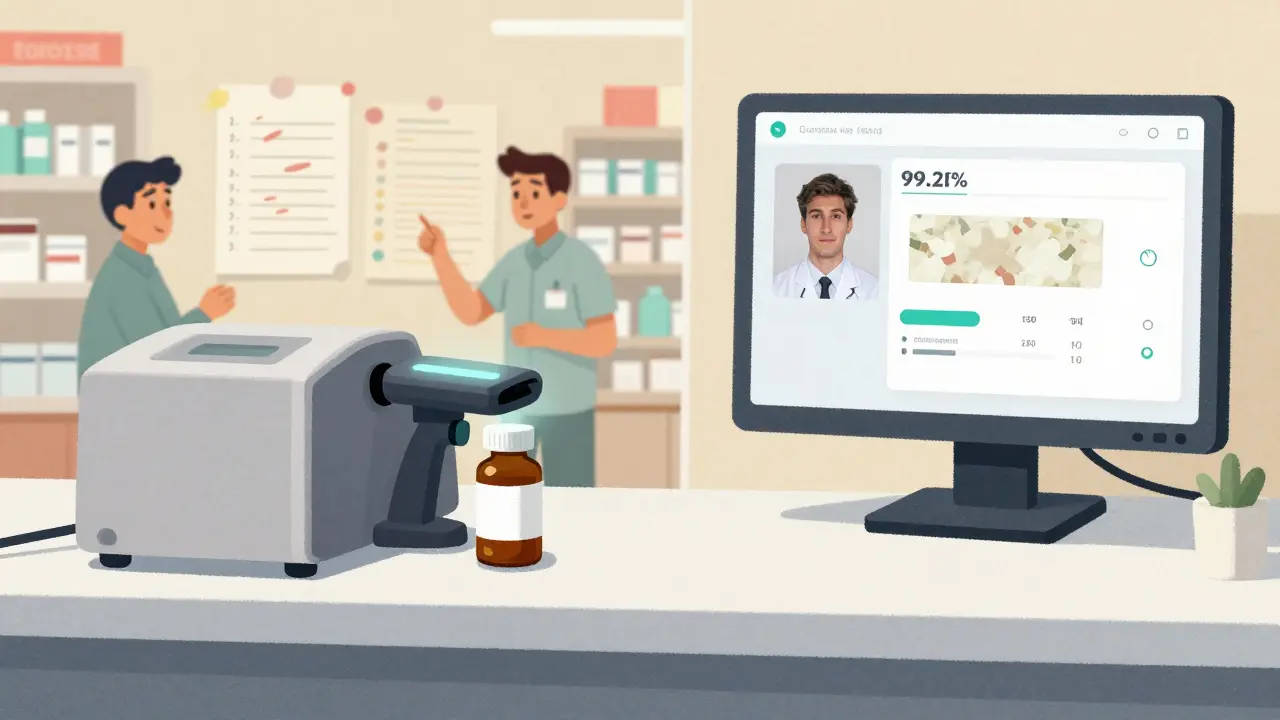
Barcode scanners linked to inventory software like IFS or MedKeeper are game-changers. At UC San Diego Medical Center, scanning lot and EXP dates cut inventory clearance time from three hours to 22 minutes per cycle. The key? Make sure your scanner can read both the barcode and the printed date. Some scanners fail if the label is damaged or poorly printed.
Now there’s AI. The FDA approved Medplore’s AI scanner in April 2024. It can read expiration dates from blurry, faded, or angled photos with 99.2% accuracy. That’s huge - because 31% of medication labels get damaged during handling, according to the University of Florida. If your pharmacy can’t afford a full system yet, at least use your phone’s camera with the Medplore app for high-risk meds like insulin or epinephrine.
What Independent Pharmacies Are Missing
Chain pharmacies like CVS and Walgreens have automated systems. But 42.3% of independent pharmacies still use paper logs or spreadsheets, according to the National Community Pharmacists Association (NCPA) 2023 survey. That’s a problem.
One independent pharmacist in Arizona told a Reddit thread: "We switched manufacturers last year and didn’t update our lot number lookup sheet. We missed three expirations. Two of those went to elderly patients."
Small pharmacies are often the last to get recall notices. They don’t get automated alerts. They don’t have IT staff. If you’re running one, get on the FDA’s recall email list. Print out a list of your top 10 most-used drugs and their manufacturers. Keep their phone numbers handy. Call them directly if a lot number looks odd.
What’s Changing in 2025 and Beyond
By November 2025, the FDA requires all pharmacies to use electronic lot tracking. That means no more handwritten logs. If you’re not ready, you’ll be out of compliance.
Companies like Pfizer are testing blockchain systems (MediLedger) to track every bottle from factory to patient. Early results show a 28% improvement in expiry accuracy. GS1, the global standards body, is pushing for uniform lot number formats by 2027. That will make life easier.
But here’s the catch: even with better tech, the core rule won’t change. The EXP date on the package is still the only thing that matters. Lot numbers are for tracing. Not guessing. Not assuming. Not hoping.
Final Reminder: When in Doubt, Throw It Out
There’s no shame in disposing of a pill you’re unsure about. The cost of one wrong dose - a child getting adult-strength medicine, an elderly person having a seizure from a degraded drug - is far higher than the price of a bottle of pills.
Use your local drug take-back program. Don’t flush them. Don’t toss them in the trash where kids or pets might get to them. Many pharmacies offer free disposal bins. If yours doesn’t, call your city’s health department. They’ll point you to one.
Clearing expired meds isn’t a chore. It’s your last line of defense. Do it right. Every time.
clarissa sulio
February 3, 2026 AT 01:44Bridget Molokomme
February 4, 2026 AT 12:49Vatsal Srivastava
February 5, 2026 AT 08:39Brittany Marioni
February 7, 2026 AT 03:16Monica Slypig
February 7, 2026 AT 07:09Becky M.
February 8, 2026 AT 07:37jay patel
February 10, 2026 AT 04:03Ansley Mayson
February 11, 2026 AT 23:39phara don
February 13, 2026 AT 03:00Hannah Gliane
February 14, 2026 AT 14:45Murarikar Satishwar
February 14, 2026 AT 18:15Dan Pearson
February 16, 2026 AT 13:49Bob Hynes
February 17, 2026 AT 12:45Eli Kiseop
February 18, 2026 AT 17:07