
Why Your Medicine Cabinet Might Be Dangerously Outdated
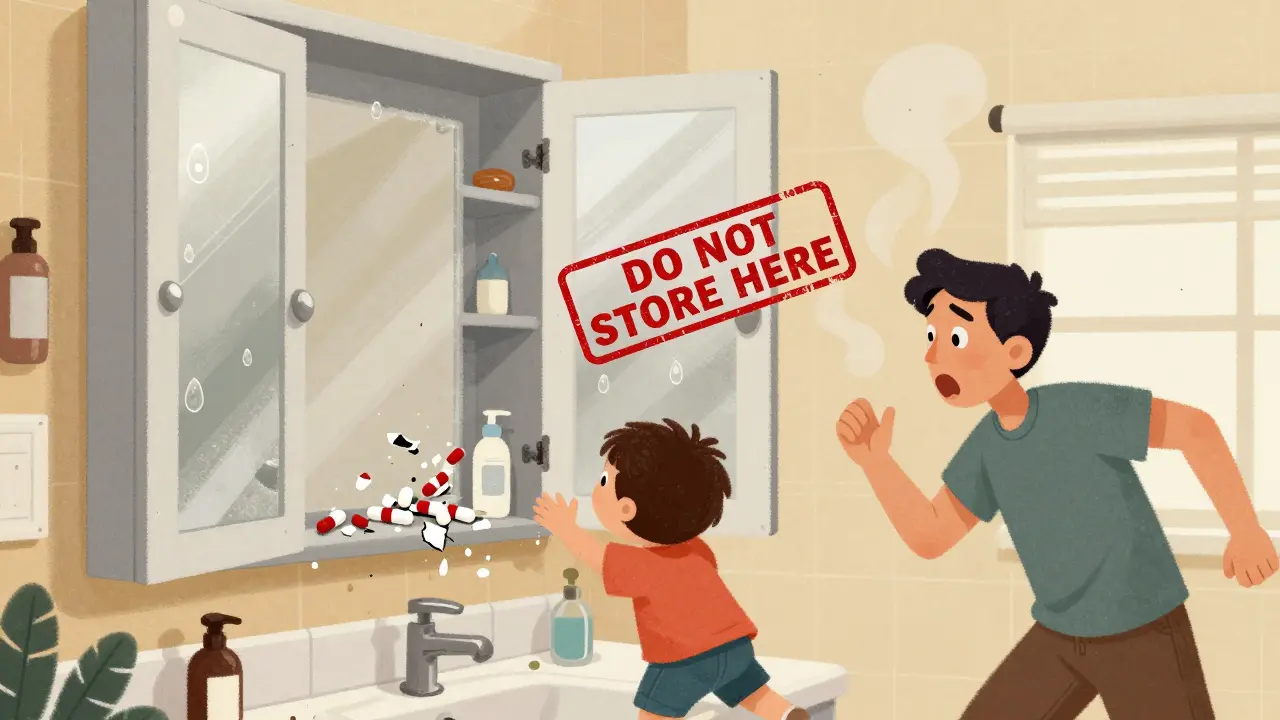
Most families keep their over-the-counter medicines in the bathroom. It’s convenient-right next to the sink, toothbrush, and shampoo. But here’s the problem: that cabinet is a moisture trap. Humidity from showers and baths doesn’t just fog up your mirror-it ruins your pills. Medications can break down, lose potency, or even turn into harmful substances. According to Cone Health’s Pharmacy Supervisor Melonie Crews-Foye, PharmD, moisture can make pills crumble or become ineffective. And if your child finds them? That’s not just a scare-it’s an emergency.
Every year, more than 60,000 children under age 5 end up in the emergency room after swallowing someone else’s medicine. The CDC reports over 458,000 ER visits for kids aged 0-19 due to accidental poisoning. And it’s not just kids. Teens are taking pills from home cabinets at alarming rates-54% of teens who misuse prescription drugs get them from their own or a friend’s medicine cabinet, according to SAMHSA’s 2022 survey. Your cabinet isn’t just messy. It’s a risk.
Where to Store Medicines (And Where Not To)
Stop storing meds in the bathroom. Seriously. Even if it’s a fancy cabinet with a mirror, it’s still the worst place in the house. The heat and moisture from daily showers degrade medications faster than you think. The same goes for the kitchen near the stove or dishwasher. Heat above 86°F (30°C) speeds up chemical breakdown, as outlined in USP General Chapter <1079>. That means your pain relievers, antihistamines, and even children’s vitamins could be less effective-or worse.
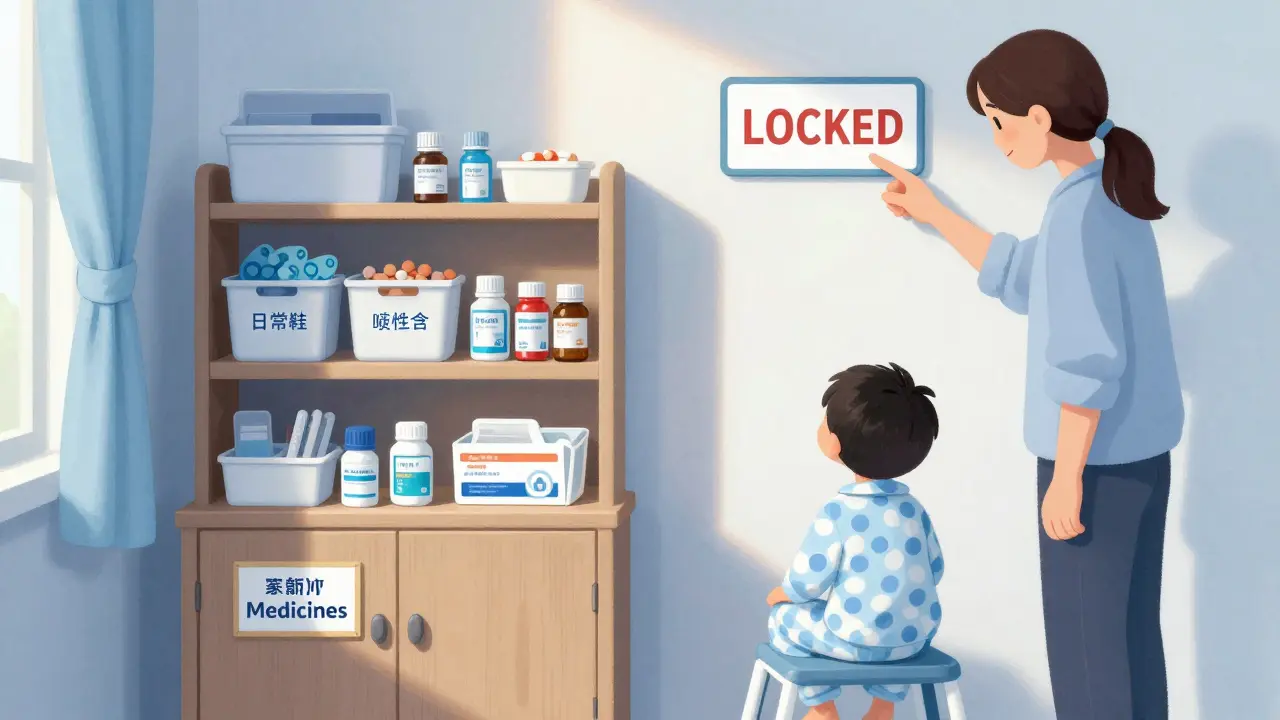
The best spot? A high, dry, cool cabinet that’s out of reach. Think linen closet, bedroom shelf, or a closet in a hallway. ADT’s 2023 safety guidelines recommend keeping medicine at least 4 feet off the ground. But height alone isn’t enough. Kids are clever. They use chairs, step stools, or even climb on furniture. A cabinet that’s just “out of reach” isn’t safe if it’s unlocked. You need a lock.
Lock It Down: Beyond Childproof Caps
Childproof caps? They’re not childproof. A 2021 Johns Hopkins study found that 42% of kids aged 4-5 can open standard safety caps in under 10 minutes. That’s not a flaw in the cap-it’s a flaw in relying on it. Real protection means physical barriers. If your cabinet doesn’t have a lock, install one. You don’t need a safe. A simple childproof latch, like the ones used on kitchen cabinets, works. Or use a locked drawer inside the cabinet.
If you’re serious about safety, consider a smart device. ADT and other security companies now offer asset protection devices that send alerts to your phone if the cabinet is opened. Adoption of these devices has jumped 300% since 2020. It’s not overkill-it’s prevention. And if you keep opioids, painkillers, or ADHD meds, you need double security: a locked container inside a locked cabinet. These aren’t just medications-they’re potential drugs of abuse.
What Should Be in Your Cabinet (And What Shouldn’t)
Not everything that’s labeled “OTC” belongs in your cabinet. Start fresh. Empty everything out. Sort into three piles: Keep, Discard, Questionable.
- Keep: Only items you use regularly-pain relievers (acetaminophen, ibuprofen), antihistamines (for allergies), antacids, hydrocortisone cream, bandages, thermometer, and tweezers.
- Discard: Anything expired. More than 12 months past the expiration date? Toss it. The FDA says expired antibiotics can become toxic. Expired cough syrup? It won’t work. Expired children’s vitamins? They can cause nausea or liver stress. Melonie Crews-Foye says it plainly: “If they are expired, get rid of them. They can do more harm than good.”
- Questionable: Items you haven’t used in over a year, or you’re not sure about. If you can’t remember why you bought it, don’t keep it. That includes old eye drops, nasal sprays, and herbal supplements with no clear label.
And don’t forget: vitamins and supplements aren’t harmless. They’re still drugs. Too much iron can poison a child. Too much vitamin D can cause kidney damage. Treat them like prescription meds.
Organize for Safety and Speed
A messy cabinet is a dangerous cabinet. When you’re stressed-your child has a fever at 2 a.m.-you don’t want to dig through a junk drawer. Organize by use:
- Group by frequency: Daily meds (like allergy pills) go front and center.
- Separate by time of day: Morning meds on one shelf, nighttime on another. Cone Health offers free adherence packaging that sorts pills by day and time-great for families with multiple people on different schedules.
- Use clear, labeled bins or small containers. Don’t rely on the original boxes if they’re torn or faded. Write the name, expiration date, and purpose on each container.
- Keep a written list: Include every OTC item, prescription, and supplement. Keep it in your wallet or saved on your phone. Emergency responders need to know what’s in your system.
Dispose of Old Medicines the Right Way
Don’t flush them. Don’t throw them in the trash. Don’t pour them down the sink. The DEA and FDA agree: these methods pollute water and make drugs accessible to others.
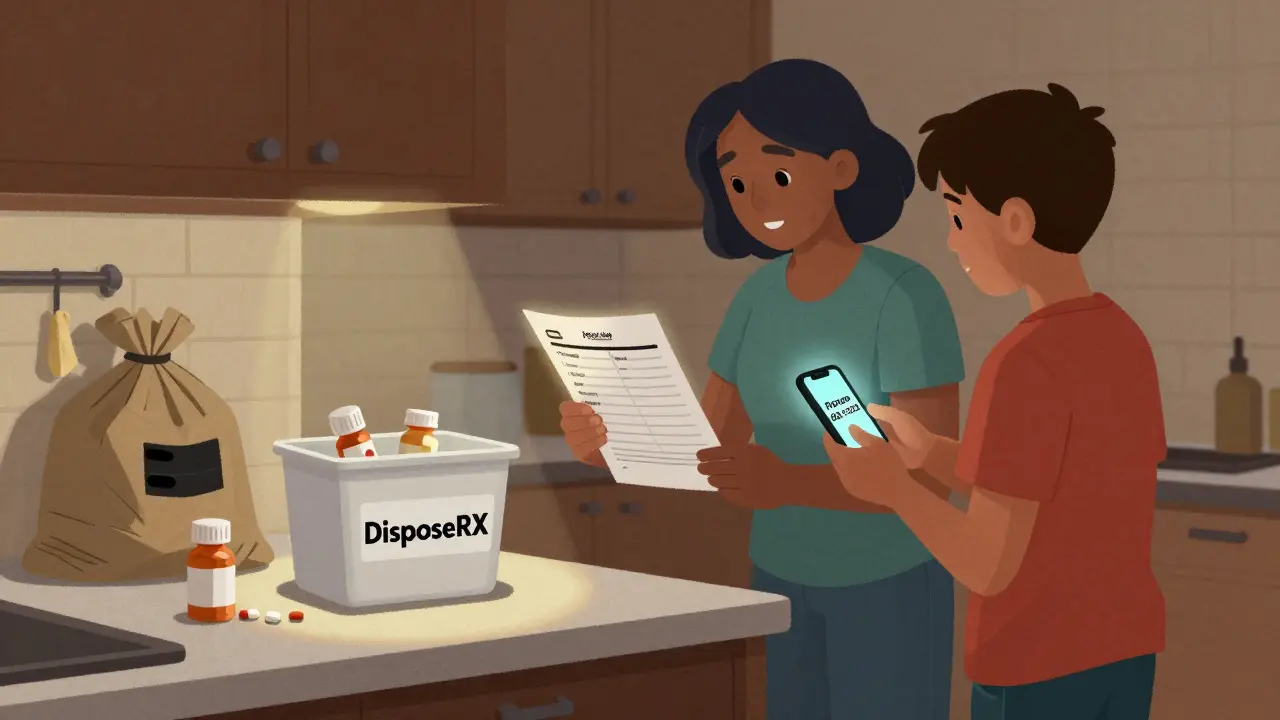
Use a take-back program. CVS, Walgreens, and many police stations have secure disposal kiosks. In 2023, the DEA’s National Prescription Drug Take Back Day collected over a million pounds of unused meds. You can also ask your pharmacist for DisposeRX powder-a free, FDA-approved product that neutralizes opioids and other controlled substances for safe household disposal. Just mix it with your pills in the original bottle, seal it, and toss it.
Even if you don’t have opioids, dispose of everything you’re not using. Empty bottles? Remove labels or black them out with a marker. That prevents someone from finding your name and using it to get prescriptions fraudulently.
Emergency Plan: Know What to Do If Something Goes Wrong
Accidents happen. That’s why every home with kids needs a clear plan.
- Post the Poison Help number-800-222-1222-on the fridge, near the phone, and saved in every family member’s contacts.
- Teach older kids how to call it. Don’t assume they’ll know.
- Keep the number in your wallet or phone. Emergency responders will ask what your child ingested. If you have your list, you can answer quickly.
- Don’t wait for symptoms. If you suspect ingestion, call immediately. Poison control centers give free, expert advice 24/7. They can tell you whether to wait, watch, or rush to the ER.
Check Twice a Year. Make It a Habit.
Don’t wait for a crisis. Set a reminder: every April and October, do a full medicine cabinet check. That’s twice a year. Here’s your checklist:
- Remove everything.
- Check expiration dates. Toss anything older than 12 months past the date.
- Look for changes: discolored pills, cracked capsules, cloudy liquids.
- Confirm all containers are labeled.
- Verify locks are working.
- Update your medication list.
It takes 15 minutes. But it could save a life.
Final Thought: Safety Isn’t About Perfection. It’s About Progress.
You don’t need a vault. You don’t need to spend hundreds on smart tech. You just need to stop storing meds in the bathroom, lock what you keep, get rid of what you don’t use, and know what to do if something goes wrong. That’s it.
The goal isn’t to scare you. It’s to make your home safer than 90% of American households. Right now, only 23% of parents use locked storage. You can be one of them. Start today. Your family will thank you.
Can I store OTC medicines in the bathroom if I keep them in a sealed container?
No. Even sealed containers are exposed to humidity and heat from showers and baths. Moisture degrades medications over time, making them less effective or potentially unsafe. The American College of Emergency Physicians and Cone Health both recommend storing medicines in a dry, cool place like a bedroom or linen closet-not the bathroom.
Are childproof caps enough to keep kids safe?
No. A 2021 Johns Hopkins study showed that 42% of children aged 4-5 can open standard childproof caps in under 10 minutes. Caps are designed to slow down curious kids, not stop them. Physical locks-on cabinets or drawers-are the only reliable barrier.
What should I do with expired medications?
Do not flush, burn, or throw them in the trash. Use a DEA-authorized take-back location like CVS or Walgreens, or use DisposeRX powder (often free from pharmacies) to neutralize them at home. Then seal the container and discard it in the regular trash. Expired meds can be toxic, especially antibiotics and painkillers.
Is it safe to keep vitamins and supplements in the medicine cabinet?
Yes-but treat them like medicine. Iron, vitamin D, and melatonin can be dangerous in large doses, especially for young children. Keep them locked and labeled. Don’t assume they’re harmless just because they’re sold over the counter.
How often should I check my medicine cabinet?
At least twice a year-April and October. Check expiration dates, look for damaged packaging, remove unused items, and confirm locks are working. Memorial Hermann and Cone Health both recommend this schedule to prevent accidental poisoning and ensure medications are effective.
What if I have teens in the house? Do I need extra precautions?
Yes. Teens are the second-largest group after young children to misuse medications from home. Half of teens who misuse prescription drugs get them from their own or a friend’s medicine cabinet. Lock all medications, especially opioids, ADHD meds, and anxiety drugs. Use double security: a locked container inside a locked cabinet. Have open conversations about the risks. Don’t assume they know how dangerous it is.
Should I keep a list of all medications in my home?
Absolutely. Keep a written or digital list of every prescription, OTC medicine, vitamin, and supplement-including doses and why you take them. Store it in your wallet or phone. In an emergency, this saves critical time. Emergency responders and poison control need to know exactly what’s been taken.
Can I use a smart lock or alarm system for my medicine cabinet?
Yes, and it’s becoming more common. Smart asset protection devices send alerts to your phone if the cabinet is opened. Adoption has grown 300% since 2020. While not required, they’re a powerful tool for families with teens, visitors, or high-risk medications. They don’t replace locks-they reinforce them.
Dorine Anthony
December 18, 2025 AT 15:41William Storrs
December 20, 2025 AT 07:44Kevin Motta Top
December 21, 2025 AT 10:02Alisa Silvia Bila
December 21, 2025 AT 17:46Marsha Jentzsch
December 22, 2025 AT 10:31Janelle Moore
December 23, 2025 AT 15:25Henry Marcus
December 24, 2025 AT 11:35William Liu
December 25, 2025 AT 22:44Frank Drewery
December 25, 2025 AT 23:15mary lizardo
December 26, 2025 AT 23:54