

Generic drugs make up 90% of all prescriptions filled in the U.S., but they account for just 23% of total drug spending. That’s not an accident. It’s the result of a deliberate, market-driven system designed to drive prices down through competition - not government price setting.
Why Generic Drugs Don’t Need Price Caps
When a brand-name drug’s patent expires, generic manufacturers can step in. They don’t need to repeat expensive clinical trials. All they need to prove is that their version works the same way as the original. That’s called bioequivalence. The FDA approves these copies through a fast-track process called the Abbreviated New Drug Application (ANDA). This system, created by the Hatch-Waxman Act in 1984, turned generic drugs into a high-volume, low-margin business.Once the first generic hits the market, prices start dropping. Within six months, they’re down about 75%. By the time three or more companies are selling the same generic, prices fall to just 10-15% of the original brand’s cost. That’s not because the government set a price limit. It’s because competition forces manufacturers to undercut each other just to stay in the game.
How the Government Actually Controls Generic Prices
The government doesn’t set prices for generics. It sets the rules that make competition possible.The FDA’s Generic Drug User Fee Amendments (GDUFA), renewed in 2022, pump $750 million into speeding up approvals. Before GDUFA, it took an average of 18 months to get a generic approved. Now, the goal is 10 months - and they’re hitting it. In 2023 alone, the FDA approved 1,083 generic drugs. More approvals mean more competitors. More competitors mean lower prices.
The Federal Trade Commission (FTC) watches for tricks that block competition. One big one? Pay-for-delay deals. That’s when a brand-name company pays a generic maker to delay launching its cheaper version. The FTC challenged 37 of these deals in 2023. If those deals were stopped, consumers could save $3.5 billion a year.
Medicare Part D plans don’t pay the list price for generics. They negotiate rebates. On average, they pay 15% below the manufacturer’s price. For preferred generics, rebates hit 28%. That’s not a government mandate. It’s how private insurers negotiate in a crowded market.
Why Price Negotiation Programs Skip Generics
The Inflation Reduction Act of 2022 lets Medicare negotiate prices for some high-cost brand-name drugs - like Ozempic and Wegovy. But it explicitly excludes generics. Why? Because they’re already cheap.The Department of Health and Human Services looked at the numbers. Generic drugs are already priced at a fraction of brand-name drugs. Extending negotiation to generics would save only $1.2 billion a year - less than 1% of total drug spending. Meanwhile, negotiating on brand-name drugs alone could save $9.5 billion.
The Congressional Budget Office did the math too. If the U.S. used international pricing benchmarks for generics, Medicare spending would drop by just $2.1 billion annually. That’s 0.4% of total generic drug spending. For brand-name drugs? $158 billion. The math doesn’t justify the risk.

When Generic Prices Go Up - And Why
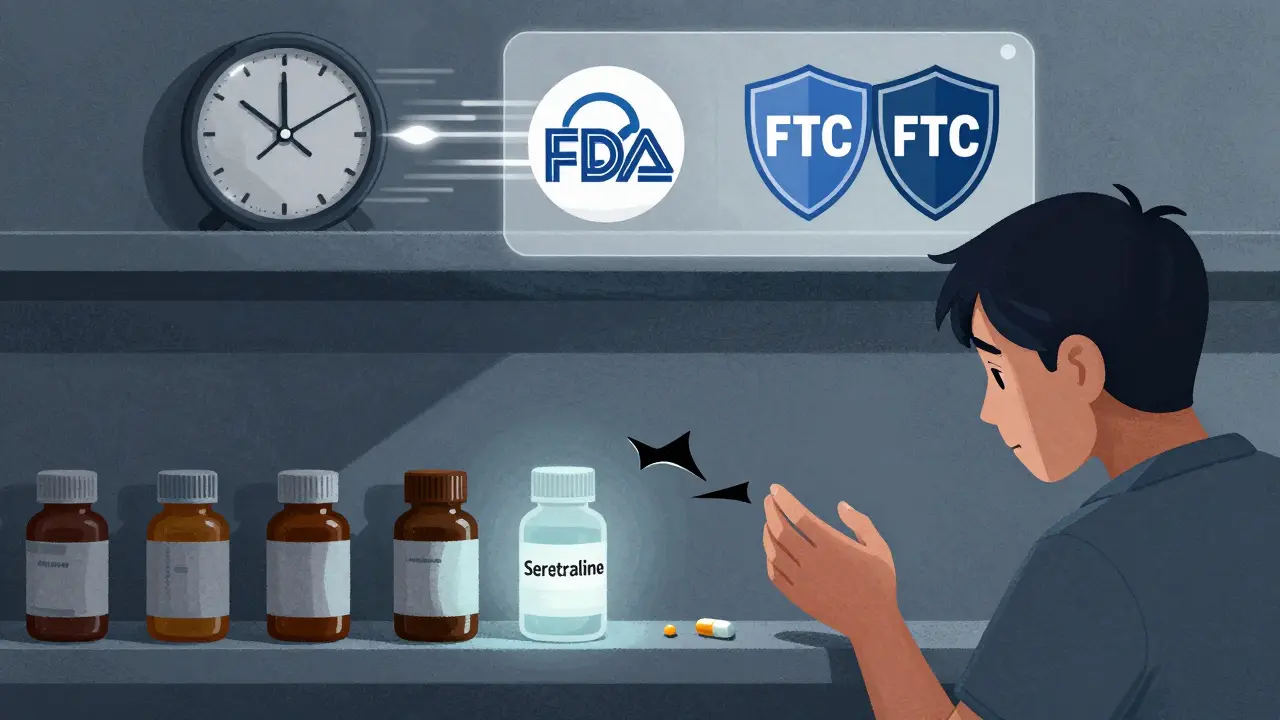
Most of the time, generic prices keep falling. But sometimes, they spike. In 2023, the FDA reported that only 0.3% of generic drugs saw price hikes above inflation. That’s rare. But when it happens, it’s usually because the market lost competition.Take sertraline, a common antidepressant. One Reddit user saw the price jump from $4 to $45 a month. That wasn’t because of inflation or production costs. It was because the only two manufacturers left stopped making it - and a third didn’t step in fast enough. That’s not a broken system. That’s a market failure.
These spikes happen when there’s a shortage. The American Society of Health-System Pharmacists found that 18% of hospital pharmacists had trouble getting critical generics because manufacturers stopped making them. Why? The price had dropped so low that making the drug cost more than they could sell it for. That’s the dark side of competition: if prices fall too far, companies quit.
What Happens When Competition Fades
The U.S. has more generic manufacturers per drug than any other country - 14.7 on average. In Europe, it’s 8.2. In Japan, it’s 5.3. That’s why U.S. generic prices are lower.But consolidation threatens that. In January 2024, the FTC blocked the merger between Teva and Sandoz, two of the world’s biggest generic makers. Why? Because together, they’d control 13 key generic drugs. Less competition means higher prices. The FTC stepped in to stop it.
Complex generics - drugs with tricky formulations, like inhalers or injectables - are especially vulnerable. Only 38% of these applications met the FDA’s 10-month approval target in 2023. That’s why the FDA created a special submission template to help manufacturers get through the process faster. They’re trying to keep competition alive even for harder-to-make drugs.
How Patients Really Feel About Generic Prices
Most people don’t complain about generic prices. They’re grateful for them.A 2024 KFF survey found that 76% of people on Medicare Part D paid $10 or less for their generic prescriptions. Only 28% paid that little for brand-name drugs. Eighty-two percent of generic users said they were satisfied with affordability. For brand-name users? Just 41%.
On Drugs.com, 87% of reviews for generic drugs mentioned "affordable" or "cost-effective" as the top reason they chose them. Only 5% raised pricing concerns.
But affordability isn’t just about price. It’s about access. If a drug disappears from the shelf because the price is too low, then no one wins. That’s why the real policy focus isn’t on lowering prices further - it’s on keeping enough manufacturers in the game.
The Future of Generic Drug Pricing
The government’s next moves aren’t about setting prices. They’re about protecting competition.The FDA’s 2024-2026 plan is pushing for faster approval of complex generics and cracking down on "product hopping" - when brand companies slightly change a drug just to extend their patent and block generics.
CMS is working on rules to stop insurance plans from requiring prior authorization for generics. Right now, some plans make patients jump through hoops to get a $5 generic, even though it’s cheaper than the brand. That’s nonsense. The proposed rule could save beneficiaries $420 million a year.
And the FTC? They’re still filing lawsuits. In 2024 alone, they brought 12 enforcement actions against companies trying to manipulate the generic market. They’re recovering $1.2 billion in consumer refunds.
The bottom line? Generic drug prices will keep falling - not because the government says so, but because the market forces them to. The goal isn’t to control prices. It’s to keep the playing field fair so competition can do its job.
What This Means for You
If you’re taking a generic drug, you’re already benefiting from one of the most successful cost-control systems in health care. You don’t need price caps. You need competition.But if your generic suddenly becomes unaffordable, it’s not because the system failed. It’s because competition broke down. That’s when you should ask your pharmacist: "Is there another manufacturer making this?" Or call your state’s Medicaid office. Sometimes, switching to a different generic version - even if it’s the same drug - can cut your cost in half.
And if you’re worried about future shortages? Support policies that keep manufacturers in the game - not those that try to force prices lower. The cheapest drug is useless if no one makes it.
Why doesn’t the government set prices for generic drugs like it does for brand-name drugs?
The government doesn’t set prices for generics because competition already does it better. When multiple manufacturers make the same drug, they compete on price. That drives costs down naturally. Medicare’s price negotiation program only targets brand-name drugs with no generic alternatives - because those are the ones where competition doesn’t exist. Generics have competition, so price controls aren’t needed.
Are generic drug price spikes common?
No, they’re rare. Only about 0.3% of generic drugs saw price increases above inflation in 2023. Most price spikes happen when only one or two manufacturers make the drug, and one quits production. That’s a supply chain issue, not a pricing policy failure. The FDA and FTC track these cases closely and try to bring new manufacturers into the market quickly.
Can I get a cheaper generic by switching brands?
Yes. Even if two generics have the same active ingredient, they can be made by different companies and priced differently. One might cost $5, another $15. Ask your pharmacist to check if another version is available. Insurance plans often have preferred generics - those are usually the cheapest. You can also use price comparison tools like GoodRx to find the lowest price at nearby pharmacies.
Why do some generic drugs disappear from shelves?
When the price of a generic drops too low, manufacturers can’t cover production costs. That’s especially true for older, low-margin drugs or complex formulations like injectables. If no one else steps in to make it, the drug disappears. This isn’t about greed - it’s about economics. The solution isn’t to raise prices artificially. It’s to encourage more manufacturers to enter the market through faster approvals and incentives.
Does the FDA help make generic drugs cheaper?
Yes, indirectly. The FDA speeds up approvals through GDUFA, which reduces the time and cost to bring generics to market. More approvals mean more competitors. More competitors mean lower prices. The FDA also created special tools for complex generics and tracks applications in real time through its public dashboard. Their job isn’t to set prices - it’s to make sure competition can happen.
Are generic drugs as safe as brand-name drugs?
Yes. The FDA requires generics to be bioequivalent to the brand-name drug - meaning they work the same way in the body, at the same dose, with the same risks and benefits. They’re held to the same quality standards. Over 90% of prescriptions are generics because they’re proven safe and effective. The only difference is the price - and sometimes the shape or color of the pill.
What’s the biggest threat to affordable generic drugs?
The biggest threat is reduced competition. When manufacturers merge, exit the market, or collude to delay competition (like in pay-for-delay deals), prices rise. The FTC and FDA are working to stop this. But the best defense is a healthy market with many players. Policies that slow down approvals or discourage new manufacturers from entering are the real danger - not low prices.
Wren Hamley
January 4, 2026 AT 04:41So let me get this straight - the government doesn’t set prices, it just clears the runway for competition to crash-land prices into the dirt? That’s wild. It’s like letting 20 chefs fight over one pot of soup and calling it ‘market efficiency.’
But honestly? It works. I’ve seen my insulin generic drop from $400 to $12 in three years. No law changed. Just more companies showing up with cheaper vials.
Still… what happens when the last guy leaves the kitchen? That’s when you get sertraline at $45. No one’s screaming about ‘price gouging’ - they’re just Googling ‘where can I get antidepressants without going broke.’
The real villain isn’t greed. It’s thin margins and consolidation. When the FDA approves 1,000 generics a year, but only 3 companies actually make them? That’s not competition. That’s a rigged game with extra steps.
I don’t want price caps. I want more players. More factories. More generics made in Ohio, not just in India or China. If we’re serious about affordability, we need domestic production incentives - not just regulatory speed bumps.
And yeah, pay-for-delay deals? Those are corporate bribery. The FTC should slap fines so big they make pharma execs cry into their Yacht Club martinis.
Also - why the hell are we still letting insurance companies make you jump through hoops to get a $5 generic? That’s not ‘cost management.’ That’s bureaucratic torture.
Bottom line: The system’s genius… until it’s not. And when it breaks, it breaks hard. We need to fix the cracks before the whole damn floor collapses.
Joy F
January 4, 2026 AT 04:49Oh sweet merciful capitalism, here we go again. The system is ‘elegant’ until you’re the one paying $45 for a drug that should cost $4. Then it’s just… cruel.
They call it ‘competition,’ but it’s really a death spiral. Manufacturers race to the bottom until there’s no bottom left. Then they vanish. And you? You’re left holding a prescription with no pills.
And don’t get me started on ‘bioequivalent.’ My cousin took a generic Adderall and had a panic attack. The brand didn’t do that. Same active ingredient? Sure. But the fillers? The coating? The damn *dye*? Those aren’t regulated the same way.
So yeah, 90% of prescriptions are generics. But 90% of ER visits for ‘medication failure’? Also generics. Coincidence? I think not.
The FDA says ‘safe.’ But safe isn’t the same as identical. And when your mental health depends on consistency? You don’t want to be a guinea pig.
They’re proud of 1,083 approvals? Great. But how many of those are actually *usable*? How many are just copies of copies of copies made by companies that don’t even have a QA department?
This isn’t free market magic. It’s a house of cards built on trust - and we’re all just waiting for the wind to blow.
Michael Burgess
January 4, 2026 AT 16:43Just had this happen to me last month - switched from one generic sertraline to another because the first one disappeared. Same pill, same dose. But the new one made me feel like I was underwater. Took 3 weeks to adjust.
And yeah, the price was $3 cheaper. But my anxiety didn’t care about $3. It cared that I couldn’t sleep or focus.
So yeah, competition drives prices down. But it also drives quality variance up. And no one talks about that.
Pharmacists know this. That’s why they always ask, ‘Which brand do you want?’ But most people just say ‘whatever’s cheapest.’
We need a color-coding system or something. Like, green = stable, yellow = maybe different, red = proceed with caution.
And honestly? If I could pay $2 more and get the same version every time? I’d do it in a heartbeat.
Cost isn’t everything. Consistency matters too. 🤷♂️
Brittany Wallace
January 5, 2026 AT 00:37Just wanted to say thank you for writing this. As someone who’s been on 5 different generics for thyroid meds over the last 7 years… I get it. The system is broken when you’re the one paying the price.
But I also believe in it. I’ve saved thousands because of generics. I don’t want price caps. I want better oversight. More transparency. More accountability.
Maybe we need a public dashboard - like the FDA’s - but for patients. Show which generics have the most complaints. Which ones have stability issues. Which ones are made in which country.
Knowledge is power. And right now, we’re flying blind.
Also… if you’re on a generic and it feels ‘off’? Don’t just suffer. Talk to your pharmacist. Ask for a different maker. It’s your right. 💛
Shruti Badhwar
January 6, 2026 AT 22:46While the U.S. system demonstrates remarkable efficiency in cost containment, the structural vulnerabilities are non-trivial. The absence of strategic stockpiling, coupled with overreliance on offshore manufacturing, introduces systemic risk.
India and China supply over 80% of API for generics - yet geopolitical instability, trade restrictions, or pandemic-related disruptions can instantly trigger shortages.
Furthermore, the ‘race to the bottom’ incentivizes cost-cutting at the expense of supply chain resilience. The FDA’s accelerated approval process, while commendable, lacks mandatory post-market surveillance protocols for bioequivalence drift.
What is needed is not more approvals, but a tiered regulatory framework: one for simple generics, another for complex formulations with enhanced monitoring.
Additionally, public-private partnerships for domestic API production could mitigate supply shocks. The U.S. government already does this for vaccines - why not for life-saving generics?
Competition is essential - but not at the cost of national health security.
JUNE OHM
January 8, 2026 AT 14:17THIS is why I hate the government. They let foreign companies make our meds, then act like it’s ‘free market’ when the prices spike. Meanwhile, Big Pharma is laughing all the way to the bank with their $10,000 Ozempic.
And now they want to ‘encourage more manufacturers’? Like who? China? India? You think they’re not playing us? They know we’re addicted to cheap pills - so they hold the supply hostage.
Stop pretending this is capitalism. It’s economic colonialism with a FDA stamp.
Build the factories here. Pay Americans to make the pills. Or we’re all gonna die because some CEO in Mumbai decided to shut down a plant for ‘profit optimization.’
And don’t give me that ‘competition’ crap. If I can’t get my blood pressure med, competition doesn’t matter. I’m dead. 🇺🇸
innocent massawe
January 10, 2026 AT 03:30Interesting perspective. In Nigeria, generics are often the only option - but quality is a gamble. Some are excellent. Some are fake. We don’t have FDA oversight. We have ‘drug inspectors’ who show up once a year.
So I see both sides. The U.S. system is advanced. But it’s fragile.
Maybe the answer isn’t just more competition - but better global standards. Shared testing labs. Uniform quality controls. Maybe even a WHO-style badge for approved generics.
Because when your life depends on a pill… it shouldn’t matter if you’re in Ohio or Owerri.
🙏
Ian Detrick
January 10, 2026 AT 23:35Let’s zoom out. This isn’t about drugs. It’s about how we value human life in a market economy.
We treat health like a commodity - optimize, reduce, compete, cut. But medicine isn’t widgets. It’s biology. It’s dignity.
When a 72-year-old woman skips her generic statin because it went from $4 to $12… that’s not a market failure. That’s a moral failure.
Competition drives prices down. But it doesn’t guarantee access. And access isn’t just about cost - it’s about stability, trust, continuity.
Maybe the goal shouldn’t be ‘lowest price possible.’ Maybe it should be ‘reliable, consistent, safe access at a price you can afford.’
That’s not socialism. That’s sanity.
Lori Jackson
January 11, 2026 AT 12:27Of course the system works ‘well’ - for investors, for shareholders, for CEOs with offshore accounts. But for the rest of us? We’re the collateral damage.
You call it ‘competition.’ I call it a rigged casino where the house always wins - and the players are the ones with diabetes, heart disease, and depression.
And let’s not pretend the FTC is some hero. They ‘challenge’ 37 pay-for-delay deals? That’s like arresting 37 shoplifters while the bank vault is wide open.
Meanwhile, the same pharma companies that pay off generic makers are lobbying to kill Medicare negotiation for brand drugs - and they’re winning.
This isn’t free market. It’s crony capitalism with a white coat.
And you? You’re still thanking the system. Pathetic.
Liam Tanner
January 11, 2026 AT 19:38My dad’s on 6 generics. He’s 81. He switches brands every time his prescription runs out - because the pharmacy doesn’t tell him which one he’s getting.
He’s had dizziness, confusion, nausea. All from switching generics.
He doesn’t complain. He just says, ‘It’s cheaper, right?’
But here’s the thing - he’s on Medicare. He’s not rich. He’s not loud. He’s just… old.
And nobody’s asking him what he needs.
Maybe the real solution isn’t more approvals. Maybe it’s a simple rule: if you’re on a generic, you get the same one every time - unless your doctor says otherwise.
That’s not radical. That’s basic care.
Philip Leth
January 12, 2026 AT 04:01Y’all are overthinking this.
Go to GoodRx. Type in your drug. See the lowest price. Walk in. Buy it. Done.
Some places have $4 generics. Some have $12. Doesn’t matter. Just shop.
And if it’s out? Ask for another brand. Pharmacies have 3-5 versions on the shelf. They just don’t tell you.
Stop waiting for the government to fix it. You’ve got a phone. You’ve got a wallet. Go get your pills.
It’s not perfect. But it’s not hopeless either.
Sarah Little
January 13, 2026 AT 05:14Wait - so you’re saying the FDA approves 1,000 generics a year, but only 0.3% spike in price? That’s a success story!
But what about the 18% of hospitals that can’t get critical generics? What about the 40-year-old woman who can’t afford her seizure meds because the only manufacturer left raised the price 300% after the others quit?
You’re looking at the average. I’m looking at the people falling through the cracks.
And you know what? Those cracks are getting wider. And we’re all pretending they’re just potholes.
Competition isn’t magic. It’s a tool. And right now, it’s broken.