
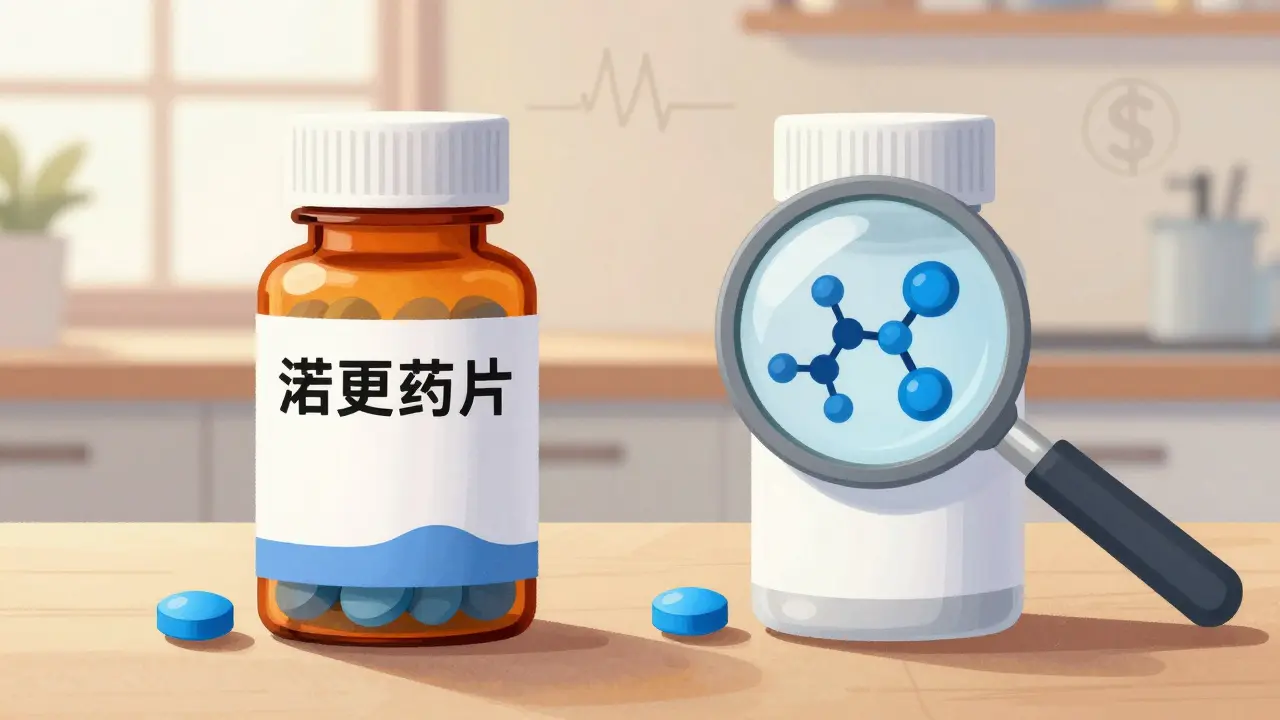
Every year, millions of people in the U.S. switch from brand-name drugs to generics to save money. But here’s the thing: generic drugs aren’t just cheaper copies-they’re the exact same medicine, legally required to work the same way. If you’ve ever looked at your pill bottle and thought, "This doesn’t look right," you’re not alone. The color’s different. The shape’s changed. Maybe it says a different name. But that doesn’t mean it’s not doing the same job.
What Exactly Makes a Generic Drug a Generic?
A generic drug must contain the same active ingredient, in the same strength, and delivered the same way as the brand-name version. That means if you’re taking 10 mg of lisinopril for high blood pressure, whether it’s called Zestril or just "lisinopril," the molecule doing the work is identical. The U.S. Food and Drug Administration (FDA) doesn’t allow a generic to hit shelves unless it proves it delivers the same amount of medicine into your bloodstream at the same speed as the brand. This is called bioequivalence.
The FDA requires generics to meet the same strict standards for quality, purity, and potency. The same factories that make brand-name pills often make generics too-just under different labels. In fact, about 40% of generic drugs are made by the same companies that produce the original brand-name versions. So it’s not some sketchy offshore product. It’s the same science, just without the marketing budget.
Why Are Generics So Much Cheaper?
Brand-name drugs cost a fortune because their makers spend billions developing them. The FDA estimates it takes around $2.6 billion to bring a new drug to market-covering years of research, clinical trials, and regulatory paperwork. Once that drug’s patent expires (usually after 20 years), other companies can step in. They don’t need to repeat those expensive studies. They just need to prove their version works the same way. That cuts their costs dramatically.
The result? Generics typically cost 80% to 85% less. A 2022 GoodRx analysis found the average savings was 82.5%. For example, the brand-name cholesterol drug Lipitor used to cost $130 a month. Five years after its patent expired, the generic version dropped to under $1. That’s not a marketing gimmick-it’s real savings. From 2007 to 2016, generic drugs saved the U.S. healthcare system over $1.6 trillion. Medicare alone saved $77 billion in that time.
Are Generics Always Safe? The NTI Exception
For most people, generics are perfectly safe. But there’s a small group of medications where even tiny differences matter. These are called narrow therapeutic index (NTI) drugs. That means the difference between an effective dose and a dangerous one is very small. Examples include warfarin (a blood thinner), levothyroxine (for thyroid issues), and certain seizure medications like phenytoin and levetiracetam.
Studies show that for these drugs, switching between different generic brands can sometimes cause problems. One 2017 study found patients with epilepsy who switched between different generic versions of levetiracetam had a 32% higher chance of being hospitalized for seizures. It’s not because the generic was bad-it’s because even a 5% change in how the drug is absorbed can throw off the balance in someone who’s already on the edge.
The FDA still says all approved generics are therapeutically equivalent. But experts like neurologists and endocrinologists recommend sticking with the same manufacturer if you’re on an NTI drug. If you’re stable on one generic, don’t switch unless your doctor says so. Your pharmacist might try to swap it out automatically-but you have the right to ask for the same brand every time.
What’s Different About Generics? (And Why It Matters)
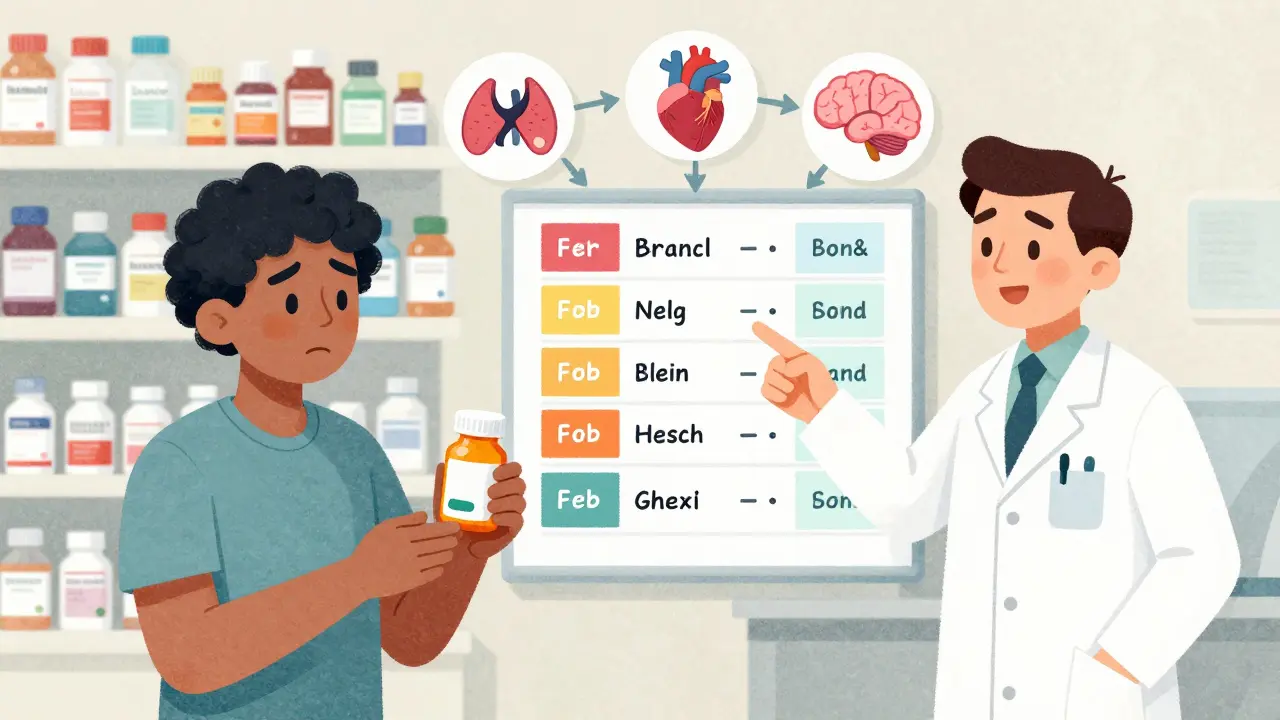
While the active ingredient is identical, the rest isn’t. Generics can have different fillers, dyes, coatings, and shapes. That’s why your generic metformin might be a white oval, while the brand is a blue capsule. These inactive ingredients don’t affect how the drug works-but they can affect people with allergies or sensitivities.
If you’re allergic to certain dyes (like FD&C Red No. 40), or if a coating causes stomach upset, you might notice a difference. That’s not a sign the drug isn’t working-it’s just your body reacting to something extra. Always check the inactive ingredients listed on the label if you’ve had reactions before.
Also, don’t assume the pill looks the same every time. Different manufacturers make the same generic. One month it might be round, the next it’s oval. That’s normal. The FDA allows this to prevent generics from looking too much like the brand (to avoid trademark issues). But it’s also why 65% of medication errors linked to generics come from patients thinking they got the wrong drug because it looked different.
When Should You Stick With Brand-Name?
For most people-over 90% of prescriptions-the answer is: go generic. But there are a few cases where sticking with brand makes sense.
- You’re on an NTI drug and had problems switching generics.
- Your insurance doesn’t cover the generic, but the brand is cheaper due to a coupon or patient assistance program.
- You’re taking a complex drug like an inhaler, topical cream, or injectable biologic-where generics (called biosimilars) are harder to make and may not be as interchangeable.
Biosimilars are a whole different category. They’re not exact copies like traditional generics because biologics are made from living cells, not chemicals. They’re close, but not identical. As of 2023, only 35 biosimilars have been approved in the U.S., and they make up just 3% of the biologics market. They’re still cheaper than the brand-but not by 80%. Expect to save 15% to 30%.
What You Can Do: Practical Tips
You don’t need to be a pharmacist to make smart choices. Here’s how to take control:
- Ask your pharmacist: "Is there a generic for this?" They’re required to offer it unless you say no.
- If you’re on an NTI drug, ask your doctor to write "dispense as written" on the prescription. That stops automatic substitution.
- Use GoodRx or your pharmacy’s price checker. Sometimes the brand is cheaper than the generic due to coupons.
- Keep a list of which generic manufacturer you’re on-especially for thyroid or seizure meds. Write it down or take a photo of the bottle.
- Don’t panic if your pill looks different. Check the name and strength. If it’s the same, it’s the same medicine.
The FDA’s "Orange Book" is a free public database that lists all approved generics and their therapeutic ratings. You can search it online to see if your drug has multiple generic options and which ones are rated as equivalent.
The Bigger Picture: Why This Matters
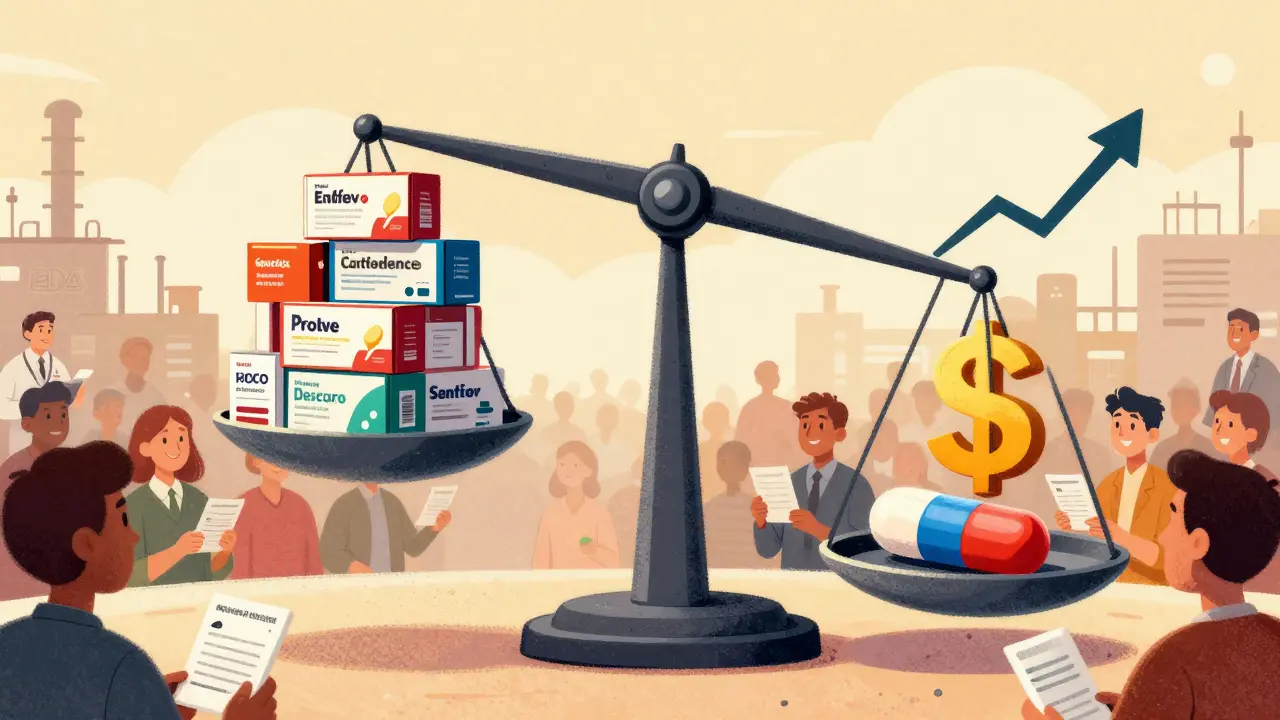
Generics aren’t just about saving money-they’re about making healthcare sustainable. In 2022, 90% of all prescriptions filled in the U.S. were for generics. Yet they accounted for only 26% of total drug spending. That’s the power of competition. When multiple companies make the same drug, prices crash. That’s why drugs like atorvastatin and metformin are now cheaper than a cup of coffee.
But there’s a downside. Drug shortages hit generics hardest. In 2022, the FDA reported 178 active shortages of generic medications. Many are made overseas, and quality control can be inconsistent. A 2023 GAO report found 18% of foreign generic manufacturing plants had violations during inspections-twice the rate of U.S. plants.
That’s why it’s important to know your source. If you notice a change in how you feel after switching to a new generic, talk to your doctor. It’s not always the drug-it could be the filler, the coating, or even stress. But don’t ignore it.
Bottom Line: Trust the Science, Stay Informed
Generic drugs are safe, effective, and backed by decades of data. For the vast majority of people, switching to a generic is the smartest financial and medical decision you can make. The science is clear: the active ingredient is the same. The results are the same. The savings are massive.
But for a small number of people-those on narrow therapeutic index drugs-consistency matters. Don’t let a pharmacy swap your thyroid or seizure medication without your knowledge. Know your drugs. Know your body. And don’t be afraid to ask questions.
Medicine doesn’t have to be expensive to be effective. Generics prove that every day.
Are generic drugs as effective as brand-name drugs?
Yes, for the vast majority of medications, generic drugs are just as effective as brand-name versions. The FDA requires them to contain the same active ingredient, in the same strength, and deliver it to your bloodstream at the same rate. Studies involving over 2,000 bioequivalence tests show the average difference in absorption is only 3.5%, well within the FDA’s acceptable range of 80-125%. For drugs like high blood pressure pills, antibiotics, and antidepressants, patient outcomes are identical.
Why do generic pills look different from brand-name pills?
By law, generic drugs can’t look exactly like the brand-name version to avoid trademark infringement. That’s why the shape, color, or size might be different. These changes only affect the inactive ingredients-like dyes or fillers-not the medicine itself. The active ingredient remains identical. If you’re confused by the appearance, check the drug name and dosage on the label. That’s what matters.
Can I switch between different generic manufacturers?
For most drugs, yes-switching between generic manufacturers is safe. But for narrow therapeutic index (NTI) drugs like levothyroxine, warfarin, or certain seizure medications, switching can cause problems. Even small changes in how the drug is absorbed can affect your health. If you’re on one of these drugs, ask your doctor to write "dispense as written" on your prescription, and try to stick with the same generic brand each time.
Are generic drugs made in the same facilities as brand-name drugs?
Yes, often they are. About 40% of generic drugs are manufactured by the same companies that make the brand-name versions. The FDA inspects all facilities-whether they make brand or generic drugs-using the same strict standards. Some generics are made overseas, and while most are safe, inspections have shown higher rates of violations at foreign plants compared to U.S.-based ones. That’s why it’s important to report any unusual side effects after switching to a new generic.
Why are some generic drugs more expensive than others?
Price differences between generics happen because of supply and demand. When a drug first goes generic, several companies enter the market, driving prices down. But if one manufacturer stops making it, or if there’s a shortage, prices can spike. Sometimes, a generic from a lesser-known company is cheaper simply because it has less marketing. Use tools like GoodRx to compare prices across pharmacies-it’s common to see a $1 difference between two generics for the same drug.
Do insurance plans cover generic drugs better than brand-name drugs?
Yes, almost always. Most insurance plans have lower copays for generics. Some even require you to try the generic first before covering the brand-name version. If your plan doesn’t cover a generic, it’s usually because the brand is cheaper due to a manufacturer coupon. Always check with your pharmacy and insurance before filling a prescription.