
Why Fertility Preservation Matters Before Chemotherapy
Chemotherapy doesn’t just fight cancer-it can also stop your body from having children later. For many people, especially those under 40, this is a devastating side effect they didn’t see coming. About 80% of common chemotherapy drugs carry a high risk of damaging eggs or sperm, leading to early menopause in women or low sperm counts in men. This isn’t rare. In fact, up to 80% of premenopausal women who get alkylating agents like cyclophosphamide will lose ovarian function. That means no more periods, no more natural pregnancies, and often no chance to have biological children without help.
But here’s the good news: you don’t have to accept this as inevitable. Fertility preservation isn’t experimental anymore-it’s standard care. And if you’re diagnosed with cancer, you have options. The key is acting fast. Most treatments need to start within days or weeks, and some preservation methods require time to set up. Waiting too long can mean losing your chance forever.
What Are Your Options?
There are six proven ways to protect your fertility before chemotherapy begins. Each has its own benefits, time requirements, and limitations. Knowing what’s available helps you make the right choice for your life.
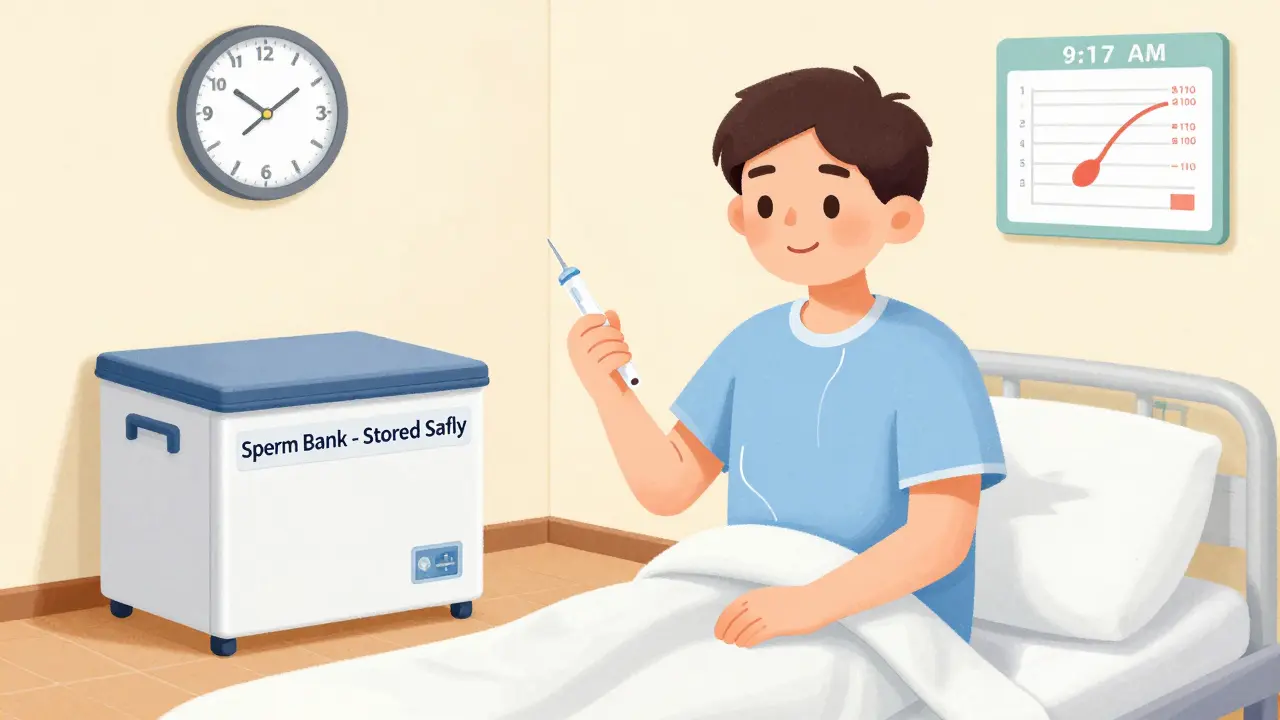
- Sperm banking is the simplest and most reliable option for men. It involves collecting semen through masturbation after 2-3 days of abstinence. The sample is frozen and stored. Success rates are high: after thawing, 40-60% of sperm remain active and usable. It takes less than a day to complete and can be done even if you’re feeling unwell.
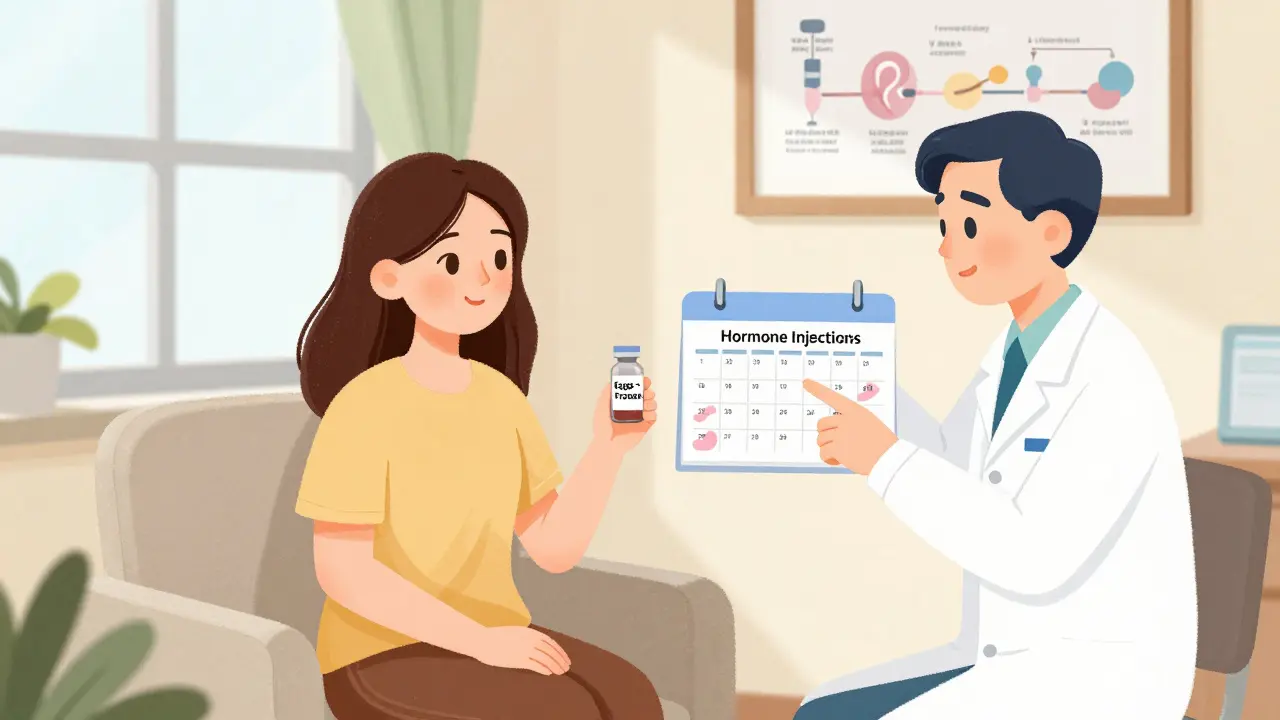
- Egg freezing (oocyte cryopreservation) is the go-to for women without a partner. It starts with 10-14 days of daily hormone injections to stimulate egg production. Then, eggs are retrieved under light sedation using a needle guided by ultrasound. The eggs are frozen using a fast-freeze method called vitrification, which preserves 90-95% of them. Each frozen egg has about a 4-6% chance of leading to a live birth. Most women need to freeze 15-20 eggs to have a decent shot at one baby.
- Embryo freezing is the most successful method-up to 60% of frozen embryos result in live births for women under 35. But it requires sperm, either from a partner or a donor. If you’re single or not ready to choose a donor, this isn’t an option. Still, for couples, it’s the best chance at having a biological child after treatment.
- Ovarian tissue cryopreservation is the only option for girls who haven’t hit puberty or women who can’t delay treatment. A small piece of ovarian tissue is removed through a quick laparoscopic surgery, frozen, and stored. Later, when the person is cancer-free and ready to have kids, the tissue is reimplanted. This has led to over 200 live births worldwide. It’s still considered experimental by the FDA, but it’s widely used and increasingly successful.
- Ovarian suppression uses monthly hormone shots (like goserelin) to temporarily shut down the ovaries during chemo. It doesn’t guarantee fertility, but studies show it reduces the risk of early menopause by 15-20%. It’s often used alongside egg or embryo freezing, not instead of it. Side effects can be tough-hot flashes, night sweats, mood swings-and some women stop taking it because it feels like going through menopause early.
- Radiation shielding only helps if you’re getting radiation to the pelvis. A custom lead shield is placed over the testicles or ovaries to block scattered radiation. It cuts exposure by up to 90%, but it does nothing against chemo damage. It’s a simple, non-invasive step that should always be asked for if radiation is part of your plan.
Timing Is Everything
There’s no time to waste. Many cancer treatments start within days of diagnosis. If you’re waiting to think about fertility, you might be waiting too long. For men, sperm banking can be done in under 24 hours. For women, egg freezing usually takes 10-14 days-but new "random-start" protocols now let you begin hormone treatment at any point in your cycle, cutting the delay to just 11 days on average.
Some cancers leave almost no room for delay. In acute leukemia, doctors may have just 48-72 hours before starting chemo. In these cases, sperm banking or ovarian tissue removal are the only realistic options. That’s why experts say: ask about fertility preservation within 14 days of your cancer diagnosis. If your oncologist doesn’t mention it, ask. Don’t assume they’ll bring it up.
Who Can Do What?
Not all options work for everyone. Age, gender, cancer type, and treatment urgency all matter.
- Women under 35: Egg or embryo freezing gives the best results. Ovarian tissue freezing is also an option if time is tight.
- Women over 35: Success rates drop sharply after 35. Egg freezing is still possible, but you may need more cycles. Embryo freezing is still the most effective.
- Prepubescent girls: Only ovarian tissue cryopreservation works. No hormone stimulation is possible. This is the only option to preserve future fertility for young girls with cancer.
- Men: Sperm banking is always an option. Even if you’re too sick to collect on your own, doctors can retrieve sperm directly from the testicles using a small procedure.
- Transgender patients: If you’re transitioning and need chemo, freezing eggs or sperm before treatment is critical. Hormone therapy can also affect fertility, so timing matters even more.
Cost, Insurance, and Access
Fertility preservation isn’t cheap. Egg freezing can cost $10,000-$15,000 per cycle. Sperm banking is cheaper-around $500-$1,000 upfront, plus $300-$500 a year to store. Ovarian tissue freezing runs $8,000-$12,000. Storage fees add up over time.
Insurance coverage is a mess. In 24 U.S. states, insurers are required to cover fertility preservation for cancer patients. But in Australia, Medicare doesn’t cover it. Private insurance varies widely. Many patients get denied, especially for egg freezing. If you’re denied, appeal. Some hospitals have financial aid programs or payment plans. Nonprofits like Fertile Hope and Livestrong offer grants for cancer patients.
Access is another problem. In rural areas, the nearest fertility clinic might be 178 miles away. In cities, it’s often under 25 miles. If you’re far from a center, ask your oncologist about telehealth consultations or if they can coordinate with a nearby clinic. Some hospitals now have on-site fertility teams.
What About Success Stories?
Real people have had babies after chemo. One woman in her early 30s, diagnosed with breast cancer and carrying a BRCA1 gene mutation, froze her ovarian tissue before treatment. Five years later, after being cancer-free, doctors reimplanted the tissue. She got pregnant naturally and gave birth to twins. Another man banked sperm before treatment for Hodgkin’s lymphoma. Three years later, he used it to father a child through IVF.
But success isn’t guaranteed. Freezing eggs doesn’t mean you’ll have a baby. You might need multiple cycles. You might need donor eggs later. You might never get pregnant. That’s why counseling is part of the process. Talking to a fertility specialist and a counselor helps you prepare for all outcomes-not just the best-case scenario.
What’s New in 2026?
The field is moving fast. In 2023, the FDA approved a new closed-system device for freezing eggs that cuts contamination risk by 92%. In Europe, scientists successfully activated frozen ovarian tissue in the lab-meaning one day, you might not need surgery to transplant tissue back. Instead, eggs could be grown in a dish and fertilized in vitro.
There’s also a major NIH-funded trial testing "artificial ovaries"-tiny scaffolds seeded with preserved follicles that could one day be implanted to restore natural hormone production and fertility. Early results in monkeys are promising.
And in 2024, ASCO is expected to update its guidelines to strongly recommend GnRHa (ovarian suppression) for all premenopausal women on chemo, based on new data showing a 22% drop in ovarian failure.
What to Do Next
If you’re facing chemotherapy and want to preserve fertility:
- Ask your oncologist right away: "Can you refer me to a fertility specialist?" Don’t wait.
- Call a fertility clinic within 48 hours. Explain your diagnosis and treatment timeline.
- Bring your treatment plan. The clinic needs to know what drugs you’ll get and when.
- Ask about insurance. Get a written denial if needed-then appeal.
- Consider counseling. This is emotional. You’re not alone.
- If you’re a parent of a child with cancer, ask about ovarian or testicular tissue freezing. It’s the only option for young kids.
There’s no one-size-fits-all solution. But there is a solution. And if you act quickly, you can protect your future as much as your present.
Frequently Asked Questions
Can I still have children after chemotherapy if I didn’t preserve my fertility?
It’s possible, but unlikely. Some people regain natural fertility after treatment, especially younger women and men. But for most, chemotherapy causes permanent damage. If you didn’t preserve your fertility, you may still be able to have a child using donor eggs, donor sperm, or adoption. Surrogacy is another option. Talk to a fertility specialist to understand your chances and alternatives.
Does freezing eggs or sperm delay cancer treatment?
For most cancers, no. Egg freezing can be done in 10-14 days using a random-start protocol, which doesn’t wait for your period. Sperm banking takes less than a day. Ovarian tissue removal is a 30-minute surgery that can be done the same day as other procedures. The only exception is aggressive cancers like acute leukemia, where even 48 hours of delay can be risky. In those cases, only sperm banking or tissue freezing are options.
Is fertility preservation covered by Medicare in Australia?
No, Medicare does not cover egg freezing, sperm banking, or ovarian tissue freezing for cancer patients. Some private health insurers offer partial coverage, but it’s not guaranteed. Many patients pay out-of-pocket or seek grants from nonprofit organizations. Check with your hospital’s social work team-they often know about funding options.
Can I freeze my fertility if I’m single and not in a relationship?
Yes. Egg freezing is designed for single women. You don’t need a partner or donor sperm to freeze your eggs. Embryo freezing requires sperm, so it’s not an option unless you’re using donor sperm. Many single women choose egg freezing as a way to keep their options open for the future.
How long can frozen eggs, sperm, or tissue be stored?
There’s no known expiration date. Frozen eggs, sperm, and ovarian tissue can be stored indefinitely. The longest successful pregnancy from frozen eggs was from material stored for 24 years. Storage fees apply, but the biological material remains viable for decades. Many clinics offer long-term storage plans at reduced rates.
What if I’m worried about the emotional toll of this decision?
It’s completely normal. Being diagnosed with cancer is overwhelming. Adding fertility decisions on top can feel impossible. That’s why counseling is part of standard care at major cancer centers. Fertility specialists work with psychologists to help you process grief, guilt, and hope. You’re not alone-many patients feel the same way. Talking to someone who’s been through it can make all the difference.
Mandy Kowitz
January 5, 2026 AT 21:53Michael Rudge
January 6, 2026 AT 08:19Dee Humprey
January 6, 2026 AT 11:36Justin Lowans
January 6, 2026 AT 19:35Jason Stafford
January 7, 2026 AT 05:16Roshan Aryal
January 8, 2026 AT 15:58Oluwapelumi Yakubu
January 10, 2026 AT 13:05Catherine HARDY
January 12, 2026 AT 03:22Rory Corrigan
January 13, 2026 AT 00:01Jay Tejada
January 13, 2026 AT 06:41Cassie Tynan
January 13, 2026 AT 10:38