
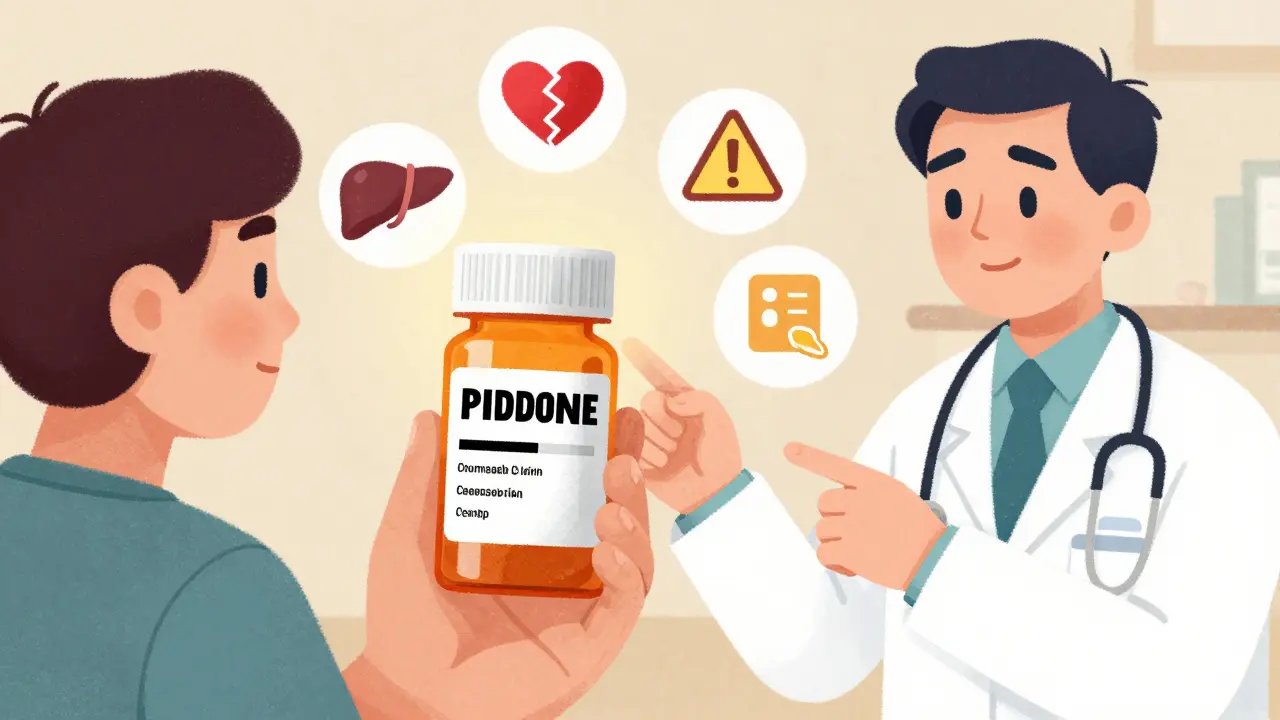
When your doctor hands you a new prescription, you might not notice the small black rectangle on the packaging or the bold text in the patient information leaflet. But that boxed warning - often called a black box warning - is one of the most important things you should read. It’s the FDA’s strongest alert that a drug carries serious, sometimes life-threatening risks. And if you’re taking one of these medications, understanding what it means could literally save your life.
What Is a Boxed Warning, Really?
A boxed warning is not just a caution. It’s the FDA’s highest-level safety alert for prescription drugs. You’ll find it printed in a thick black border at the very top of the drug’s official prescribing information. It’s not there to scare you. It’s there because the FDA has seen enough evidence - from clinical trials, patient reports, or post-market surveillance - to know that this drug can cause severe harm or death in certain people. These warnings aren’t random. They’re based on real data. As of 2022, over 400 prescription drugs in the U.S. carry a boxed warning. That’s about 1 in 10 of all medications on the market. They’re not just for rare side effects. They’re for risks like heart failure, liver damage, suicidal thoughts, severe bleeding, or birth defects. For example, antidepressants like fluoxetine (Prozac) and sertraline (Zoloft) carry a boxed warning for increased risk of suicidal thoughts in children, teens, and young adults under 25. Diabetes drugs like rosiglitazone (Avandia) warn of heart attack risk. Even common medications like methotrexate, used for rheumatoid arthritis and some cancers, carry a warning for fatal liver and lung damage if not monitored properly.Why Do These Warnings Exist?
The system started after the thalidomide tragedy in the 1960s, when thousands of babies were born with severe birth defects because their mothers took a drug that wasn’t properly tested for pregnancy safety. The Kefauver-Harris Amendments of 1962 forced drug companies to prove their medicines were safe before selling them. The black box format itself didn’t appear until the 1970s, but it became standard because it works. Unlike general warnings on a pill bottle, a boxed warning is legally part of the drug’s approved labeling. That means the FDA requires drugmakers to include it - and doctors must acknowledge it before prescribing. The warning doesn’t just say “this might be dangerous.” It tells you exactly what the danger is: “Risk of acute liver failure,” “May cause life-threatening skin reactions,” “Contraindicated in patients with severe heart failure.” And here’s something most people don’t realize: nearly 70% of these warnings are added after the drug is already on the market. Clinical trials involve a few thousand people. Real-world use involves millions. That’s where the real risks show up - like the case with rofecoxib (Vioxx), which was pulled from shelves after it caused thousands of heart attacks and strokes.How Are Boxed Warnings Different From Other Warnings?
The FDA uses several types of safety alerts, but boxed warnings sit at the top of the pyramid:- Boxed warnings - the most serious. Legally required, printed in a black box, and must be discussed with patients.
- Drug Safety Communications - public alerts issued when new risks emerge after approval. These don’t change the label.
- Label changes - updates to the drug’s information without a black box. Often less urgent.
- Medication Guides - patient-friendly handouts given with the prescription. They’re helpful, but not legally binding.
What Should You Do If You’re Prescribed a Drug With a Boxed Warning?
Don’t panic. Don’t stop taking it. But do ask questions. Here’s what you need to know before you start:- What exactly is the risk? Don’t accept vague answers. Ask: “Is this about heart problems? Liver damage? Suicide risk?” Get the specific outcome.
- Am I at higher risk? Some warnings target specific groups. For example, isotretinoin (Accutane) can cause severe birth defects - so women of childbearing age must enroll in a special program. Or, some drugs are dangerous for people over 65 with kidney issues.
- What signs should I watch for? Know the red flags. For blood thinners like warfarin, it’s unexplained bruising or bleeding. For antipsychotics, it’s fever, stiff muscles, confusion - signs of a rare but deadly condition called neuroleptic malignant syndrome.
- Do I need regular tests? Many boxed warning drugs require monitoring. Methotrexate needs liver and blood tests every few weeks. Antidepressants may require follow-ups every 2-4 weeks in the first months.
- Are there safer alternatives? Ask your doctor: “Is there another medication without this warning that would work just as well?”
What If Your Doctor Doesn’t Mention the Warning?
This happens more often than you’d think. A 2023 study in the Journal of General Internal Medicine found that nearly 30% of patients prescribed drugs with boxed warnings had never heard the warning discussed in detail. If your doctor doesn’t bring it up, ask. Say: “I read this drug has a black box warning. Can you explain what it means for me?” Doctors are busy. But the FDA requires them to have this conversation. If they brush you off, get a second opinion. Your life depends on it.Real Stories: What Patients Actually Experience
On patient forums like PatientsLikeMe, people sharing experiences with anticoagulants like apixaban (Eliquis) showed that 78% kept taking the drug after their doctor explained the bleeding risk - and 62% said they got clear instructions on what to watch for. But there are also heartbreaking cases. In 2023, a MedWatch report described a 58-year-old man who took methotrexate for psoriasis. He never had blood tests. After six months, he was hospitalized with liver failure. He survived - but barely. His doctor had never mentioned the monitoring requirement. Another patient on Reddit shared how her teen was prescribed an antidepressant with a suicide warning. Her doctor spent 20 minutes explaining it, asked her to call if the teen became withdrawn or talked about dying, and scheduled a follow-up in two weeks. She felt scared but prepared. That’s how it should work.What’s Changing? The Future of Boxed Warnings
The FDA knows these warnings aren’t perfect. Some are too vague. Others come too late. A 2019 study found that nearly half of all boxed warnings were added more than five years after the drug hit the market. In 2023, the FDA launched a pilot program to rewrite boxed warnings in plain language - no medical jargon. Instead of “increased risk of hepatotoxicity,” it might say: “This drug can seriously damage your liver. You’ll need blood tests every few weeks.” They’re also using real-world data from electronic health records - over 300 million Americans now - to spot dangers faster. That’s how they added a new boxed warning in September 2023 for diabetes drugs linked to serious urinary tract infections. But progress is slow. A 2023 government report found that only 60% of required safety studies after a boxed warning were completed on time. That means we’re still waiting for answers on some of the riskiest drugs.
What You Can Do Right Now
If you’re taking any prescription drug:- Check the patient information sheet. Look for the black box.
- If you don’t have it, ask your pharmacist for a copy.
- Write down the exact risk and what signs to watch for.
- Know if you need blood tests - and when.
- Don’t skip follow-ups.
- Report any strange side effects to the FDA’s MedWatch program. You can do it online - it takes 10 minutes.
Frequently Asked Questions
Does a boxed warning mean I can’t take the medication?
No. A boxed warning means the drug has serious risks, but it may still be the best or only option for your condition. Many people safely use these medications with proper monitoring. The warning is there so you and your doctor can weigh the benefits against the risks - not to scare you away completely.
Can I stop taking a drug with a boxed warning on my own?
Never stop a prescription medication without talking to your doctor first. Stopping suddenly can be dangerous. For example, stopping antidepressants abruptly can cause withdrawal symptoms or worsen depression. Stopping blood thinners can lead to clots or strokes. Always consult your provider before making changes.
Are boxed warnings only for prescription drugs?
Yes. Boxed warnings apply only to prescription drugs approved by the FDA. Over-the-counter medications don’t carry them, though they may have other warnings on the label. Some OTC drugs can still be dangerous if misused - but the FDA’s strongest alerts are reserved for prescription medications.
Why do some drugs have boxed warnings and others don’t, even if they’re similar?
Because each drug is studied differently, and risks emerge at different times. Two drugs in the same class may have different chemical structures, metabolism pathways, or patient populations studied. For example, one antidepressant might carry a suicide risk warning, while another doesn’t - even though they treat the same condition. That’s why you can’t assume safety based on class. Always check the specific drug’s label.
Can I report a side effect from a drug with a boxed warning?
Yes, and you should. The FDA’s MedWatch program lets patients report adverse reactions directly. Even if you’re not sure it’s related, report it. These reports help the FDA identify patterns and decide whether to strengthen warnings or take action. You can file a report online at fda.gov/medwatch - it takes less than 10 minutes.
Next Steps
If you’re on a medication with a boxed warning:- Keep a log of any symptoms - even small ones.
- Set calendar reminders for blood tests or checkups.
- Keep a printed copy of the warning in your wallet or phone.
- Bring it up at every doctor visit - even if you’ve taken the drug for years.
- Use trusted resources like Consumer Reports’ Best Buy Drugs or the Drug Effectiveness Review Project to compare risks and alternatives.
Anna Weitz
December 27, 2025 AT 17:05Boxed warnings are just corporate liability theater anyway
Doctors don't care and pharma just wants you scared so you'll take more pills
The real danger is trusting a system that lets drugs sit on shelves for years while people die
They'd rather patch a warning than fix the broken approval process
Jane Lucas
December 28, 2025 AT 10:43i read the black box on my zoloft and just cried
my doctor never mentioned it
now im scared to take it but also scared to stop
why do they even make us figure this out alone
Elizabeth Alvarez
December 30, 2025 AT 09:07Did you know the FDA is secretly controlled by Big Pharma through a backdoor deal with the World Health Organization?
Boxed warnings are a distraction so you don't notice they're injecting microchips into your blood thinners
The real risk isn't liver damage-it's that they're tracking your compliance through your pill bottle RFID
They added the warning for methotrexate because they knew people would stop taking it and expose the truth
Why do you think they changed the language to 'hepatotoxicity'? To confuse you into thinking it's not real
My cousin's neighbor's dog got sick after a vet prescribed something with a black box-same pattern
They're testing population control through antidepressants and you're too busy scrolling to notice
Next they'll put black boxes on water bottles
Wake up people
The system is rigged and the warning is the bait
Kylie Robson
December 31, 2025 AT 16:33From a pharmacovigilance standpoint, the boxed warning is a Class I risk communication intervention per FDA Guidance 2018
It's not merely a caution-it's a regulatory artifact embedded in the REMS framework
What's concerning is the low concordance between label comprehension and actual patient behavior
Studies show only 22% of patients correctly identify the primary risk domain
And the temporal lag between post-marketing signal detection and label revision averages 5.3 years
Which is statistically significant (p<0.01) in survival analysis
The real failure isn't the warning-it's the absence of structured patient decision aids
Until we implement shared decision-making protocols with validated risk calculators, this is just performative safety
Caitlin Foster
January 1, 2026 AT 01:54STOP. BREATHE. READ THE LABEL.!!!!!
YOU THINK YOUR DOCTOR HAS TIME TO EXPLAIN EVERYTHING?!!!!!
THEY'RE JUGGLING 30 PATIENTS AND A CHART THAT CRASHED AGAIN!!!!!
THE BLACK BOX IS YOUR LAST LINE OF DEFENSE!!!!!
IF YOU DON'T ASK QUESTIONS, WHO WILL?????
YOU'RE NOT TOO BUSY FOR YOUR LIFE!!!!!
PRINT IT. TAPE IT TO YOUR MIRROR. TEXT IT TO YOUR MOM!!!!!
YOU WANT TO LIVE? THEN BE ANNOYING ABOUT IT!!!!!
Todd Scott
January 2, 2026 AT 14:45As someone who's worked in global health for over 20 years, I've seen how these warnings play out differently across cultures
In the U.S., people panic and stop meds
In Japan, they trust the system too much and never ask
In Brazil, they self-medicate with herbs because the warning scared them away from pharmacies
The real issue isn't the warning-it's the lack of culturally competent patient education
Doctors need training to explain this without triggering fear or false reassurance
And pharmacists? They're the unsung heroes here-they're the ones who actually sit down with patients and walk them through the black box
But they're understaffed, underpaid, and overworked
So we blame the system instead of fixing the frontline
The warning isn't broken-it's the delivery system that's failing
Andrew Gurung
January 4, 2026 AT 06:23OMG I just realized... this whole boxed warning thing is just a plot twist in the Great Pharmaceutical Drama
Like, imagine if your antidepressant was actually a metaphor for capitalism?
It numbs you so you don't notice you're being exploited
And the black box? That's the mirror the system doesn't want you to look into
Meanwhile, my yoga instructor took methotrexate and now she's 'aligned with her chakras'... but also on monthly IVs
So yeah... the real warning is that we've outsourced our healing to corporations that profit from our suffering
And if you're not crying right now... you're part of the problem
❤️🩸🩹
Nikki Thames
January 5, 2026 AT 19:41It is imperative to underscore that the presence of a boxed warning constitutes a mandatory ethical obligation on the part of the prescribing clinician to engage in a documented, informed consent discourse with the patient.
Failure to do so constitutes a breach of the standard of care, as delineated in the American Medical Association's Code of Medical Ethics, Opinion 8.12.
Furthermore, the patient's autonomy is not merely a procedural formality-it is a foundational tenet of biomedical ethics.
It is therefore unconscionable that, as the cited study indicates, nearly thirty percent of patients remain uninformed.
One must ask: Is this negligence? Or is it institutionalized apathy?
Until every physician is held to the same rigorous standard of disclosure, we are not practicing medicine-we are performing risk management for shareholders.
The boxed warning is not a suggestion.
It is a covenant.
And we are failing it.