
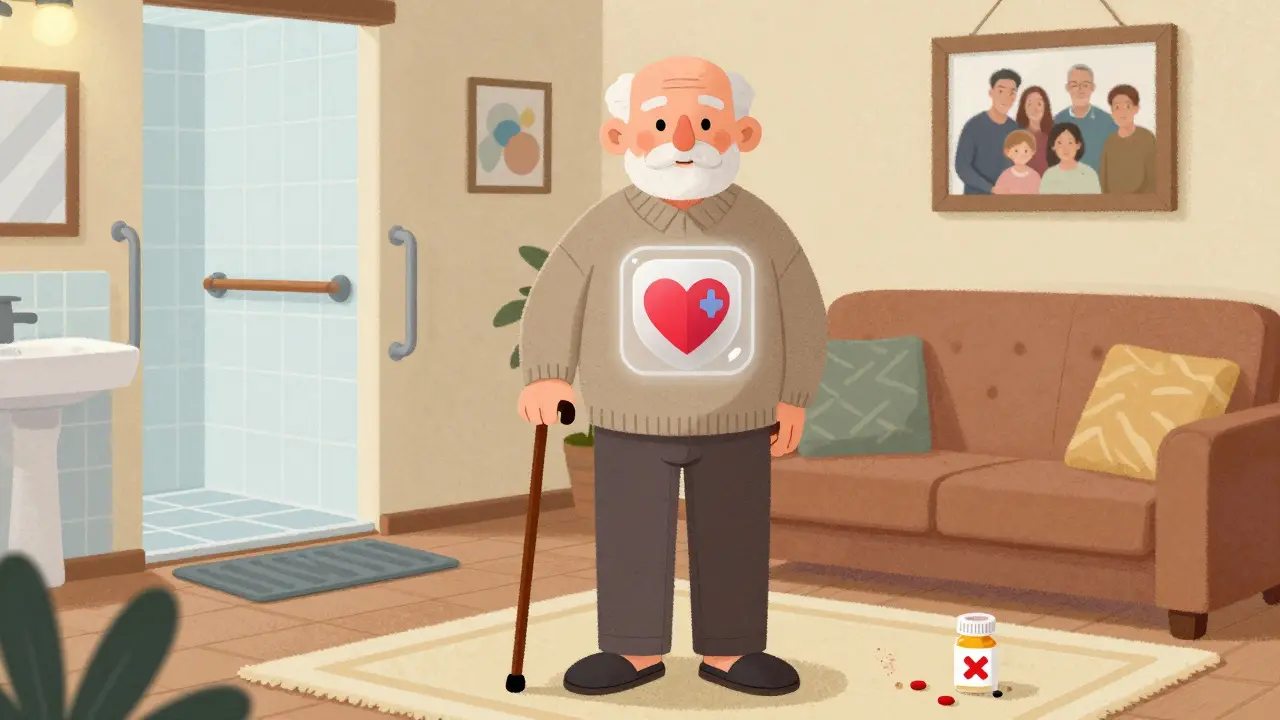
Stroke Risk Calculator
This calculator helps you understand your stroke risk using the CHA2DS2-VASc scoring system, which is recommended by major medical guidelines to determine if you should be on anticoagulant therapy for atrial fibrillation.
Your Results
Your score helps determine stroke risk. A score of 2 or higher for men, or 3 or higher for women indicates moderate to high stroke risk, and guidelines recommend anticoagulation regardless of fall risk.
Many older adults on blood thinners are told to stop taking them because they fall. But that’s often the wrong call. The real danger isn’t falling - it’s having a stroke because you stopped your medicine. Studies show that for most people with atrial fibrillation, the risk of stroke is 1.5% to 3% per year. The risk of a serious brain bleed from a fall while on a blood thinner? Just 0.2% to 0.5% per year. That means you’d need to fall nearly 300 times in one year for the bleeding risk to outweigh the stroke protection.
Why Stopping Blood Thinners Because of Falls Is a Mistake
Doctors used to avoid prescribing anticoagulants to older patients who fell often. It seemed logical: if someone’s going to trip and hit their head, why give them a drug that makes bleeding worse? But that thinking has been turned upside down by hard data. The American College of Physicians, the American Heart Association, and the European Society of Geriatric Medicine all agree now: fall risk alone is not a reason to skip anticoagulation. Take Mr. H, a 78-year-old man with atrial fibrillation and a CHA2DS2-VASc score of 3. That means his chance of having a stroke in the next year is about 3.2%. He was afraid of falling, so he refused warfarin. A year later, he had a stroke. He didn’t fall. He just had a clot form in his heart and travel to his brain. That’s the silent threat - and it’s far more common than a fall causing a major bleed. The truth is, most strokes in older adults happen without any trauma. They’re caused by clots. Blood thinners stop those clots. Stopping them doesn’t make you safer - it makes you more vulnerable.What Makes Someone a Good Candidate for Anticoagulants?
Not everyone needs a blood thinner. But if you have atrial fibrillation (AFib), your risk is measured with the CHA2DS2-VASc score. Here’s how it breaks down:- Age 65-74 = 1 point
- Age 75 or older = 2 points
- High blood pressure = 1 point
- Diabetes = 1 point
- Heart failure = 1 point
- History of stroke or TIA = 2 points
- Vascular disease (like prior heart attack or peripheral artery disease) = 1 point
- Female sex = 1 point
DOACs Are the New Standard for Fall-Risk Patients
If you’re on a blood thinner, you’re likely on a DOAC - that’s direct oral anticoagulant. These include apixaban, rivaroxaban, dabigatran, and edoxaban. They’ve replaced warfarin for most people because they’re easier to use and safer. Warfarin requires frequent blood tests, has many food and drug interactions, and carries a higher risk of brain bleeds. DOACs don’t need regular monitoring, interact less with other meds, and reduce intracranial hemorrhage risk by 30% to 50% compared to warfarin. That’s huge for someone who falls. In the U.S., about 80% of new anticoagulant prescriptions for AFib are DOACs. That’s not a trend - it’s the new standard. And for fall-risk patients, it’s the smartest choice.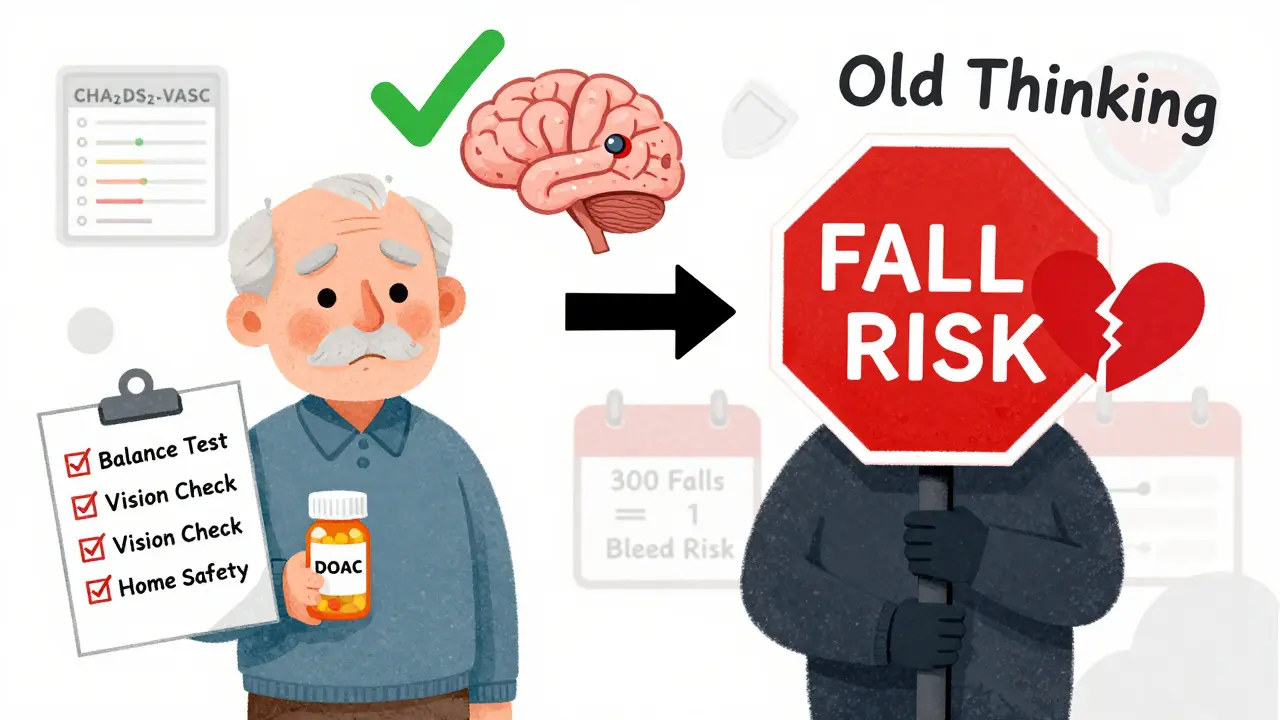
Don’t Reduce the Dose to Be ‘Safer’ - It Doesn’t Work
Some doctors try to lower the dose of DOACs in older or frail patients to cut bleeding risk. They think, “If a little is good, maybe half is better.” But that’s dangerous. Studies show that underdosing DOACs doesn’t lower bleeding risk - it just makes the drug less effective at preventing strokes. You end up with no benefit and no safety gain. The European Geriatric Medicine review in 2023 says this practice should stop. Same goes for trying to keep INR levels lower than 2.0 on warfarin. That’s not safer - it’s riskier. Stick to the approved doses. For most people, that’s apixaban 5 mg twice daily, or 2.5 mg if they’re over 80, weigh under 60 kg, or have kidney issues. Don’t guess. Don’t cut. Follow the guidelines.How to Prevent Falls - Without Stopping Your Medicine
The goal isn’t to avoid anticoagulants. It’s to prevent falls. And that’s doable. Start with a full falls assessment. It takes 30 to 60 minutes, but it’s worth it. Here’s what to check:- Medications: Sedatives, sleep aids, antihypertensives, and antidepressants can make you dizzy. Review every pill. Cut what you don’t need.
- Gait and balance: Use the Timed Up and Go test. Time how long it takes to stand from a chair, walk 3 meters, turn, walk back, and sit down. Over 12 seconds? You’re at risk.
- Vision: Outdated glasses? Cataracts? Get checked yearly.
- Home safety: Loose rugs, poor lighting, no handrails, cluttered hallways - fix them. Install grab bars in the bathroom.
- Orthostatic hypotension: Blood pressure drops when standing. Check it sitting and standing. If it drops more than 20 mmHg, treat it.
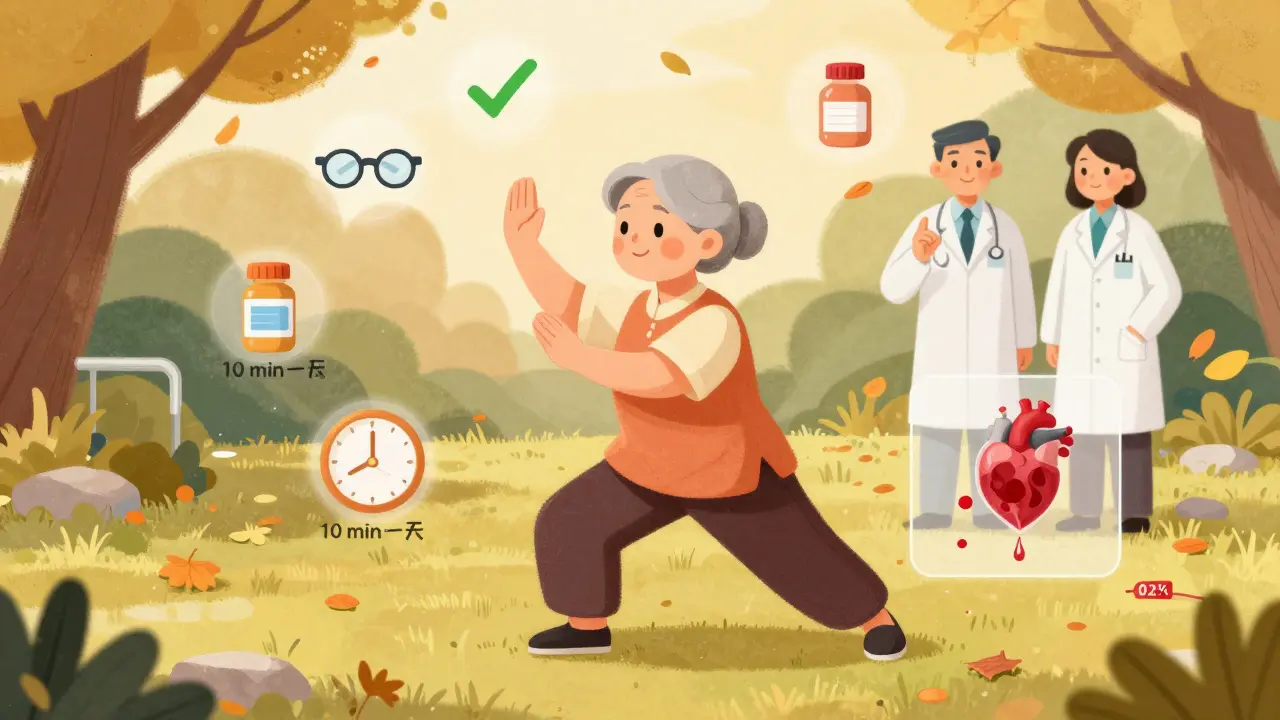
- Strength and exercise: Tai Chi, balance training, leg strengthening - three times a week cuts falls by 30%.
When Might You Really Consider Stopping Anticoagulants?
There are exceptions. You should not take anticoagulants if you have:- Active bleeding (like a stomach ulcer or brain hemorrhage)
- A known bleeding disorder
- Uncontrolled high blood pressure (systolic over 180 mmHg)
What’s the Real Barrier? Fear - and Time
The biggest reason doctors avoid prescribing anticoagulants to fallers? Fear. And it’s not always their fault. Many clinics don’t have the time or tools to do proper falls assessments. A 2023 study found that 40% to 50% of primary care providers still believe fall risk alone should stop anticoagulation - even though the guidelines say otherwise. But the tide is turning. Medicare and other payers now penalize hospitals for under-treating AFib with anticoagulants. Clinical decision support tools in electronic health records are starting to flag when a patient with a CHA2DS2-VASc score of 3 is not on a blood thinner - and why. The message is clear: you can’t let fear of falling keep you from living safely. The solution isn’t stopping your medicine. It’s fixing your environment, your meds, and your balance - while keeping your stroke protection intact.What to Do Next
If you’re on a blood thinner and worried about falling:- Ask your doctor for your CHA2DS2-VASc and HAS-BLED scores.
- If you’re on warfarin, ask if switching to a DOAC is right for you.
- Request a falls risk assessment - it’s not optional. It’s essential.
- Get your vision checked. Review all your meds with a pharmacist.
- Start balance exercises - even 10 minutes a day helps.
Should I stop my blood thinner if I fall often?
No. Falling often is not a reason to stop anticoagulants. The risk of stroke from atrial fibrillation is much higher than the risk of a serious brain bleed from a fall. Guidelines from the American College of Physicians and European Society of Geriatric Medicine say fall risk alone should not stop anticoagulation. Instead, focus on preventing falls through medication review, balance training, and home safety changes.
Are DOACs safer than warfarin if I’m at risk of falling?
Yes. DOACs (like apixaban and rivaroxaban) reduce the risk of intracranial hemorrhage by 30% to 50% compared to warfarin. They don’t require frequent blood tests and have fewer food and drug interactions. For older adults and fall-risk patients, DOACs are the preferred first-line option unless there’s severe kidney disease or a mechanical heart valve.
Can I take a lower dose of my DOAC to reduce bleeding risk?
No. Reducing the dose of a DOAC doesn’t lower bleeding risk - it reduces stroke protection. Studies show underdosing leads to more strokes without fewer bleeds. Always take the full approved dose unless your doctor specifically adjusts it based on kidney function, weight, or age - and even then, only within guideline-recommended limits.
What’s the best way to prevent falls while on blood thinners?
Start with a multifactorial falls assessment: review all medications (especially sedatives and blood pressure drugs), check your vision, test your balance with the Timed Up and Go test, and make your home safer - remove rugs, install grab bars, improve lighting. Add balance exercises like Tai Chi three times a week. These steps can cut falls by 30% or more.
How do I know if I’m at high stroke risk?
Use the CHA2DS2-VASc score. If you’re a man with a score of 2 or higher, or a woman with a score of 3 or higher, you’re at moderate to high stroke risk and should be on a blood thinner - even if you fall. A score of 0 in men or 1 in women usually means you don’t need anticoagulation. Ask your doctor to calculate your score.
When should I consider stopping anticoagulants?
Only if you have active bleeding, a bleeding disorder, or uncontrolled high blood pressure (systolic over 180 mmHg). For very frail patients with life expectancy under 1-2 years, the benefits of stroke prevention may not outweigh the risks. But this is rare and requires a detailed discussion with your care team - not a default decision based on fall risk alone.
Janette Martens
December 30, 2025 AT 10:21also i typed this on my phone and i swear i meant 'rugs' not 'rug' but its too late now. sorry.
Marie-Pierre Gonzalez
December 31, 2025 AT 15:23May I respectfully suggest that clinicians partner with occupational therapists to conduct home safety audits? A simple nightlight and non-slip mat can reduce falls by over 40%. Medication reconciliation is equally critical.
Let us not abandon our patients out of fear-let us empower them with evidence, environment, and empathy. 🙏
Louis Paré
January 1, 2026 AT 19:41And who the hell is counting how many times someone falls? My grandma fell once, cracked her skull, and spent six months in rehab. Now you want me to give her a drug that turns her into a walking bruise?
Also, ‘DOACs reduce intracranial hemorrhage by 30-50%’ - compared to what? Warfarin? That’s like saying ‘this new poison is 40% less deadly than the old one.’ Congrats. Still poison.
James Hilton
January 2, 2026 AT 01:16also, tai chi? i tried it. looked like slow-motion yoga with a side of existential dread. but hey, if it keeps me from having a stroke while my cat knocks me over... sign me up. 🤡
Kelsey Youmans
January 3, 2026 AT 23:43It is imperative that clinicians not only understand the CHA2DS2-VASc and HAS-BLED scores, but also have access to structured, time-efficient fall risk assessment tools within the EHR. Without institutional support, even the most compelling evidence remains inaccessible to those who need it most.
ANA MARIE VALENZUELA
January 5, 2026 AT 01:41And ‘stick to the approved dose’? My aunt was 82, 52kg, had kidney issues - and they gave her 5mg twice daily. She ended up in the ER with a subdural.
Guidelines don’t care about real people. They care about stats. Real people die. So stop pretending this is science. It’s corporate policy with a lab coat.
Bradly Draper
January 6, 2026 AT 18:55my doc says no. but it feels wrong. like i’m being forced to choose between two bad things. why can’t we just fix the falls? why’s the medicine the only answer?
Gran Badshah
January 8, 2026 AT 00:30