
Esketamine Blood Pressure Monitor
Blood Pressure Calculator
Estimate potential blood pressure changes after esketamine treatment based on FDA guidelines.
Monitoring Protocol
Based on your current blood pressure, here's what you need to know:
What Esketamine Nasal Spray Is and Why It’s Different
Most antidepressants take weeks to work. Esketamine nasal spray - sold under the brand name Spravato - works in hours. It’s the first antidepressant approved in decades that doesn’t target serotonin, norepinephrine, or dopamine. Instead, it acts on the brain’s glutamate system, specifically blocking NMDA receptors. This mechanism is why it can help people with treatment-resistant depression - those who haven’t improved after trying at least two other antidepressants.
It’s not a pill you pick up at the pharmacy. You can only get it in a certified medical clinic, under direct supervision. Why? Because it causes noticeable side effects: dissociation and spikes in blood pressure. These aren’t rare. They’re expected. And they’re why strict monitoring is required.
Dissociation: Feeling Unreal, But Not Always Bad
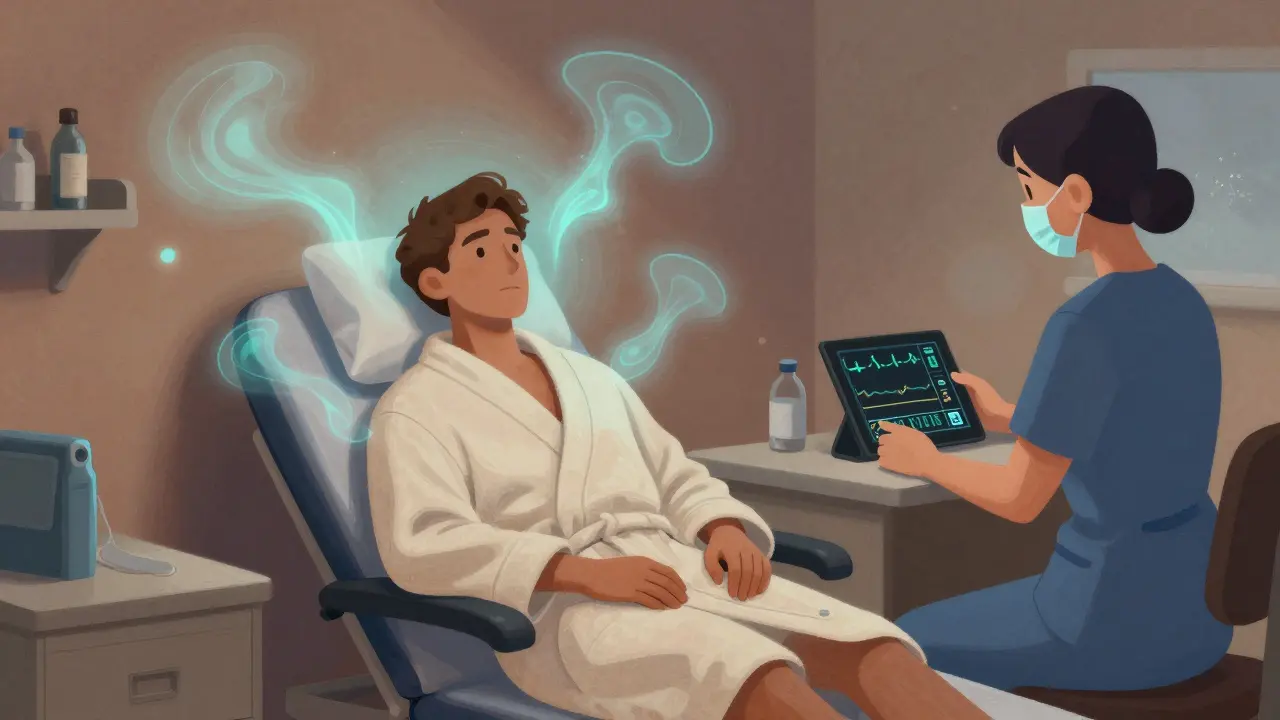
Dissociation is the most common side effect of esketamine. In clinical trials, about 56% of patients reported feeling detached from their body or surroundings, as if they were in a dream. Some described it as floating, blurred vision, or time feeling stretched out. A small number - about 6% - had severe dissociation, scoring high on clinical scales.
These feelings don’t last. They usually peak around 40 minutes after spraying the medication into your nose and fade by the 1.5- to 2-hour mark. Most patients say the intensity drops with each treatment. One person on a patient forum wrote: "My first session felt like I was watching myself from the ceiling. By the fourth, I just felt a little spaced out for 20 minutes."
Doctors don’t treat dissociation with drugs unless it’s extreme. Instead, they create a calm environment - dim lights, no loud noises, a quiet room. You’re monitored using tools like the CADSS scale to measure how intense it is. If you’re scared, that’s normal. Many patients are, at first. But the staff is trained to guide you through it.
Blood Pressure Spikes: Why They Happen and How They’re Managed
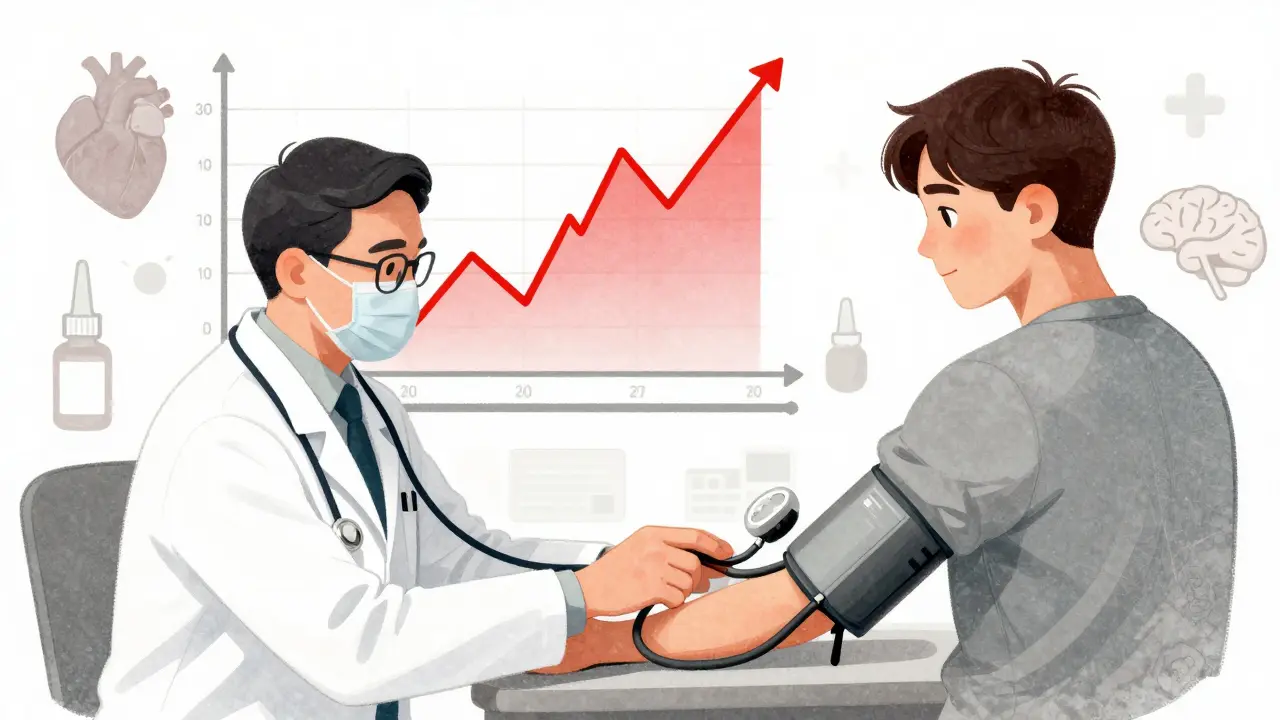
Within five minutes of using esketamine, your blood pressure can rise. Systolic (the top number) might jump 14 to 23 points. Diastolic (the bottom number) could climb 7 to 16 points. About one in three patients experience this. It’s usually silent - you won’t feel dizzy or chest pain - but it’s still risky for people with heart problems.
That’s why clinics check your blood pressure before, during, and after treatment. They measure it every 5 to 10 minutes for the first half-hour, then every 15 to 30 minutes after. If your systolic hits 180 or higher, or your diastolic hits 110, they’ll stop the session and monitor you until it drops.
People with uncontrolled high blood pressure - over 160/100 - aren’t eligible. Those with a history of stroke, aneurysm, or recent heart attack are also excluded. For most others, the spike is temporary and harmless. By 90 minutes, 87% of patients return to normal without any intervention.
The Monitoring Protocol: Why It’s So Strict
You can’t just walk in, get sprayed, and leave. The FDA requires a Risk Evaluation and Mitigation Strategy (REMS) program. That means:
- You must be in a certified clinic, staffed by trained professionals.
- You’re observed for at least two hours after dosing.
- Your vital signs - blood pressure, heart rate, oxygen levels - are checked repeatedly.
- You must sign a consent form before every session, acknowledging the risks.
This isn’t just bureaucracy. It’s safety. There have been rare cases of sedation, breathing issues, or severe dissociation. Clinics must have emergency equipment on hand - oxygen, suction devices, benzodiazepines - just in case. But here’s the thing: only 1.2% of treatments ever need rescue medication.
Most clinics now use digital systems that alert staff if your blood pressure spikes or your dissociation score climbs too high. Some even use tablets to ask you questions during the session: "Do you feel disconnected from your body?" "Is time moving slowly?" This helps track your response in real time.
Who Benefits - and Who Should Avoid It
Esketamine isn’t for everyone. It’s designed for one group: adults with treatment-resistant depression who are currently in a moderate-to-severe episode. If you’ve tried multiple antidepressants and still feel hopeless, this might be an option.
But if you have:
- Uncontrolled high blood pressure
- A history of brain aneurysms or vascular malformations
- Heart disease or recent heart attack
- Substance use disorder (especially alcohol or stimulants)
- then it’s not safe for you.
It’s also not a standalone treatment. You must keep taking an oral antidepressant while using esketamine. The two work together. Esketamine gives you rapid relief; the oral drug helps sustain it.
Real Patient Experiences: The Good, the Hard, the Worth It
On patient forums, people are honest. Some say it saved their life. Others say the side effects were too much.
A 42-year-old woman in Ohio wrote: "After 12 years of depression, nothing worked. My first esketamine session was terrifying - I felt like I was floating out of my skin. But by session four, I could sit quietly and just breathe. I cried for the first time in years after my third treatment. I haven’t felt this clear-headed in a decade."
But another man, 58, with a history of hypertension, said: "My blood pressure spiked to 175 after the first dose. I was on medication already, but it still shot up. The clinic told me to stop. I was disappointed - I really wanted this to work."
What most patients agree on: the staff makes the difference. Those who felt cared for, explained to, and supported through the experience were far more likely to stick with it. One review on Drugs.com said: "The nurses knew exactly what to say. They didn’t rush me. They just sat there and waited. That’s what helped me get through it."
Access and Cost: Is It Available Where You Live?
There are over 2,800 certified esketamine clinics in the U.S. as of 2023 - up from just 350 in 2019. But access isn’t equal. In cities, you might find one within 10 miles. In rural areas, you could be driving 100 miles or more. The average is 0.8 clinics per 100,000 people in rural regions versus 3.2 in urban areas.
Cost is another barrier. A single session can run $900 to $1,500. Insurance often covers it, but prior authorization can take weeks. Many patients wait months to start. Some clinics now offer telehealth check-ins before or after sessions to reduce travel, but the actual administration still requires an in-person visit.
What’s Next? Shorter Visits and New Tech
As of September 2023, the FDA approved a new option: if you’ve had two or more treatments and your blood pressure stays stable and dissociation is mild, you might be able to leave after one hour instead of two. This is based on data from a trial where 63% of patients showed no risk after 60 minutes.
Companies are also testing digital tools - apps that ask you questions via tablet, wearables that track heart rate and oxygen - to make monitoring more efficient. But experts agree: the core risks won’t disappear. Dissociation and blood pressure spikes are built into how esketamine works. So, even with tech, someone will still need to be there with you.
Final Thoughts: A Powerful Tool With Real Risks
Esketamine nasal spray isn’t magic. It’s medicine - powerful, fast, and demanding. It doesn’t cure depression. But for people who’ve lost hope, it can be a lifeline. The dissociation fades. The blood pressure drops. The monitoring is strict, but it’s there for a reason.
If you’re considering it, ask your doctor: "Am I a good candidate? What will my monitoring look like? What happens if I have a bad reaction?" Don’t skip the questions. The answers matter.
For those who’ve tried everything else, esketamine offers a rare chance - not just to feel better, but to feel like yourself again. And sometimes, that’s enough to keep going.
Rory Corrigan
January 3, 2026 AT 15:38Connor Hale
January 4, 2026 AT 13:35Oluwapelumi Yakubu
January 5, 2026 AT 11:51Joseph Snow
January 6, 2026 AT 02:31melissa cucic
January 6, 2026 AT 08:10jigisha Patel
January 8, 2026 AT 02:41Jason Stafford
January 8, 2026 AT 08:09Cassie Tynan
January 9, 2026 AT 12:53Abhishek Mondal
January 10, 2026 AT 01:46Terri Gladden
January 11, 2026 AT 03:42Jennifer Glass
January 11, 2026 AT 13:57Peyton Feuer
January 11, 2026 AT 20:08Vikram Sujay
January 12, 2026 AT 03:44