
Caffeine Risk Calculator
Calculate Your Risk
Your Risk Assessment
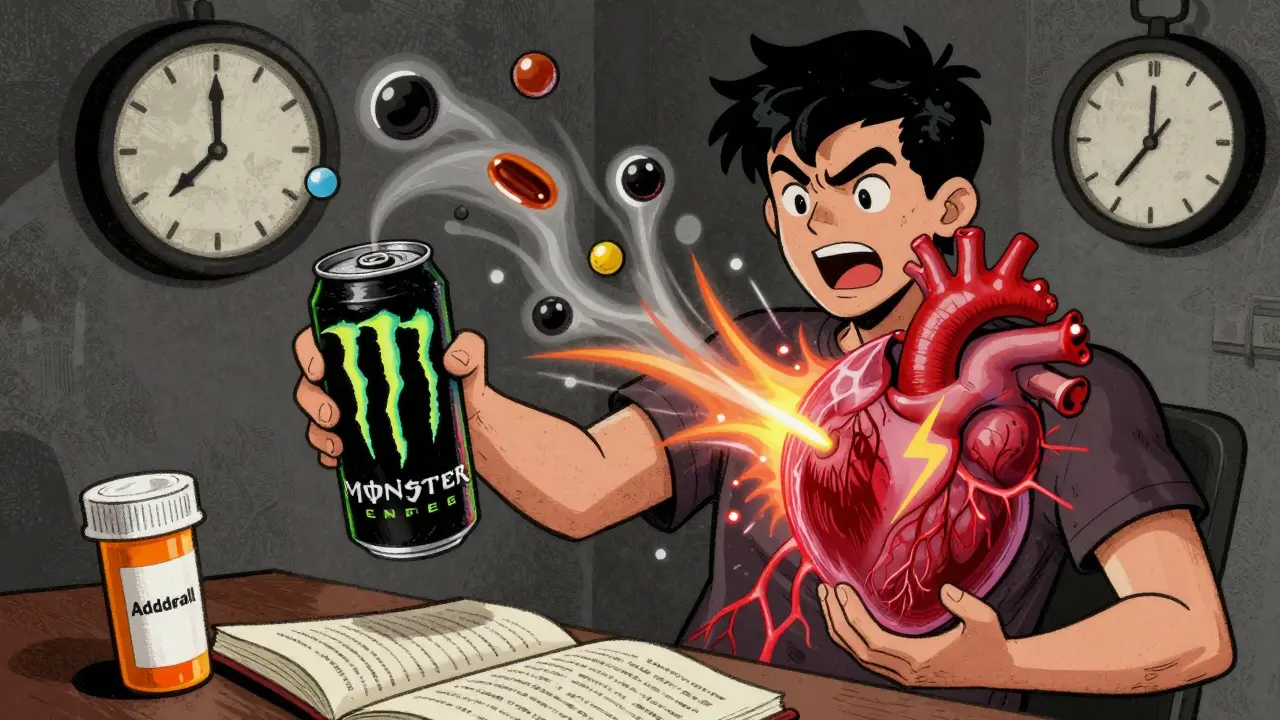
When you down an energy drink after a long night or pop a prescription stimulant to get through a workday, you might think you’re just boosting focus and energy. But what you’re really doing is putting extra strain on your heart - and the risks are real, especially when the two are combined.
What’s Actually in Energy Drinks?
Energy drinks aren’t just sugary soda with caffeine. A typical can of Monster Energy has 160 mg of caffeine - that’s more than two cups of coffee. Bang Energy packs 300 mg. Some products go even higher. But caffeine isn’t the only player. Guarana, a plant seed, adds more caffeine - sometimes up to 50 mg extra per serving. Bitter orange contains synephrine, a stimulant that acts like adrenaline. Taurine and glucuronolactone are added for flavor and marketing, but they don’t calm the heart down. Together, these ingredients create a chemical cocktail that forces your heart to race.
Studies show that within 30 minutes of drinking one of these, systolic blood pressure - the top number - can jump by 6 to 10 points. For someone with normal blood pressure (120/80), that could push them into the hypertensive range (130/85 or higher). In people with existing heart conditions, the spike can be even worse. One 2015 Mayo Clinic study found that healthy young adults saw their adrenaline levels rise by nearly 75% after just one energy drink. That’s not a mild buzz. That’s your body going into fight-or-flight mode.
Stimulant Medications: The Hidden Danger
If you’re taking Adderall, Ritalin, or another prescription stimulant for ADHD, you’re already on a drug that raises heart rate and blood pressure. The FDA labels for these medications list increases of 2-7 mmHg in systolic pressure and 3-13 extra beats per minute in heart rate. That’s not dangerous for most people - unless you add energy drinks on top.
When caffeine and amphetamines mix, they don’t just add up. They multiply. Both drugs trigger the same receptors in your brain and heart. The result? Your heart doesn’t just beat faster - it beats harder and irregularly. A 2024 study from UT Health San Antonio found that combining energy drinks with stimulant medications could raise the risk of heart events by 3 to 5 times. That’s not a small increase. That’s the difference between a warning and a hospital visit.
Doctors are seeing this in real life. On medical forums like Student Doctor Network, physicians report young patients - teens and early 20s - showing up with new-onset high blood pressure and heart palpitations after daily energy drink use. One patient, a 19-year-old in California, suffered a heart attack after drinking three Monster Energy drinks in two hours. He was on Adderall. His case led to a lawsuit against Monster Beverage Corp. in 2022.
Who’s Most at Risk?
It’s not just people with diagnosed heart disease. Teens, athletes, shift workers, and anyone with undiagnosed hypertension are vulnerable. The American Academy of Pediatrics says adolescents should avoid energy drinks entirely. Yet, the CDC reports that 30% to 50% of teens still drink them regularly. Why? Because they’re marketed as performance enhancers - for studying, gaming, or working out.
But here’s the truth: caffeine doesn’t improve athletic performance in the way people think. It masks fatigue. That means you push harder, longer, and risk cardiac strain. A 2024 UC Davis Health study found that regular energy drink users showed signs of endothelial dysfunction - a early warning sign of clogged arteries. This isn’t just a short-term spike. It’s long-term damage.
Older adults are even more at risk. As we age, our arteries stiffen. Blood pressure control weakens. A 2023 Harvard Heart Letter warned that stimulants are “more worrisome in older people,” because their hearts can’t handle the extra load. Even one energy drink can trigger arrhythmias or a stroke in someone over 50 with undiagnosed high blood pressure.
Real Stories, Real Consequences
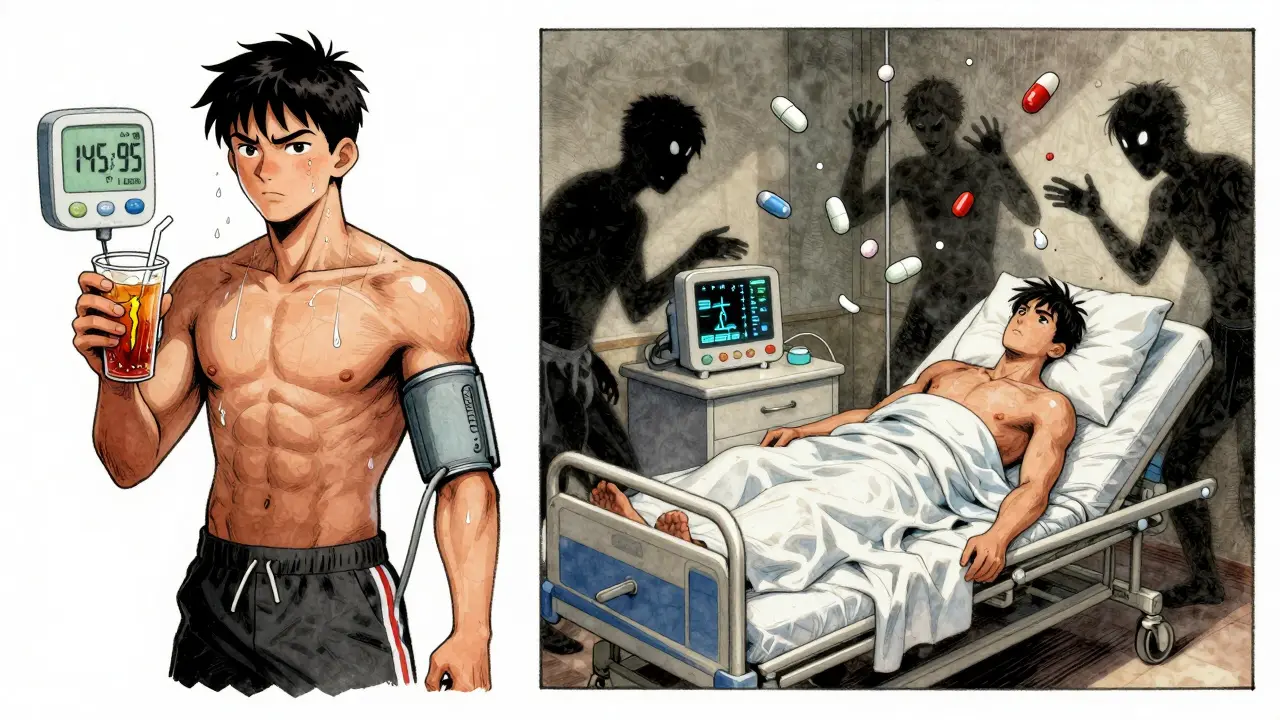
Reddit threads like r/Healthyhooha are full of personal accounts. One user, u/BloodPressureWatcher, logged his BP rising from 120/80 to 145/95 after a single 300 mg energy drink. Another, u/HeartPalpitations, described heart fluttering for three hours straight after two Monster cans. These aren’t rare. They’re common enough that poison control centers in the U.S. saw a 24.2% increase in pediatric energy drink exposures between 2022 and 2023.
Emergency rooms see the fallout: chest pain, rapid heartbeat, anxiety, dizziness. In 2011, nearly 1,500 teens were rushed to ERs for energy drink-related issues. Today, it’s worse. Caffeine overdose visits for middle schoolers more than doubled from 2017 to 2023.
How Much Is Safe?
The FDA says 400 mg of caffeine a day is safe for most healthy adults. That’s about two cans of Monster or one Bang. But that’s not a target - it’s a ceiling. And it doesn’t include caffeine from coffee, tea, chocolate, or medications.
For teens? The recommendation is 100 mg or less per day. That’s one small Red Bull. Anything more is risky. And if you’re on stimulant meds? Even 100 mg might be too much. The combination isn’t additive - it’s explosive.
There’s no official safe limit for mixing stimulant meds and energy drinks. Doctors don’t give one because there shouldn’t be one. The safest answer is: don’t mix them.
Warning Signs You Can’t Ignore
If you feel any of these after drinking an energy drink - especially if you’re on stimulant medication - stop. Call a doctor.
- Chest pain or pressure
- Heart palpitations lasting more than 5 minutes
- Severe headache or blurred vision
- Shortness of breath
- Dizziness or fainting
These aren’t “just nerves.” They’re signs your heart is under stress. In rare cases, they can lead to heart attack, stroke, or sudden cardiac arrest.
What Should You Do?
If you’re a regular energy drink user, especially if you’re on stimulant medication:
- Stop combining them. Period.
- Track your caffeine intake. Include coffee, tea, soda, and medication.
- Get your blood pressure checked. Even if you feel fine.
- Look for alternatives: water, herbal tea, better sleep, or a short walk.
- If you’re trying to quit energy drinks, reduce slowly. Quitting cold turkey can cause headaches, fatigue, and irritability for up to a week.
The American Heart Association now recommends complete avoidance of energy drinks for anyone with known heart disease. That advice should extend to anyone on stimulant meds - even if they’re young and healthy.
The Bigger Picture
Energy drink sales hit $77.6 billion in 2023. Companies aren’t slowing down. They’re marketing sugar-free, vitamin-fortified versions that make people think they’re healthier. But the stimulants are still there. The risks haven’t changed.
Regulators are catching on. Canada requires warning labels on drinks with more than 180 mg of caffeine. The FDA has issued warning letters to manufacturers for mislabeling caffeine content. Lawsuits are rising - 147 filed between 2018 and 2023.
But individual responsibility matters most. No label says, “This may kill you if you’re on Adderall.” That’s why you need to know the facts. Your heart doesn’t care about marketing. It only responds to what’s in your bloodstream.
Chloe Hadland
January 25, 2026 AT 00:32Tiffany Wagner
January 25, 2026 AT 03:17Viola Li
January 25, 2026 AT 10:48John McGuirk
January 26, 2026 AT 14:59Vatsal Patel
January 27, 2026 AT 21:36Michael Camilleri
January 28, 2026 AT 08:33lorraine england
January 29, 2026 AT 15:30Kevin Waters
January 31, 2026 AT 01:14Kat Peterson
February 1, 2026 AT 17:26Himanshu Singh
February 2, 2026 AT 01:32Jamie Hooper
February 2, 2026 AT 19:03Amelia Williams
February 2, 2026 AT 23:05Izzy Hadala
February 3, 2026 AT 09:42