
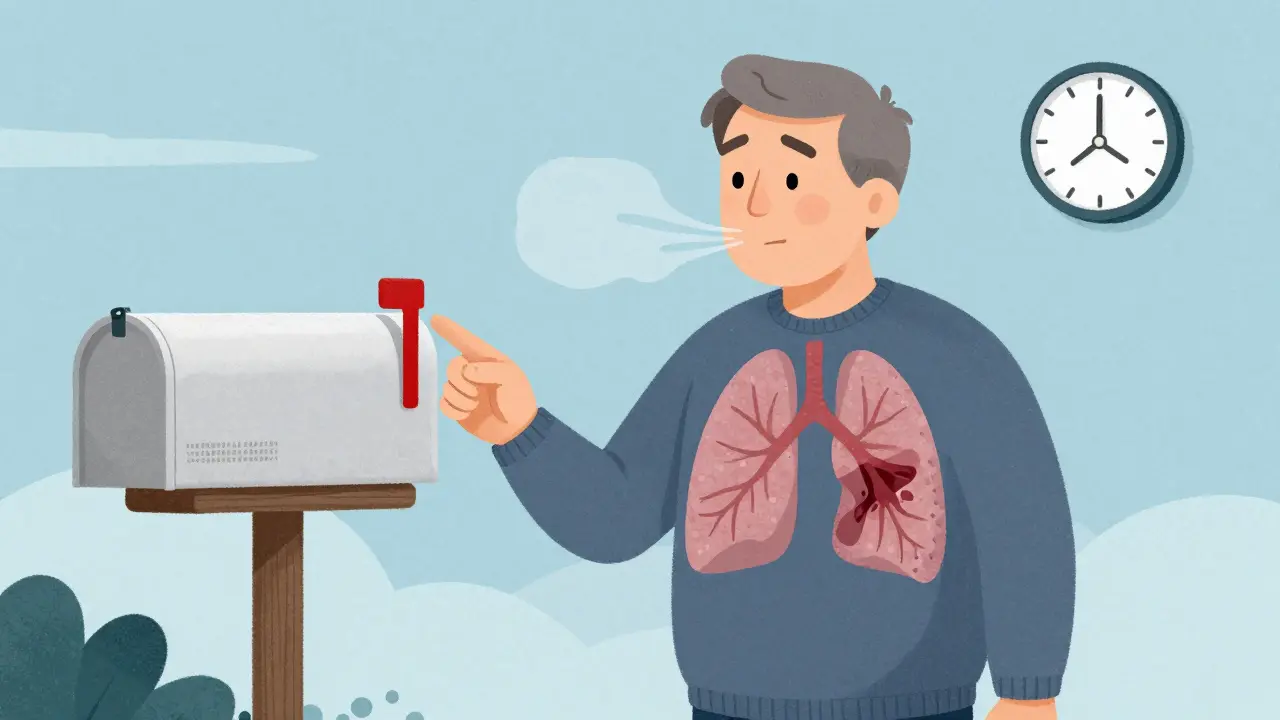
Chronic Obstructive Pulmonary Disease, or COPD, isn’t just a cough that won’t go away. It’s a serious, progressive lung condition that slowly steals your ability to breathe - and many people don’t realize they have it until it’s advanced. If you’re struggling to catch your breath during simple tasks like walking to the mailbox or getting dressed, it might not just be age or being out of shape. It could be COPD. This disease affects around 380 million people worldwide, and it’s the third leading cause of death globally. The good news? Knowing the stages and what treatments actually work can make a huge difference - even if you’re already diagnosed.
What Exactly Is COPD?
COPD isn’t one single disease. It’s an umbrella term for two main conditions: chronic bronchitis and emphysema. Both damage your lungs in different ways, but they end up doing the same thing - blocking airflow. Chronic bronchitis means your airways are swollen and full of mucus. Emphysema destroys the tiny air sacs in your lungs where oxygen gets into your blood. The result? You’re constantly short of breath.
Most cases - 85% to 90% - are caused by smoking. But it’s not just cigarettes. Long-term exposure to air pollution, chemical fumes, dust, or secondhand smoke can also lead to COPD. It’s not contagious. It doesn’t come from a virus. It builds up slowly over years, often starting with a nagging cough you ignore.
Doctors diagnose COPD with a simple breathing test called spirometry. It measures how much air you can force out of your lungs in one second - that’s your FEV1. This number tells them how much lung function you’ve lost compared to someone your age who’s never smoked. It’s not a guess. It’s a hard number. And that number determines your stage.
The Four Stages of COPD
The Global Initiative for Chronic Obstructive Lung Disease (GOLD) updated its guidelines in 2023 to make staging more accurate. It’s not just about FEV1 anymore. It’s also about how often you get sick and how much your symptoms affect your daily life. But FEV1 is still the foundation.
- Stage 1: Mild COPD - FEV1 is 80% or higher. At this point, you might have a daily cough with mucus, especially in the morning. You may get winded when you climb stairs or jog. But most people think it’s just getting older. Many don’t see a doctor until years later. This is the stage where quitting smoking can cut disease progression in half.
- Stage 2: Moderate COPD - FEV1 drops to 50-79%. Now, you’re struggling to walk on flat ground without stopping to catch your breath. Daily tasks like showering or cooking become harder. You might need to use a rescue inhaler more often. This is the stage where pulmonary rehab starts to make a real difference - improving how far you can walk by an average of 54 meters.
- Stage 3: Severe COPD - FEV1 is between 30-49%. Breathing becomes a full-time challenge. You’re likely getting sick with lung infections several times a year. Even simple things like dressing or washing dishes leave you gasping. Oxygen therapy may be needed if your blood oxygen drops below 88% at rest. Hospital visits become common.
- Stage 4: Very Severe (End-Stage) COPD - FEV1 is below 30%, or below 50% with chronic low oxygen. You’re short of breath even when sitting still. Your lips or fingertips may turn blue. You might feel confused or dizzy from lack of oxygen. Many need continuous oxygen at home - 15+ hours a day. Lung surgery or transplant may be the only options left, and only if you’re young enough and otherwise healthy.
On top of these stages, doctors now group patients into A, B, C, or D based on symptoms and how often they flare up. Group A has fewer symptoms and rare flare-ups. Group D has lots of symptoms and frequent hospital visits. This helps doctors pick the right treatment, not just based on lung numbers, but on how you actually live.
Treatment Options by Stage
There’s no cure for COPD. But treatments can slow it down, help you breathe better, and keep you out of the hospital.
Stage 1: Mild - The most important thing here is quitting smoking. That’s the single biggest thing you can do. No medication will help if you keep smoking. Short-acting inhalers like albuterol (Ventolin) are used only when you feel tightness - not daily. No need for long-term meds yet.
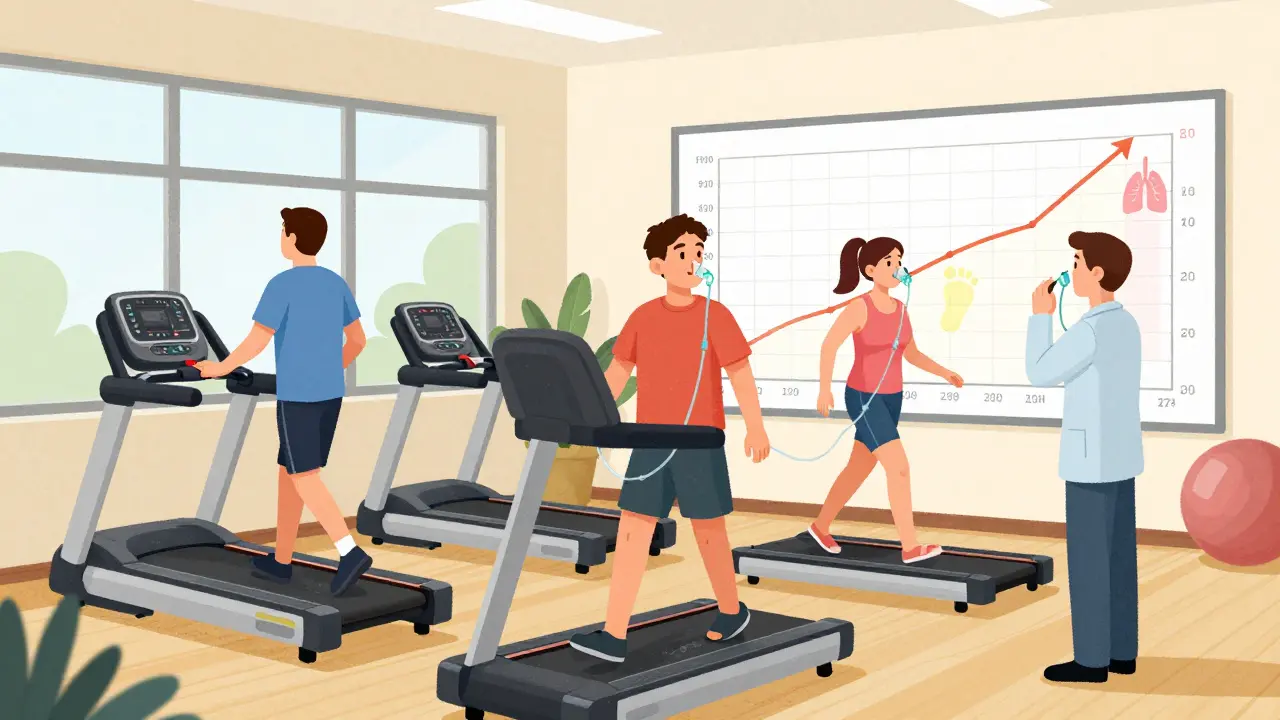
Stage 2: Moderate - Long-acting inhalers become standard. Tiotropium (Spiriva) or salmeterol (Serevent) help keep airways open all day. Pulmonary rehabilitation is strongly recommended - it’s a structured program with exercise, breathing techniques, and education. Studies show it improves walking distance by over 50 meters and reduces hospital visits by 37%. You’ll also get annual flu shots and pneumococcal vaccines to prevent infections.
Stage 3: Severe - Combination inhalers with two long-acting drugs (LAMA + LABA) are common. If you keep having flare-ups, doctors add inhaled steroids (ICS). Oxygen therapy starts if your blood oxygen is consistently low. You’ll likely be referred to a specialist who can monitor your condition closely. Some patients start using portable oxygen units, but these only last 4-6 hours at normal flow rates - a major limitation for daily life.
Stage 4: Very Severe - Continuous oxygen is often required 24/7. Studies show this can improve survival by 44% in people with severe low oxygen. Lung volume reduction surgery may be an option - it removes damaged parts of the lung so the healthier parts can work better. In selected patients under 65 with very low FEV1, lung transplant is possible. But it’s not for everyone. You need to be in good overall health, no cancer history, and willing to take lifelong anti-rejection drugs.
What About New Treatments?
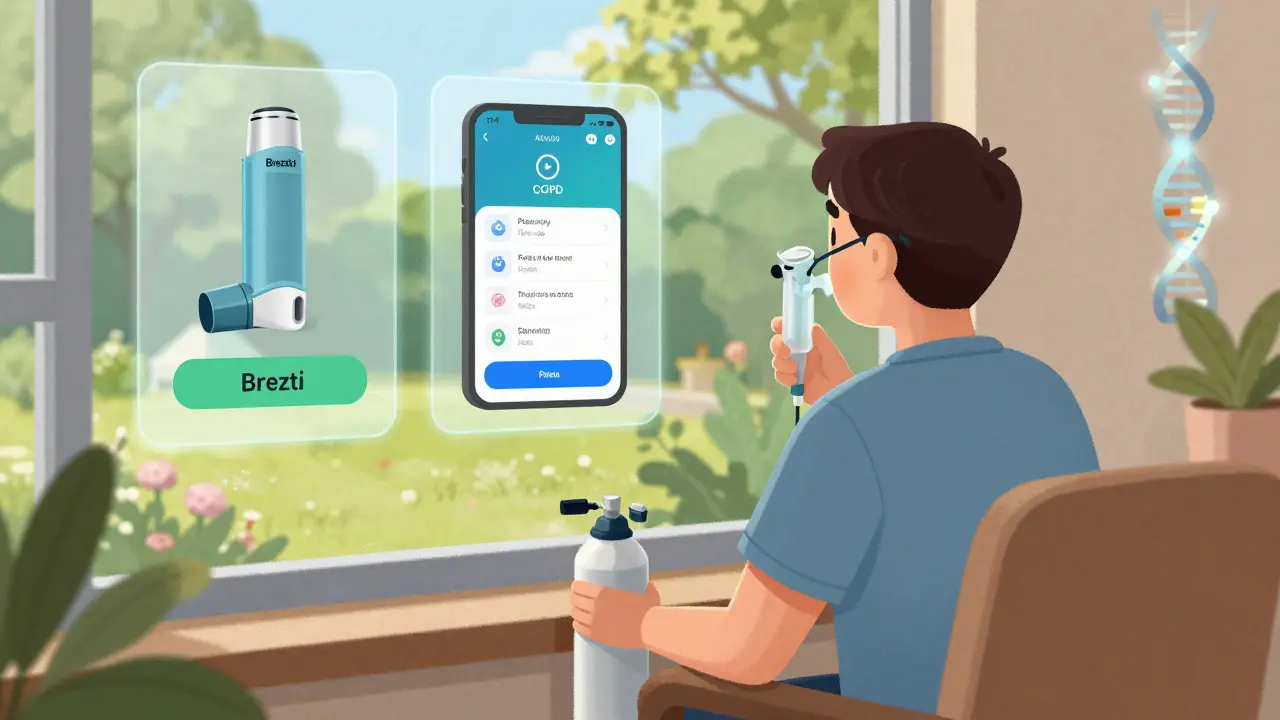
In 2023, the FDA approved Breztri Aerosphere - the first single-inhaler triple therapy (LAMA + LABA + ICS) approved specifically for COPD. It’s easier than juggling multiple inhalers. Another promising drug, ensifentrine, showed a 13% improvement in lung function in late-stage trials. It’s not on the market yet, but it’s likely to be soon.
Digital tools are also changing things. The Kyna COPD app, cleared by the FDA in June 2023, uses AI to predict when a flare-up is coming - with 82% accuracy. It tracks your breathing, cough, and energy levels daily. If it senses trouble, it alerts you and your doctor before you end up in the ER.
Genetic research is growing too. The NIH’s COPDGene study found 82 gene variants linked to how fast COPD progresses. This could lead to personalized treatments based on your DNA - not just your symptoms.
The Real Challenges
Even with all the advances, real-world problems remain. About 70-80% of people use their inhalers wrong. You need to be shown how to use them - not just handed a prescription. Three to five training sessions are typical. Most people don’t get that.
Adherence is another issue. Half of patients stop taking their meds within six months. Why? Cost. Spiriva costs $350-$400 a month without insurance. Oxygen equipment is bulky. Portable units are heavy. Many patients avoid going out because they can’t carry it far enough.
And let’s not forget the emotional toll. One patient on Reddit said, “I had to quit my warehouse job at Stage 2 because I couldn’t walk 200 feet without stopping.” Another Stage 4 patient wrote, “I can’t shower without oxygen. Brushing my teeth leaves me gasping.” Anxiety, depression, and isolation are common - and often untreated.
What You Can Do Right Now
- If you smoke - quit. No matter how long you’ve smoked. It’s never too late.
- If you have a persistent cough or shortness of breath - get tested. Don’t wait. Early diagnosis means better outcomes.
- Ask about pulmonary rehab. It’s not a luxury - it’s essential. It works.
- Learn how to use your inhaler. Ask your pharmacist to watch you. Do it again next week.
- Get vaccinated. Flu, pneumonia, and COVID-19 shots are critical. COPD patients are at higher risk of death from these.
- Track your symptoms. Use a notebook or app. Note when you’re more tired, coughing more, or breathing harder. This helps your doctor adjust your treatment.
COPD is not a death sentence. But it demands action. The sooner you understand your stage and what treatments are available, the more control you have over your life. You don’t have to stop living - you just have to live smarter.