
Heart Medication Interaction Checker
Enter the heart medications you're taking, then click "Check Interactions". This tool will alert you about dangerous combinations based on the article's information.
Important: This tool provides general information only. Always consult your doctor or pharmacist for personalized medical advice.
Results
Select medications and substances to check for interactions.
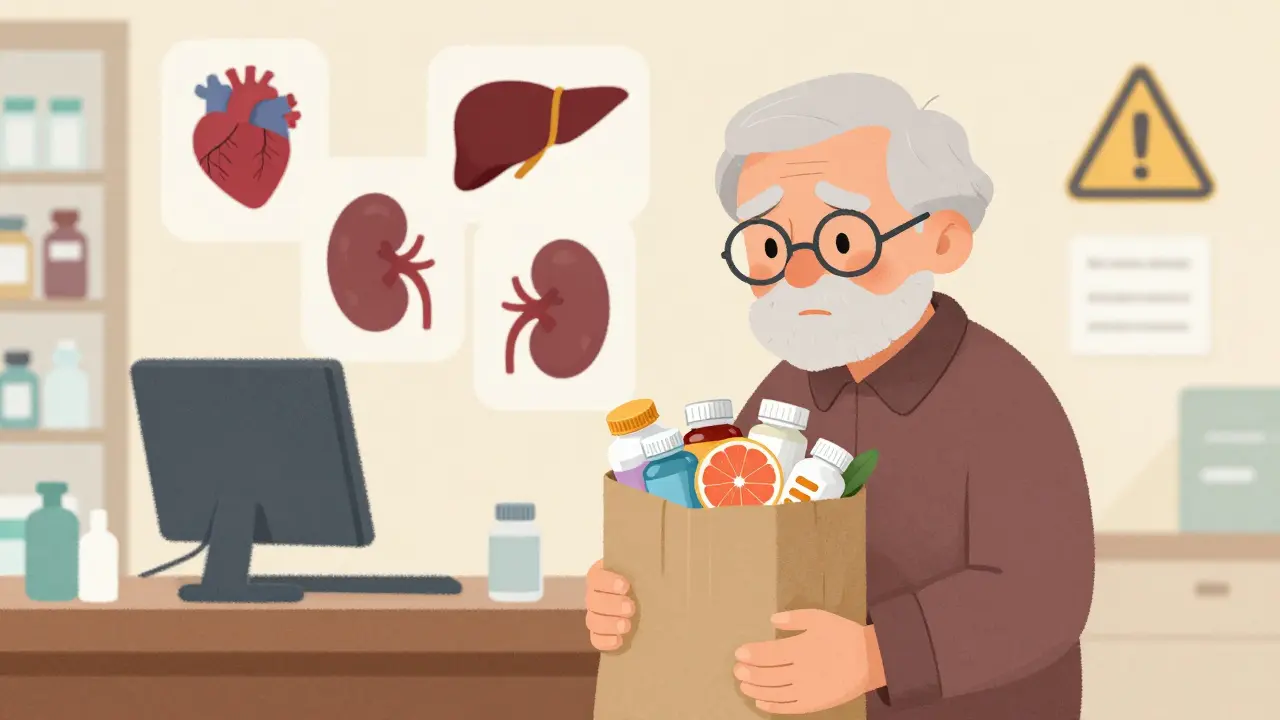
When you're managing heart disease, taking multiple medications is often necessary. But each pill you add doesn’t just help-it also increases the chance of something going wrong. Mixing heart drugs can be like playing Russian roulette with your health. Some combinations are safe. Others can send you to the hospital-or worse. The truth is, if you're on four or more heart medications, your risk of a dangerous drug interaction jumps to 38%. At seven or more, it hits 82%. This isn’t theoretical. It’s happening right now to people just like you.
Why Heart Medications Are Especially Risky
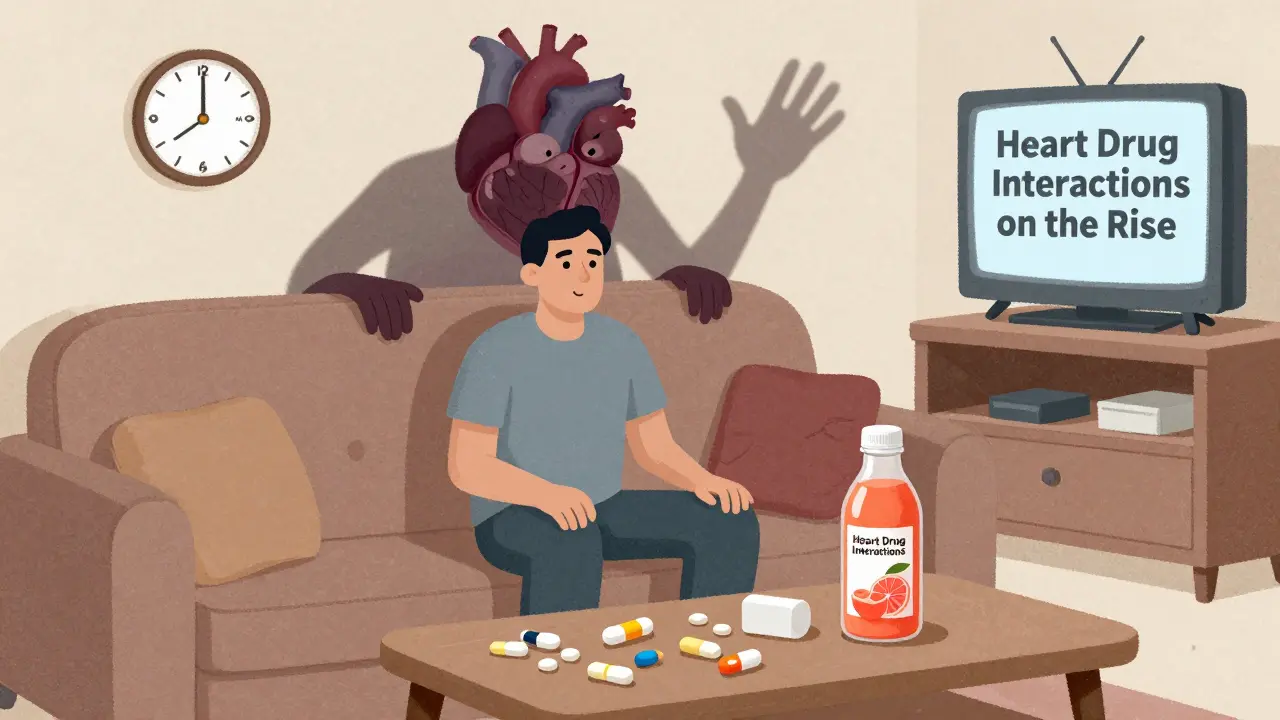
Heart medications don’t work in isolation. They affect your liver, kidneys, blood pressure, heart rhythm, and how your body breaks down other drugs. Even small changes in how a drug is absorbed or metabolized can turn a safe dose into a toxic one. The most common culprits? Statins for cholesterol, beta blockers for blood pressure, anticoagulants like warfarin, and diuretics. These drugs are often prescribed together because they treat different aspects of heart disease. But that’s exactly why they clash.Take statins. They’re among the most prescribed drugs in the world. But if you drink grapefruit juice-even just one quart a day-you’re putting yourself at serious risk. Grapefruit blocks an enzyme called CYP3A4 that normally breaks down statins in your gut. Without it, statin levels in your blood can spike. That’s not just a little extra side effect. It can cause rhabdomyolysis, a condition where muscle tissue breaks down and floods your kidneys with toxic proteins. Kidney failure can follow. The FDA says this interaction isn’t rare. It’s well-documented, and it happens with even moderate amounts of grapefruit juice.
Supplements You Think Are Safe (But Aren’t)
Many people assume that because something is natural, it’s harmless. That’s a dangerous myth when you’re on heart meds. St. John’s wort, often taken for mild depression, is one of the most dangerous offenders. It speeds up how quickly your body clears out drugs like beta blockers, calcium channel blockers, and even some blood thinners. The result? Your medication stops working. Your blood pressure spikes. Your heart races. You might not even realize what’s happening until you’re in crisis.Turmeric is another popular supplement. People take it for inflammation. But it can interfere with blood thinners like warfarin or aspirin, increasing your risk of bleeding. Even black licorice-something you might snack on without thinking-is a hidden danger. It contains glycyrrhizin, which raises blood pressure and lowers potassium. When combined with beta blockers or diuretics, it can cause dangerous heart rhythm changes or even heart failure.
Alcohol: The Silent Killer in Your Medicine Cabinet
Alcohol doesn’t just affect your liver. It messes with every heart medication you take. If you’re on blood pressure pills, alcohol can make them work too well-causing dizziness, fainting, or a dangerous drop in blood pressure. If you’re on statins, alcohol adds stress to your liver, increasing the chance of muscle damage. For those on anticoagulants, alcohol can thin your blood even further, raising the risk of internal bleeding. The National Institute on Alcohol Abuse and Alcoholism says alcohol interacts with more than 150 medications. For heart patients, that list is especially deadly.And it’s not just about how much you drink. Even one drink a day can be risky. The American Heart Association doesn’t recommend alcohol for heart health anymore. If you’re on heart meds, the safest choice is none at all.
Over-the-Counter Drugs That Can Hurt You
You don’t need a prescription to cause harm. Many common OTC meds are ticking time bombs when mixed with heart drugs.- NSAIDs like ibuprofen or naproxen can reduce the effectiveness of blood pressure medications and increase your risk of kidney damage. They also raise bleeding risk when taken with warfarin or aspirin.
- First-generation antihistamines like diphenhydramine (Benadryl) can cause QT prolongation-a dangerous heart rhythm issue-especially if you’re already on other drugs that affect your heart’s electrical system.
- Decongestants like pseudoephedrine in cold medicines can spike your blood pressure and heart rate. If you have high blood pressure or heart failure, this can trigger a heart attack or stroke.
- Antacids like Tums or Pepcid can block the absorption of other heart meds, especially antibiotics and beta blockers. Taking them at the same time can mean your heart drug doesn’t work at all.
What You Can Do to Stay Safe
The good news? Most of these risks are preventable. You don’t need to stop your meds. You just need to be smarter about how you take them.Use one pharmacy for everything. Pharmacies have software that checks for interactions. But only if they know what you’re taking. If you get your blood pressure pills from one place and your statins from another, they can’t see the full picture. One pharmacy means one full record.
Do a brown bag review. Every six months, take all your medications-pills, patches, supplements, even cough syrup-to your doctor or pharmacist. Don’t rely on memory. Bring the actual bottles. Many people forget they’re taking something, especially if it’s herbal or bought online. This simple step has caught dangerous interactions in over 60% of cases in studies from the BeMedWise program.
Know your high-risk group. If you’re over 65, you’re at higher risk. About 40% of patients with dangerous drug interactions in one major study were over 65. Age changes how your body handles drugs. Your liver and kidneys don’t work as fast. That means drugs stick around longer. Even a normal dose can become too much.
Ask about alternatives. If you’re on multiple drugs, ask your doctor: “Is there a safer option?” For example, some statins like pravastatin or fluvastatin don’t interact with grapefruit juice. Some blood pressure meds like losartan have fewer interactions than others. There’s often a choice.
What Your Doctor Should Be Checking
Your doctor doesn’t have all the answers. But they should be asking the right questions. Ask them:- “Am I on any drugs that interact with each other?”
- “Is there a medication I can stop or replace?”
- “Could any of these be causing my fatigue, dizziness, or muscle pain?”
Electronic health records now flag interactions-but they still miss about 23% of serious ones. Why? Because they don’t know your full history. They don’t know about the supplements you take. They don’t know if you drink grapefruit juice every morning. That’s why your input matters.
When to Call for Help
If you’re on multiple heart medications and notice any of these, call your doctor right away:- Sudden muscle pain or weakness, especially with dark urine
- Unexplained dizziness or fainting
- Heart palpitations or irregular heartbeat
- Swelling in your legs, ankles, or feet
- Bleeding that won’t stop (nosebleeds, bruising, blood in stool)
These aren’t normal side effects. They’re warning signs. Don’t wait. Don’t assume it’s just aging. It could be a drug interaction.
Deprescribing: The Hard but Necessary Conversation
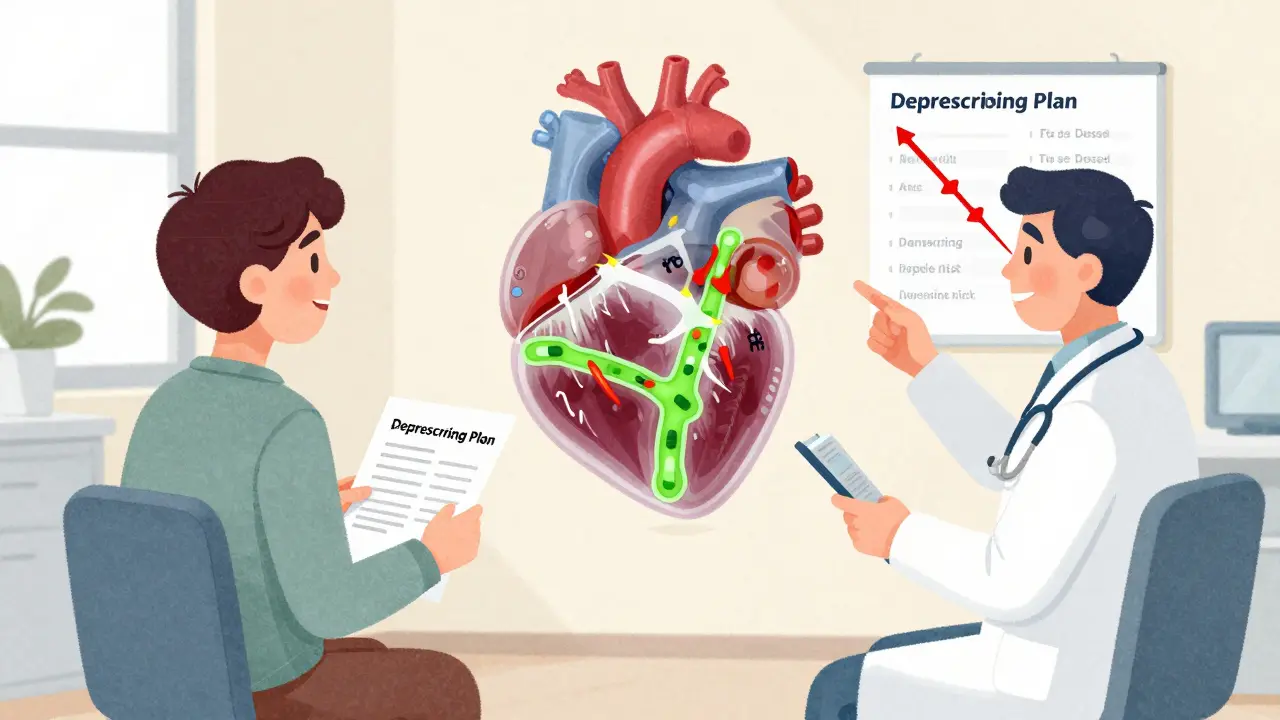
Many people are afraid to ask if they can stop a pill. They worry their doctor thinks they’re not trying hard enough. But the truth is, taking fewer drugs can be healthier than taking more. A 2022 study from the Wilmot Cancer Institute found that older patients often resist stopping medications-not because they don’t want to get better, but because they think their doctor is giving up on them.That’s the wrong mindset. Deprescribing isn’t failure. It’s smart medicine. If you’re on five or more heart meds, ask: “Is this still helping me? Or is it just adding risk?” Sometimes, stopping one drug makes the others work better. It can improve your energy, your balance, your quality of life. And it might save your life.
The Bottom Line
Heart medications save lives. But they can also hurt you if you don’t know how they work together. The more pills you take, the higher the risk. Grapefruit juice, alcohol, supplements, and even cold medicine can turn your treatment plan into a danger zone. You don’t need to live in fear. But you do need to be informed. Use one pharmacy. Bring your meds to every appointment. Ask questions. And never assume a drug is safe just because it’s natural or over-the-counter.Your heart is worth protecting-not just with pills, but with awareness.
Can I still drink grapefruit juice if I take a statin?
No. Even small amounts of grapefruit juice can interfere with how your body breaks down most statins, causing dangerous buildup in your blood. This can lead to severe muscle damage and kidney failure. The FDA warns that one quart of grapefruit juice a day can block 47% of the enzyme needed to process statins. If you take a statin, avoid grapefruit juice entirely. Some statins like pravastatin or fluvastatin are safer, but you should still check with your doctor before consuming any citrus juice.
Is it safe to take ibuprofen with blood pressure medication?
Not usually. Ibuprofen and other NSAIDs can reduce the effectiveness of blood pressure medications like ACE inhibitors or beta blockers. They also increase your risk of kidney damage and can cause dangerous fluid retention. If you need pain relief, acetaminophen (Tylenol) is usually a safer option for heart patients-but even that should be used carefully and only as directed. Always talk to your doctor before taking any OTC painkiller.
Can St. John’s wort make my heart meds stop working?
Yes. St. John’s wort speeds up the metabolism of many heart medications, including beta blockers, calcium channel blockers, and some blood thinners. This means your body clears the drugs too fast, so they don’t work as well. Your blood pressure could spike, your heart rate could become irregular, or your risk of clotting could increase. Even if you feel fine, your meds may not be doing their job. Never take St. John’s wort with heart medications without talking to your doctor.
Why do I need to bring all my meds to my doctor?
Because you might forget what you’re taking-or your doctor might not know about supplements, OTC drugs, or herbal products. Studies show that up to 70% of patients don’t mention everything they take. A “brown bag review” where you bring all your pills, patches, and bottles to your appointment helps your doctor see the full picture. This simple step has caught life-threatening interactions that electronic systems missed.
Can I just stop a heart medication if I think it’s causing side effects?
No. Stopping a heart medication suddenly can be dangerous. Blood pressure can rebound, heart rhythm can go haywire, or your risk of clotting can increase. If you’re having side effects, talk to your doctor. They can adjust your dose, switch you to a different drug, or check for interactions. Never stop or change your meds without medical guidance-even if you think you know what’s going on.
Are natural supplements always safer than prescription drugs?
No. Many people assume that because something is labeled “natural,” it’s safe. But supplements like St. John’s wort, turmeric, and black licorice can have powerful effects on your heart and interact dangerously with prescription medications. They’re not regulated like drugs, so their strength and purity can vary. What’s natural isn’t always safe-especially when you have heart disease.
How many heart medications are too many?
There’s no magic number, but risk rises sharply after four medications. At four, your chance of a dangerous interaction is 38%. At seven or more, it’s 82%. If you’re on five or more, ask your doctor if any can be stopped or replaced. The goal isn’t to take fewer pills for the sake of it-it’s to take only what’s truly necessary to keep your heart healthy and avoid unnecessary risks.
LIZETH DE PACHECO
January 1, 2026 AT 16:57Just wanted to say thank you for writing this. My dad’s on seven heart meds, and I’ve been terrified of what he’s taking with his daily turmeric smoothie. We’re scheduling a brown bag review next week. You’re right-most people don’t realize how dangerous ‘natural’ can be.
Bryan Anderson
January 3, 2026 AT 04:52This is one of the most practical, well-researched pieces I’ve read on polypharmacy. I’m a pharmacist in rural Ohio, and I see this daily-patients on 8+ meds, mixing OTCs, grapefruit juice, and supplements without a clue. The brown bag review is non-negotiable. We’ve caught 3 cases of rhabdomyolysis risk just last month because someone brought in their ‘herbal heart tonic.’
Also, to the person asking about ibuprofen: acetaminophen isn’t always safe either if you have liver issues. Always check with your provider. No one-size-fits-all here.
Dusty Weeks
January 5, 2026 AT 00:48frankly i think doctors are just trying to sell more pills 😒
why not just eat better and move? why do we need 7 meds??
Alex Warden
January 5, 2026 AT 13:11Oh please. You’re telling people to stop their meds? That’s why America’s falling apart. Back in my day, we took what the doctor gave us and didn’t question it. Now everyone’s on some ‘natural’ crap from the internet. Grapefruit juice? It’s just fruit. You think your body can’t handle it? Grow up.
Kristen Russell
January 5, 2026 AT 15:23Thank you for saying this so clearly. I’ve been telling my mom for months to stop the black licorice candy. She says it ‘helps her stomach.’ Nope. It’s raising her BP. We’re cutting it out today. Small change, big difference.
Lee M
January 6, 2026 AT 18:09The real issue isn’t the drugs-it’s the system. We’ve turned medicine into a commodity. Pharma funds the guidelines, doctors get paid for prescriptions, and patients are left drowning in pills. Deprescribing isn’t ‘smart medicine’-it’s the only sane response to a broken industry. We’re not treating disease anymore. We’re managing profit margins.
And yes, I’ve seen it: 82% interaction risk at seven meds? That’s not statistical noise. That’s systemic violence.
Matthew Hekmatniaz
January 6, 2026 AT 20:55As someone who moved from India to the U.S. and had to relearn my entire health routine, this hits hard. In India, we use turmeric, ginger, and garlic like spices-not supplements. But here, everything gets bottled, labeled, and sold as a ‘cure.’ I’ve seen elderly neighbors take 12 pills a day and think they’re being ‘proactive.’
One pharmacy? Brown bag? Ask questions? These aren’t just tips-they’re survival skills in a system that doesn’t prioritize you.
sharad vyas
January 8, 2026 AT 09:13I think this is very wise. In my village in India, we never had so many pills. We had food, rest, and family. Now even my brother in Texas takes 6 pills for his heart and says he feels worse. Maybe the answer is not more medicine, but less noise?
Sally Denham-Vaughan
January 9, 2026 AT 09:41Just had my brown bag review today. Turned out I was taking two different versions of the same blood pressure med. My pharmacist facepalmed. I felt like an idiot. But honestly? I’m glad I brought the bottles. I feel way more in control now.
Liam George
January 10, 2026 AT 12:49They don’t want you to know this, but the real reason they push so many meds is because they’re part of a global pharmaceutical cabal that profits from chronic illness. The FDA? Controlled by Big Pharma. Grapefruit juice? A natural antidote to their synthetic toxins. They scare you with ‘rhabdomyolysis’ because they don’t want you to realize that real healing comes from detoxing-your body, your mind, your environment. The system wants you dependent. Don’t be fooled. Question everything. Even this post.