

When you’re prescribed a blood pressure pill or a statin, you might be handed a small, plain tablet with a generic label. It costs a fraction of the brand-name version. But do you really know if it works the same? Are you safer on the original? These aren’t just questions patients ask-they’re questions doctors, pharmacists, and regulators wrestle with every day.
What Exactly Are Cardiovascular Generics?
Cardiovascular generics are chemically identical copies of brand-name heart and blood pressure drugs. They contain the same active ingredient, dose, and way of being taken-whether it’s a pill, capsule, or liquid. The U.S. Food and Drug Administration (FDA) requires them to match the brand-name drug in how fast and how much of the drug gets into your bloodstream. That’s called bioequivalence. The standard? The amount absorbed must fall within 80% to 125% of the brand’s levels. For most drugs, the difference is tiny-on average, just 3.5%.
These generics include the most common heart medications: statins like atorvastatin, beta-blockers like metoprolol, ACE inhibitors like lisinopril, ARBs like losartan, and calcium channel blockers like amlodipine. In 2023, nearly 90% of all cardiovascular prescriptions in the U.S. were filled with generics. They saved the healthcare system over $300 billion in the last decade, mostly from heart drugs.
Do They Work as Well as Brand-Name Drugs?
Let’s cut through the noise. The best evidence comes from randomized controlled trials-the gold standard in medicine. A 2020 Harvard Health analysis looked at 38 of these studies. In 35 of them (92.1%), generics performed just as well as brand-name drugs in preventing heart attacks, strokes, and death. The other three showed tiny differences, but nothing that changed patient outcomes.
A 2023 meta-analysis of over 1.5 million patients found no meaningful difference in major heart events between generics and brands. The risk ratio was 1.02-meaning generics were just as safe. Even minor side effects were nearly identical, with a ratio of 0.98.
But here’s where it gets tricky. Not all studies agree. One large Canadian study tracked 136,000 seniors after their ARBs switched from brand to generic. In the first month, adverse events jumped: 14% for candesartan, 11.7% for valsartan, and 8% for losartan. That’s not a huge number, but it’s enough to make doctors pause. Why? It might not be the drug itself-it could be the switch.
Why Do Some Patients Have Problems After Switching?
The issue isn’t always the active ingredient. It’s the rest of the pill. Generics can use different fillers, coatings, or dyes. These inactive ingredients don’t treat your condition, but they can change how the drug is absorbed-especially in older adults, people with gut issues, or those on multiple medications.
A 2020 study in Circulation: Cardiovascular Quality and Outcomes found that when patients switched to generic ARBs, their risk of hospital visits for heart problems rose by 14%. But here’s the catch: when researchers looked only at randomized trials (where patients were randomly assigned to brand or generic), the difference vanished. That suggests the problem isn’t the drug-it’s the transition.
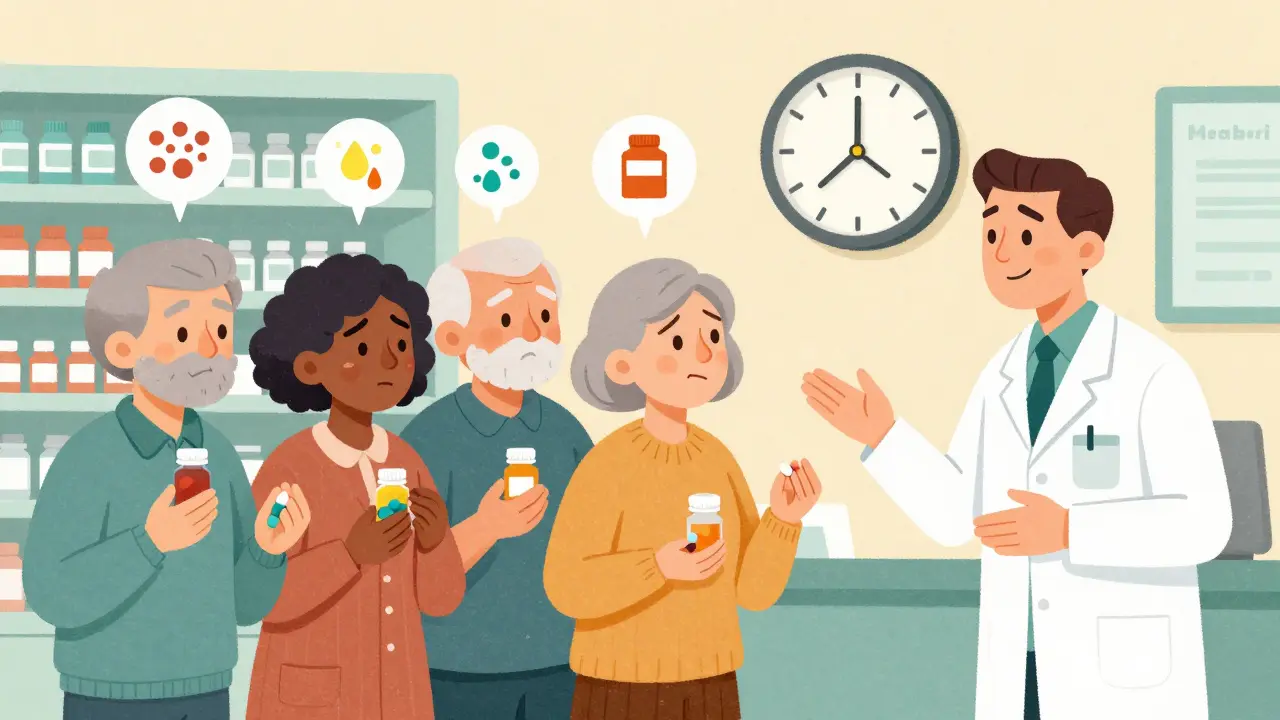
Think of it like changing your morning coffee brand. The caffeine is the same, but if the taste or smell is different, you might skip it. For heart patients, changing pill color or size can lead to confusion. One JAMA Internal Medicine study found that when pill appearance changed during a switch, 14.2% of patients stopped taking their medication entirely. That’s dangerous. Missing doses of blood pressure or cholesterol meds can trigger a heart attack or stroke.
The Nitrosamine Scare and Manufacturing Concerns
In 2018, a major scandal rocked the generic drug world. Contaminated valsartan, losartan, and irbesartan pills were found to contain nitrosamines-chemicals linked to cancer. Over 1,200 recalls followed. The FDA found that some manufacturers, especially in India and China, had cut corners in their chemical processes.
Since then, the FDA has tightened rules. Now, all manufacturers must test for these impurities and keep levels below 96 nanograms per day. But inspections still find problems. In 2022, 12.7% of generic drug plants had critical deficiencies. In 2023, the FDA started unannounced inspections for cardiovascular generics-and nearly half of those facilities had issues.
It’s not that all generics are unsafe. It’s that quality control isn’t uniform. Some manufacturers are excellent. Others are barely meeting the minimum. That’s why the FDA’s 2023 draft guidance now demands more advanced testing for complex heart drugs-especially those with narrow therapeutic windows.
What Do Doctors Really Think?
Surprisingly, many doctors still have doubts. A 2020 analysis by the American College of Physicians found that 25% of physicians wouldn’t use generics for their own families. That’s not because they think the science is wrong-it’s because they’ve seen patients struggle after switching.
Cardiologists report that 34.7% of their patients ask if generics are safe, especially after the ARB recalls. Nearly one in five patients refuse the switch outright. Even pharmacists, who dispense these drugs daily, spend extra time counseling patients because of these fears.
But here’s the disconnect: 89.4% of pharmacists believe generics are just as safe and effective. So why the gap? Partly it’s perception. A 2023 Consumer Reports survey found that 61% of Americans believe brand-name drugs work better-even though the data doesn’t support it. The placebo effect works both ways. If you believe the generic is inferior, your body might react as if it is.
Who Should Stick With Brand-Name?
For most people, generics are fine. But there are exceptions.
- Warfarin users: This blood thinner has a very narrow range between effective and toxic. Even small changes in absorption can be dangerous. The American Heart Association recommends avoiding automatic substitution.
- Patients with complex health issues: If you’re on five or more medications, have kidney disease, or are over 75, your body may process drugs differently. A switch could throw off your balance.
- People who’ve had bad reactions: If you switched to a generic and felt worse-dizziness, chest tightness, irregular heartbeat-tell your doctor. It might not be coincidence.
For everyone else-especially those on statins, beta-blockers, or ARBs-generics are a safe, proven choice. Statins, for example, have a 94% generic market share because the data is rock solid.

How to Use Generics Safely
Don’t avoid generics because of fear. But don’t switch blindly, either.
- Ask your pharmacist: If your pill looks different, ask why. Confirm it’s the same active ingredient.
- Monitor how you feel: Keep a simple log: energy levels, dizziness, swelling, or unusual fatigue in the first two weeks after switching.
- Don’t stop without talking to your doctor: If you feel off, don’t quit. Call your provider. They may switch you back or adjust your dose.
- Use medication therapy management: Many pharmacies offer free counseling for patients on multiple heart meds. These programs cut discontinuation rates by over 20%.
Insurance plans push generics because they’re cheaper. That’s good for the system. But your health shouldn’t be a cost-cutting experiment. Be informed. Be proactive. Your heart doesn’t care if the pill has a brand name or not-it only cares if you take it, and if it works.
What’s Next for Cardiovascular Generics?
The next wave of generics will include newer drugs like sacubitril/valsartan (Entresto), used for heart failure. But patent protections and complex formulations mean these won’t hit the market until 2027 or later. When they do, regulators will demand even more testing-food-effect studies, advanced bioequivalence models, and real-world outcomes tracking.
Meanwhile, manufacturers are investing in better quality control. Teva, Mylan, and Sandoz-the top three players-control over 44% of the market. Their reputation depends on consistency. If one batch fails, it can trigger nationwide recalls.
The future of cardiovascular generics isn’t about cost anymore. It’s about trust. And trust comes from transparency, consistent quality, and honest communication between patients, doctors, and pharmacists.
Are generic cardiovascular drugs as safe as brand-name ones?
For most people, yes. Large studies involving over a million patients show that generic heart medications work just as well as brand-name versions in preventing heart attacks, strokes, and death. The FDA requires them to meet strict bioequivalence standards. However, a small number of patients-especially those switching from brand to generic-may experience temporary increases in side effects or hospital visits, likely due to changes in pill appearance or inactive ingredients, not the active drug itself.
Why did some studies show higher risks with generics?
The higher risk seen in some observational studies came from patients who were switched to generics, often without warning or counseling. These studies didn’t compare the drugs directly-they compared patients before and after a switch. The problem wasn’t the drug; it was the transition. When researchers looked only at randomized trials (where patients were randomly assigned to brand or generic), the risk difference disappeared. Changes in pill size, color, or even taste can lead to confusion and non-adherence, which raises health risks.
Should I avoid generics if I’m on blood thinners like warfarin?
Yes. Warfarin has a very narrow therapeutic window-meaning even small changes in how the drug is absorbed can cause dangerous bleeding or clotting. The American Heart Association advises against automatic substitution for warfarin. If you’re on warfarin, stick with the same brand unless your doctor closely monitors your INR levels after any switch.
What should I do if I feel worse after switching to a generic?
Don’t stop taking your medication. Call your doctor or pharmacist. Keep a short log of symptoms-dizziness, fatigue, swelling, or irregular heartbeat. These could be signs that the new formulation isn’t working for you. Your provider may switch you back to the brand or adjust your dose. Many patients improve after giving their body a few weeks to adapt, but if symptoms persist, don’t ignore them.
Are generic heart drugs made in the same factories as brand-name ones?
Sometimes, yes. Many brand-name companies also make generic versions under different labels. But most generics are made by separate manufacturers, often overseas. The FDA inspects all facilities-both domestic and foreign-but inspections found critical issues at over 12% of generic plants in 2022. Quality varies by manufacturer. That’s why it’s important to know your pharmacy and ask if your generic is from a trusted supplier.
Do generics have more side effects?
No-not because of the active ingredient. The side effect profile is the same. But some patients report more side effects after switching because of changes in inactive ingredients like dyes, fillers, or coatings. These can affect how quickly the drug is absorbed, especially in older adults or those with digestive issues. It’s not the drug being less safe-it’s the body adjusting to a new formulation.
Can I trust generics from big pharmacy chains?
Generally, yes. Major chains like CVS, Walgreens, and Walmart source generics from large, regulated manufacturers like Teva, Mylan, or Sandoz. These companies are held to the same FDA standards as brand-name makers. However, some mail-order or discount pharmacies may use lesser-known suppliers. If you’re concerned, ask your pharmacist which manufacturer makes your generic. You can also check the FDA’s website for recall notices.
Final Thoughts
Cardiovascular generics are not a compromise. They’re a smart, science-backed choice for the vast majority of patients. The evidence is clear: they save lives by making treatment affordable. But they’re not magic. They require awareness, communication, and vigilance. Don’t let fear stop you from using them. But don’t ignore your body’s signals either. Your heart doesn’t care about the label on the bottle. It cares that you take your medicine-every day, without fail.
Pankaj Singh
January 14, 2026 AT 00:07The FDA’s bioequivalence standard is a joke. 80-125% absorption? That’s a 45% swing. I’ve seen patients crash after switching to Indian-made atorvastatin-CK levels spiked, rhabdo risk went through the roof. This isn’t theoretical. My cousin died because his pharmacy switched him without warning. The system is rigged for profit, not patients.
Robin Williams
January 14, 2026 AT 23:44bro. generics are the reason i’m still alive. statin cost me $40 a month brand. $3 generic. i take it every day. no heart attack. no stroke. no drama. if you’re scared of a pill because it’s white instead of blue… maybe your brain needs a reset. the science is solid. the fear? that’s marketing.
Scottie Baker
January 16, 2026 AT 13:44I’ve been on lisinopril for 12 years. Switched to generic last year. Felt like my chest was caving in for two weeks. Couldn’t sleep. Dizzy all day. Thought I was dying. Called my doc-she said ‘give it 3 weeks.’ I did. Now I feel better than ever. But here’s the thing-no one warned me. No one asked how I’d feel. They just swapped the pill like it was a different brand of toilet paper. That’s not healthcare. That’s negligence wrapped in a cost-cutting slogan.
Anny Kaettano
January 16, 2026 AT 16:27Let’s unpack this holistically. The bioequivalence threshold is statistically valid, but pharmacokinetic variability in elderly polypharmacy patients is non-trivial. Non-inert excipients-particularly magnesium stearate, lactose monohydrate, and hypromellose-can alter gastric transit time and mucosal permeability, especially in those with SIBO or gastroparesis. The real issue isn’t active pharmaceutical ingredient (API) equivalence-it’s formulation fidelity across heterogeneous populations. We need personalized bioequivalence modeling, not one-size-fits-all FDA thresholds. Pharmacist-led MTM programs reduce discontinuation by 22%-that’s the scalable solution, not fear-mongering or blind trust.
Kimberly Mitchell
January 18, 2026 AT 03:11People who blame the switch for side effects are just making excuses. If you can’t take a pill because it’s a different color, you’re not sick-you’re lazy. The science doesn’t lie. The FDA doesn’t lie. The million-patient studies don’t lie. Stop letting fear and placebo effects dictate your health decisions. You’re not special. Take the generic and get over it.
Angel Molano
January 19, 2026 AT 09:44Warfarin is the only one that matters. Everything else is noise. Stop playing roulette with your life.
Vinaypriy Wane
January 21, 2026 AT 05:43As someone from India, I’ve seen factories that make these pills. Some are clean. Some are… not. The FDA inspections? They’re scheduled. The real problems? They happen when inspectors aren’t there. My uncle’s generic losartan came from a plant that got shut down last year-still sold for months. We need traceability. Not just ‘FDA approved’-but ‘this batch came from this factory, on this date, with these QA logs.’ Otherwise, we’re all gambling with our hearts.
Diana Campos Ortiz
January 22, 2026 AT 13:03I switched to generic metoprolol after my insurance dropped coverage. Felt weird for a week-slight nausea, more tired than usual. I kept a journal: sleep, BP, energy. Shared it with my cardiologist. She said it was likely the fillers. Switched back to brand for 30 days, then tried a different generic-same manufacturer as the brand. No issues. Point is: don’t panic. Don’t quit. Track. Talk. Adapt. Your body’s feedback is the real data.