
What automated refills actually do for your generic meds
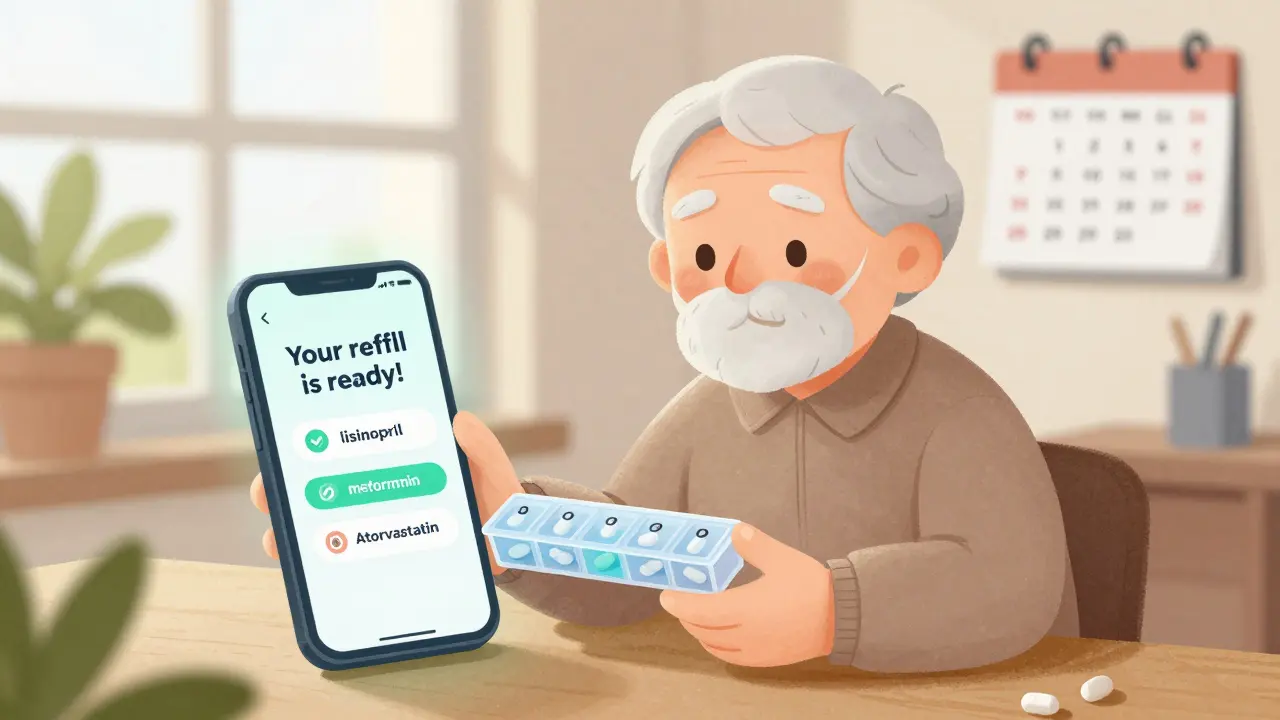
If you take the same generic medicine every day - whether it’s lisinopril for blood pressure, metformin for diabetes, or atorvastatin for cholesterol - you know the drill. Run out of pills? Call the pharmacy. Wait on hold. Get a reminder from your doctor’s office. Repeat next month. It’s not hard, but it’s a hassle. And for millions of people managing chronic conditions, that hassle adds up. That’s where automated refills come in.
Automated refills are built into most major online pharmacies and retail chains like CVS, Walgreens, and Amazon Pharmacy. Instead of you remembering to request a refill, the system does it for you. Around five to seven days before your current supply runs out, the pharmacy automatically sends a refill request to your doctor’s office. Once approved, your meds are ready for pickup or shipped to your door. No calls. No texts. No forgotten appointments.
This isn’t magic. It’s simple math. The World Health Organization says about half of people with long-term conditions don’t take their meds as prescribed. A 2016 study in the Journal of the American Medical Informatics Association found that automated refills improved adherence by 7.2% for statins, 6.8% for diabetes drugs, and nearly 4% for blood pressure meds. That might sound small, but for someone with heart disease, that 7% could mean avoiding a hospital visit.
How automated refills actually work behind the scenes
Here’s how it really works: Your pharmacy’s system checks your prescription history. If you’ve been refilling the same generic drug every 30 days for six months straight, it assumes you’ll keep doing it. The system flags your next refill date - say, March 12 - and triggers the process on March 5. That gives your doctor’s office time to approve it, and the pharmacy time to fill it.
Modern systems don’t just guess. They learn. If you usually pick up your meds on a Tuesday, but suddenly stop coming in for two months, the system might pause the refill and send you a text: “Still taking your metformin?” If you’re on a 90-day supply, the refill might be set for day 60 instead of day 85 - a move some pharmacy benefit managers (PBMs) use to boost revenue. But reputable pharmacies stick to the actual end-of-supply date.
These systems connect to your electronic health record. If your doctor changes your dose - say, from 10mg to 20mg of simvastatin - the pharmacy should get that update. But sometimes, it doesn’t. That’s a known risk. There have been cases where patients kept getting the old dose because the system didn’t sync properly. That’s why it’s smart to double-check your pill bottle every time you get a refill.
Why automated refills work better for generics
Generic medicines are the backbone of chronic care. They’re cheaper, just as effective, and prescribed for long-term conditions. That makes them perfect for automation.
When you’re on a brand-name drug, you might get more hand-holding. Pharmacists call to check in. Doctors schedule follow-ups. But generics? They’re treated like commodities. That’s where automated refills step in. They add the personal touch back in - without the cost.
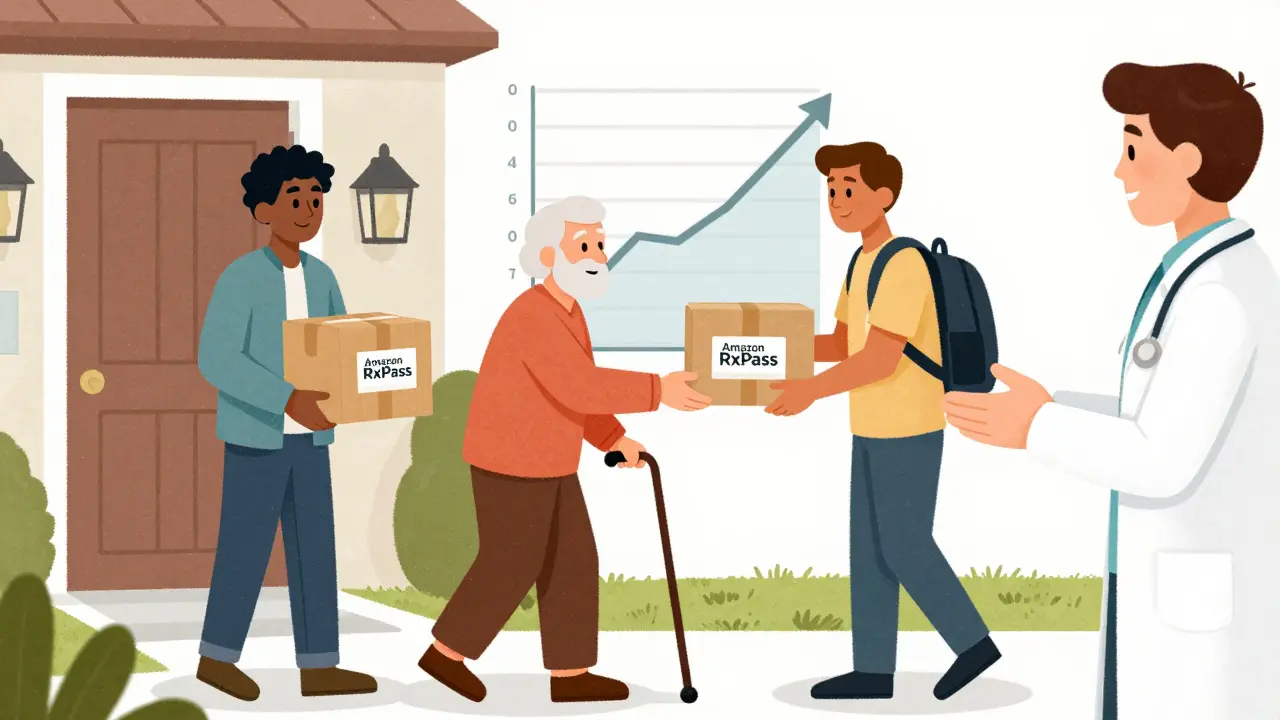
Amazon Pharmacy’s RxPass, launched in early 2023, offers 60 common generic medications for $5 a month to Prime members in 45 U.S. states. Since then, refills for those drugs have jumped 18%, according to a 2025 study in JAMA Network Open. Why? Because when the price is locked and the process is invisible, people take their meds.
And it’s not just about cost. It’s about consistency. If you’re on a fixed income, you might skip a refill if you’re short on cash that month. An automated system doesn’t care. It just keeps you stocked. That’s why 73% of users on Trustpilot who use automated refills say they feel “peace of mind.”
The hidden downsides - and how to avoid them
Automated refills aren’t flawless. The biggest problem? Dosage changes.
There’s a documented case from late 2024 where a patient on diltiazem 240mg was told by their doctor to increase to 360mg. The pharmacy’s system didn’t catch the update. The patient kept getting the old dose for three weeks. That’s not rare. About 22% of Reddit users who’ve used automated refills say they’ve had a similar issue.
Another concern: overfilling. Some pharmacies trigger refills early to make more money - especially mail-order services owned by PBMs. If your prescription is for 90 pills, they might refill you at day 60. That means you end up with extra pills you don’t need. That’s waste. And waste costs the system money.
Then there’s the loss of human contact. Pharmacists used to be the ones who asked, “How are you feeling on this med?” Now, that conversation happens less. A 2022 article on KevinMD argued that automated refills remove those 30-day touchpoints - the moments when a patient might mention side effects or confusion.
Here’s how to protect yourself:
- Always check your pill bottle when you get it. Does the dose match what your doctor told you?
- Review your medication list every three months. Use your pharmacy’s app or portal.
- Call your pharmacy if you stop taking a med. Don’t assume they’ll know.
- If you’re enrolled in an automated system, ask how to pause it. You should be able to do it online or over the phone.
Who benefits the most - and who should skip it
Automated refills are a game-changer for people with memory issues, busy schedules, or complex regimens. One study found patients with dementia or Parkinson’s who used automated refills maintained 95%+ adherence rates. That’s huge.
They’re also great for people who live far from pharmacies or have mobility issues. One Medical reports 78% of their home delivery users enroll in automated refills - mostly because they don’t want to drive to the store.
But if you’re someone who frequently changes meds, skips doses on purpose, or doesn’t trust your prescriptions, automated refills might not help. If you’re unsure whether you even need the medicine, you should talk to your doctor - not rely on a system to keep sending it.
And if you’re on a new medication, wait at least two cycles before enrolling. Give yourself time to see how your body reacts. Automation is for stability, not experimentation.
How to sign up - and what to expect
Getting started is easy. Most online pharmacies let you enroll through their app or website. Log in, go to “Prescriptions,” find the generic you want to automate, and toggle “Auto-Refill.” You’ll need to confirm your contact info - email, SMS, or phone - so they can notify you when your order is ready.
The whole process takes less than 10 minutes. CVS and Walgreens even have in-store kiosks where pharmacy techs can help you sign up. If you’re older or not tech-savvy, ask for help. About 83% of seniors need assistance the first time.
Once you’re enrolled, you’ll get a notification when your refill is processed. You might see a message like: “Your lisinopril 10mg is ready for pickup on April 3.” Or: “Your 90-day supply of metformin will ship tomorrow.”
You can pause, skip, or cancel anytime. There’s no contract. No fee. You’re not locked in.
What’s next for automated refills
The future is smarter. By 2026, two-thirds of pharmacy automation systems will use AI to adjust refill timing based on your behavior. If you usually pick up your meds on Friday but missed two in a row, the system might text you: “Still taking your pills?”
Some pharmacies are already linking refills to Apple Health and Google Fit. Your medication history shows up alongside your steps and sleep data. That’s not just convenient - it’s powerful. Doctors can see your adherence patterns in real time.
And the cost? It’s dropping. Amazon’s RxPass proves you can get 60 generics for $5 a month. Other chains are starting to offer similar flat-fee models. That’s a big deal for people on tight budgets.
The real win? Fewer missed doses. Fewer ER visits. Fewer hospitalizations. That’s what automated refills are really about - not saving pharmacies time, but saving your health.
FAQ
Are automated refills safe for all generic medicines?
Yes, for most chronic condition meds like blood pressure, cholesterol, diabetes, and thyroid drugs. But they’re not ideal for medications you take as needed, like painkillers or antibiotics. Automated refills work best when you take the same dose, at the same time, every day. If your doctor changes your dose often, check with your pharmacy before enrolling.
Can I be enrolled without my permission?
No. Federal rules require your explicit consent before a pharmacy can auto-refill your prescription. If you didn’t sign up, you weren’t enrolled. Some patients report receiving refills they didn’t request - that’s usually because someone else (like a family member) enrolled them on your behalf. Always check your pharmacy portal to confirm your settings.
Do automated refills cost extra?
No. There’s no fee to use automated refills through your pharmacy. Some services like Amazon RxPass charge a monthly subscription, but that’s for unlimited access to 60 generics - not for the auto-refill feature itself. Your insurance still covers the cost of the medication; the automation is free.
What if I stop taking a medication? Will it still refill?
It might - and that’s a risk. Pharmacies don’t always know you’ve stopped taking a drug unless you tell them. If you discontinue a medication, call your pharmacy and ask them to remove it from your auto-refill list. Otherwise, you could end up with unused pills sitting in your cabinet. That’s waste - and potentially dangerous if someone else takes them.
How do I know if my dose changed after an auto-refill?
Always check the label on your pill bottle. The dose and instructions should match what your doctor told you. If it doesn’t, don’t take it. Call your pharmacy immediately. Most will swap it out for the correct dose the same day. Also, review your medication list in your pharmacy’s app every few months. That’s the best way to catch errors early.
Hilary Miller
January 21, 2026 AT 11:44Philip House
January 23, 2026 AT 05:06Liberty C
January 23, 2026 AT 22:56shivani acharya
January 24, 2026 AT 01:26Sarvesh CK
January 25, 2026 AT 22:13Alec Amiri
January 26, 2026 AT 22:48Lana Kabulova
January 27, 2026 AT 08:49arun mehta
January 28, 2026 AT 07:10Chiraghuddin Qureshi
January 29, 2026 AT 21:23Lauren Wall
January 31, 2026 AT 20:42Kenji Gaerlan
February 2, 2026 AT 01:32Oren Prettyman
February 2, 2026 AT 18:47