
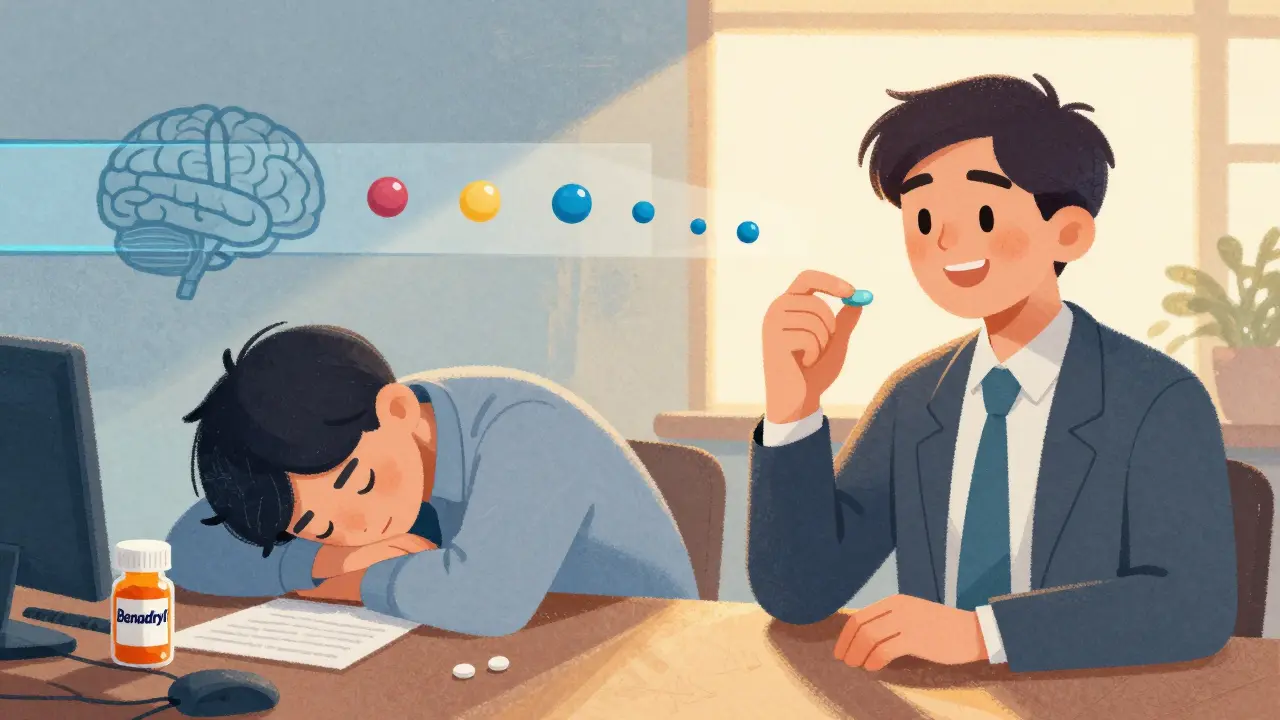
When your nose won’t stop running, your eyes are itchy, or you’re sneezing nonstop, antihistamines are often the first thing you reach for. But not all antihistamines are the same. There are two main types-first-generation and second-generation-and choosing the wrong one can leave you drowsy, confused, or still suffering. If you’ve ever taken Benadryl and felt like you were drugged for the rest of the day, or wondered why Zyrtec didn’t work right away, you’re not alone. The difference between these two classes isn’t just marketing-it’s science, safety, and real-life impact.
How Antihistamines Work
Antihistamines block histamine, a chemical your body releases during an allergic reaction. Histamine causes swelling, itching, runny nose, and watery eyes. By stopping histamine from binding to H-1 receptors, these drugs reduce those symptoms. Both first- and second-generation antihistamines do this job. But how they get there-and what else they do along the way-is where things get complicated.
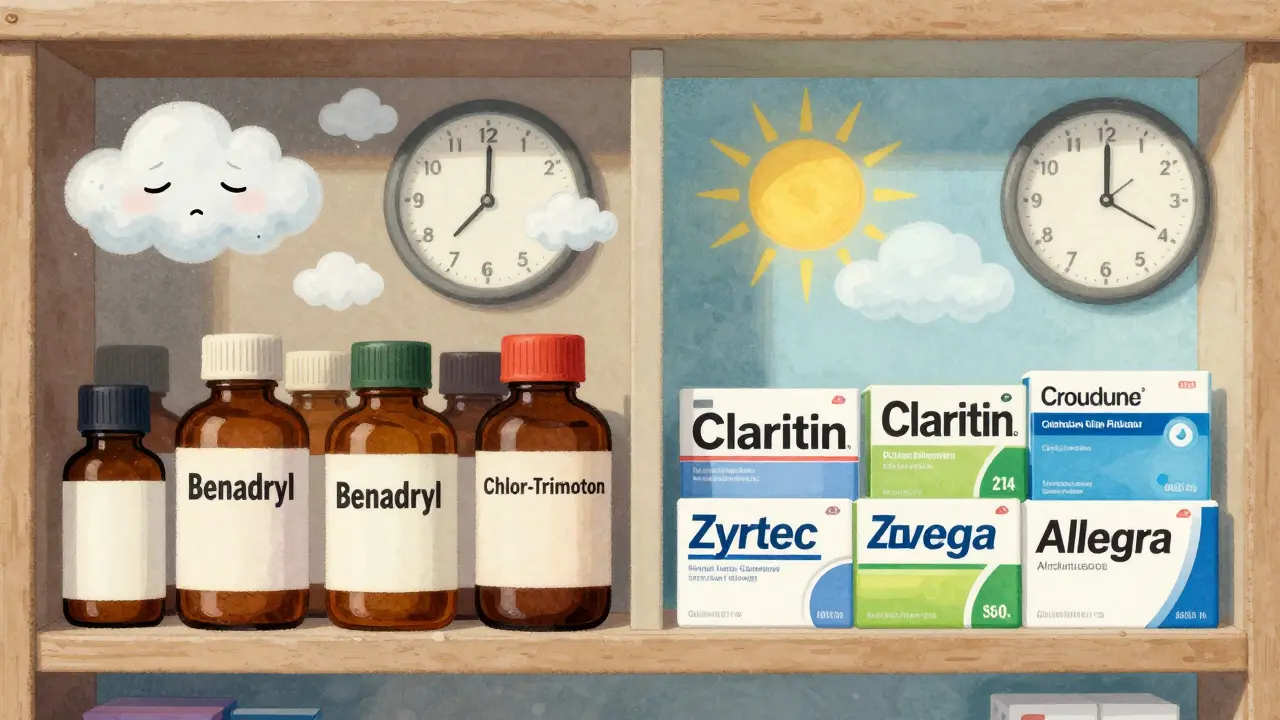
First-generation antihistamines like diphenhydramine (Benadryl), chlorpheniramine (Chlor-Trimeton), and promethazine (Phenergan) were developed in the 1940s. They’re small, fat-soluble molecules that slip easily through the blood-brain barrier. That’s why they work fast-often in under 30 minutes-but also why they make you sleepy. Second-generation antihistamines like loratadine (Claritin), cetirizine (Zyrtec), and fexofenadine (Allegra) were designed in the 1980s to avoid that problem. They’re bulkier or have special transporters that keep them out of the brain. The result? Relief without the fog.
Side Effects: The Big Difference
The biggest problem with first-generation antihistamines? They don’t just block histamine in your nose-they also block it in your brain. That’s why about 50-60% of people who take Benadryl feel drowsy. Some even report trouble concentrating, slowed reaction times, or memory lapses. Driving studies show users of first-gen antihistamines have 25% slower reaction times-similar to someone with a blood alcohol level of 0.05%.
That’s not all. These drugs also block acetylcholine, another brain chemical. That leads to dry mouth, constipation, blurred vision, and trouble urinating-especially in older adults. One in five elderly users on long-term first-gen antihistamines show signs of cognitive decline that mimic early dementia. Harvard’s Dr. Pieter Cohen calls this “hidden benzodiazepine-level risk,” and it’s why many doctors now avoid prescribing them to seniors.
Second-generation antihistamines? Only 10-15% of users report drowsiness-and even then, it’s usually mild. They’re much safer for daily use, work driving, or school. But they’re not perfect. Some people still feel a little tired on cetirizine (Zyrtec), especially at higher doses. And while they don’t cause dry mouth as often, they can still trigger headaches or stomach upset in a small number of users.
Effectiveness: Which One Works Better?
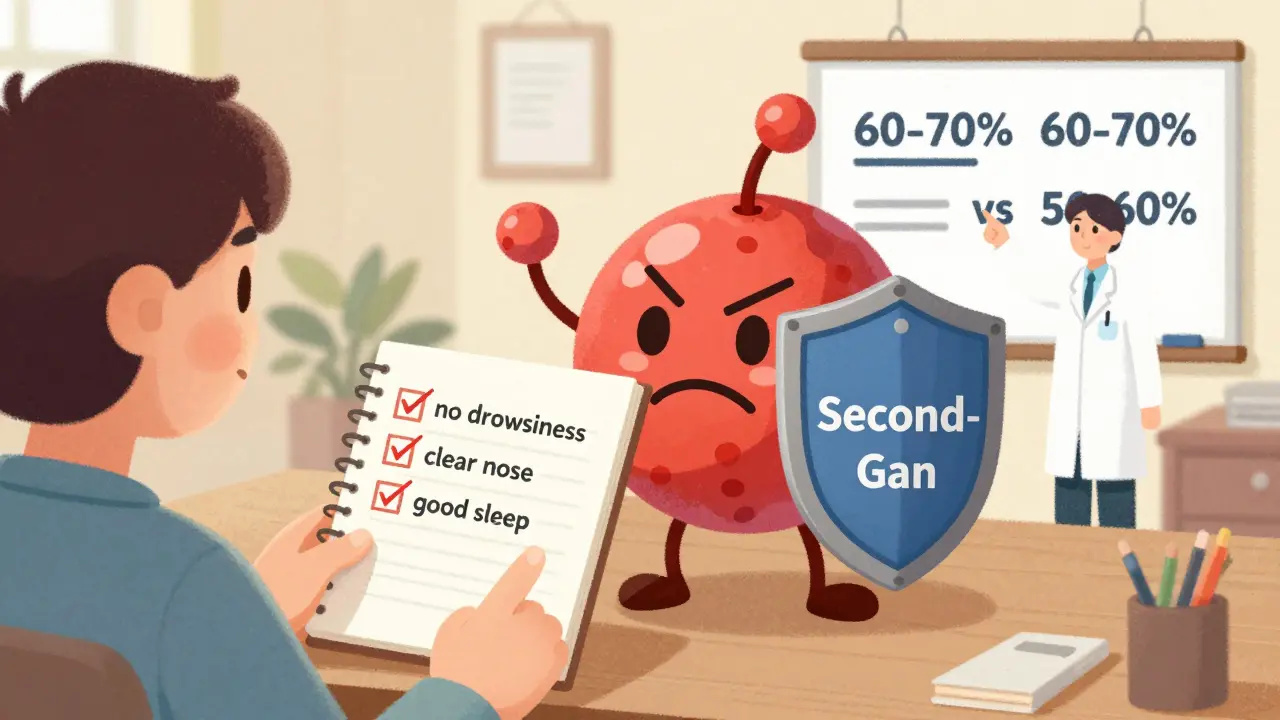
When it comes to stopping sneezing and itching, both classes do a solid job. But second-generation antihistamines have a slight edge. A 2022 meta-analysis found they reduce nasal allergy symptoms by 60-70%, compared to 50-60% for first-gen. That might not sound like much, but for someone with chronic allergic rhinitis, that extra 10-20% can mean the difference between managing symptoms and needing extra medication.
There’s also variation within the second-gen group. Cetirizine (Zyrtec) tends to work better for itchy, watery eyes than loratadine (Claritin). Fexofenadine (Allegra) is gentler on the stomach but may take longer to kick in. And if you have nasal congestion, neither works great alone-you’ll likely need a decongestant like pseudoephedrine. That’s why combination products like Allegra-D are so popular.
First-gen antihistamines win in one area: speed. If you get hit with a sudden allergy attack-say, from a cat or pollen-you’ll feel relief from Benadryl in 30 minutes. Second-gen drugs take 1-3 hours to peak. That’s why some people keep Benadryl on hand for emergencies, even if they take Zyrtec daily.
Dosing and Convenience
First-generation antihistamines last only 4-6 hours. That means taking them 3-4 times a day. For someone with allergies, that’s a lot to remember. It’s also why many people end up taking them at the wrong time-like in the morning-and then crash by noon.
Second-generation antihistamines last 12-24 hours. One pill a day is all you need. Compliance rates for once-daily dosing are 85%, compared to just 60% for multiple-dose regimens. That’s a huge advantage for long-term control. It’s also why doctors now recommend second-gen as first-line treatment for chronic allergies like hay fever or hives.
But here’s the catch: because they’re slower to start, you can’t wait until symptoms appear. If you know you’ll be around pollen or pets, take your second-gen antihistamine the night before or at least 2 hours before exposure. Many users get frustrated when they take Zyrtec “after” the sneezing starts and wonder why it’s not working. It’s not broken-it’s just not designed for instant relief.
Cost and Accessibility
Price matters. Generic diphenhydramine (Benadryl) costs about $4-$6 for 100 tablets. That’s less than 6 cents per dose. Generic loratadine (Claritin) runs $10-$15 for 30 tablets-about 35-50 cents per dose. Brand-name versions can hit $25-$40 a month.
For people without insurance, the price gap is real. But many find the cost worth it. Why? Because they’re not missing work, not forgetting to take pills, and not feeling groggy all day. A 2024 survey found that 78% of users who switched from Benadryl to Zyrtec or Claritin said their quality of life improved.
First-gen antihistamines still dominate the OTC cold and flu aisle because they’re cheap and help with sleep. But that’s not their intended use-and it’s risky if you’re using them long-term just to nod off.
Who Should Use Which?
Here’s the simple breakdown:
- Use second-generation if you have chronic allergies, need to stay alert, are on daily medication, or are over 65. Zyrtec, Claritin, and Allegra are all solid choices. Pick cetirizine if itching and watery eyes are your biggest issue. Pick fexofenadine if your stomach is sensitive.
- Use first-generation only for short-term, acute situations: sudden hives, severe allergic reaction before epinephrine, motion sickness, or as a nighttime sleep aid for allergy-related insomnia. Don’t use it daily. Don’t use it for kids under 6 without a doctor’s advice. And never use it while driving or operating machinery.
Some experts, like Dr. David Stukus from Nationwide Children’s Hospital, say second-gen should be the default for almost everyone. But Dr. Robert Wood from Johns Hopkins adds an important caveat: first-gen still has a place-for acute urticaria, nausea, and yes, even sleep. If you’re struggling to sleep because your allergies won’t let you, Benadryl might be the only thing that works. Just don’t make it your long-term solution.
What’s New and What’s Coming
The antihistamine market is evolving. Newer second-gen drugs like desloratadine and levocetirizine (the active form of cetirizine) are gaining traction. They’re more potent and have fewer side effects. In 2023, the FDA approved bilastine in Europe-a next-gen antihistamine that’s stronger against nasal congestion. It’s not yet available in the U.S., but it’s coming.
Combination pills are also on the rise. Fexofenadine with pseudoephedrine (Allegra-D) is now available in extended-release form, giving 24-hour relief from both allergy and congestion symptoms. That’s a big win for people who hate juggling multiple pills.
And while third-generation antihistamines are emerging, they’re still just refined versions of the second-gen class. The real shift isn’t about new drugs-it’s about using the right drug for the right job.
Real User Experiences
People on Reddit’s r/Allergies say it best: “Zyrtec lets me function at work without the brain fog Benadryl gives me.” That’s the most common sentiment. But flip to Drugs.com, and you’ll see another story: “Diphenhydramine gives me the best sleep of any sleep aid I’ve tried.”
Amazon reviews show second-gen antihistamines average 4.2 stars. The top praise? “Non-drowsy.” The top complaint? “Didn’t work fast enough.” First-gen gets 3.8 stars. The top praise? “Saved me during a sudden attack.” The top complaint? “Too sleepy to do anything.”
It’s not about which is better-it’s about which fits your life.
What to Do Next
If you’re currently taking Benadryl every day, talk to your doctor or pharmacist. There’s likely a safer, more effective option. If you’ve tried Zyrtec and it didn’t help, try cetirizine or fexofenadine. Different people respond differently.
Keep a symptom diary. Note what you took, when, and how you felt. Did you feel drowsy? Did your eyes stop itching? Did your nose clear up after 2 hours? That info helps your provider pick the best fit.
And if you’re using antihistamines for sleep, consider melatonin, a sleep routine, or an allergy-proof bedroom first. Relying on Benadryl to fall asleep every night isn’t sustainable-and it’s not safe long-term.
Antihistamines are tools. Not all tools are made for the same job. Choose wisely.
Are first-generation antihistamines safe for long-term use?
No, first-generation antihistamines are not recommended for long-term daily use. Their anticholinergic effects can cause dry mouth, constipation, urinary retention, and cognitive decline-especially in older adults. Long-term use has been linked to increased dementia risk, equivalent to low-dose benzodiazepine exposure. They’re best reserved for short-term, acute symptoms or nighttime sleep aid under medical guidance.
Can second-generation antihistamines make you sleepy?
Yes, but rarely. About 10-15% of users report mild drowsiness with second-generation antihistamines, especially cetirizine (Zyrtec). Higher-than-recommended doses can increase this risk to 20%. Most people tolerate them well, but if you feel tired, try switching to fexofenadine (Allegra), which has the lowest sedation rate.
Which antihistamine works fastest?
First-generation antihistamines like diphenhydramine (Benadryl) work fastest-relief can begin in as little as 30 minutes. Second-generation antihistamines take 1-3 hours to reach peak effectiveness. That’s why Benadryl is still used for sudden allergic reactions, while second-gen drugs are better for daily prevention.
Is Zyrtec better than Claritin?
Studies show cetirizine (Zyrtec) provides slightly better symptom relief than loratadine (Claritin), especially for itchy, watery eyes and skin reactions. Zyrtec also works faster for some people. However, Claritin is less likely to cause drowsiness. If you need maximum effectiveness and can tolerate mild sleepiness, Zyrtec is often preferred. If you need zero drowsiness, Claritin or Allegra may be better.
Why do some people still use Benadryl if it causes drowsiness?
Benadryl is still used because it’s cheap, widely available, and works quickly. Many people keep it on hand for sudden allergic reactions, motion sickness, or as a sleep aid. It’s also a key ingredient in many OTC cold and flu products. But it’s not meant for daily allergy control. For ongoing symptoms, second-generation antihistamines are safer and more effective.
Can I take both first- and second-generation antihistamines together?
Generally, no. Taking both increases the risk of side effects like extreme drowsiness, confusion, dry mouth, and urinary retention. There’s no proven benefit to combining them. If one isn’t working, talk to your doctor about switching or adding a nasal spray, eye drops, or a decongestant instead.
Are second-generation antihistamines safe for children?
Yes, most second-generation antihistamines are approved for children as young as 2 years old, and some even for infants over 6 months (with doctor approval). They’re preferred over first-gen options because they don’t impair learning, attention, or sleep quality in kids. Always follow weight-based dosing guidelines and avoid using them for colds unless prescribed.
Do antihistamines help with sinus infections?
No. Antihistamines are designed for allergies, not infections. Sinus infections are usually caused by viruses or bacteria and require different treatment-like rest, hydration, or antibiotics if bacterial. Antihistamines can actually make sinus congestion worse by drying out mucus membranes. If you think you have a sinus infection, see a doctor instead of relying on antihistamines.
sagar patel
December 26, 2025 AT 10:45First-gen antihistamines are a trap for people who think they need instant relief. Benadryl doesn’t cure allergies it just masks them while stealing your focus. I switched to Zyrtec after a week of failing at work. No more brain fog. No more 3pm crashes. Just quiet breathing.
Bailey Adkison
December 26, 2025 AT 22:07Everyone says second-gen is better but nobody mentions the truth: Zyrtec makes me feel like I’m underwater. Claritin? Barely does anything. So I take Benadryl at night and call it a day. Your ‘science’ ignores real human tolerance. You’re not helping you’re preaching.
Michael Dillon
December 28, 2025 AT 21:15Let’s be real here. The real reason people use Benadryl isn’t because it works better-it’s because it’s the only OTC drug that turns you into a zombie fast enough to forget your problems. I’ve taken it before a breakup. I’ve taken it before a job interview. I’ve taken it because I didn’t want to feel anything. It’s not about allergies. It’s about emotional anesthesia. And yeah I know that’s not what it’s for.
Gary Hartung
December 30, 2025 AT 09:31Oh, so now we’re pretending that pharmaceutical companies didn’t design second-generation antihistamines to maximize shareholder value, not patient outcomes? The fact that they cost 8x more and still don’t work for everyone… it’s a scam wrapped in clinical trials. And don’t even get me started on the ‘non-drowsy’ marketing-that’s just placebo with a patent.
Ben Harris
December 30, 2025 AT 23:46Why do doctors always assume we’re all adults who can read labels? My grandma takes Benadryl every night because the pharmacist told her it’s good for sleep. She doesn’t know it’s an anticholinergic. She doesn’t know it’s linked to dementia. She just knows it makes her stop coughing. Who’s responsible here? The doctor? The pharmacist? The FDA? Or the fact that we live in a country where medicine is sold like cereal?
Carlos Narvaez
December 31, 2025 AT 08:18Claritin doesn’t work for me. Zyrtec does. Fexofenadine? Mild relief. No science needed. Trial and error is the only algorithm that matters.
Harbans Singh
January 1, 2026 AT 09:11I grew up in India where Benadryl was the only thing available. We used it for everything-itching, fever, even teething babies. I didn’t know there was another option until I moved to the US. Now I take Allegra daily and I’m amazed at how clear-headed I feel. But I still keep Benadryl in the cabinet. Just in case. Sometimes tradition isn’t wrong-it’s just incomplete.
Justin James
January 3, 2026 AT 06:40Have you ever wondered why all these ‘non-drowsy’ antihistamines are made by the same 3 companies? And why the FDA approved them right after the patent on diphenhydramine expired? Coincidence? Or is this just another case of Big Pharma creating a problem so they can sell you the solution? They didn’t make second-gen to help you-they made them so you’d keep buying pills instead of fixing your environment. Allergies are caused by indoor air pollution, poor diet, and chronic stress. Not histamine. But that’s not a pill you can market.
Rick Kimberly
January 3, 2026 AT 15:53While the comparative efficacy and pharmacokinetic profiles of first- and second-generation antihistamines are well-documented in peer-reviewed literature, the clinical implications of chronic anticholinergic burden remain underappreciated in primary care settings. I recommend a structured medication review for all patients over 50 with prolonged antihistamine use, particularly in the context of polypharmacy.
Terry Free
January 5, 2026 AT 10:19Oh wow Zyrtec is ‘better’? How revolutionary. Next you’ll tell me water is wet. People have been using Benadryl since 1946 and they’re still alive. You think your 2024 meta-analysis is the final word? Newsflash: most people don’t care about your ‘60-70% symptom reduction.’ They care if they can drive without falling asleep. And guess what? Benadryl does that. For free. And you want to shame them for it?
Lindsay Hensel
January 6, 2026 AT 08:21As someone who’s managed seasonal allergies for 22 years, I’ve tried everything. I used to rely on Benadryl until I realized I was forgetting my daughter’s recitals because I was too drowsy to remember where I was. Switching to fexofenadine didn’t just help my nose-it helped me show up for my life. I’m not saying one is morally superior. I’m saying: your presence matters more than your sedation.
Sophie Stallkind
January 6, 2026 AT 21:36The pharmacological distinction between first- and second-generation H1 antagonists is well established. However, patient adherence and quality-of-life outcomes are significantly improved with once-daily dosing regimens. It is therefore clinically prudent to prioritize second-generation agents in the management of chronic allergic rhinitis, particularly in populations requiring sustained cognitive performance.
Katherine Blumhardt
January 8, 2026 AT 01:45Benadryl is the only thing that works for me I dont care what the science says I need to sleep and it helps I dont want to hear about dementia risks I just want to stop sneezing