
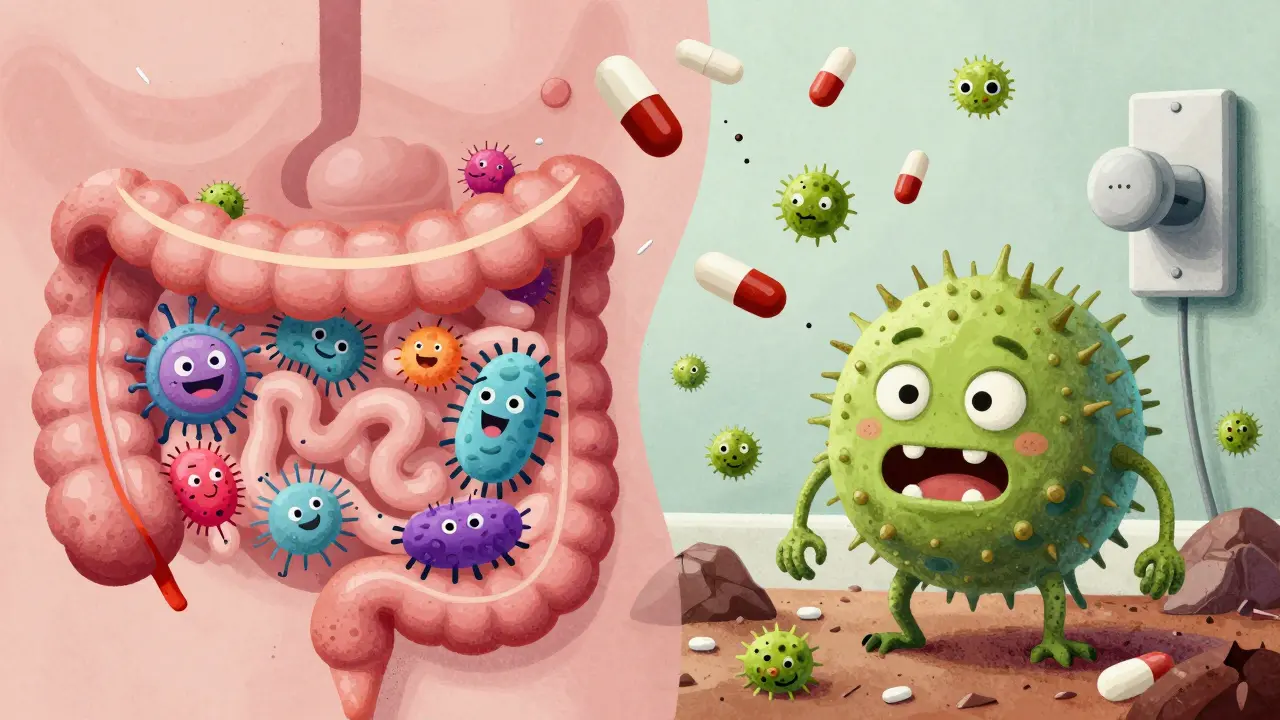
When you take an antibiotic, you expect it to kill the bad bacteria making you sick. But sometimes, it also wipes out the good bacteria in your gut - and that’s when trouble starts. Antibiotic-induced diarrhea isn’t just a mild side effect. For about 1 in 5 people who develop diarrhea after antibiotics, it’s actually a dangerous infection caused by Clostridioides difficile, or C. diff. This isn’t just a hospital problem anymore. It’s showing up in homes, nursing homes, and even healthy people who’ve taken a simple course of antibiotics. And if you don’t know what to look for, or how to treat it, it can spiral into something life-threatening.
What Exactly Is C. diff?
C. diff is a tough, spore-forming bacterium that lives harmlessly in some people’s guts - until antibiotics come along. When you take antibiotics like clindamycin, ciprofloxacin, or cephalosporins, they don’t just target the infection you’re treating. They also destroy the friendly bacteria that normally keep C. diff in check. Once those good bacteria are gone, C. diff takes over. It multiplies fast and releases two powerful toxins that attack the lining of your colon. That’s when you get watery diarrhea, cramps, fever, and sometimes bloody stools.
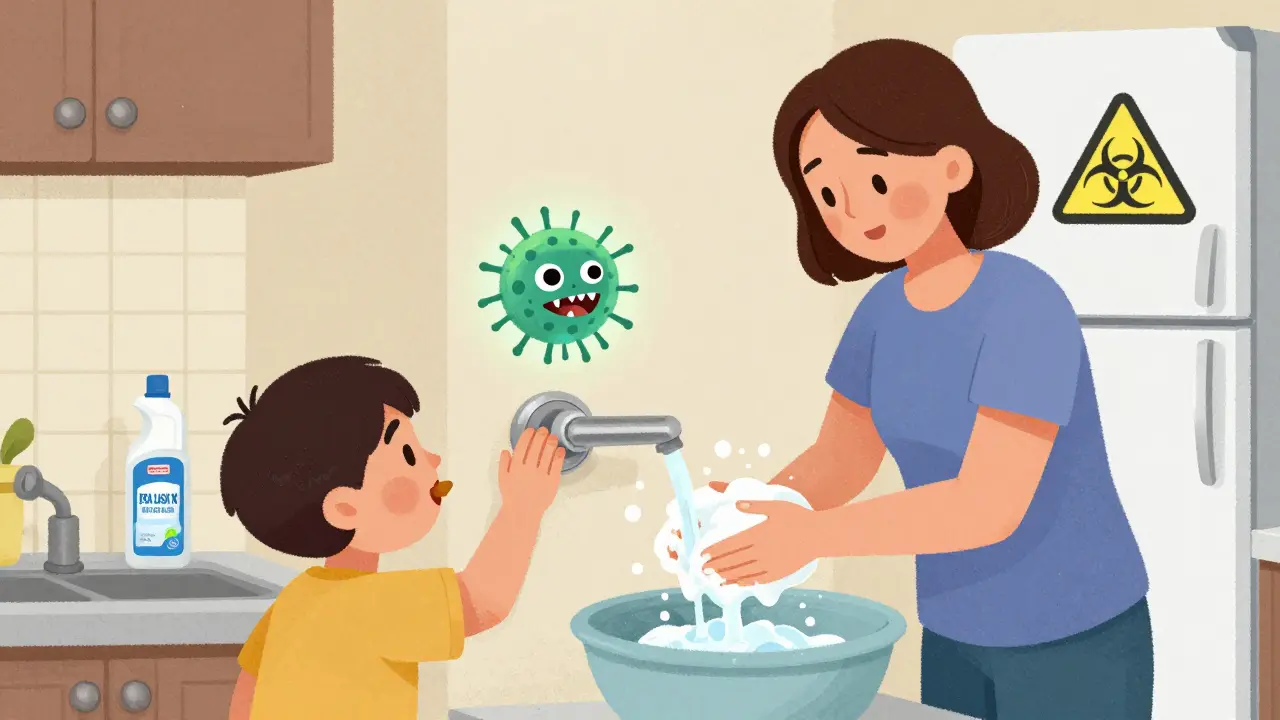
The real danger? C. diff spores can survive for months on doorknobs, bed rails, toilets, and even your phone. You don’t need to be in a hospital to catch it. A 2023 CDC report found that nearly 24% of new cases now start in the community - not in healthcare settings. That means someone who just finished a course of amoxicillin for a sinus infection could end up infected at home, simply by touching a contaminated surface and then eating without washing their hands.
Who’s at Risk?
It’s not just the elderly or hospitalized patients. While people over 65, those on long-term antibiotics, or those with weakened immune systems are at higher risk, C. diff doesn’t play favorites. A 2022 analysis of patient forums showed that 37% of people who developed C. diff had no known risk factors beyond taking antibiotics in the past 30 days.
High-risk antibiotics include:
- Clindamycin (used for skin and dental infections)
- Fluoroquinolones like ciprofloxacin and levofloxacin (common for UTIs and respiratory infections)
- Third- and fourth-generation cephalosporins (like ceftriaxone and cefepime)
- Carbapenems (reserved for serious infections, often in hospitals)
Even a single dose of one of these can be enough. And the longer you’re on antibiotics, the higher your risk. A study from the University of Nebraska found that patients on antibiotics for more than 7 days had nearly double the chance of developing C. diff compared to those on a 3- to 5-day course.
How Is It Diagnosed?
There’s no single perfect test. Doctors usually start with a stool sample. But here’s the catch: not all diarrhea after antibiotics is C. diff. In fact, up to two-thirds of cases are caused by other things - viruses, food intolerance, or just gut irritation from the meds. That’s why labs use a two-step process: first, they check for a protein (GDH) that C. diff produces. If that’s positive, they test for the actual toxins. Sometimes they use a DNA test (NAAT) to detect the bacteria’s genetic material, even if it’s not making toxins yet.
But here’s what most people don’t know: you need to give an unformed stool sample. If you’ve taken a laxative or anti-diarrheal like loperamide (Imodium) in the last 48 hours, the test could be negative - even if you have C. diff. That’s why doctors now tell patients: Don’t take anything to stop the diarrhea until you’ve been tested.
Treatment: What Actually Works
For years, metronidazole (Flagyl) was the go-to drug. But that changed after multiple studies showed it was failing more often. Today, the CDC and Infectious Diseases Society of America (IDSA) no longer recommend it as first-line treatment. Why? Because resistance has climbed to 30-40% in recent years. What’s used now depends on how bad your infection is.
For mild to moderate cases:
- Vancomycin (125 mg, four times a day for 10 days) - effective, affordable ($40-$1,650 per course), and widely available.
- Fidaxomicin (200 mg, twice a day for 10 days) - more expensive ($3,350), but cuts recurrence rates nearly in half. It’s gentler on your gut flora and stays mostly in the intestines instead of spreading through your body.
For severe cases (high white blood cell count, rising creatinine, or fever):
- Vancomycin or fidaxomicin, same as above.
- If you’re very sick - with low blood pressure, bloating, or a paralyzed bowel - you may need IV metronidazole along with high-dose oral vancomycin (500 mg four times a day). In rare cases, doctors even give vancomycin as an enema if your gut is too sluggish to absorb pills.
And here’s something most people don’t realize: don’t take anti-diarrheal drugs. Loperamide (Imodium) or diphenoxylate (Lomotil) might seem like they’d help, but they trap the toxins inside your colon. That can make your infection worse - even lead to toxic megacolon, a life-threatening condition where your colon swells and bursts.
What Happens When It Comes Back?
One in five people who get C. diff will get it again. And each time it returns, the chance of it coming back again goes up. After one recurrence, your odds of a second are 40%. After two, they jump to 60%. That’s why treatment gets more complex after the first episode.
For a first recurrence:
- Repeat the same antibiotic you used before - vancomycin or fidaxomicin.
- Or try a vancomycin taper: 125 mg four times a day for 10-14 days, then twice daily for 7 days, then once daily for 7 days, then every 2-3 days for up to 8 weeks. This slow withdrawal helps your gut bacteria recover.
For second or third recurrences:
- Fidaxomicin followed by rifaximin (a gut-specific antibiotic) may help.
- Or, the most effective option: fecal microbiota transplantation (FMT).
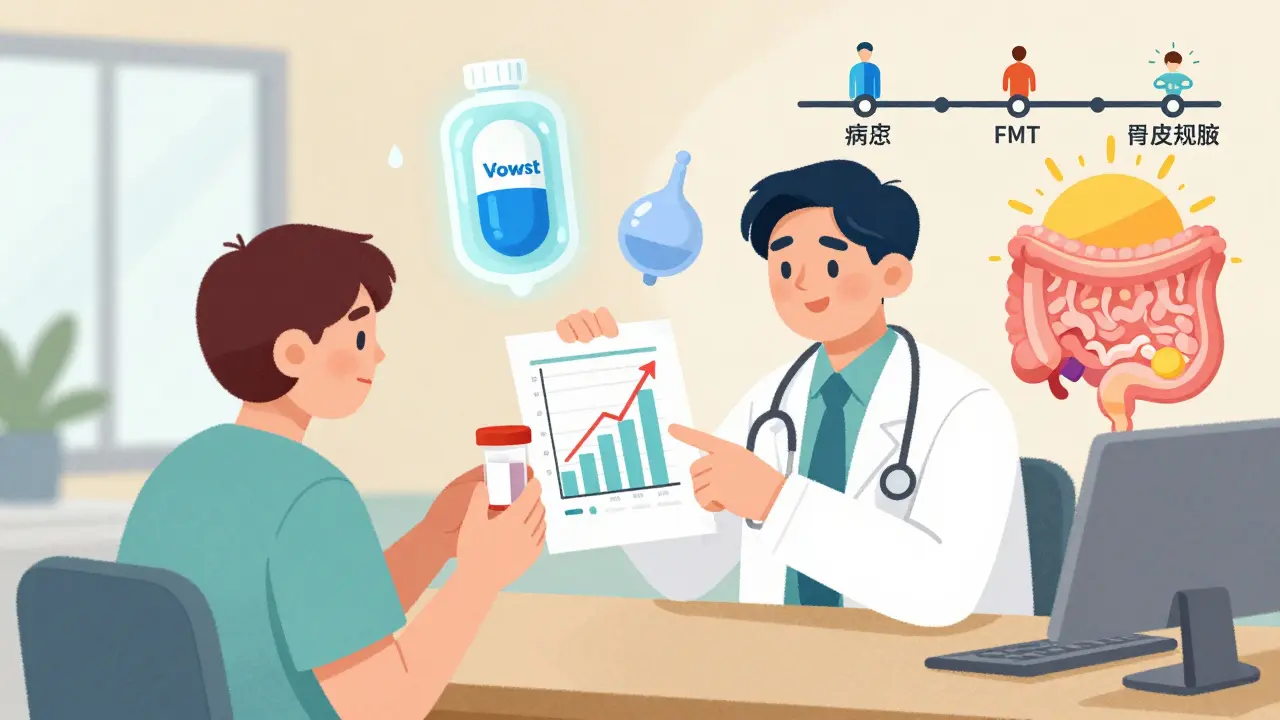
FMT sounds strange - it’s basically a stool transplant from a healthy donor. But it works. Studies show it cures 85-90% of people with multiple recurrences. In 2022, the FDA approved Rebyota, a ready-to-use FMT product given as an enema. Then in April 2023, they approved Vowst, a capsule you swallow with freeze-dried bacterial spores. Both are game-changers. One patient on a health forum wrote: “After 7 recurrences over 18 months, one FMT cleared me permanently. I wish I hadn’t waited so long.”
How to Prevent It
The best way to avoid C. diff? Don’t get it in the first place. And the #1 way to do that is smarter antibiotic use.
Here’s what works:
- Only take antibiotics when you really need them. Up to half of all antibiotic prescriptions in hospitals are unnecessary. Ask your doctor: “Is this antibiotic really needed?” “Is there a narrower-spectrum option?”
- Use the shortest effective course. Don’t finish the bottle if you feel better in 3 days. Talk to your doctor about stopping early if appropriate.
- Wash your hands with soap and water. Alcohol-based hand sanitizers don’t kill C. diff spores. Only soap and water do.
- Disinfect surfaces properly. If someone in your home has C. diff, clean toilets, doorknobs, and faucets with EPA-registered sporicidal cleaners (look for List K on the label). Bleach solutions work too - 1:10 dilution of household bleach.
- Don’t rely on probiotics. You’ll see ads for Saccharomyces boulardii or Lactobacillus as “C. diff preventers.” The evidence is weak. A 2017 Cochrane review found some benefit in specific high-risk groups, but the IDSA doesn’t recommend them routinely. They’re not a substitute for good hygiene or smart antibiotic use.
What Recovery Really Looks Like
People think once the diarrhea stops, they’re fine. But recovery is deeper than that. A 2022 review of 1,247 patient reports found:
- 68% felt better within 3 days of starting vancomycin.
- 22% took 5-7 days.
- 10% still had symptoms after a week - and many of them had recurrent infections.
- 45% reported “brain fog” - trouble focusing, memory lapses, mental fatigue - for weeks after the infection cleared.
- 37% said fatigue lasted longer than the diarrhea.
- 82% had to avoid certain foods (dairy, spicy meals, caffeine) for weeks or months.
Rebuilding your gut microbiome takes time. Some people find relief with a high-fiber diet, fermented foods like yogurt or kimchi, and avoiding processed sugars. But there’s no magic diet. Your gut needs months to fully recover - and sometimes, it never returns to exactly how it was before.
What’s Next in Treatment?
Science is moving fast. In 2023, the CDC officially labeled C. diff an “urgent threat.” That’s the same level as drug-resistant tuberculosis. Why? Because it’s spreading, getting harder to treat, and killing more people.
New drugs are on the horizon:
- Ridinilazole - a targeted antibiotic that kills C. diff but leaves other gut bacteria alone. In a 2022 trial, it outperformed vancomycin in keeping patients symptom-free.
- Cadazolid - showed promise in early trials with fewer recurrences.
- Bezlotoxumab (Zinplava) - a monoclonal antibody that neutralizes C. diff toxins. Given as a single IV infusion along with antibiotics, it cuts recurrence by 10% in high-risk patients.
And the future? Personalized treatment. Instead of one-size-fits-all antibiotics, doctors may soon test your specific C. diff strain and your gut microbiome profile to pick the best therapy. The CDC’s Dr. L. Clifford McDonald predicts: “Microbiome-targeted therapies will become standard of care for recurrent CDI within five years.”
Final Thoughts
Antibiotics save lives. But they’re not harmless. C. diff is a silent consequence of how we use them. The good news? Most cases are preventable. The better news? We now have powerful tools to treat it - even when it comes back.
If you’ve had diarrhea after antibiotics, don’t ignore it. Don’t reach for Imodium. Get tested. And if you’ve had it before, talk to your doctor about prevention strategies - because this isn’t a one-time event. It’s a cycle you can break.
Iona Jane
January 17, 2026 AT 10:34Jaspreet Kaur Chana
January 19, 2026 AT 08:19Haley Graves
January 20, 2026 AT 19:23Diane Hendriks
January 22, 2026 AT 07:22ellen adamina
January 23, 2026 AT 04:31Niki Van den Bossche
January 24, 2026 AT 15:36Jan Hess
January 26, 2026 AT 14:40Gloria Montero Puertas
January 27, 2026 AT 04:29Tom Doan
January 28, 2026 AT 17:56Sohan Jindal
January 28, 2026 AT 18:28Frank Geurts
January 30, 2026 AT 06:35Annie Choi
January 31, 2026 AT 06:31Arjun Seth
February 1, 2026 AT 22:51Mike Berrange
February 3, 2026 AT 01:15