
Taking a common pain reliever seems harmless, but there is a dangerous line between a therapeutic dose and a toxic one. Acetaminophen is an over-the-counter analgesic and antipyretic medication used to treat pain and fever. Also known as paracetamol in many parts of the world, it is found in everything from Tylenol® to complex prescription opioids like Vicodin. Because it's so common, people often underestimate its power to cause severe harm. When too much enters the system, it doesn't just stop working; it turns into a poison that can trigger acute liver failure.
The real danger lies in the "silent window." Many people don't feel sick immediately after taking too much, leading them to wait until it's too late to seek help. However, the window for the most effective treatment is narrow. If caught within the first 8 hours, the chance of survival is incredibly high, but waiting too long can lead to permanent organ damage or death. Understanding the signs and the biological process is the only way to stop a household medicine from becoming a fatal mistake.
How an Overdose Actually Damages the Liver
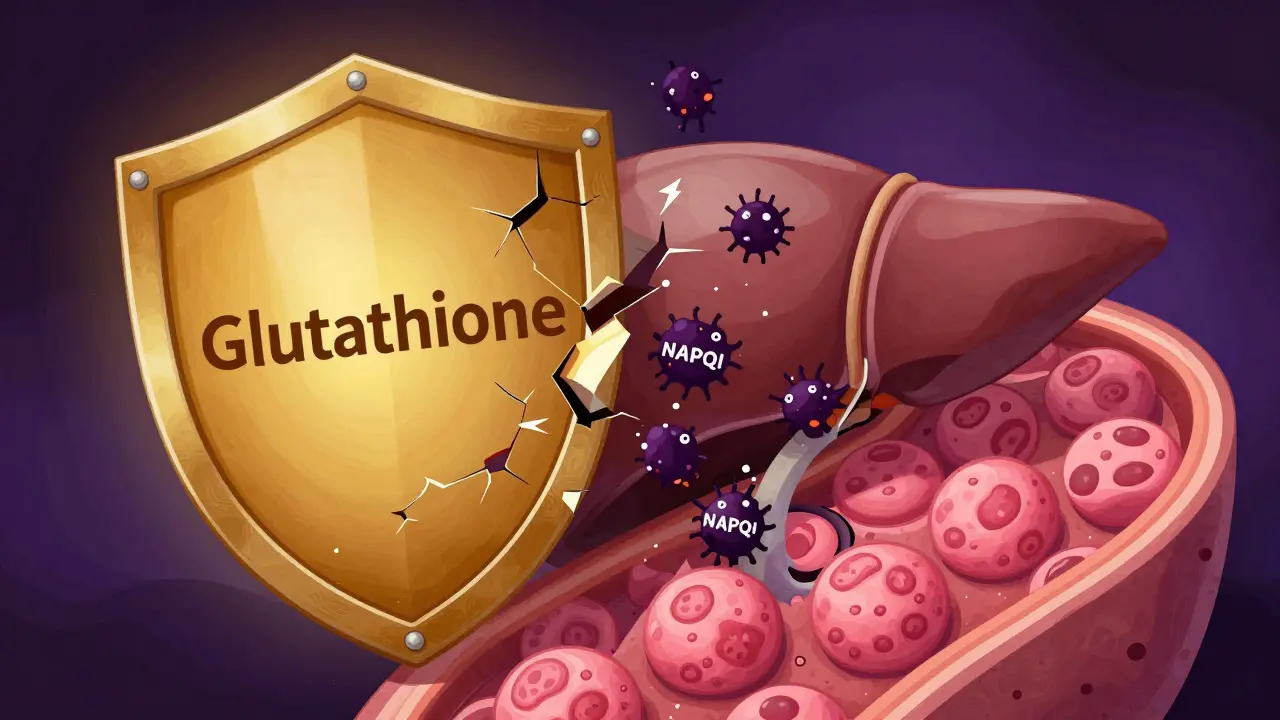
To understand why an Acetaminophen Overdose is so dangerous, you have to look at how the liver processes the drug. Normally, your liver breaks down most of the medication safely. However, a small amount is converted into a highly reactive and toxic byproduct called NAPQI N-acetyl-p-benzoquinone imine, a toxic metabolite that causes oxidative damage to liver cells .
Under normal conditions, a natural antioxidant in your body called Glutathione a powerful antioxidant that neutralizes NAPQI to prevent liver cell death neutralizes NAPQI immediately. The problem starts when you take too much acetaminophen; your glutathione stores run dry. Once the "shield" is gone, NAPQI begins attacking liver cells directly, causing widespread cell death and inflammation. This is why certain people are at higher risk-if you have low glutathione due to malnutrition or chronic alcohol use, your liver's defenses are already weakened, making even a slightly higher dose potentially lethal.
The Four Stages of Liver Damage
Acetaminophen poisoning doesn't happen all at once. It follows a predictable, yet deceptive, timeline that often tricks patients into thinking they are fine.
- Stage 1 (0-24 Hours): This is the most dangerous phase because it's often asymptomatic. About 30-40% of people feel nothing at all. Others might experience mild nausea, vomiting, or a general feeling of malaise. Because these symptoms mimic a common stomach flu, many people ignore them.
- Stage 2 (24-72 Hours): The "false recovery" period. The initial nausea might fade, but the liver is actively dying. You'll likely feel pain in the right upper quadrant of your abdomen where the liver sits. At this point, blood tests would show a rise in ALT alanine aminotransferase, a liver enzyme that leaks into the blood during cell damage levels.
- Stage 3 (72-96 Hours): This is the peak of toxicity. The liver is now severely compromised. Signs include jaundice (yellowing of the skin and eyes), profound confusion, and bleeding issues because the liver can no longer produce clotting factors. In severe cases, ALT levels can skyrocket to over 10,000 IU/L, compared to a normal range of 7-56 IU/L. Renal failure often kicks in during this window.
- Stage 4 (Beyond 5 Days): This is the recovery or failure phase. If the patient survives the peak, the liver begins a slow process of regeneration. For those who don't receive timely care, this stage ends in multi-organ failure.
The Critical Treatment Window and Antidotes
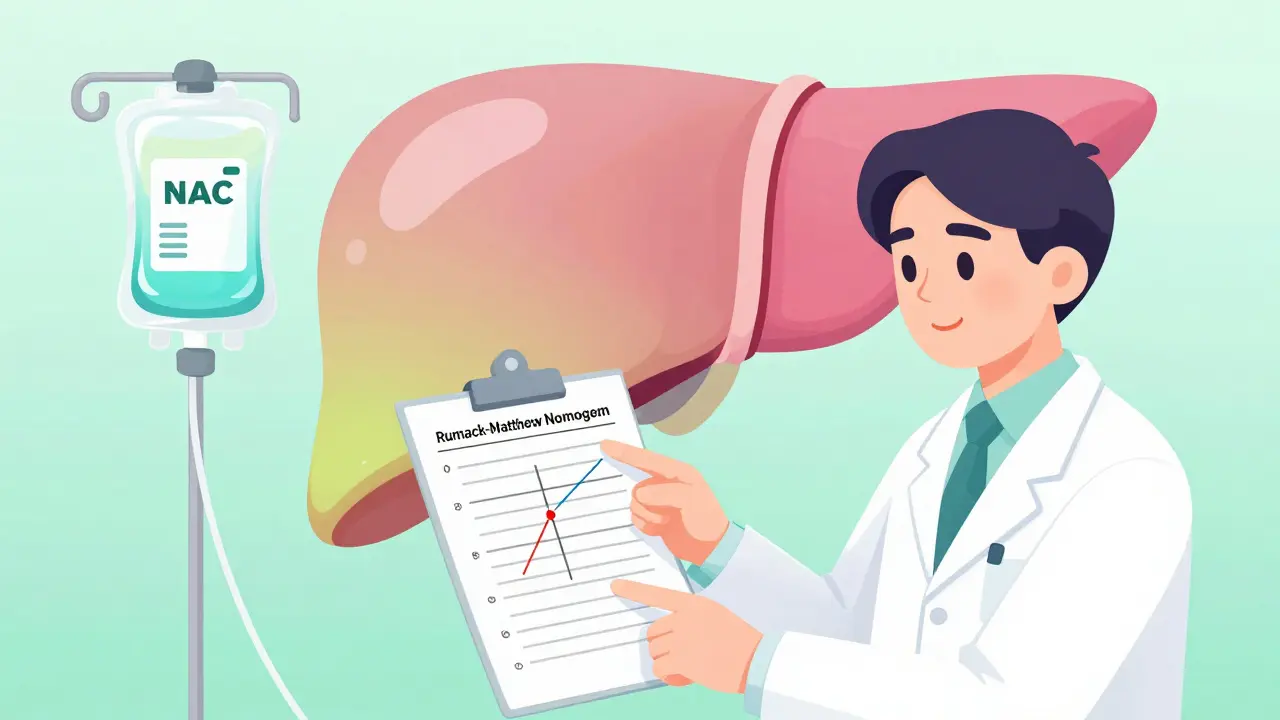
Time is the most important factor in surviving a toxic dose. The gold standard for treatment is N-acetylcysteine NAC, a medication that replenishes glutathione and binds to NAPQI to stop liver damage (NAC).
NAC works by essentially "refilling" the glutathione tank, allowing the body to neutralize the toxic NAPQI. Its effectiveness is strictly time-dependent. When given within 8 hours, it's nearly 98% effective. However, if you wait until the 15-hour mark, that efficacy drops to around 55%. Doctors use the Rumack-Matthew Nomogram a clinical tool used to determine the need for NAC treatment based on serum acetaminophen levels and time since ingestion to decide if treatment is necessary. If a blood test at 4 hours shows levels above 150 µg/mL, NAC is started immediately.
| Time Since Ingestion | Primary Intervention | Expected Efficacy/Outcome |
|---|---|---|
| 1-2 Hours | Activated Charcoal + NAC | High (Prevents absorption) |
| Under 8 Hours | Intravenous NAC | ~98% effectiveness in preventing failure |
| 8-15 Hours | Intravenous NAC | ~75% effectiveness |
| Over 24 Hours | NAC + Supportive Care | Lower efficacy; focus on organ support |
| Severe Failure | Liver Transplantation | Last resort for King's College Criteria cases |
High-Risk Groups and Hidden Dangers
Not everyone reacts to acetaminophen the same way. Certain factors can essentially "fast-track" you to liver failure even with doses that might be tolerated by others. Chronic alcohol drinkers are at a 3-4 fold higher risk because alcohol induces enzymes that create more NAPQI while simultaneously depleting glutathione.
People with existing liver conditions, such as hepatitis B or C, are also significantly more vulnerable. Additionally, some medications like the anticonvulsants phenytoin and carbamazepine can increase the risk of toxicity by about 40% because they ramp up the production of the toxic metabolite. Even severe malnutrition can be a factor, as a lack of protein reduces the body's ability to maintain glutathione levels.
Perhaps the biggest danger is the "hidden dose." Many people don't realize that prescription painkillers like Vicodin or Percocet contain acetaminophen. If you take a prescription opioid and then take a standard dose of Tylenol for a headache, you might unknowingly exceed the 4,000 mg daily limit. This unintentional overdose is a leading cause of emergency room visits.
What Happens in Severe Cases?
When NAC isn't enough or is administered too late, the patient enters acute liver failure. At this stage, doctors use the King's College Criteria to determine if a liver transplant is the only option. If a patient's pH is below 7.3, their INR (a measure of blood clotting) is over 6.5, and creatinine levels are above 3.4 mg/dL, the mortality rate without a transplant is nearly 100%.
The good news is that for those who receive a transplant, the survival rate is high, with 85% of recipients surviving at least five years. For the vast majority of those treated with NAC early on, the liver is remarkably resilient. About 92% of survivors see a complete recovery of liver function within three months.
What is the maximum safe dose of acetaminophen for an adult?
For most healthy adults, the absolute maximum dose is 4,000 mg within a 24-hour period. However, many doctors recommend staying below this limit, as individual tolerance varies. A typical single dose ranges from 325 mg to 1,000 mg, but you should never exceed 1,000 mg in one go or 4 grams in a day.
Why don't I feel sick immediately after an overdose?
This is the most dangerous part of acetaminophen toxicity. During the first 24 hours (Stage 1), the damage is happening at a cellular level, but it hasn't yet caused systemic organ failure. You might only feel slight nausea or nothing at all, which often leads people to delay seeking medical help until the liver is already severely damaged.
Can you treat an overdose at home?
No. Acetaminophen overdose is a medical emergency. There are no home remedies that can replenish glutathione or neutralize NAPQI. You need hospital-grade N-acetylcysteine (NAC) and precise blood monitoring via the Rumack-Matthew Nomogram to prevent permanent liver failure.
Does drinking alcohol make acetaminophen more dangerous?
Yes, significantly. Chronic alcohol consumption increases the risk of liver damage 3-4 fold. Alcohol induces the enzymes that create more toxic NAPQI and depletes the glutathione stores your liver needs to detoxify the drug. This makes the liver much more susceptible to injury even at lower doses.
What is the role of activated charcoal in treatment?
Activated charcoal is used if the patient arrives at the hospital within 1 to 2 hours of ingestion. It works by binding to the drug in the stomach and intestines, preventing it from being absorbed into the bloodstream. This is used as a first line of defense before starting NAC therapy.
Next Steps for Safety and Recovery
If you suspect you or someone else has taken too much acetaminophen, don't wait for symptoms like jaundice or abdominal pain to appear. Go to the emergency room immediately. Tell the medical staff exactly how many milligrams were taken and at what time; this allows them to use the nomogram to start NAC treatment within the critical 8-hour window.
To prevent this in the future, start reading the "Drug Facts" label on every medication. Check for ingredients like "Acetaminophen" or "APAP" in combination medicines. If you are taking a prescription painkiller, ask your pharmacist if it contains a liver-toxic agent so you can adjust your over-the-counter dosages accordingly.